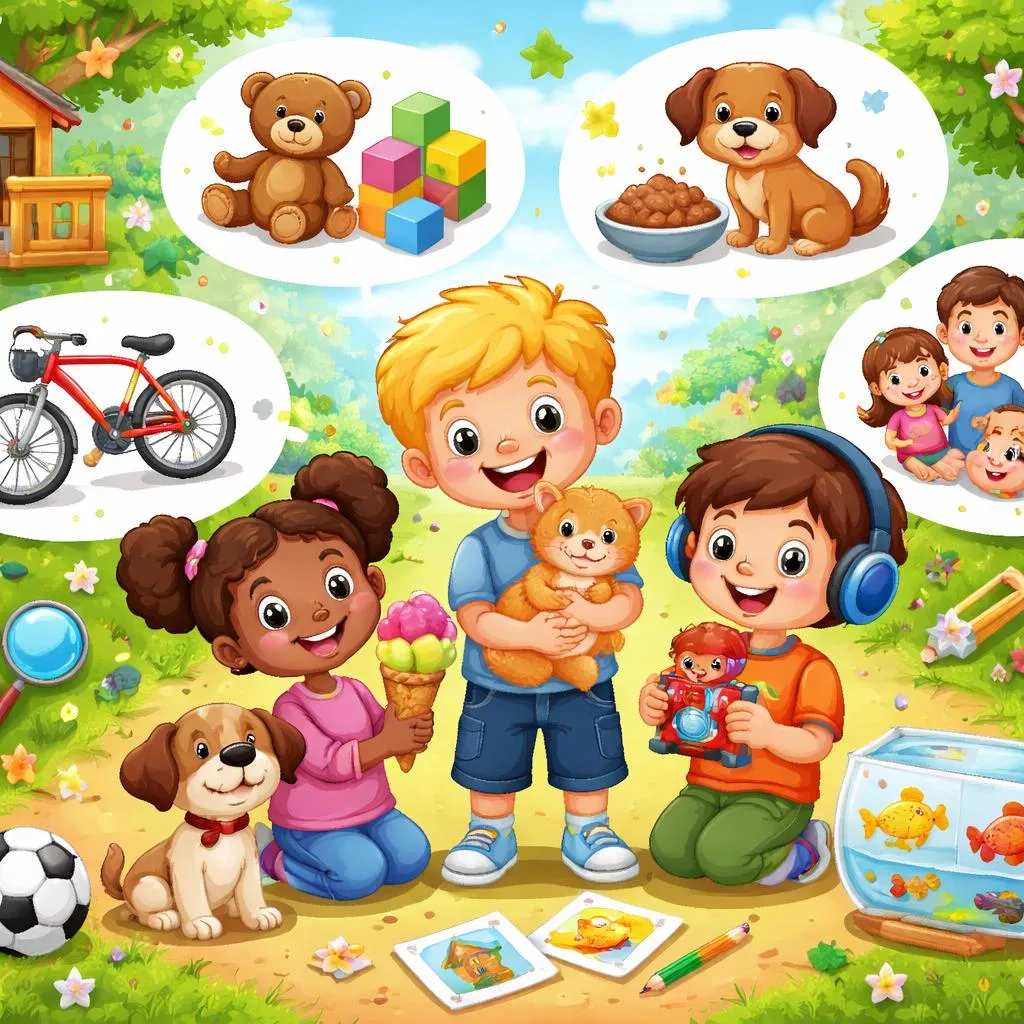

Meaning of the Verb to Have The verb to have is used to show possession, relationships, or experiences. It helps children talk about objects, family, and daily life. For example, “I have a book” or “She has a pet.” The verb to have also appears in expressions like “have breakfast” or “have fun.” It is one of the most important verbs in English. Understanding it makes speaking and writing easier. Children learn to describe what belongs to them and others.
Conjugation of the Verb to Have The verb to have changes depending on the subject. For example, “I have,” “you have,” and “he/she/it has.” In plural, it becomes “we have,” “you have,” and “they have.” Knowing these forms helps build correct sentences. Children notice patterns and use them in speaking naturally. The verb is irregular in the third person singular: “has” instead of “haves.” Recognizing this form is important for reading and conversation.
Present Tense of the Verb to Have In present tense, the verb to have shows what exists now or what someone possesses. “I have a pencil.” “She has a backpack.” “We have two cats.” Children can describe what they see around them. It also helps when talking about family, friends, and school items. Using real objects while learning makes the present tense more meaningful.
Past Tense of the Verb to Have The past tense of to have is had. It shows what someone possessed or experienced before. “I had a red ball yesterday.” “He had a snack this morning.” Children can practice telling stories about past events. This form is the same for all subjects, which makes it easier to remember. Practicing past tense with daily activities helps children speak about time.
Future Tense of the Verb to Have The future tense uses “will have” to show what someone will possess or experience. “I will have a new notebook tomorrow.” “She will have a birthday party next week.” “We will have lunch at school.” Children learn to talk about plans and future events. Using “will have” helps understand sequences of time. Games and storytelling support learning the future tense.
Questions with the Verb to Have Questions often start with “Do” or “Does” in the present tense. “Do you have a pencil?” “Does he have a pet?” In the past tense, questions use “Did.” “Did you have a snack?” “Did she have fun yesterday?” Future tense questions use “Will.” “Will they have a picnic?” Children practice these questions in conversations and games. Question forms encourage speaking and listening skills.
Other Uses of the Verb to Have The verb to have is also used in expressions: “have breakfast,” “have a good time,” “have a bath.” It shows actions, experiences, or states. “I have breakfast at 7 a.m.” “She has a shower every morning.” Children learn these phrases to describe daily routines. It also helps in storytelling and describing feelings or activities.
Learning Tips for the Verb to Have Use real objects to practice: books, toys, or pets. Make sentences with simple structures. Repeat phrases in daily routines. Play games to ask and answer “Do you have…?” Sing songs that include the verb to have. Practice past and future forms with short stories.
Educational Games for the Verb to Have Memory game: match pictures with sentences using “have.” Role-play: ask and answer “Do you have…?” with classmates or family. Story building: children make short stories using had and will have. Song and rhyme: sing simple songs with “I have,” “I had,” and “I will have.” Sorting game: organize sentences by present, past, and future tense. These games make learning interactive and memorable.
Children can see the verb to have in many contexts. From possessions to activities, it appears in daily life. Using it in speaking, reading, and writing strengthens English skills. Simple sentences, interactive games, and storytelling make learning fun. Understanding the verb to have is a key step in becoming confident in English.