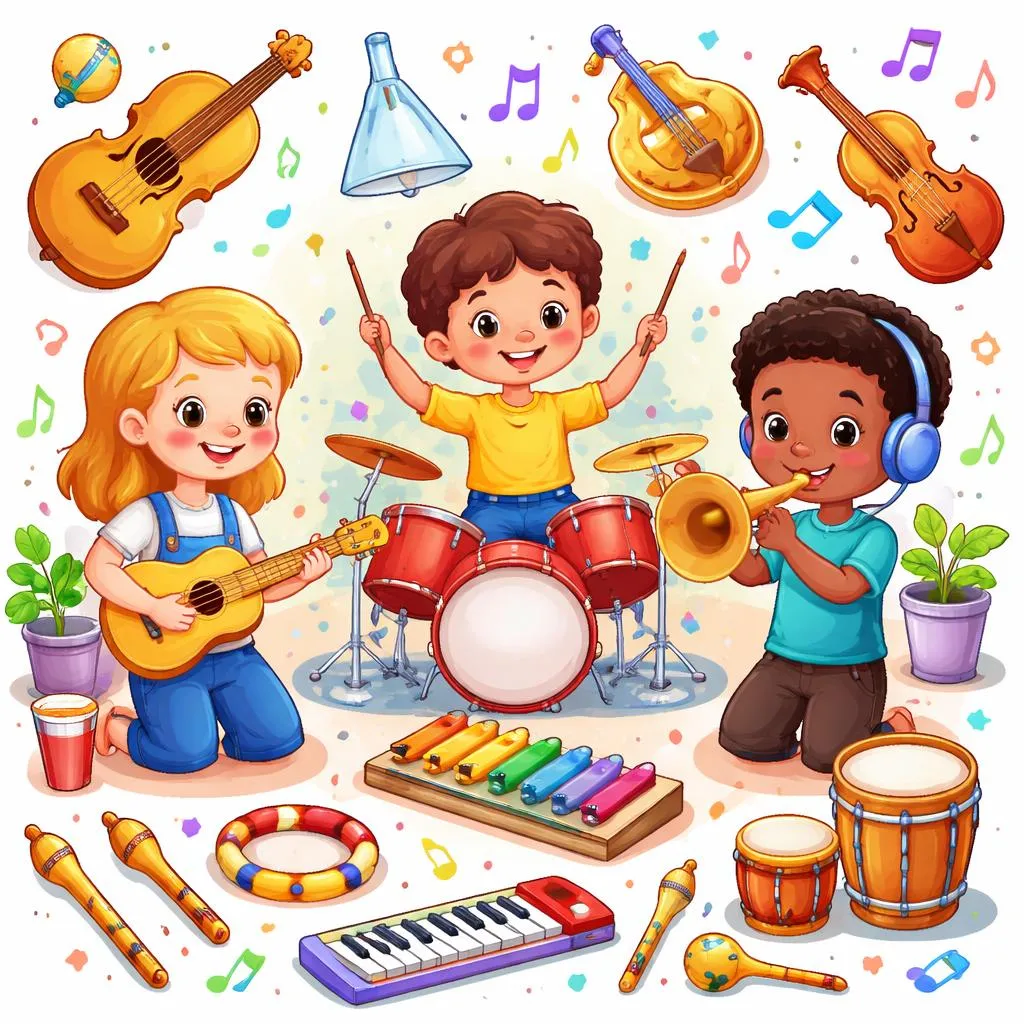

What Is a “musical instruments list”?
A musical instruments list is a collection of instrument names. It helps build music vocabulary in a clear and structured way. It also supports listening skills and sound awareness.
Musical instruments appear in songs, stories, and daily life. Learning instrument names supports language development and creativity. Music also builds memory, attention, and emotional expression.
Meaning and Explanation of Musical Instruments
A musical instrument is an object that makes sound. The sound can come from strings, air, or hitting surfaces. Instruments appear in bands, orchestras, and solo performances.
Some instruments are small and portable. Some instruments are large and powerful. Each instrument has a unique sound and role in music.
Categories in a Musical Instruments List
Musical instruments often fall into clear families. These families help organize sounds and playing methods.
String instruments use strings to make sound. Wind instruments use air to create sound. Percussion instruments use hitting or shaking. Keyboard instruments use keys to produce sound. Electronic instruments use technology to create sound.
These categories help structure music learning and vocabulary building.
String Instruments in the Musical Instruments List
String instruments create sound through vibrating strings. They often use fingers or a bow.
The violin has four strings and a bright sound. The viola looks like a violin but sounds deeper. The cello is larger and has a warm tone. The double bass is very large and produces low sounds. The guitar has six strings and appears in many music styles. The harp has many strings and creates soft, magical sounds.
String instruments appear in orchestras, bands, and solo performances. They support melody and harmony.
Wind Instruments in the Musical Instruments List
Wind instruments use air to make sound. Blowing into the instrument creates vibration.
The flute has a light and clear tone. The clarinet has a smooth and rich sound. The saxophone has a jazzy and expressive tone. The trumpet has a bright and powerful sound. The trombone has a sliding mechanism and deep tone. The tuba has a very low and strong sound.
Wind instruments appear in orchestras, jazz bands, and marching bands. They often carry melody and strong musical lines.
Percussion Instruments in the Musical Instruments List
Percussion instruments make sound when hit or shaken. They create rhythm and beat.
The drum produces strong and steady beats. The tambourine has jingles and can shake or hit. The xylophone uses wooden bars to create pitched sounds. The cymbals crash to create bright effects. The triangle creates a high ringing sound. The maracas shake to create rhythmic textures.
Percussion instruments support timing and rhythm awareness. They also encourage movement and coordination.
Keyboard Instruments in the Musical Instruments List
Keyboard instruments use keys to make sound. Each key represents a different pitch.
The piano produces sound through strings and hammers. The organ uses air pipes or digital sound. The keyboard is electronic and versatile.
Keyboard instruments help visualize pitch and melody. They support early music theory learning.
Electronic Instruments in the Musical Instruments List
Electronic instruments use technology to create sound. They often appear in modern music styles.
The synthesizer creates many different sounds. The digital drum pad triggers drum sounds. The electric guitar uses amplification.
Electronic instruments connect music with technology and creativity.
Daily Life Examples of Musical Instruments
Musical instruments appear in many daily settings. Concert halls feature orchestras and bands. Schools use instruments in music classes. Homes use instruments for practice and fun.
Movies and cartoons use instruments in soundtracks. Festivals and celebrations include live music. Online platforms share instrument tutorials and performances.
Recognizing instruments in daily life builds listening awareness and curiosity.
Vocabulary Learning with a Musical Instruments List
Instrument names introduce concrete nouns. These nouns connect with sounds and images.
Violin, guitar, drum, and piano are common beginner words. Trumpet, flute, and saxophone introduce new sounds. Harp and cello introduce classical music vocabulary.
Learning these words supports reading, listening, and speaking skills. Connecting words with sound improves memory and comprehension.
Phonics Points in Instrument Names
Instrument names offer useful phonics practice. They include many common English sounds.
The /g/ sound appears in “guitar.” The /f/ sound appears in “flute.” The /p/ sound appears in “piano.” The /d/ sound appears in “drum.” The /s/ sound appears in “saxophone.”
Repeating instrument names supports articulation and sound awareness. Clapping syllables supports rhythm and syllable segmentation.
Grammar Patterns Using Musical Instruments
Instrument names support basic sentence patterns. Simple sentences can describe sound and action.
“The piano is loud.” “The drum makes a beat.” “The violin is soft.” “The guitar plays a song.”
These patterns build early sentence structure and descriptive language. Music vocabulary also supports adjectives and verbs like play, hear, and listen.
Printable Flashcards for Musical Instruments
Flashcards help visual learning and recall. Each card can show an instrument picture and a clear word.
A piano card can show black and white keys. A guitar card can show strings and a body. A drum card can show sticks and a drum head. A flute card can show a long silver tube.
Flashcards support matching games, reading practice, and speaking tasks. Large pictures and bold text support early readers.
Learning Activities with a Musical Instruments List
Listening activities help recognize instrument sounds. Matching activities connect pictures and names. Drawing activities support creativity and fine motor skills.
Simple crafts can include making paper guitars or drums. Sound guessing games can play instrument recordings. Storytelling activities can include a music-themed story.
These activities integrate language, music, and creativity.
Educational Games Based on Musical Instruments
Memory games can match instrument cards. Sound games can identify which instrument is playing. Rhythm games can clap or tap to drum beats.
Digital games can include virtual instruments and sound buttons. Role-play games can simulate a band or orchestra.
These games build listening, speaking, and cognitive skills.
Storytelling with Musical Instruments
Musical instruments can become story characters. A guitar can travel on an adventure. A piano can tell a story about a concert. A drum can lead a parade.
Storytelling with instruments builds imagination and narrative skills. It also reinforces vocabulary and sentence patterns.
Integrating Musical Instruments into Early Literacy
Music supports phonological awareness. Rhythm helps recognize syllables and stress patterns. Songs support memorization and fluency.
Reading instrument names supports word recognition. Writing simple sentences about instruments supports early writing. Chanting names supports pronunciation and confidence.
Cross-Curricular Connections with Music
Music connects with science through sound and vibration. It connects with math through rhythm and patterns. It connects with art through instrument design and decoration.
These connections create a rich learning environment. Language learning becomes part of a broader knowledge system.
Tips for Teaching with a Musical Instruments List
Short and frequent practice improves retention. Clear pronunciation models accurate speech. Visual aids strengthen comprehension.
Encouraging listening and imitation builds confidence. Celebrating musical exploration increases motivation and curiosity.
Why a Musical Instruments List Works Well for Early Learners
Instruments provide concrete and engaging vocabulary. Sounds create strong memory links. Music stimulates emotion and attention.
Instrument names appear in songs, stories, and daily experiences. This makes them ideal for early language learning.
Creative Writing Prompts with Musical Instruments
A prompt can describe a magical piano. Another prompt can describe a band of animal musicians. Another prompt can describe a concert in the forest.
These prompts encourage storytelling and writing. They reinforce vocabulary and sentence structure.
Building Listening Skills with Musical Instruments
Listening to instrument sounds improves auditory discrimination. Repeating instrument names improves pronunciation. Clapping rhythms improves timing and coordination.
Listening tasks can include identifying instruments in songs. This builds focused listening and comprehension skills.
Extending Learning Through Songs and Performances
Singing songs with instruments increases engagement. Watching performances shows how instruments are played. Trying simple instruments builds confidence and curiosity.
These experiences make language learning dynamic and inspiring.
A musical instruments list opens a world of sound, language, and creativity. Instrument names connect words with real sounds and emotions. Music, language, and imagination come together in joyful and meaningful learning experiences.