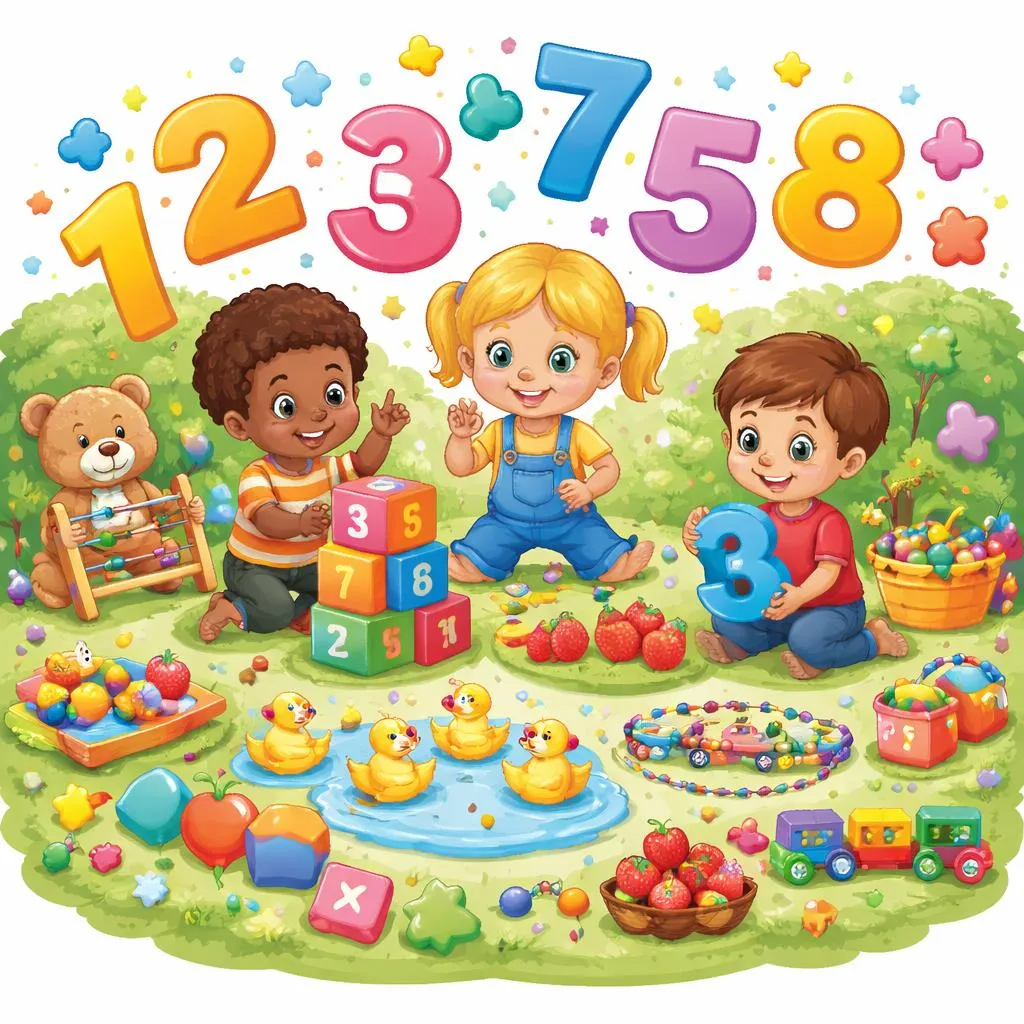

What Are Numbers for Kids?
Numbers for kids are symbols used to count, measure, and understand quantities. They form the foundation of math learning and daily life skills. Numbers help describe objects, time, money, and even games. Learning numbers encourages problem-solving, observation, and logical thinking.
Meaning and Explanation
Numbers are symbols representing quantities. They can be written as digits, words, or even objects. For example: 1, 2, 3 or one, two, three. Numbers show how many items are in a group, how much something costs, or how long an event lasts.
Categories of Numbers
Numbers can be divided into categories to make learning easier:
Counting Numbers: 1, 2, 3, 4…
Even and Odd Numbers: 2, 4, 6 (even), 1, 3, 5 (odd)
Ordinal Numbers: first, second, third
Large Numbers: tens, hundreds, thousands
Fractions and Decimals: ½, 0.5, ¼, 0.25
Each type has its own rules and uses in daily life and math.
Daily Life Examples
Numbers appear in many everyday activities:
Counting toys: “One, two, three blocks.” Telling time: “It is three o’clock.” Shopping: “The apples cost five dollars.” Games: Counting steps, scores, or points
Using real-life examples makes numbers more meaningful.
Printable Flashcards for Numbers
Flashcards help children recognize numbers and practice counting:
Numbers written as digits and words Pictures showing the same quantity of objects Simple addition or subtraction problems Matching games to pair digits with quantities
Flashcards support memory, reading, and early math skills.
Learning Activities and Games
Counting game: Count toys, snacks, or objects in the room Number hop: Jump to the correct number in sequence Matching game: Match digits to sets of objects Story problems: Simple problems like “If you have 3 apples and get 2 more, how many?”
Activities combine movement, imagination, and math learning.
Vocabulary Learning
Learning numbers expands vocabulary in English:
Number names: one, two, three Math words: add, subtract, more, less Quantities: few, many, some, all Ordinal words: first, second, third
Short sentences help practice language and math together: “Two cats are on the mat.”
Phonics and Pronunciation Points
Number words help practice English sounds:
Initial sounds: /t/ in two, /f/ in five Ending sounds: /n/ in seven, /r/ in four Vowel sounds: /iː/ in three, /aɪ/ in five
Singing counting songs reinforces pronunciation naturally.
Grammar Patterns
Using numbers in sentences teaches grammar:
Verbs: is, are, have – “There are three apples.” Prepositions: in, on, under – “Two balls are in the basket.” Questions: “How many pencils are there?” “Which is first?” Comparisons: more, less – “Five is more than two.”
Practicing these patterns builds sentence structure and communication skills.
Creative Activities
Children can make their own number book:
Draw objects for each number Write number names and short sentences Create counting stories or number-based games Use colored pencils or stickers to make learning fun
Creative activities support writing, speaking, and imagination.
Educational Games for Numbers
Treasure hunt: Hide objects and count them when found Number bingo: Match numbers to sets of objects Number puzzle: Arrange numbers in order Addition and subtraction race: Solve simple problems and move pieces on a board
Games make learning numbers interactive, fun, and memorable.
Tips for Learning Numbers
Use everyday situations like shopping, cooking, or walking to count objects Encourage speaking sentences aloud with numbers Combine drawing, acting, and singing for interactive learning Ask questions: “How many cars are red?” “Which number comes next?” Connect numbers with other subjects: shapes, measurements, and time
Learning numbers for kids builds a strong foundation for math, problem-solving, and English communication. Exploring numbers through games, stories, and daily life makes learning enjoyable and meaningful.