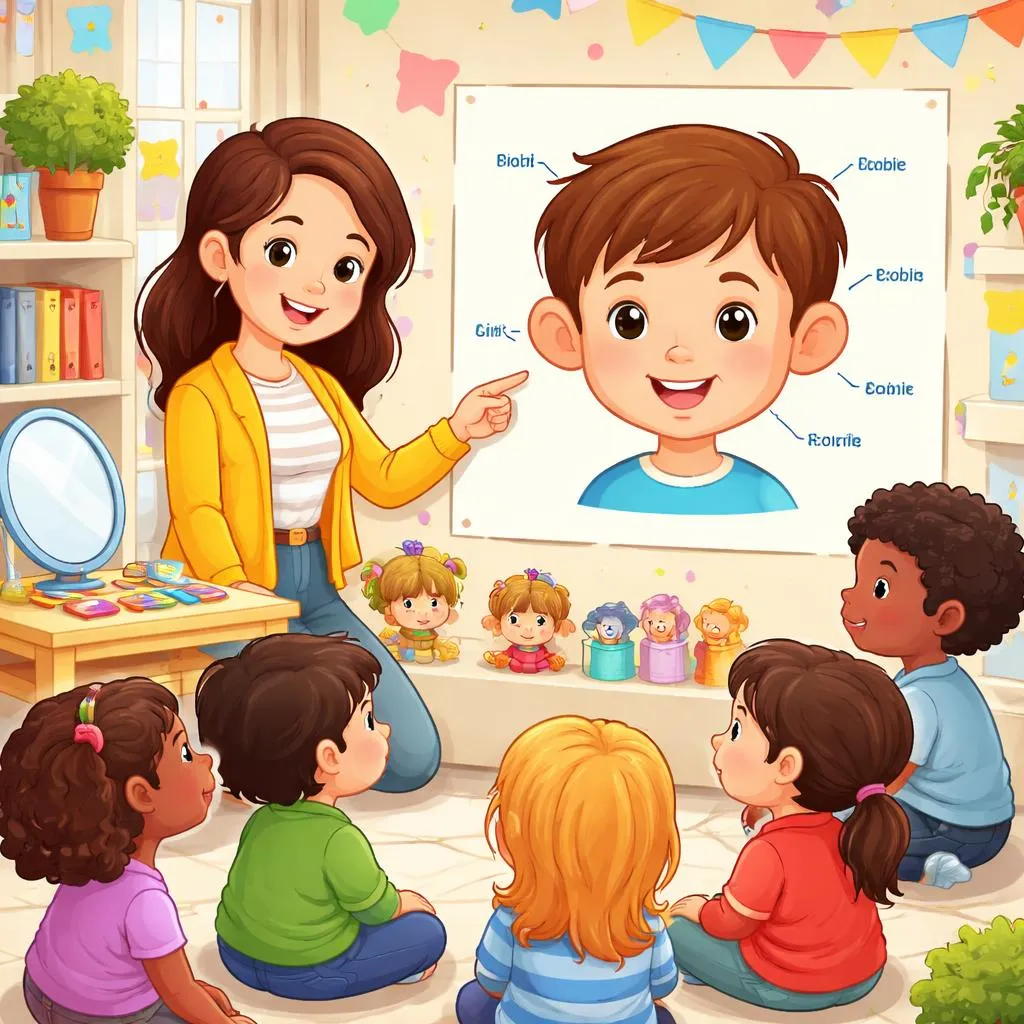

Parts of the Face as an Important Learning Topic
The face appears in every daily interaction. Faces show feelings, help with communication, and support basic needs like seeing, eating, and breathing. Learning the parts of the face builds essential vocabulary and self-awareness. This topic often becomes one of the first steps in early English learning.
In lessons, face vocabulary feels familiar and safe. Mirrors, pictures, and expressions make learning concrete. Clear words and simple explanations support confidence and understanding.
This lesson introduces the parts of the face step by step. Each section uses gentle guidance and clear language. Learning stays calm, friendly, and engaging.
What Are the Parts of the Face?
The parts of the face are the different areas found on the front of the head. Each part has a name and a purpose. Together, these parts help people see, hear, smell, speak, and express emotions.
Common parts of the face include eyes, nose, mouth, ears, and cheeks. Some parts help with senses. Other parts help with expression or protection.
Learning these words helps children describe themselves and others. It also supports early science and health topics.
Meaning and Explanation of Face Parts
Each part of the face has a simple function. Understanding purpose makes vocabulary easier to remember.
Eyes help with seeing. They notice light, color, and movement. Eyes also show feelings like happiness or surprise.
The nose helps with breathing and smelling. It also warms the air before it enters the body.
The mouth helps with speaking and eating. Lips, teeth, and tongue work together inside the mouth.
Ears help with hearing. They also help with balance.
Cheeks give shape to the face. They move during smiling and speaking.
The chin supports the lower part of the face. The forehead sits above the eyes and protects the brain.
Simple explanations connect words with meaning.
Main Categories of the Parts of the Face
Grouping face parts helps organize learning. Categories make lessons clear and memorable.
Some face parts support senses. Eyes, ears, nose, and mouth belong to this group.
Some face parts support expression. Eyebrows, lips, and cheeks help show emotions.
Some face parts offer structure and protection. The forehead and chin help shape the face.
Teaching in categories helps children see how parts work together.
Common Parts of the Face in Early Learning
Several face parts appear often in early lessons. These words become part of daily language.
Eyes appear in songs and stories. The word feels short and easy to say.
The nose appears in games and actions. Touching the nose makes learning active.
The mouth appears in speaking and eating lessons.
Ears appear in listening activities.
These words often appear together. Repetition supports strong memory.
Less Common but Useful Face Vocabulary
After learning basic words, lessons may introduce more detailed vocabulary.
Eyebrows sit above the eyes. They help with expression.
Eyelashes protect the eyes from dust.
Nostrils are the openings of the nose. They help with breathing.
Lips cover the mouth. They help with speech and smiles.
Introducing these words slowly keeps learning comfortable.
Parts of the Face in Daily Life
Face vocabulary appears in daily routines. Washing the face in the morning offers a natural learning moment.
Naming face parts during routines reinforces understanding.
“The eyes are open.” “The nose feels cold.” “The mouth is smiling.”
Simple sentences connect language with real actions.
Mirrors also support learning. Seeing the face helps connect words with location.
Teaching the Parts of the Face Through Observation
Observation builds awareness. Looking at pictures, drawings, or real faces supports learning.
Pointing to each part while naming it helps memory. Slow pacing works best.
Facial expressions add interest. Smiling, frowning, or raising eyebrows shows how face parts move.
This approach feels natural and playful.
Using Songs and Rhymes for Face Vocabulary
Songs support memory and pronunciation. Many children’s songs include face parts.
Rhymes with actions make learning active. Touching the eyes, nose, or mouth during a song builds coordination.
Music adds rhythm. Rhythm supports recall.
Songs often repeat words, which strengthens vocabulary.
Simple Sentences Using Parts of the Face
Short sentences help language grow.
“The eyes can see.” “The nose can smell.” “The mouth can talk.” “The ears can hear.”
These sentences feel clear and calm. Repetition builds confidence.
Cultural Awareness Through Faces
Faces show diversity. Skin color, eye shape, and facial features differ across people.
Teaching face parts offers a chance to celebrate differences. Respect and kindness become part of the lesson.
Pictures of many faces support inclusion.
Language learning becomes richer through cultural awareness.
Printable Flashcards for Parts of the Face
Flashcards support visual learning. Each card may show one face part with a clear label.
Large images and simple words work best.
Flashcards may include eyes, nose, mouth, ears, cheeks, and forehead.
Matching games and naming activities strengthen recall.
Printable materials also support home learning.
Classroom Activities for Learning Face Parts
Activities keep learning active and fun.
Drawing a face and labeling parts supports creativity and vocabulary.
Puzzles with face parts encourage problem-solving.
Acting games using expressions help connect emotion and language.
Activities should stay short and positive.
Educational Games With Face Vocabulary
Games add excitement to lessons.
A guessing game works well. One face part is described. The name is guessed.
A listening game may include instructions like “touch your nose” or “cover your eyes.”
Games support attention and comprehension.
Phonics Connections With Face Words
Face vocabulary supports phonics learning.
The long vowel sound appears in “face.” Short sounds appear in “lip” and “chin.”
Repeating words slowly helps sound awareness.
Pointing to letters while saying words builds early reading skills.
Supporting Parents and Teachers in Face Vocabulary Lessons
This topic fits easily into daily life. Parents can use face words during routines.
Teachers can include face vocabulary in health or science lessons.
Clear language and repetition support learning at any setting.
No special tools are needed.
Expanding Learning Beyond Basic Face Parts
Once basic vocabulary feels comfortable, lessons may expand.
Introducing words like wrinkle, freckle, or dimple adds depth.
These words often appear in stories and descriptions.
Expansion should stay gentle and gradual.
Connecting Face Vocabulary to Emotions
The face shows feelings. Teaching emotions alongside face parts adds meaning.
Eyes may look happy or sad. Mouths may smile or frown.
Connecting emotions helps social learning.
Language becomes more expressive.
Encouraging Expression and Confidence
Naming face parts helps children talk about themselves. Confidence grows through self-awareness.
Clear vocabulary supports communication with others.
Learning feels empowering and safe.
A Calm and Supportive Learning Flow
Learning the parts of the face works best in a calm rhythm. Short lessons, repetition, and real-life connections support success.
Through observation, language practice, songs, and play, face vocabulary becomes familiar and meaningful. This topic builds a strong foundation for communication, health awareness, and emotional understanding.