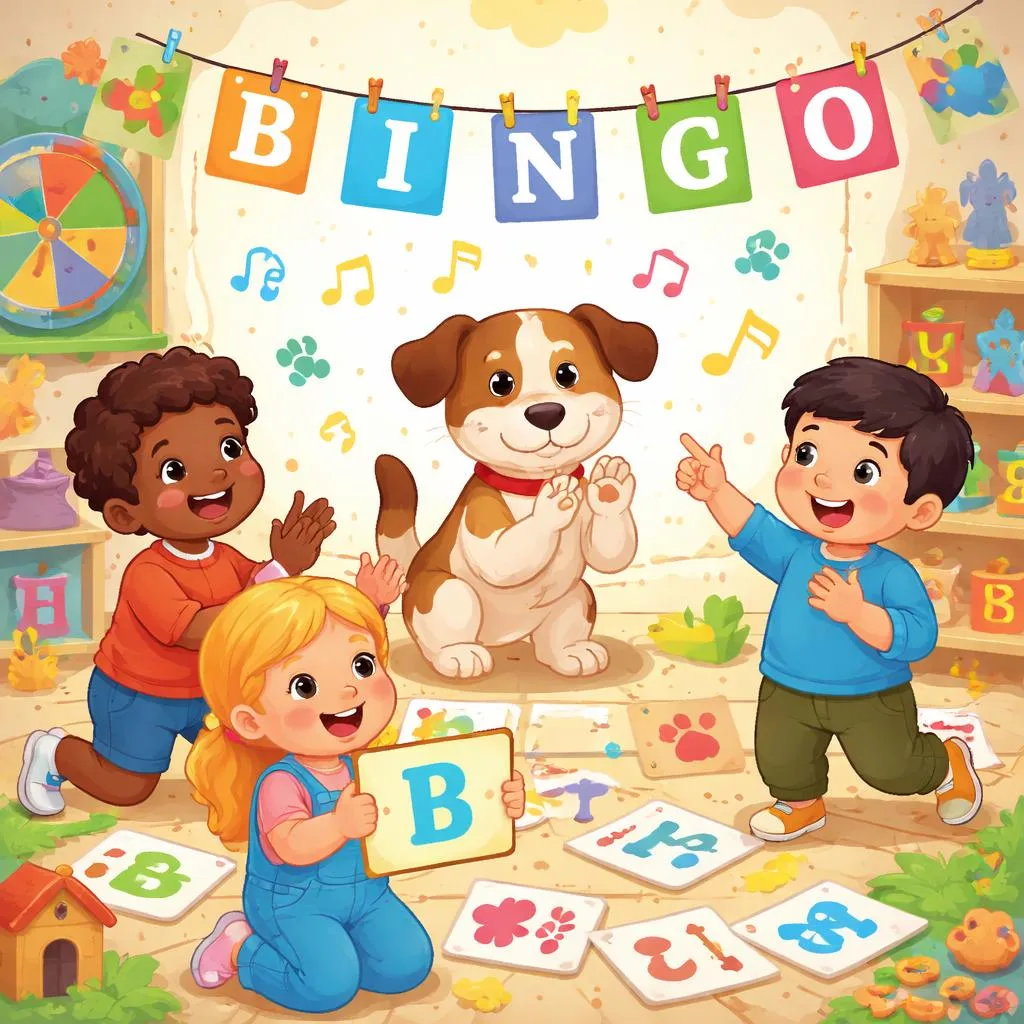

What Is the Rhyme Story Behind and bingo was his name
“And bingo was his name” comes from the classic nursery rhyme “Bingo.” The rhyme tells a simple story about a farmer and a dog named Bingo.
The song uses spelling, clapping, and repetition. Each verse removes one letter from the name and replaces it with a clap.
This structure makes the song interactive and memorable. Repetition supports listening skills and early literacy development.
The playful rhythm invites movement and participation. Music, rhythm, and spelling combine to create a powerful learning tool.
and bingo was his name Lyrics for Early Learners
The rhyme begins with a simple narrative line. “There was a farmer who had a dog, and Bingo was his name.”
The next lines spell the dog’s name: B-I-N-G-O. Each new verse replaces a letter with a clap.
This pattern continues until all letters become claps. The repetitive pattern strengthens memory and sequencing skills.
The predictable structure supports comprehension and engagement. Listening for missing letters builds attention and phonological awareness.
Vocabulary Learning with and bingo was his name
The song introduces practical and familiar vocabulary. Words like farmer, dog, name, and farm appear in the rhyme.
Spelling words like letter and name support early literacy concepts. Action words like clap and sing appear in classroom extensions.
Animal vocabulary connects language to real-world knowledge. Farm-related words connect to daily life and storytelling topics.
Repetition helps recall and pronunciation. Singing reinforces vocabulary in a natural and joyful way.
Phonics Points in and bingo was his name
The song supports phonics and letter-sound awareness. Each letter in B-I-N-G-O connects to its sound.
Spelling aloud strengthens phonemic awareness. Clapping for letters supports segmentation skills.
The rhythm highlights syllables and beats. Rhyming patterns in verses support phonological awareness.
Chanting and singing help articulation and fluency. Sound-letter connections become meaningful through music and movement.
Grammar Patterns in and bingo was his name
The rhyme uses simple present tense sentences. “There was a farmer” introduces past tense storytelling.
Possession appears in “his name.” Questions can extend the song, such as “What is his name?”
Imperative sentences appear in classroom actions like “Clap your hands.” Pronouns like his and his name appear naturally in context.
These patterns support early sentence structure awareness. Songs present grammar in a natural and memorable format.
Learning Activities with and bingo was his name
Movement activities connect language to physical actions. Clapping each missing letter reinforces spelling and rhythm.
Spelling activities use letter cards to build the name Bingo. Sequencing activities arrange letters in the correct order.
Storytelling activities expand the rhyme into a farm story. Drawing activities create scenes with the farmer and the dog.
Role-play activities allow singing and acting out the rhyme. Group singing builds confidence and communication skills.
Printable Materials for and bingo was his name
Printable flashcards show each letter of B-I-N-G-O. Picture cards show the farmer, dog, and farm scene.
Tracing worksheets support writing practice for letters. Mini-books with simplified lyrics support early reading skills.
Sequencing cards help arrange verses and spelling steps. Coloring pages reinforce vocabulary and story comprehension.
Printables provide structured practice for classroom and home learning.
Educational Games with and bingo was his name
Games add excitement and repetition. A spelling bingo game uses letters and sounds.
A clapping challenge game removes letters in random order. A memory game matches letters with pictures of Bingo the dog.
A rhythm game follows the beat of the song. A storytelling dice game creates new farm adventures.
These games reinforce spelling, listening, and speaking skills.
Cross-Curricular Connections with and bingo was his name
The rhyme connects to science topics about animals and farms. Discussing dogs and farm life builds real-world knowledge.
Math activities count claps and letters. Pattern recognition activities analyze the missing-letter pattern.
Art projects design farm scenes and dog characters. Music lessons explore rhythm, tempo, and singing.
These connections enrich language learning across subjects.
Cultural and Social Learning Through and bingo was his name
Farm songs reflect rural life and storytelling traditions. Group singing supports cooperation and social bonding.
Spelling songs appear in many cultures and classrooms. Sharing songs builds a sense of community and participation.
Discussing pets and farms supports emotional and social conversations. These topics encourage empathy and personal storytelling.
Using Technology with and bingo was his name
Digital videos show animated farms and singing dogs. Interactive apps include spelling games and rhythm activities.
Digital flashcards support home and classroom practice. Recording singing sessions supports listening and pronunciation feedback.
Technology adds visual and auditory reinforcement. Interactive tools increase motivation and engagement.
Challenges in Teaching and bingo was his name
Spelling may feel challenging at first. Visual letter cards support understanding.
Pronunciation of letters may need slow repetition. Chunking letters into small groups supports clarity.
Attention may shift during repeated verses. Adding movement and variation maintains engagement.
Understanding the missing-letter pattern may require modeling. Demonstration and repetition help comprehension.
Practical Tips for Using and bingo was his name
Use clear gestures and letter visuals during singing. Repeat verses across sessions for strong retention.
Combine clapping, singing, and spelling for multisensory learning. Encourage creative extensions like inventing new dog names.
Use props like toy dogs and farm pictures for context. Integrate the song into routines for consistent practice.
And bingo was his name provides spelling practice, rhythm, and joyful storytelling in one simple rhyme. Music, movement, and repetition create a powerful environment for early literacy and language development. Singing, clapping, drawing, and storytelling combine to support vocabulary, phonics, grammar, and confidence in young learners and supportive adults.