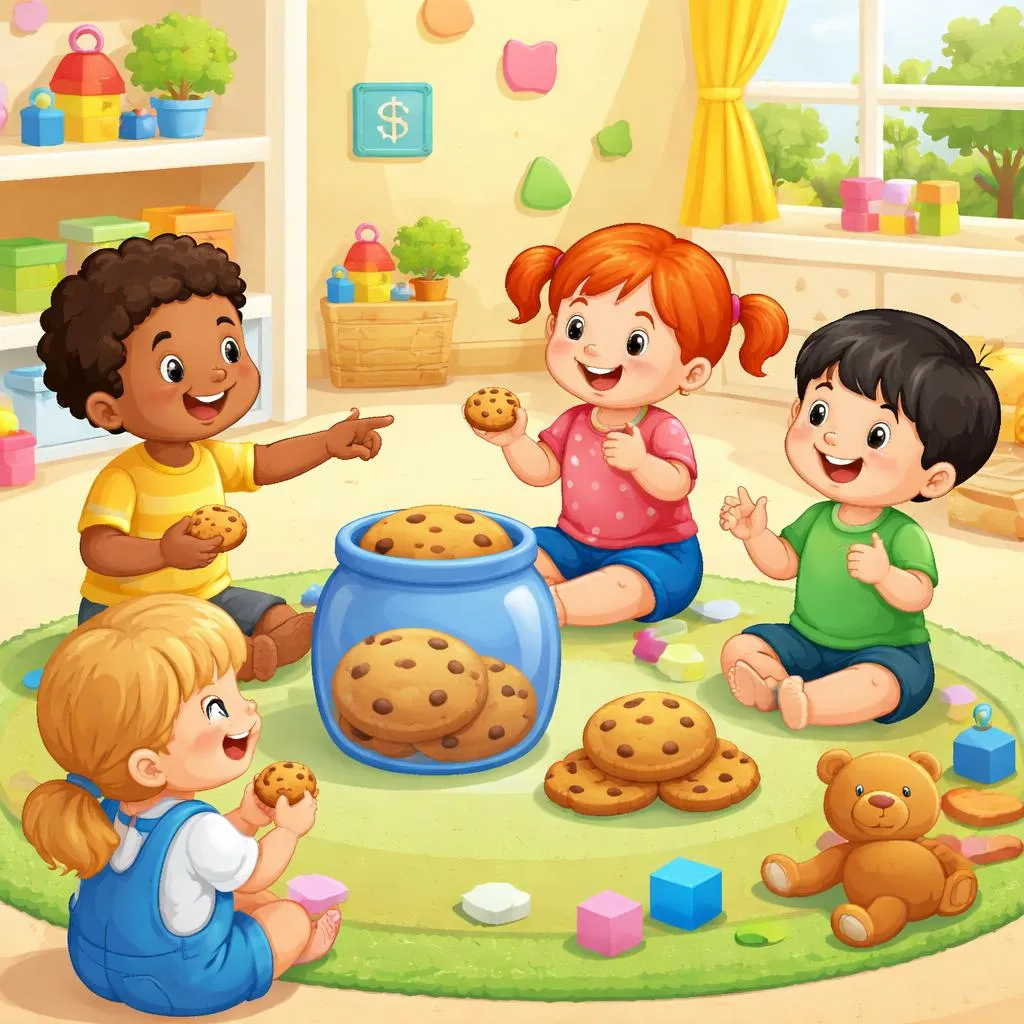

What Is “Who Took the Cookie from the Cookie Jar”?
“Who Took the Cookie from the Cookie Jar” is a classic call-and-response chant. It often appears in classrooms, camps, and group games. The chant builds rhythm, memory, and speaking confidence.
The keyword who took the cookie from the cookie jar lyrics refers to the words spoken or sung in this playful rhyme. These lyrics encourage interaction and turn-taking. They also teach question forms and simple sentence patterns.
This chant connects language with social play. It makes English practice lively and engaging.
The Rhyme and Its Story
The chant tells a simple story about a missing cookie. A question asks who took it. Names are called, and each person answers and passes the question to another.
This playful mystery creates excitement and attention. The repetitive pattern makes the chant easy to follow. The structure supports listening and speaking skills in a natural way.
Who Took the Cookie from the Cookie Jar Lyrics
Below is a common kid-friendly version of the chant. Names can change to match the group.
Leader: Who took the cookie from the cookie jar?
Group: Name took the cookie from the cookie jar.
Name: Who, me?
Group: Yes, you.
Name: Not me.
Group: Then who?
Name: Another Name took the cookie from the cookie jar.
The chant continues with new names. This repetition builds rhythm and participation.
Vocabulary Learning with the Chant
The chant includes everyday words and phrases. These words appear in daily conversations and stories.
Cookie and jar introduce food and container vocabulary. Took and from introduce simple action and preposition patterns. Who and me introduce question words and pronouns.
Names personalize the chant and create connection. This personalization increases motivation and engagement.
Repetition reinforces vocabulary retention. Speaking in rhythm supports pronunciation and memory.
Phonics Points in the Cookie Jar Chant
The chant highlights key phonics patterns. Cookie includes the short “oo” sound. Jar includes the “ar” sound. Who includes the long “oo” sound.
The word took includes the short “oo” sound again. This repetition helps distinguish similar vowel sounds.
Clapping on syllables highlights stress and rhythm. This supports syllable awareness and early reading skills.
Grammar Patterns in the Chant
The chant models simple past tense with “took.” It also models question forms with “Who took…?”
Short answers appear in the chant. “Who, me?” and “Not me” show conversational English.
The pattern “Name took the cookie” models subject and verb order. This supports early sentence structure understanding.
The repeated question pattern builds question fluency. This is important for communication and interaction.
Learning Activities with Cookie Jar Lyrics
Circle games work well with this chant. Participants sit in a circle and take turns responding.
Gesture activities add movement. Pretending to take a cookie or point to the jar supports comprehension.
Name cards can help track turns. This supports reading and name recognition.
Story extension activities can imagine what kind of cookie it was. This builds descriptive language and creativity.
Printable Materials for the Cookie Jar Chant
Printable lyric sheets support reading practice. Large fonts and clear spacing help early readers.
Flashcards with words like cookie, jar, who, and took reinforce vocabulary. Picture cards connect meaning to words.
Tracing worksheets with key phrases build handwriting skills. Coloring pages with a cookie jar scene add creative engagement.
Educational Games Using the Chant
Memory games can include remembering who was named last. This strengthens working memory and attention.
Listening games can involve raising a hand when hearing one’s name. This builds listening discrimination and focus.
Role-play games can include acting out the mystery of the missing cookie. This supports storytelling and expressive language.
Rhythm games can include clapping or tapping to the chant. This supports timing and auditory processing.
Why This Chant Supports Early Language Development
The chant encourages turn-taking and social interaction. This builds pragmatic language skills.
The question-and-answer pattern builds conversational structure. This supports real-world communication skills.
Repetition reduces cognitive load. This allows focus on pronunciation and rhythm.
Group participation builds confidence and motivation. This supports positive attitudes toward language learning.
Using Cookie Jar Lyrics in Daily Routines
The chant fits well in group circle time. It also works during transitions and breaks.
It can serve as a warm-up activity before lessons. It can also serve as an energizer during long sessions.
Home routines can include family members in the chant. Digital classes can use it for interactive speaking practice.
Short daily practice improves fluency and memory. Consistency strengthens language foundations.
Cultural and Historical Notes
The chant has roots in playground and camp traditions. It has traveled across English-speaking communities.
Different versions exist with different words and rhythms. Exploring variations shows how oral traditions evolve.
This cultural awareness builds curiosity and global perspective.
Extending Learning Beyond the Cookie Jar Chant
Other call-and-response chants can reinforce similar patterns. Chants like “Going on a Bear Hunt” support rhythm and storytelling.
Comparing chants helps identify question and answer structures. This deepens grammar understanding.
Creative writing tasks can include inventing a new mystery chant. This supports creativity and sentence building.
Supporting Different Learning Styles
Auditory learners benefit from rhythm and repetition. Visual learners benefit from printed lyrics and pictures. Kinesthetic learners benefit from pointing, clapping, and acting.
Combining these modes creates multisensory learning. This improves retention and engagement.
Adapting the Chant for Different Levels
Beginners can focus on repeating key phrases. Intermediate learners can answer with full sentences. Advanced learners can create new verses and story endings.
Simplified versions can use fewer lines. Expanded versions can include descriptive language and emotions.
Language Skills Built Through the Chant
Listening skills grow through group rhythm and turn-taking. Speaking skills grow through repeated responses. Reading skills grow through printed lyrics and word recognition. Writing skills grow through tracing and creative sentence tasks.
The chant integrates vocabulary, grammar, phonics, and fluency. It provides meaningful context for language use.
Practical Classroom and Home Integration
Group chanting builds cooperation and social skills. Solo practice builds pronunciation and confidence.
Visual displays of the chant structure support comprehension. Routine use creates predictable and comforting learning moments.
Recording sessions can track progress over time. Celebrating participation builds motivation and engagement.
Creative Extensions with Cookie Jar Lyrics
Art activities can include drawing a cookie jar and cookies. This reinforces food and container vocabulary.
Story prompts can include “What cookie was taken?” This builds narrative and descriptive language.
Music activities can include drums or shakers for rhythm. This supports timing and auditory discrimination.
Digital Learning Ideas for the Cookie Jar Chant
Animated videos can show characters in a playful mystery. Interactive lyrics can highlight words as they are spoken.
Karaoke-style tracks encourage pronunciation practice. Digital flashcards with audio reinforce vocabulary.
Recording tools allow self-evaluation and reflection. This supports autonomy and self-confidence.
Assessment Through Play
Observation of responses and turn-taking shows comprehension. Name recognition tasks show listening and attention.
Sentence creation tasks show grammar development. Story retelling shows expressive language ability.
Play-based assessment keeps learning low-stress and joyful.
Long-Term Benefits of Call-and-Response Chants
Call-and-response builds conversational rhythm. It strengthens listening, speaking, and social communication.
Early exposure to question patterns supports later academic language. Rhythmic repetition strengthens memory and phonological awareness.
The cookie jar chant provides a strong foundation for these skills.
Connecting Cookie Jar Lyrics with Other Topics
Food vocabulary can expand learning. Words like cake, apple, and bread add context.
Question words like who, what, and where can extend grammar practice. Sentences can expand with adjectives and details.
Examples include: Who took the big cookie? The red cookie was taken. The cookie jar is on the table.
Creative Writing with the Cookie Jar Chant
Writing prompts can start with “Who took the…” This encourages sentence creation and imagination.
Examples include: Who took the toy from the toy box? Who took the book from the shelf? Who took the hat from the closet?
These prompts connect grammar, vocabulary, and creativity.
Encouraging Positive Social Language
The chant encourages polite questioning and playful accusation. It teaches turn-taking and listening to others.
Group laughter and rhythm create a positive learning atmosphere. Positive atmosphere supports motivation and confidence.
The who took the cookie from the cookie jar lyrics provide rhythm, questions, and social interaction in one simple chant. They support listening, speaking, reading, and writing in an integrated way. They fit classrooms, homes, and digital platforms with ease. They invite curiosity, movement, and joyful communication through English.