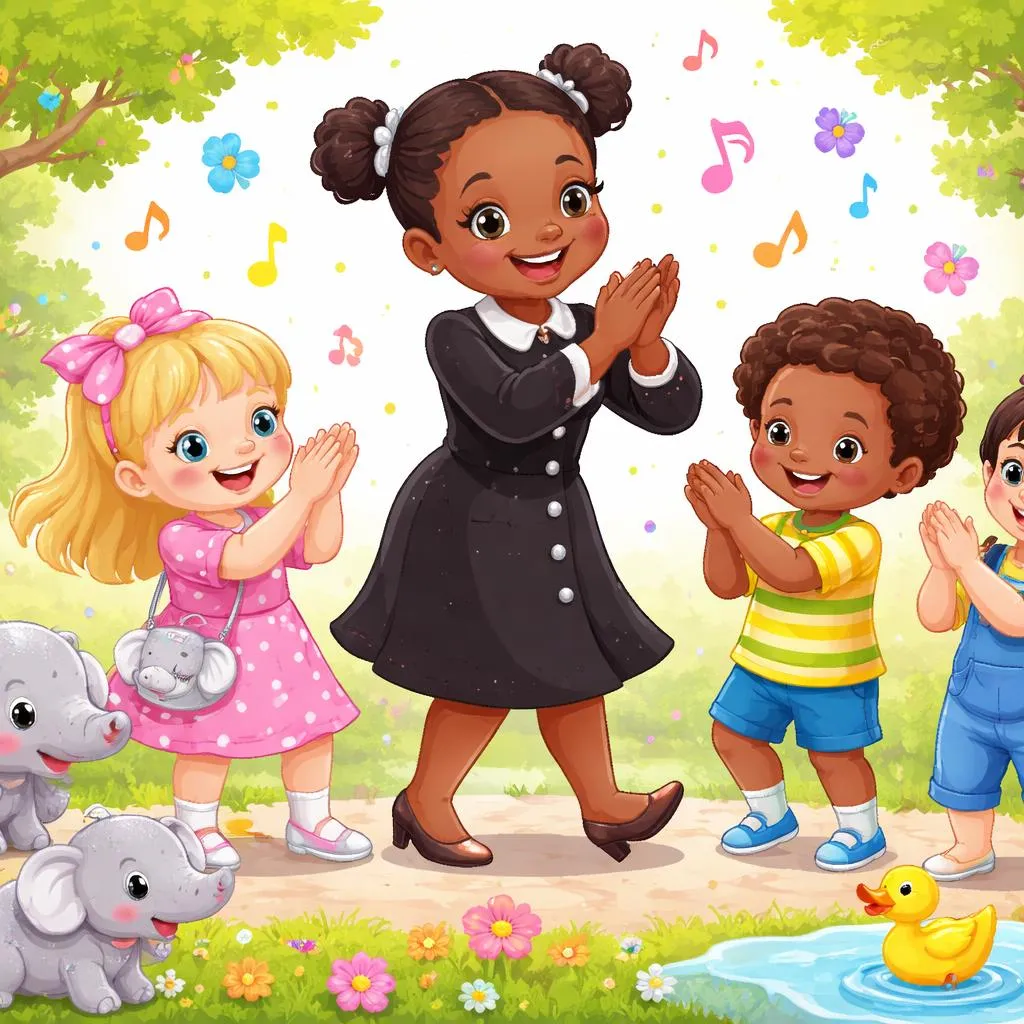

What Is “Miss Mary Mack”?
“Miss Mary Mack” is a traditional playground rhyme with a strong rhythm and clapping pattern. This rhyme has traveled across generations and cultures. It is often used in classrooms, homes, and playgrounds to build rhythm, memory, and English skills.
The miss mary mack lyrics kid version keeps the song friendly and simple. It removes old-fashioned or confusing lines and focuses on fun and clear language. This makes it perfect for early learners and young English students.
The rhyme supports listening skills, pronunciation practice, and early reading confidence. It also connects language with movement, which strengthens memory.
Miss Mary Mack Lyrics Kid Version
Below is a gentle and child-friendly version of the rhyme. This version keeps rhythm and repetition for learning.
Miss Mary Mack, Mack, Mack All dressed in black, black, black With silver buttons, buttons, buttons All down her back, back, back
She asked her mother, mother, mother For fifty cents, cents, cents To see the elephants, elephants, elephants Jump the fence, fence, fence
They jumped so high, high, high They reached the sky, sky, sky And never came back, back, back To Miss Mary Mack, Mack, Mack
These lines use repetition to build rhythm and sound awareness. The repeated words help learners predict sounds and patterns.
Vocabulary Learning with Miss Mary Mack
This rhyme includes many useful everyday words. These words appear often in beginner English books and conversations.
Words like “dress,” “black,” “silver,” and “back” describe colors and positions. Words like “mother,” “money,” and “elephants” describe people, objects, and animals.
Short verbs like “asked,” “jumped,” and “reached” show simple actions. These verbs help learners understand basic past tense patterns.
Repetition makes new vocabulary easy to remember. Hearing and speaking the words in rhythm strengthens memory and pronunciation.
Phonics Points in Miss Mary Mack
“Miss Mary Mack” is rich in phonics patterns. Rhyming sounds appear in many lines.
Mack, black, back repeat the short “a” sound. Fence and cents repeat the short “e” sound. High and sky repeat the long “i” sound.
These patterns help learners hear vowel sounds clearly. Clapping while speaking highlights syllables and stress patterns.
The rhyme also includes consonant blends like “bl” in black and “sk” in sky. Practicing these sounds builds clear articulation and reading readiness.
Grammar Patterns in the Rhyme
The rhyme uses simple sentence structures. This makes it ideal for early grammar exposure.
“She asked her mother” shows past tense with regular verbs. “They jumped so high” shows subject and verb agreement. “To see the elephants” introduces purpose with “to.”
Repetition of names and nouns reinforces subject recognition. Short sentences model clear and natural English structure.
Learning Activities with Miss Mary Mack
Movement and rhythm make language memorable. Clapping patterns match the rhyme’s beat. Hand games help learners connect sound with action.
Call-and-response reading can build confidence. One line can be spoken, then echoed. This supports listening and speaking skills.
Picture cards can illustrate words like dress, elephants, and sky. Visual support helps learners connect meaning with sound.
Story retelling activities can expand imagination. Learners can describe Miss Mary Mack’s dress or the jumping elephants. This encourages sentence building and creative thinking.
Printable Materials for Miss Mary Mack
Printable lyric sheets support reading practice. Large text and simple spacing help beginner readers.
Flashcards with key words reinforce vocabulary. Coloring pages with Miss Mary Mack and elephants add creativity.
Simple worksheets can include fill-in-the-blank sentences. This builds writing and grammar practice.
Tracing pages can focus on words like Mack, black, and sky. This strengthens letter recognition and handwriting skills.
Educational Games Using the Rhyme
Clap-and-stop games build listening attention. When the rhyme stops, movement stops.
Word matching games can pair words with pictures. This supports comprehension and memory.
Rhyming challenges can invite learners to create new rhymes for Mack. This builds phonemic awareness and creativity.
Role-play activities can include acting out elephants jumping the fence. Drama supports expressive language and confidence.
Why Miss Mary Mack Supports Early English Learning
The rhythm makes language predictable and fun. Predictability helps learners anticipate sounds and words.
Repetition builds automatic recall of vocabulary and structures. Music and movement improve retention and engagement.
Short lines reduce cognitive load. This keeps learning joyful and stress-free.
The playful story sparks imagination. Imagination motivates communication and storytelling.
Using Miss Mary Mack in Daily Language Practice
Morning routines can include a quick rhyme session. This sets a positive tone for learning.
Transition times can use clapping games to refocus attention. Listening tasks can use lyric gap-fills for practice.
Creative writing can start with “Miss Mary Mack likes…” This encourages sentence expansion and descriptive language.
Listening comprehension tasks can ask simple questions about elephants or clothes. This checks understanding in a gentle way.
Cultural and Historical Notes
“Miss Mary Mack” has roots in playground traditions. It has been shared orally for many decades.
Different versions exist across regions and countries. The kid-friendly version keeps content positive and modern.
Exploring versions can show how language changes over time. This builds cultural awareness and curiosity.
Extending Learning Beyond the Rhyme
Songs with similar rhythm can reinforce skills. Examples include “Pat-a-Cake” and “This Is the Way.”
Comparing rhymes helps identify patterns in sound and structure. This deepens phonics understanding.
Creative tasks can include drawing Miss Mary Mack’s outfit or the elephants. Art supports vocabulary recall and storytelling.
Simple recording activities can help track pronunciation progress. Listening to recordings builds self-awareness and confidence.
Supporting Different Learning Styles
Auditory learners benefit from rhythm and repetition. Visual learners benefit from pictures and flashcards. Kinesthetic learners benefit from clapping and movement.
Combining sound, sight, and movement creates multisensory learning. Multisensory input improves retention and engagement.
Adapting Miss Mary Mack for Different Levels
Beginners can focus on listening and repeating lines. Intermediate learners can rewrite lines with new words. Advanced learners can create a new verse or short story.
Simplified lyrics can focus on colors and animals. Expanded lyrics can introduce adjectives and descriptive phrases.
Language Skills Built Through the Rhyme
Listening skills grow through rhythm and repetition. Speaking skills grow through chanting and clapping. Reading skills grow through printed lyrics and word recognition. Writing skills grow through tracing and creative sentence building.
The rhyme acts as a compact language lesson. It integrates phonics, vocabulary, grammar, and fluency.
Practical Classroom and Home Integration
Short daily sessions keep learning consistent. Five minutes of rhyme practice can make a big difference.
Group activities encourage cooperation and turn-taking. Solo practice supports independent learning.
Recording progress with drawings or mini journals builds motivation. Celebrating new verses and performances builds confidence.
Creative Extensions with Miss Mary Mack
Learners can design Miss Mary Mack’s outfit with colors and patterns. This reinforces color words and adjectives.
Elephant stories can expand into simple narratives. This builds sequencing and storytelling skills.
Music instruments like drums or shakers can match the rhythm. This supports timing and auditory discrimination.
Digital Learning Ideas
Animated videos can illustrate the rhyme. Interactive apps can highlight words as they are sung.
Simple karaoke tracks encourage pronunciation practice. Digital flashcards can reinforce vocabulary with audio support.
Recording tools allow learners to perform and review progress. This builds autonomy and engagement.
Assessment Through Play
Observation of clapping accuracy shows rhythm awareness. Word recognition tasks show vocabulary growth.
Sentence creation shows grammar development. Story retelling shows comprehension and expressive ability.
Informal assessment through play keeps learning pressure-free. This aligns with early childhood learning principles.
Long-Term Benefits of Nursery Rhymes
Nursery rhymes build a strong foundation for literacy. They improve phonological awareness, memory, and fluency.
Early exposure to rhyme predicts later reading success. Musical language strengthens neural connections for language processing.
“Miss Mary Mack” offers a compact and engaging tool for this foundation.
Encouraging Lifelong Language Curiosity
Songs and rhymes make language joyful. Joyful experiences build positive attitudes toward learning.
Curiosity grows when language feels playful and creative. This supports long-term motivation and confidence.
The miss mary mack lyrics kid version provides rhythm, story, and language in one simple rhyme. It offers a flexible resource for listening, speaking, reading, and creative expression. It fits classrooms, homes, and digital platforms with ease. It invites imagination, movement, and discovery through language.