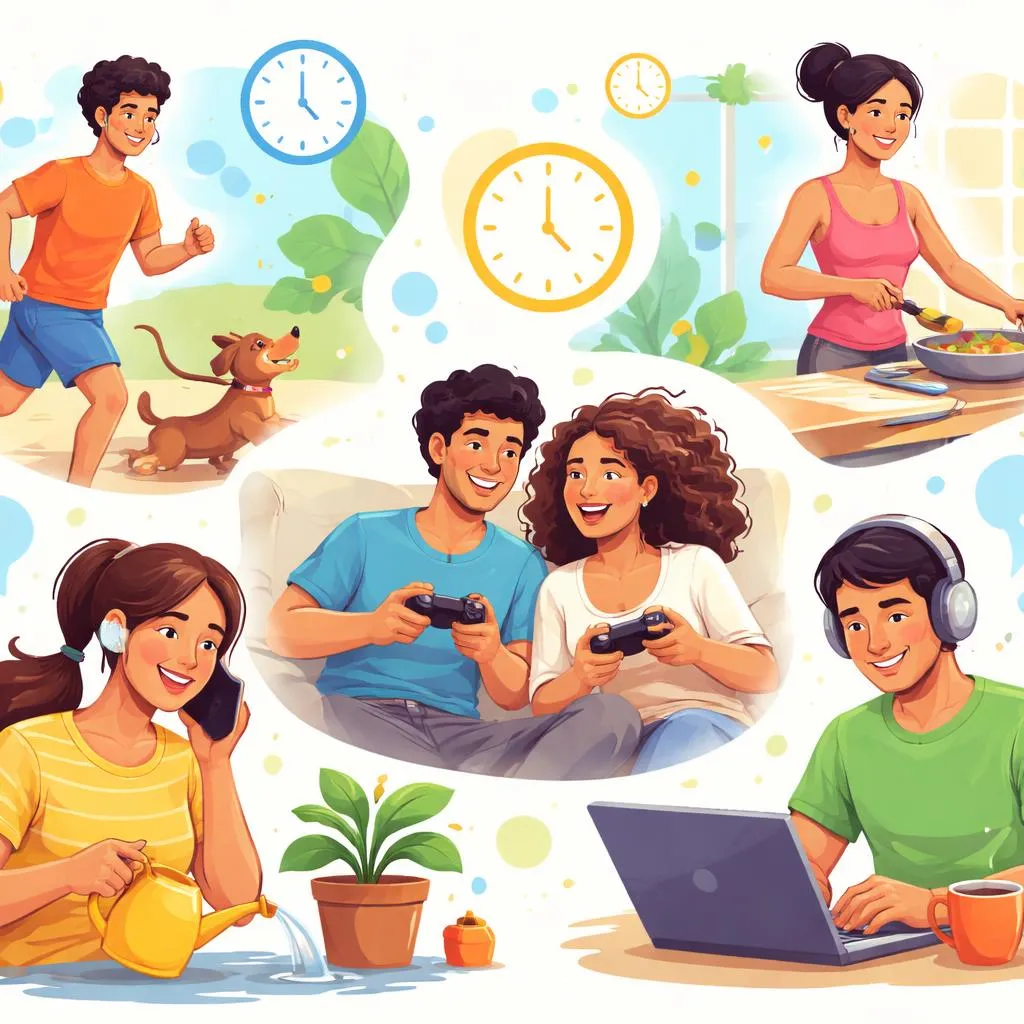

Language helps us talk about time.
Some words talk about now. Some words talk about before.
The present progressive is about now. It tells what is happening at this moment.
Children live in the present.
They talk about what they are doing. They talk about what they see.
The present progressive fits their world.
When a child says I am playing, they are using the present progressive.
The action is happening now. It is not finished.
The present progressive has two parts.
One part shows the person. One part shows the action.
This structure appears again and again.
Children hear it early.
I am eating. She is running. They are laughing.
These sentences feel natural.
The present progressive helps children describe movement.
Someone is walking. Someone is jumping.
Actions feel alive. Language matches action.
Many classroom moments use the present progressive.
A teacher is talking. Students are listening.
Children see and hear the action.
The present progressive often answers simple questions.
What are you doing. What is happening.
Children answer without thinking too much.
Short answers work well.
I am drawing. I am reading.
These sentences are clear and easy.
Children enjoy talking about activities.
They play games. They draw pictures.
The present progressive helps them share.
The verb be is part of the present progressive.
Am. Is. Are.
Children hear these words often.
I am sitting. He is standing. We are learning.
The pattern repeats.
Repetition builds comfort.
The more children hear it, the more natural it feels.
Mistakes are part of learning.
Children may forget part of the form. They may say I playing.
With time, the full form settles in.
Teachers model correct sentences.
They speak slowly. They repeat often.
Children listen and copy.
The present progressive connects language and action.
Children move. They speak.
Language follows movement.
Games support learning.
Children act out actions. Others guess what is happening.
He is dancing. She is sleeping.
Learning feels playful.
Pictures are also helpful.
A picture shows action. Children describe it.
The present progressive fits the scene.
The present progressive is used with time words.
Now. Right now. At the moment.
These words point to the present.
Children understand now easily.
They feel now. They live now.
Language matches their thinking.
The present progressive is common in daily speech.
People use it often. Children hear it everywhere.
This helps learning feel natural.
Storytelling can use the present progressive.
A story shows action happening. It feels close and exciting.
Children stay engaged.
The present progressive helps with listening skills.
Children listen for am, is, are. They notice the -ing ending.
Understanding grows.
Songs often include the present progressive.
Songs talk about actions. Songs repeat phrases.
Repetition supports memory.
Children sing and move.
They clap. They jump.
Language and action join together.
The present progressive can describe temporary actions.
Something is happening now. It may stop later.
Children feel this idea naturally.
Weather talk can include the present progressive.
It is raining. It is snowing.
Children look outside and connect words to life.
The present progressive is different from simple present.
Simple present talks about habits. Present progressive talks about now.
Children do not need to compare yet. They just use it.
Learning happens step by step.
Use comes first. Explanation comes later.
This feels safe.
Short dialogues help learning.
What are you doing. I am building a tower.
Children enjoy this exchange.
The present progressive supports social interaction.
Children ask questions. They answer.
Language connects people.
Teachers often ask children to describe the class.
Who is talking. Who is reading.
Children use the present progressive naturally.
Movement breaks support learning.
Children stretch. They move.
They describe what they are doing.
The present progressive appears in daily routines.
Morning activities. Afternoon play.
Children repeat forms throughout the day.
Listening activities help recognition.
Children hear sentences. They point to pictures.
Understanding grows quietly.
The present progressive feels friendly.
It sounds soft. It sounds active.
Children are not afraid to use it.
Writing can support learning.
Children write short sentences. They describe pictures.
Writing slows thinking and supports accuracy.
Teachers encourage effort.
They praise attempts. They repeat correct forms.
Confidence grows.
The present progressive helps children stay present.
They notice actions. They describe the world around them.
Language becomes observation.
Children begin to use longer sentences.
I am playing with my friend. She is drawing a picture.
Growth feels natural.
The present progressive stays useful as language grows.
Vocabulary increases. But the structure remains.
This stability helps learning.
Children do not need rules to speak.
They need examples. They need chances to talk.
The present progressive grows through use.
Classroom stories often use now language.
Characters are moving. Characters are talking.
Children follow easily.
The present progressive also appears in questions.
What is he doing. What are they making.
Children listen carefully.
Answering builds fluency.
They respond quickly. They feel confident.
Language flows.
The present progressive is part of everyday English.
It lives in homes. It lives in schools.
Children hear it all the time.
Learning feels gentle this way.
No pressure. No rush.
Language grows with use.
Children carry this structure forward.
They use it with new verbs. They use it with new ideas.
Learning continues.
The present progressive supports expression.
Children share actions. They share moments.
Language becomes a tool.
Each sentence builds skill.
Each moment of speaking matters.
The present progressive becomes familiar.
Children speak about what is happening.
Here. Now.
Language stays close to life.
And day by day, the present progressive becomes part of natural speech.
Children often use the present progressive during play.
They move toys. They build blocks.
I am building a house feels natural. The action is happening now.
Playtime creates many chances to speak.
Children talk while acting. They describe what they see.
The present progressive follows movement.
Outdoor activities also support learning.
Children run. They climb.
I am running fast. She is climbing the slide.
Language stays close to action.
Art time is another good moment.
Children draw pictures. They paint shapes.
I am drawing a cat. He is painting a tree.
The sentences feel useful.
Snack time includes conversation too.
Children sit together. They eat.
I am eating an apple. We are drinking milk.
Daily life supports language.
Teachers often describe the classroom.
The door is opening. The children are listening.
Hearing the present progressive helps recognition.
Children enjoy guessing games.
One child acts. Others guess.
He is sleeping. She is dancing.
The structure repeats naturally.
Listening carefully matters.
Children hear the verb be. They hear the -ing sound.
These sounds become familiar.
Some actions last a short time.
Some last longer.
The present progressive fits both. It describes what is happening now.
Children may mix forms at first.
They may forget am or are. This is part of learning.
With time, the full form feels normal.
Teachers respond calmly.
They repeat the correct sentence. They keep the flow.
Learning feels safe.
The present progressive supports attention.
Children look closely. They notice actions.
Language becomes observation.
Morning routines give many chances to speak.
Children arrive. They unpack bags.
I am sitting down. She is taking out her book.
Language follows routine.
Transitions are good moments too.
Children line up. They move rooms.
We are walking quietly. We are waiting.
The present progressive stays useful.
Children enjoy talking about others.
They watch friends. They describe actions.
He is jumping high. They are laughing.
Social language grows.
Stories told in pictures also help.
A picture shows action. Children describe it.
The present progressive fits the scene.
Language learning happens through use.
Children do not stop to think. They just speak.
The structure settles in.
As vocabulary grows, sentences grow.
Children add more words. But the structure stays.
I am building a big tower. She is reading a funny book.
The present progressive supports confidence.
Children feel understood. They feel successful.
Speaking becomes easier.
Over time, children use the form freely.
They talk about now. They share moments.
Language stays alive.
Each small sentence adds strength.
Each use matters.
The present progressive becomes part of daily speech.
And little by little, children speak about what is happening with ease.