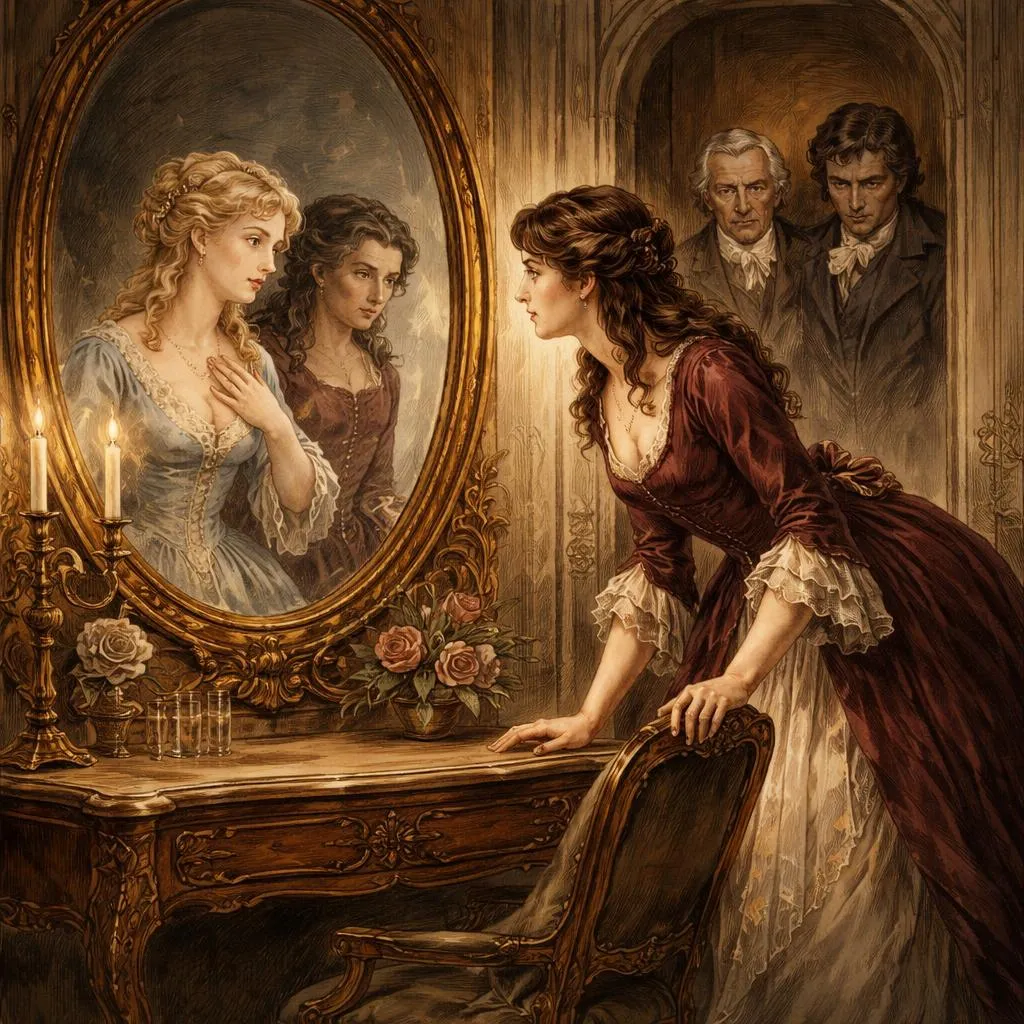

“Sydney,” said Mr. Stryver, on that self-same night, or morning, to his jackal; “mix another bowl of punch; I have something to say to you.”
Sydney had been working double tides that night, and the night before, and the night before that, and a good many nights in succession, making a grand clearance among Mr. Stryver’s papers before the setting in of the long vacation. The clearance was effected at last; the Stryver arrears were handsomely fetched up; everything was got rid of until November should come with its fogs atmospheric, and fogs legal, and bring grist to the mill again.
Sydney was none the livelier and none the soberer for so much application. It had taken a deal of extra wet-towelling to pull him through the night; a correspondingly extra quantity of wine had preceded the towelling; and he was in a very damaged condition, as he now pulled his turban off and threw it into the basin in which he had steeped it at intervals for the last six hours.
“Are you mixing that other bowl of punch?” said Stryver the portly, with his hands in his waistband, glancing round from the sofa where he lay on his back.
“I am.”
“Now, look here! I am going to tell you something that will rather surprise you, and that perhaps will make you think me not quite as shrewd as you usually do think me. I intend to marry.”
“DO you?”
“Yes. And not for money. What do you say now?”
“I don’t feel disposed to say much. Who is she?”
“Guess.”
“Do I know her?”
“Guess.”
“I am not going to guess, at five o’clock in the morning, with my brains frying and sputtering in my head. if you want me to guess, you must ask me to dinner.”
“Well then, I’ll tell you, said Stryver, coming slowly into a sitting posture. “Sydney, I rather despair of making myself intelligible to you, because you are such an insensible dog.
“And you,” returned Sydney, busy concocting the punch, “are such a sensitive and poetical spirit—”
“Come!” rejoined Stryver, laughing boastfully, “though I don’t prefer any claim to being the soul of Romance (for I hope I know better), still I am a tenderer sort of fellow than YOU.”
“You are a luckier, if you mean that.”
“I don’t mean that. I mean I am a man of more—more—”
“Say gallantry, while you are about it,” suggested Carton.
“Well! I’ll say gallantry. My meaning is that I am a man,” said Stryver, inflating himself at his friend as he made the punch, “who cares more to be agreeable, who takes more pains to be agreeable, who knows better how to be agreeable, in a woman’s society, than you do.”
“Go on,” said Sydney Carton.
“No; but before I go on,” said Stryver, shaking his head in his bullying way, I’ll have this out with you. You’ve been at Doctor Manette’s house as much as I have, or more than I have. Why, I have been ashamed of your moroseness there! Your manners have been of that silent and sullen and hangdog kind, that, upon my life and soul, I have been ashamed of you, Sydney!”
“It should be very beneficial to a man in your practice at the bar, to be ashamed of anything,” returned Sydney; “you ought to be much obliged to me.”
“You shall not get off in that way,” rejoined Stryver, shouldering the rejoinder at him; “no, Sydney, it’s my duty to tell you—and I tell you to your face to do you good—that you are a devilish ill-conditioned fellow in that sort of society. You are a disagreeable fellow.”
Sydney drank a bumper of the punch he had made, and laughed.
“Look at me!” said Stryver, squaring himself; “I have less need to make myself agreeable than you have, being more independent in circumstances. Why do I do it?”
“I never saw you do it yet,” muttered Carton.
“I do it because it’s politic; I do it on principle. And look at me! I get on.”
“You don’t get on with your account of your matrimonial intentions,” answered Carton, with a careless air; “I wish you would keep to that. As to me—will you never understand that I am incorrigible?”
He asked the question with some appearance of scorn.
“You have no business to be incorrigible,” was his friend’s answer, delivered in no very soothing tone.
“I have no business to be, at all, that I know of,” said Sydney Carton. “Who is the lady?”
“Now, don’t let my announcement of the name make you uncomfortable, Sydney,” said Mr. Stryver, preparing him with ostentatious friendliness for the disclosure he was about to make, “because I know you don’t mean half you say; and if you meant it all, it would be of no importance. I make this little preface, because you once mentioned the young lady to me in slighting terms.”
“I did?”
“Certainly; and in these chambers.”
Sydney Carton looked at his punch and looked at his complacent friend; drank his punch and looked at his complacent friend.
“You made mention of the young lady as a golden-haired doll. The young lady is Miss Manette. If you had been a fellow of any sensitiveness or delicacy of feeling in that kind of way, Sydney, I might have been a little resentful of your employing such a designation; but you are not. You want that sense altogether; therefore I am no more annoyed when I think of the expression, than I should be annoyed by a man’s opinion of a picture of mine, who had no eye for pictures: or of a piece of music of mine, who had no ear for music.”
Sydney Carton drank the punch at a great rate; drank it by bumpers, looking at his friend.
“Now you know all about it, Syd,” said Mr. Stryver. “I don’t care about fortune: she is a charming creature, and I have made up my mind to please myself: on the whole, I think I can afford to please myself. She will have in me a man already pretty well off, and a rapidly rising man, and a man of some distinction: it is a piece of good fortune for her, but she is worthy of good fortune. Are you astonished?”
Carton, still drinking the punch, rejoined, “Why should I be astonished?”
“You approve?”
Carton, still drinking the punch, rejoined, “Why should I not approve?”
“Well!” said his friend Stryver, “you take it more easily than I fancied you would, and are less mercenary on my behalf than I thought you would be; though, to be sure, you know well enough by this time that your ancient chum is a man of a pretty strong will. Yes, Sydney, I have had enough of this style of life, with no other as a change from it; I feel that it is a pleasant thing for a man to have a home when he feels inclined to go to it (when he doesn’t, he can stay away), and I feel that Miss Manette will tell well in any station, and will always do me credit. So I have made up my mind. And now, Sydney, old boy, I want to say a word to YOU about YOUR prospects. You are in a bad way, you know; you really are in a bad way. You don’t know the value of money, you Eve hard, you’ll knock up one of these days, and be ill and poor; you really ought to think about a nurse.”
The prosperous patronage with which he said it, made him look twice as big as he was, and four times as offensive.
“Now, let me recommend you,” pursued Stryver, “to look it in the face. I have looked it in the face, in my different way; look it in the face, you, in your different way. Marry. Provide somebody to take care of you. Never mind your having no enjoyment of women’s society, nor understanding of it, nor tact for it. Find out somebody. Find out some respectable woman with a little property—somebody in the landlady way, or lodging-letting way—and marry her, against a rainy day. That’s the kind of thing for YOU. Now think of it, Sydney.”
“I’ll think of it,” said Sydney.
Contexto e Introdução do Autor
Esta passagem é de Um Conto de Duas Cidades, um famoso romance escrito por Charles Dickens, um dos maiores romancistas ingleses do século XIX. Publicado em 1859, este romance se passa durante os tempos turbulentos da Revolução Francesa. Dickens é conhecido por seus personagens vívidos e comentários sociais profundos, frequentemente destacando as dificuldades dos pobres e as injustiças da sociedade.
A história contrasta a vida em Londres e Paris, explorando temas de sacrifício, ressurreição e a possibilidade de redenção. Os personagens do romance enfrentam dilemas morais e transformações pessoais em meio ao caos político.
Interpretação Detalhada da Passagem
Nesta cena, o Sr. Stryver, um advogado confiante e um tanto presunçoso, revela a Sydney Carton, seu amigo e colega, que pretende se casar com a Srta. Manette. Sydney, que tem uma personalidade complexa e um tanto autodepreciativa, reage com uma mistura de sarcasmo e indiferença.
O diálogo revela traços de caráter importantes: a ambição de Stryver e o desejo de ascensão social por meio do casamento, e o cinismo e o distanciamento emocional de Carton. A menção da Srta. Manette conecta-se à história maior, pois ela é uma figura central cujo destino afeta profundamente os protagonistas.
O conselho de Stryver a Carton sobre o casamento é prático, mas também condescendente, refletindo as atitudes sociais da época. A resposta de Carton mostra seu conflito interno e prenuncia suas eventuais ações heroicas mais tarde no romance.
Lições e Insights para Estudantes
-
Compreendendo a Complexidade dos Personagens: Esta passagem ajuda os alunos a apreciar que as pessoas são frequentemente complicadas, com pontos fortes e fracos. A mistura de humor, tristeza e perspicácia de Sydney Carton o torna um personagem memorável que cresce ao longo da história.
-
Responsabilidade Social e Pessoal: O foco de Stryver no casamento como um meio de segurança e status reflete as pressões sociais. Os alunos podem aprender a pensar criticamente sobre como as expectativas sociais influenciam as escolhas pessoais.
-
Amizade e Honestidade: Apesar de suas diferenças, Stryver e Carton compartilham um relacionamento franco. Isso mostra o valor da comunicação honesta entre amigos, mesmo quando as opiniões divergem.
-
Autorreflexão: As observações sarcásticas de Carton e a eventual disposição de “pensar nisso” sugerem a importância da autoconsciência e da abertura à mudança.
Aplicando Essas Lições na Vida e no Aprendizado
-
Na Escola: Os alunos podem aprender a analisar personagens profundamente, compreendendo motivações e conflitos, o que aprimora o pensamento crítico e a empatia.
-
Em Situações Sociais: Reconhecer que as pessoas têm personalidades e dificuldades diferentes pode ajudar os alunos a desenvolver paciência e bondade nas amizades.
-
No Crescimento Pessoal: Como Sydney Carton, os alunos podem enfrentar momentos de dúvida ou cinismo. Refletir sobre suas atitudes e estar aberto a novas perspectivas pode levar à melhoria pessoal.
-
Na Tomada de Decisões: Compreender as influências sociais, como mostrado pela abordagem pragmática de Stryver, pode ajudar os alunos a fazer escolhas informadas sobre seus futuros, equilibrando os desejos pessoais com as considerações práticas.
Cultivando Qualidades Positivas da História
-
Empatia: Ao ver o mundo pelos olhos de personagens como Carton e Manette, os alunos podem desenvolver uma compreensão mais profunda dos sentimentos dos outros.
-
Coragem e Sacrifício: O romance como um todo ensina sobre bravura e colocar os outros antes de si mesmo, inspirando os alunos a agir com integridade.
-
Resiliência: Os personagens enfrentam dificuldades, mas continuam a lutar por vidas melhores, incentivando os alunos a perseverar diante dos desafios.
Conclusão
Este trecho de Um Conto de Duas Cidades oferece material rico para os alunos explorarem a natureza humana, a dinâmica social e as escolhas morais. Ao se envolverem com a história, os jovens leitores podem obter insights que os ajudam a navegar em suas próprias vidas com maior sabedoria e compaixão.
