
The weather was bad during the latter days of the voyage. The wind, obstinately remaining in the north–west, blew a gale, and retarded the steamer. The Rangoon rolled heavily and the passengers became impatient of the long, monstrous waves which the wind raised before their path. A sort of tempest arose on the 3rd of November, the squall knocking the vessel about with fury, and the waves running high. The Rangoon reefed all her sails, and even the rigging proved too much, whistling and shaking amid the squall. The steamer was forced to proceed slowly, and the captain estimated that she would reach Hong Kong twenty hours behind time, and more if the storm lasted.
Phileas Fogg gazed at the tempestuous sea, which seemed to be struggling especially to delay him, with his habitual tranquillity. He never changed countenance for an instant, though a delay of twenty hours, by making him too late for the Yokohama boat, would almost inevitably cause the loss of the wager. But this man of nerve manifested neither impatience nor annoyance; it seemed as if the storm were a part of his programme, and had been foreseen. Aouda was amazed to find him as calm as he had been from the first time she saw him.
Fix did not look at the state of things in the same light. The storm greatly pleased him. His satisfaction would have been complete had the Rangoon been forced to retreat before the violence of wind and waves. Each delay filled him with hope, for it became more and more probable that Fogg would be obliged to remain some days at Hong Kong; and now the heavens themselves became his allies, with the gusts and squalls. It mattered not that they made him sea–sick—he made no account of this inconvenience; and, whilst his body was writhing under their effects, his spirit bounded with hopeful exultation.
Passepartout was enraged beyond expression by the unpropitious weather. Everything had gone so well till now! Earth and sea had seemed to be at his master's service; steamers and railways obeyed him; wind and steam united to speed his journey. Had the hour of adversity come? Passepartout was as much excited as if the twenty thousand pounds were to come from his own pocket. The storm exasperated him, the gale made him furious, and he longed to lash the obstinate sea into obedience. Poor fellow! Fix carefully concealed from him his own satisfaction, for, had he betrayed it, Passepartout could scarcely have restrained himself from personal violence.
Passepartout remained on deck as long as the tempest lasted, being unable to remain quiet below, and taking it into his head to aid the progress of the ship by lending a hand with the crew. He overwhelmed the captain, officers, and sailors, who could not help laughing at his impatience, with all sorts of questions. He wanted to know exactly how long the storm was going to last; whereupon he was referred to the barometer, which seemed to have no intention of rising. Passepartout shook it, but with no perceptible effect; for neither shaking nor maledictions could prevail upon it to change its mind.
On the 4th, however, the sea became more calm, and the storm lessened its violence; the wind veered southward, and was once more favourable. Passepartout cleared up with the weather. Some of the sails were unfurled, and the Rangoon resumed its most rapid speed. The time lost could not, however, be regained. Land was not signalled until five o'clock on the morning of the 6th; the steamer was due on the 5th. Phileas Fogg was twenty–four hours behind–hand, and the Yokohama steamer would, of course, be missed.
The pilot went on board at six, and took his place on the bridge, to guide the Rangoon through the channels to the port of Hong Kong. Passepartout longed to ask him if the steamer had left for Yokohama; but he dared not, for he wished to preserve the spark of hope, which still remained till the last moment. He had confided his anxiety to Fix who—the sly rascal!—tried to console him by saying that Mr. Fogg would be in time if he took the next boat; but this only put Passepartout in a passion.
Mr. Fogg, bolder than his servant, did not hesitate to approach the pilot, and tranquilly ask him if he knew when a steamer would leave Hong Kong for Yokohama.
"At high tide to–morrow morning," answered the pilot.
"Ah!" said Mr. Fogg, without betraying any astonishment.
Passepartout, who heard what passed, would willingly have embraced the pilot, while Fix would have been glad to twist his neck.
"What is the steamer's name?" asked Mr. Fogg.
"The Carnatic."
"Ought she not to have gone yesterday?"
"Yes, sir; but they had to repair one of her boilers, and so her departure was postponed till to–morrow."
"Thank you," returned Mr. Fogg, descending mathematically to the saloon.
Passepartout clasped the pilot's hand and shook it heartily in his delight, exclaiming, "Pilot, you are the best of good fellows!"
The pilot probably does not know to this day why his responses won him this enthusiastic greeting. He remounted the bridge, and guided the steamer through the flotilla of junks, tankas, and fishing boats which crowd the harbour of Hong Kong.
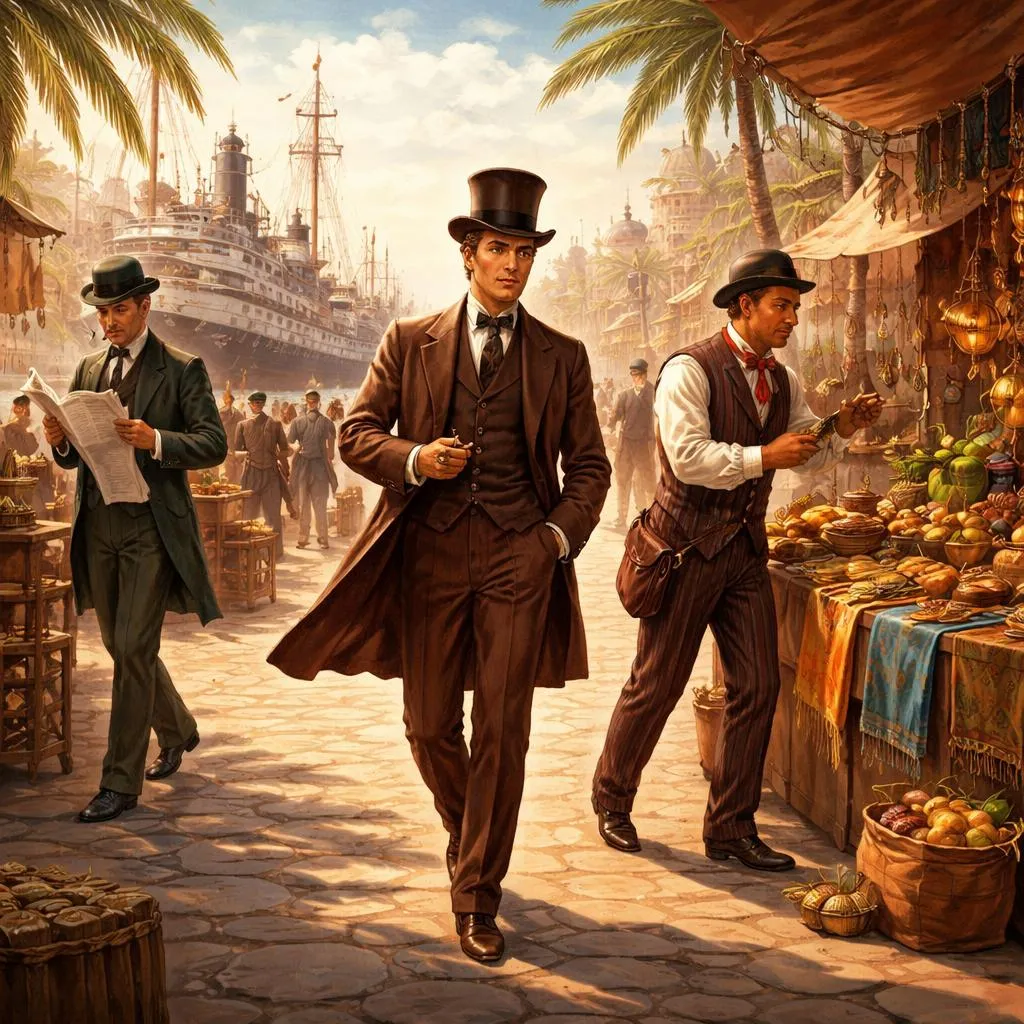
At one o'clock the Rangoon was at the quay, and the passengers were going ashore.
Chance had strangely favoured Phileas Fogg, for had not the Carnatic been forced to lie over for repairing her boilers, she would have left on the 6th of November, and the passengers for Japan would have been obliged to await for a week the sailing of the next steamer. Mr. Fogg was, it is true, twenty–four hours behind his time; but this could not seriously imperil the remainder of his tour.
The steamer which crossed the Pacific from Yokohama to San Francisco made a direct connection with that from Hong Kong, and it could not sail until the latter reached Yokohama; and if Mr. Fogg was twenty–four hours late on reaching Yokohama, this time would no doubt be easily regained in the voyage of twenty–two days across the Pacific. He found himself, then, about twenty–four hours behind–hand, thirty–five days after leaving London.
The Carnatic was announced to leave Hong Kong at five the next morning. Mr. Fogg had sixteen hours in which to attend to his business there, which was to deposit Aouda safely with her wealthy relative.
On landing, he conducted her to a palanquin, in which they repaired to the Club Hotel. A room was engaged for the young woman, and Mr. Fogg, after seeing that she wanted for nothing, set out in search of her cousin Jeejeeh. He instructed Passepartout to remain at the hotel until his return, that Aouda might not be left entirely alone.
Mr. Fogg repaired to the Exchange, where, he did not doubt, every one would know so wealthy and considerable a personage as the Parsee merchant. Meeting a broker, he made the inquiry, to learn that Jeejeeh had left China two years before, and, retiring from business with an immense fortune, had taken up his residence in Europe—in Holland the broker thought, with the merchants of which country he had principally traded. Phileas Fogg returned to the hotel, begged a moment's conversation with Aouda, and without more ado, apprised her that Jeejeeh was no longer at Hong Kong, but probably in Holland.
Aouda at first said nothing. She passed her hand across her forehead, and reflected a few moments. Then, in her sweet, soft voice, she said: "What ought I to do, Mr. Fogg?"
"It is very simple," responded the gentleman. "Go on to Europe."
"But I cannot intrude—"
"You do not intrude, nor do you in the least embarrass my project. Passepartout!"
"Monsieur."
"Go to the Carnatic, and engage three cabins."
Passepartout, delighted that the young woman, who was very gracious to him, was going to continue the journey with them, went off at a brisk gait to obey his master's order.
Contexto e Introdução do Autor
Esta passagem é de "A Volta ao Mundo em 80 Dias", um romance de aventura clássico escrito pelo autor francês Júlio Verne. Publicado em 1873, o romance conta a história de Phileas Fogg, um cavalheiro inglês preciso e calmo que aposta que pode dar a volta ao mundo em apenas oitenta dias. Verne é frequentemente chamado de "Pai da Ficção Científica" por sua narrativa imaginativa e descrições detalhadas de tecnologia e geografia. Suas obras inspiraram inúmeros leitores e aventureiros em todo o mundo.
Interpretação Detalhada da História e Significado
Neste trecho, Phileas Fogg e seus companheiros enfrentam uma forte tempestade no navio a vapor Rangoon, que ameaça atrasar sua jornada. Apesar do clima perigoso e do risco de perder o navio a vapor de conexão, Fogg permanece calmo e confiante. Sua compostura contrasta fortemente com a ansiedade e frustração dos outros, especialmente Passepartout, seu leal servo, e Fix, um detetive que o persegue. A tempestade simboliza os desafios imprevisíveis que a vida nos apresenta, e a firme determinação de Fogg destaca a importância da paciência, do pensamento racional e da perseverança.
A história também revela temas de destino e acaso. Embora atrasado, a sorte de Fogg muda quando a partida do próximo navio a vapor é adiada devido a reparos, dando-lhe uma segunda chance de continuar sua jornada. Essa reviravolta mostra como os contratempos às vezes podem levar a oportunidades inesperadas se alguém permanecer esperançoso e adaptável.
Lições e Insights para Estudantes
-
Calma na Adversidade: A calma inabalável de Fogg ensina aos alunos o valor de permanecerem calmos em tempos difíceis. Seja enfrentando exames, conflitos ou desafios pessoais, manter a mente clara ajuda a tomar melhores decisões.
-
Perseverança e Determinação: Apesar da tempestade e dos atrasos, Fogg não desiste. Essa persistência é crucial para alcançar metas de longo prazo. Os alunos podem aprender a continuar trabalhando constantemente, mesmo quando as coisas não saem como planejado.
-
Adaptabilidade e Resolução de Problemas: Quando confrontado com obstáculos inesperados, Fogg rapidamente ajusta seus planos. Essa flexibilidade é uma habilidade vital na vida, incentivando os alunos a pensar criativamente e encontrar soluções em vez de ficarem presos.
-
Trabalho em Equipe e Apoio: A vontade de Passepartout de ajudar e o cuidado de Fogg por Aouda mostram a importância de apoiar os outros em uma jornada compartilhada. Aprender a cooperar e se comunicar de forma eficaz é essencial em projetos escolares e relacionamentos sociais.
-
Esperança e Otimismo: A esperança secreta de Fix e o alívio eventual de Passepartout nos lembram que manter a esperança pode fornecer força em tempos difíceis. Incentivar uma perspectiva positiva ajuda os alunos a enfrentar a incerteza com coragem.
Aplicando Essas Lições na Vida Diária
-
Na Escola: Ao se preparar para exames ou projetos, os alunos podem praticar a calma e o foco, mesmo que dificuldades inesperadas surjam. Planejar com antecedência e estar pronto para se adaptar ajuda a gerenciar o estresse.
-
Em Situações Sociais: Como o tratamento respeitoso de Fogg a Aouda e a seu servo, os alunos devem mostrar bondade e paciência a amigos e colegas de classe, promovendo um ambiente de apoio.
-
No Crescimento Pessoal: Desenvolver a perseverança significa definir metas e trabalhar em direção a elas constantemente, entendendo que os contratempos fazem parte do processo.
Cultivando Traços Positivos da História
-
Autocontrole: Pratique a atenção plena ou a respiração profunda para permanecer calmo como Fogg ao enfrentar pressão.
-
Curiosidade e Aprendizado: Assim como Fogg reúne informações do piloto e de outros, os alunos devem fazer perguntas e buscar conhecimento para tomar decisões informadas.
-
Responsabilidade: A dedicação de Passepartout à missão de seu mestre mostra a importância de levar a responsabilidade a sério, o que os alunos podem emular em seus estudos e compromissos.
Conclusão
"A Volta ao Mundo em 80 Dias", de Júlio Verne, é mais do que uma aventura emocionante; é uma rica fonte de lições de vida sobre coragem, paciência e esperança. Ao explorar os desafios enfrentados por Phileas Fogg e seus companheiros, os alunos podem obter informações valiosas sobre como lidar com suas próprias jornadas - seja na escola, amizades ou ambições futuras - com confiança e graça.
