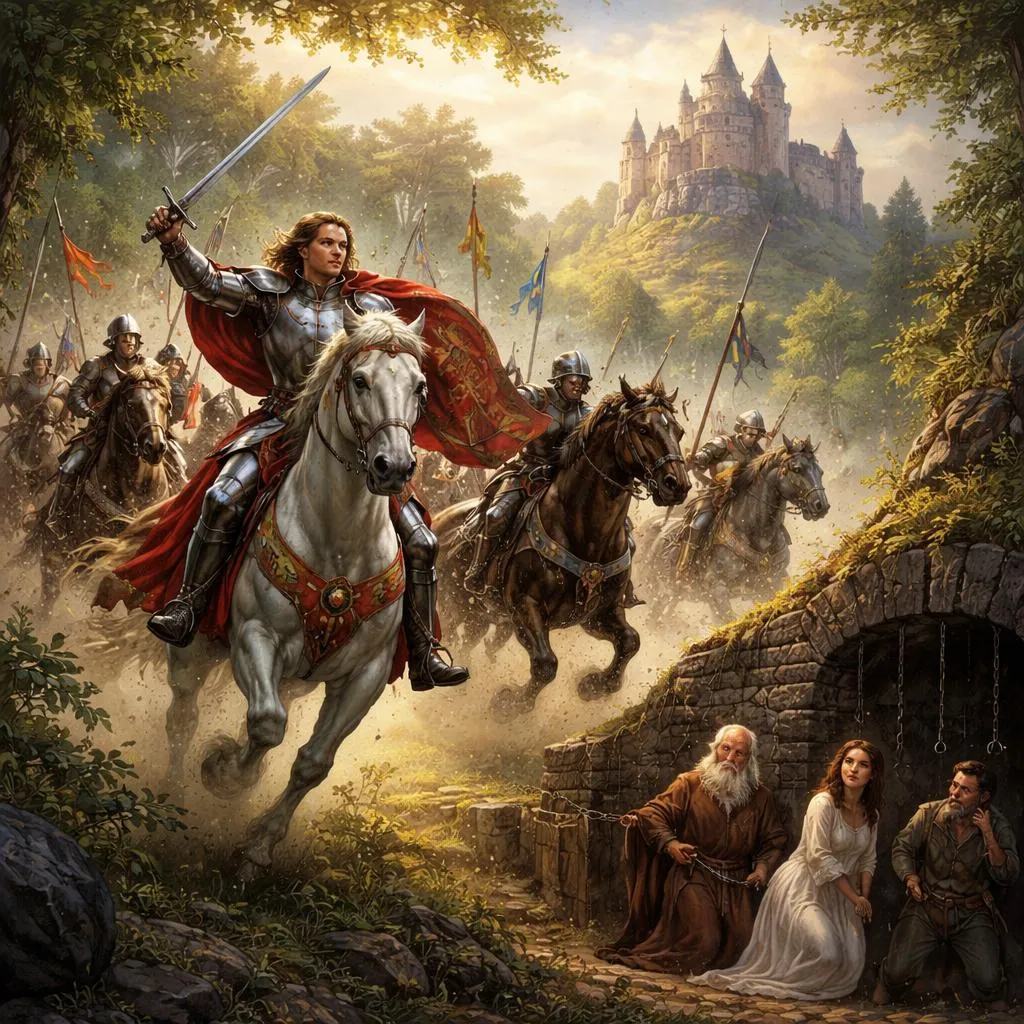

Nearing four in the afternoon. The scene was just outside the walls of London. A cool, comfortable, superb day, with a brilliant sun; the kind of day to make one want to live, not die. The multitude was prodigious and far-reaching; and yet we fifteen poor devils hadn’t a friend in it. There was something painful in that thought, look at it how you might. There we sat, on our tall scaffold, the butt of the hate and mockery of all those enemies. We were being made a holiday spectacle. They had built a sort of grand stand for the nobility and gentry, and these were there in full force, with their ladies. We recognized a good many of them.
The crowd got a brief and unexpected dash of diversion out of the king. The moment we were freed of our bonds he sprang up, in his fantastic rags, with face bruised out of all recognition, and proclaimed himself Arthur, King of Britain, and denounced the awful penalties of treason upon every soul there present if hair of his sacred head were touched. It startled and surprised him to hear them break into a vast roar of laughter. It wounded his dignity, and he locked himself up in silence. Then, although the crowd begged him to go on, and tried to provoke him to it by catcalls, jeers, and shouts of:
“Let him speak! The king! The king! his humble subjects hunger and thirst for words of wisdom out of the mouth of their master his Serene and Sacred Raggedness!”
But it went for nothing. He put on all his majesty and sat under this rain of contempt and insult unmoved. He certainly was great in his way. Absently, I had taken off my white bandage and wound it about my right arm. When the crowd noticed this, they began upon me. They said:
“Doubtless this sailor-man is his minister—observe his costly badge of office!”
I let them go on until they got tired, and then I said:
“Yes, I am his minister, The Boss; and to-morrow you will hear that from Camelot which—”
I got no further. They drowned me out with joyous derision. But presently there was silence; for the sheriffs of London, in their official robes, with their subordinates, began to make a stir which indicated that business was about to begin. In the hush which followed, our crime was recited, the death warrant read, then everybody uncovered while a priest uttered a prayer.
Then a slave was blindfolded; the hangman unslung his rope. There lay the smooth road below us, we upon one side of it, the banked multitude wailing its other side—a good clear road, and kept free by the police—how good it would be to see my five hundred horsemen come tearing down it! But no, it was out of the possibilities. I followed its receding thread out into the distance—not a horseman on it, or sign of one.
There was a jerk, and the slave hung dangling; dangling and hideously squirming, for his limbs were not tied.
A second rope was unslung, in a moment another slave was dangling.
In a minute a third slave was struggling in the air. It was dreadful. I turned away my head a moment, and when I turned back I missed the king! They were blindfolding him! I was paralyzed; I couldn’t move, I was choking, my tongue was petrified. They finished blindfolding him, they led him under the rope. I couldn’t shake off that clinging impotence. But when I saw them put the noose around his neck, then everything let go in me and I made a spring to the rescue—and as I made it I shot one more glance abroad—by George! here they came, a-tilting!—five hundred mailed and belted knights on bicycles!
The grandest sight that ever was seen. Lord, how the plumes streamed, how the sun flamed and flashed from the endless procession of webby wheels!
I waved my right arm as Launcelot swept in—he recognized my rag —I tore away noose and bandage, and shouted:
“On your knees, every rascal of you, and salute the king! Who fails shall sup in hell to-night!”
I always use that high style when I’m climaxing an effect. Well, it was noble to see Launcelot and the boys swarm up onto that scaffold and heave sheriffs and such overboard. And it was fine to see that astonished multitude go down on their knees and beg their lives of the king they had just been deriding and insulting. And as he stood apart there, receiving this homage in rags, I thought to myself, well, really there is something peculiarly grand about the gait and bearing of a king, after all.
I was immensely satisfied. Take the whole situation all around, it was one of the gaudiest effects I ever instigated.
And presently up comes Clarence, his own self! and winks, and says, very modernly:
“Good deal of a surprise, wasn’t it? I knew you’d like it. I’ve had the boys practicing this long time, privately; and just hungry for a chance to show off.”
Contexto e Introdução do Autor
Esta passagem vívida é uma recontagem criativa inspirada nos contos lendários do Rei Arthur e seus cavaleiros, ambientada em um cenário dramático e teatral. A história se baseia na rica tradição das lendas arturianas, que foram contadas e recontadas por séculos. Essas lendas se originaram na Grã-Bretanha medieval e foram adaptadas por inúmeros autores, poetas e dramaturgos. O autor desta narrativa em particular usa um tom moderno, um tanto humorístico, para dar nova vida à história clássica, misturando imagens históricas com um toque de sátira e surpresa.
Interpretação Detalhada e Significado
A cena captura um momento de tensão e espetáculo: o rei condenado e seus companheiros são zombados por uma multidão hostil, mas a dignidade do rei e a lealdade de seus cavaleiros acabam mudando o rumo. A chegada dos cavaleiros em bicicletas, uma reviravolta humorística e anacrônica, simboliza esperança, bravura e o triunfo da justiça contra a crueldade e a injustiça. A história explora temas de lealdade, coragem, dignidade na adversidade e o poder da liderança.
A recusa do rei em ser quebrado pela zombaria da multidão destaca a importância da força interior e do respeito próprio. O resgate dramático dos cavaleiros demonstra o valor de defender o que é certo, mesmo quando as probabilidades parecem esmagadoras. Esta história também aborda a ideia de que a verdadeira nobreza não vem da aparência externa ou do status social, mas sim das ações e do caráter.
Lições e Insights para Estudantes
-
Coragem e Resiliência: O rei e seus seguidores enfrentam humilhação e perigo, mas não desistem. Os alunos podem aprender a importância de se manterem firmes em suas crenças e valores, mesmo quando outros zombam ou se opõem a eles.
-
Lealdade e Amizade: A lealdade dos cavaleiros ao seu rei ensina o valor de apoiar os amigos e ficar juntos em tempos difíceis.
-
Liderança e Dignidade: A postura calma e majestosa do rei, apesar de suas roupas rasgadas e ferimentos, mostra que a verdadeira liderança é sobre caráter, não apenas poder ou aparência.
-
Justiça e Equidade: O clímax da história, onde os cavaleiros resgatam o rei da execução injusta, incentiva os alunos a pensar sobre justiça e a coragem de defender o que é certo.
Aplicando Essas Lições na Vida Diária
-
Na Escola: Os alunos podem praticar a resiliência não desistindo ao enfrentar desafios, como matérias difíceis ou pressões sociais. Eles também podem mostrar lealdade apoiando os colegas e se opondo ao bullying.
-
Nas Amizades: Como os cavaleiros, os alunos devem ser amigos confiáveis e solidários, ajudando-se uns aos outros em momentos difíceis.
-
Na Liderança: Seja em projetos de grupo ou clubes, os alunos podem aprender a liderar com dignidade e justiça, inspirando os outros com seu exemplo.
-
Em Situações Sociais: Defender a justiça e a equidade, mesmo em pequenas coisas, ajuda a criar uma comunidade mais gentil e respeitosa.
Cultivando Qualidades Positivas da História
-
Construir Força Interior: Pratique a autoconfiança e a calma, especialmente ao enfrentar críticas ou contratempos.
-
Desenvolver Lealdade: Valorize e nutra as amizades, mostrando bondade e apoio.
-
Abraçar a Coragem: Aceite os desafios com bravura e fale contra a injustiça.
-
Praticar a Liderança: Lidere pelo exemplo, com respeito e integridade.
Reflexão e Apreciação
Esta história convida os leitores a refletir sobre o que significa ser verdadeiramente nobre e corajoso. Desafia-nos a olhar além das aparências e a valorizar a coragem, a lealdade e a justiça. Ao se envolverem com essas histórias, os alunos podem desenvolver empatia, consciência moral e uma compreensão mais profunda do caráter humano. Essas qualidades serão úteis não apenas na literatura, mas em todas as áreas da vida.
Em resumo, esta recontagem imaginativa de um momento arturiano é mais do que apenas um conto divertido. É uma rica fonte de inspiração e orientação para jovens leitores, incentivando-os a cultivar virtudes que os ajudarão a se tornarem indivíduos atenciosos, corajosos e compassivos.
