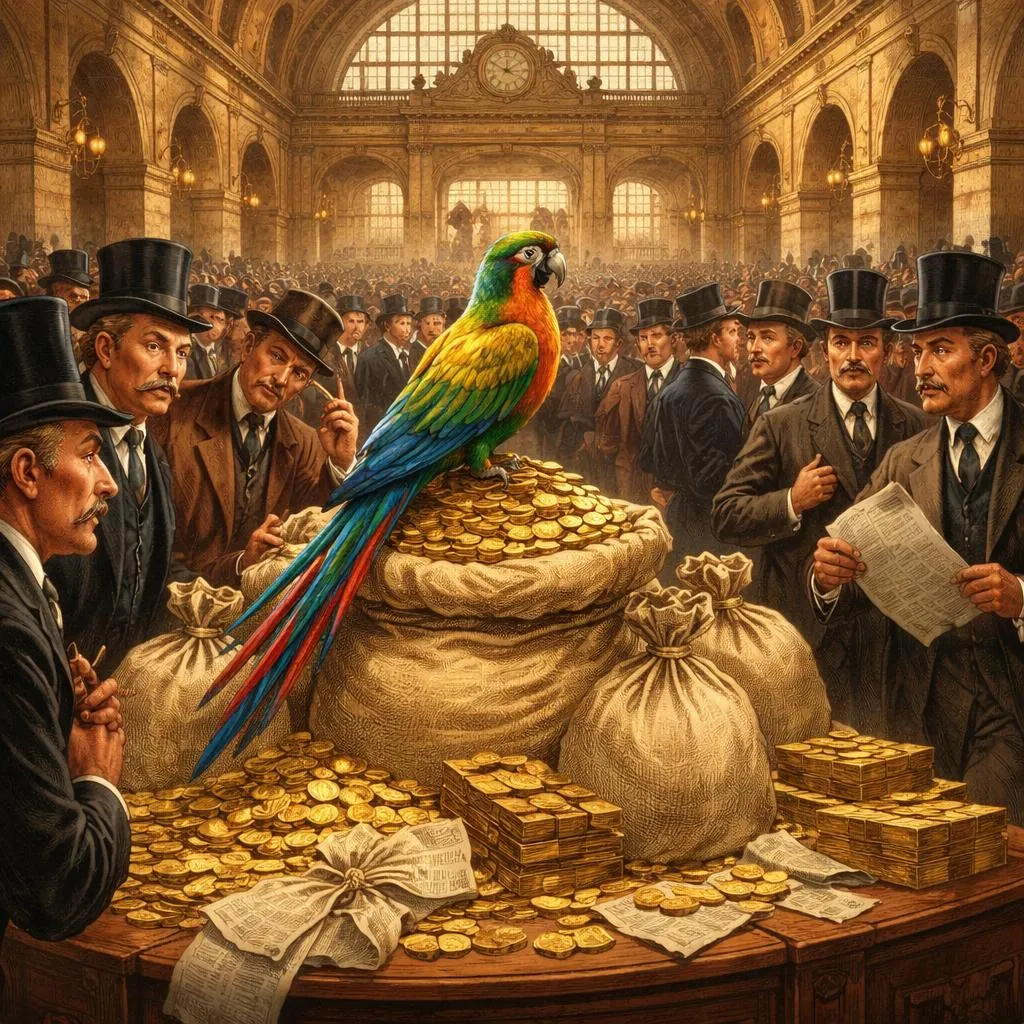

Phileas Fogg rightly suspected that his departure from London would create a lively sensation at the West End. The news of the bet spread through the Reform Club, and afforded an exciting topic of conversation to its members. From the club it soon got into the papers throughout England. The boasted "tour of the world" was talked about, disputed, argued with as much warmth as if the subject were another Alabama claim. Some took sides with Phileas Fogg, but the large majority shook their heads and declared against him; it was absurd, impossible, they declared, that the tour of the world could be made, except theoretically and on paper, in this minimum of time, and with the existing means of travelling. The Times, Standard, Morning Post, and Daily News, and twenty other highly respectable newspapers scouted Mr. Fogg's project as madness; the Daily Telegraph alone hesitatingly supported him. People in general thought him a lunatic, and blamed his Reform Club friends for having accepted a wager which betrayed the mental aberration of its proposer.
Articles no less passionate than logical appeared on the question, for geography is one of the pet subjects of the English; and the columns devoted to Phileas Fogg's venture were eagerly devoured by all classes of readers. At first some rash individuals, principally of the gentler sex, espoused his cause, which became still more popular when the Illustrated London News came out with his portrait, copied from a photograph in the Reform Club. A few readers of the Daily Telegraph even dared to say, "Why not, after all? Stranger things have come to pass."
At last a long article appeared, on the 7th of October, in the bulletin of the Royal Geographical Society, which treated the question from every point of view, and demonstrated the utter folly of the enterprise.
Everything, it said, was against the travellers, every obstacle imposed alike by man and by nature. A miraculous agreement of the times of departure and arrival, which was impossible, was absolutely necessary to his success. He might, perhaps, reckon on the arrival of trains at the designated hours, in Europe, where the distances were relatively moderate; but when he calculated upon crossing India in three days, and the United States in seven, could he rely beyond misgiving upon accomplishing his task? There were accidents to machinery, the liability of trains to run off the line, collisions, bad weather, the blocking up by snow—were not all these against Phileas Fogg? Would he not find himself, when travelling by steamer in winter, at the mercy of the winds and fogs? Is it uncommon for the best ocean steamers to be two or three days behind time? But a single delay would suffice to fatally break the chain of communication; should Phileas Fogg once miss, even by an hour; a steamer, he would have to wait for the next, and that would irrevocably render his attempt vain.
This article made a great deal of noise, and, being copied into all the papers, seriously depressed the advocates of the rash tourist.
Everybody knows that England is the world of betting men, who are of a higher class than mere gamblers; to bet is in the English temperament. Not only the members of the Reform, but the general public, made heavy wagers for or against Phileas Fogg, who was set down in the betting books as if he were a race–horse. Bonds were issued, and made their appearance on 'Change; "Phileas Fogg bonds" were offered at par or at a premium, and a great business was done in them. But five days after the article in the bulletin of the Geographical Society appeared, the demand began to subside: "Phileas Fogg" declined. They were offered by packages, at first of five, then of ten, until at last nobody would take less than twenty, fifty, a hundred!
Lord Albemarle, an elderly paralytic gentleman, was now the only advocate of Phileas Fogg left. This noble lord, who was fastened to his chair, would have given his fortune to be able to make the tour of the world, if it took ten years; and he bet five thousand pounds on Phileas Fogg. When the folly as well as the uselessness of the adventure was pointed out to him, he contented himself with replying, "If the thing is feasible, the first to do it ought to be an Englishman."
The Fogg party dwindled more and more, everybody was going against him, and the bets stood a hundred and fifty and two hundred to one; and a week after his departure an incident occurred which deprived him of backers at any price.
The commissioner of police was sitting in his office at nine o'clock one evening, when the following telegraphic dispatch was put into his hands:
Suez to London.
Rowan, Commissioner of Police, Scotland Yard:
I've found the bank robber, Phileas Fogg. Send with out delay warrant of arrest to Bombay.
Fix, Detective.
The effect of this dispatch was instantaneous. The polished gentleman disappeared to give place to the bank robber. His photograph, which was hung with those of the rest of the members at the Reform Club, was minutely examined, and it betrayed, feature by feature, the description of the robber which had been provided to the police. The mysterious habits of Phileas Fogg were recalled; his solitary ways, his sudden departure; and it seemed clear that, in undertaking a tour round the world on the pretext of a wager, he had had no other end in view than to elude the detectives, and throw them off his track.
Introdução e Contexto do Autor
Este trecho é do romance clássico A Volta ao Mundo em Oitenta Dias, de Júlio Verne, um autor francês conhecido por suas obras pioneiras em ficção científica e literatura de aventura. Escrita em 1873, a história captura o espírito da fascinação do século 19 com a exploração, a tecnologia e a redução do mundo através dos avanços nos transportes. A imaginação vívida e a pesquisa detalhada de Verne tornaram seus romances tanto divertidos quanto educativos, inspirando gerações de leitores a sonhar com lugares distantes e aventuras ousadas.
Visão Geral da História e Significado
A história segue Phileas Fogg, um cavalheiro inglês preciso e rico, que aposta que pode dar a volta ao mundo em apenas oitenta dias. Essa aposta ousada prepara o cenário para uma jornada emocionante, repleta de desafios, encontros culturais e momentos de suspense. A passagem descreve a reação pública inicial ao plano de Fogg, destacando o ceticismo e a descrença dos jornais e do público, bem como a dinâmica social em torno de apostas e reputação na Inglaterra vitoriana.
A jornada de Fogg não é apenas uma aventura física, mas também um teste de determinação humana, engenhosidade e o poder da tecnologia moderna. A história explora temas como tempo, progresso e o choque entre tradição e inovação. Também reflete sobre a natureza humana — como a sociedade reage ao não convencional e ao desconhecido, muitas vezes com dúvida ou medo.
Lições e Insights para Estudantes
-
Coragem e Determinação: A disposição de Phileas Fogg em aceitar um desafio quase impossível ensina aos alunos o valor da coragem e da persistência. Mesmo quando confrontados com dúvidas e obstáculos generalizados, manter-se comprometido com os próprios objetivos é crucial.
-
Pensamento Crítico e Ceticismo: A reação do público mostra como as pessoas frequentemente julgam ideias com base em suas próprias experiências e preconceitos. Os alunos podem aprender a avaliar novas ideias com cuidado, mas também permanecer de mente aberta às possibilidades além das limitações atuais.
-
A Importância do Planejamento e da Adaptabilidade: A jornada de Fogg depende de tempo e coordenação precisos, mas eventos inesperados ameaçam seu sucesso. Isso destaca a necessidade de planejamento cuidadoso e a capacidade de se adaptar quando as coisas não saem como o esperado.
-
Consciência Cultural: Ao viajar pelo mundo, Fogg encontra culturas e ambientes diversos. Isso incentiva os alunos a apreciar a diversidade global e a desenvolver empatia e curiosidade sobre outras formas de vida.
-
O Papel da Tecnologia: A história mostra como os avanços tecnológicos (como ferrovias e navios a vapor) podem transformar a sociedade. Os alunos podem refletir sobre como a inovação impacta a vida diária e a importância de abraçar a mudança.
Aplicando Essas Lições na Vida e no Aprendizado
-
Na Escola: Os alunos podem aplicar o exemplo de Fogg estabelecendo metas desafiadoras, mas alcançáveis, gerenciando bem seu tempo e perseverando diante das dificuldades em seus estudos.
-
Em Situações Sociais: A postura calma e respeitosa de Fogg, apesar das críticas, ensina a importância da confiança e da integridade ao enfrentar a pressão dos colegas ou o ceticismo.
-
No Crescimento Pessoal: Abraçar novas experiências e aprender com diferentes culturas pode ampliar a perspectiva de alguém e promover a mente aberta.
Cultivando Qualidades Positivas da História
-
Resiliência: Como Fogg, os alunos devem aprender a se recuperar de contratempos e seguir em frente.
-
Curiosidade e Exploração: Incentivar um espírito de aventura no aprendizado — seja por meio da leitura, viagens ou novos hobbies — pode enriquecer a vida.
-
Respeito pelos Outros: Compreender e valorizar a diversidade, como Fogg faz durante suas viagens, ajuda a construir melhores relacionamentos.
Reflexão e Apreciação
A leitura de A Volta ao Mundo em Oitenta Dias convida os alunos a imaginar a emoção da aventura, enquanto pensam criticamente sobre os desafios da mudança e do progresso. É uma história que celebra a engenhosidade humana e o desejo de ultrapassar limites, inspirando os leitores a sonhar grande e agir com ousadia. Através da jornada de Fogg, os jovens leitores ganham não apenas entretenimento, mas também valiosas lições de vida que os incentivam a serem corajosos, atenciosos e de coração aberto em suas próprias vidas.
