
My father’s mortal remains had been consigned to the tomb; and we, with sad faces and sombre garments, sat lingering over the frugal breakfast–table, revolving plans for our future life. My mother’s strong mind had not given way beneath even this affliction: her spirit, though crushed, was not broken. Mary’s wish was that I should go back to Horton Lodge, and that our mother should come and live with her and Mr. Richardson at the vicarage: she affirmed that he wished it no less than herself, and that such an arrangement could not fail to benefit all parties; for my mother’s society and experience would be of inestimable value to them, and they would do all they could to make her happy. But no arguments or entreaties could prevail: my mother was determined not to go. Not that she questioned, for a moment, the kind wishes and intentions of her daughter; but she affirmed that so long as God spared her health and strength, she would make use of them to earn her own livelihood, and be chargeable to no one; whether her dependence would be felt as a burden or not. If she could afford to reside as a lodger in—vicarage, she would choose that house before all others as the place of her abode; but not being so circumstanced, she would never come under its roof, except as an occasional visitor: unless sickness or calamity should render her assistance really needful, or until age or infirmity made her incapable of maintaining herself.
‘No, Mary,’ said she, ‘if Richardson and you have anything to spare, you must lay it aside for your family; and Agnes and I must gather honey for ourselves. Thanks to my having had daughters to educate, I have not forgotten my accomplishments. God willing, I will check this vain repining,’ she said, while the tears coursed one another down her cheeks in spite of her efforts; but she wiped them away, and resolutely shaking back her head, continued, ‘I will exert myself, and look out for a small house, commodiously situated in some populous but healthy district, where we will take a few young ladies to board and educate—if we can get them—and as many day pupils as will come, or as we can manage to instruct. Your father’s relations and old friends will be able to send us some pupils, or to assist us with their recommendations, no doubt: I shall not apply to my own. What say you to it, Agnes? will you be willing to leave your present situation and try?’
‘Quite willing, mamma; and the money I have saved will do to furnish the house. It shall be taken from the bank directly.’
‘When it is wanted: we must get the house, and settle on preliminaries first.’
Mary offered to lend the little she possessed; but my mother declined it, saying that we must begin on an economical plan; and she hoped that the whole or part of mine, added to what we could get by the sale of the furniture, and what little our dear papa had contrived to lay aside for her since the debts were paid, would be sufficient to last us till Christmas; when, it was hoped, something would accrue from our united labours. It was finally settled that this should be our plan; and that inquiries and preparations should immediately be set on foot; and while my mother busied herself with these, I should return to Horton Lodge at the close of my four weeks’ vacation, and give notice for my final departure when things were in train for the speedy commencement of our school.
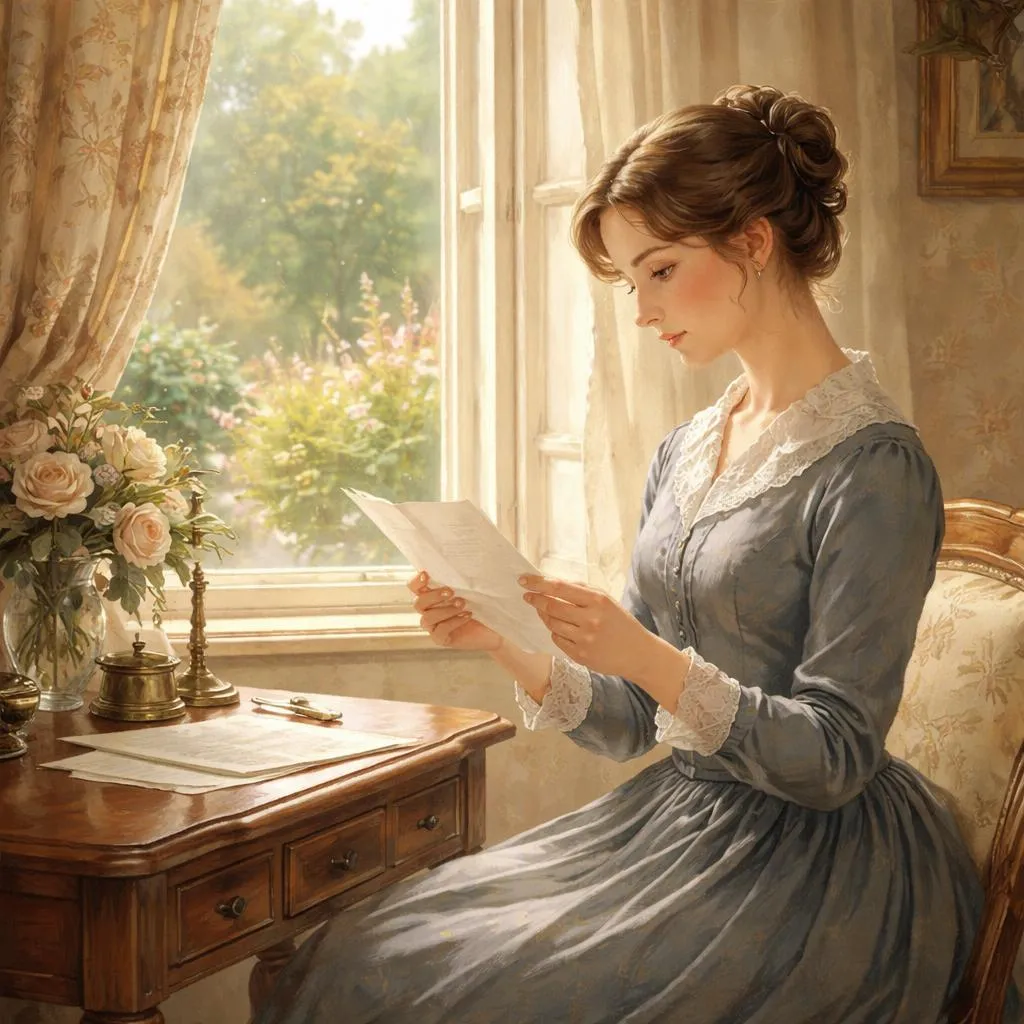
We were discussing these affairs on the morning I have mentioned, about a fortnight after my father’s death, when a letter was brought in for my mother, on beholding which the colour mounted to her face—lately pale enough with anxious watchings and excessive sorrow. ‘From my father!’ murmured she, as she hastily tore off the cover. It was many years since she had heard from any of her own relations before. Naturally wondering what the letter might contain, I watched her countenance while she read it, and was somewhat surprised to see her bite her lip and knit her brows as if in anger. When she had done, she somewhat irreverently cast it on the table, saying with a scornful smile,—’Your grandpapa has been so kind as to write to me. He says he has no doubt I have long repented of my “unfortunate marriage,” and if I will only acknowledge this, and confess I was wrong in neglecting his advice, and that I have justly suffered for it, he will make a lady of me once again—if that be possible after my long degradation—and remember my girls in his will. Get my desk, Agnes, and send these things away: I will answer the letter directly. But first, as I may be depriving you both of a legacy, it is just that I should tell you what I mean to say. I shall say that he is mistaken in supposing that I can regret the birth of my daughters (who have been the pride of my life, and are likely to be the comfort of my old age), or the thirty years I have passed in the company of my best and dearest friend;—that, had our misfortunes been three times as great as they were (unless they had been of my bringing on), I should still the more rejoice to have shared them with your father, and administered what consolation I was able; and, had his sufferings in illness been ten times what they wore, I could not regret having watched over and laboured to relieve them;—that, if he had married a richer wife, misfortunes and trials would no doubt have come upon him still; while I am egotist enough to imagine that no other woman could have cheered him through them so well: not that I am superior to the rest, but I was made for him, and he for me; and I can no more repent the hours, days, years of happiness we have spent together, and which neither could have had without the other, than I can the privilege of having been his nurse in sickness, and his comfort in affliction.
‘Will this do, children?—or shall I say we are all very sorry for what has happened during the last thirty years, and my daughters wish they had never been born; but since they have had that misfortune, they will be thankful for any trifle their grandpapa will be kind enough to bestow?’
Of course, we both applauded our mother’s resolution; Mary cleared away the breakfast things; I brought the desk; the letter was quickly written and despatched; and, from that day, we heard no more of our grandfather, till we saw his death announced in the newspaper a considerable time after—all his worldly possessions, of course, being left to our wealthy unknown cousins.
Contexto e Introdução da Autora
Esta passagem é de um romance clássico do século XIX que explora temas de família, resiliência e independência. A história se passa em uma época em que os papéis das mulheres eram amplamente confinados ao lar, e a segurança financeira muitas vezes dependia de parentes do sexo masculino. A autora, uma mulher de sua época, escreveu com profundo conhecimento das dificuldades enfrentadas pelas mulheres que tiveram que se defender sozinhas após a perda de seus maridos. Suas obras frequentemente destacam a força e a dignidade das mulheres que, apesar das dificuldades, se esforçam para manter o respeito próprio e sustentar suas famílias.
Interpretação Detalhada e Significado
A passagem descreve uma família lidando com a recente morte do pai. A mãe, embora profundamente entristecida, se recusa a depender dos outros, demonstrando uma forte vontade de sustentar a si mesma e suas filhas através do ensino. Essa decisão reflete seu orgulho e determinação em manter a independência, em vez de aceitar caridade ou viver sob o controle de parentes que não apoiam suas escolhas.
A carta do pai afastado da mãe adiciona uma camada de conflito familiar e julgamento social, revelando os desafios das expectativas sociais e da integridade pessoal. A resposta da mãe é uma declaração poderosa de autoestima e amor incondicional por seu falecido marido e filhas, rejeitando a ideia de que ela deveria se arrepender de suas escolhas de vida simplesmente porque elas não se alinham com as opiniões de seu pai.
Lições e Insights para Estudantes
-
Resiliência na Adversidade: A coragem da mãe em enfrentar dificuldades financeiras e emocionais ensina aos alunos a importância da resiliência. A vida pode apresentar desafios inesperados, mas manter a força e uma atitude positiva pode ajudar a superar as dificuldades.
-
Independência e Autossuficiência: A história incentiva os jovens leitores a valorizar a independência e a capacidade de se sustentar através do trabalho árduo e da determinação. Também destaca a dignidade que vem de ganhar a vida honestamente.
-
Família e Lealdade: Apesar das pressões externas, a lealdade da mãe à sua família e sua recusa em se arrepender de seu passado demonstram a importância de apoiar seus entes queridos e honrar os compromissos pessoais.
-
Enfrentando a Pressão Social: A firme rejeição da mãe à oferta condicional de seu pai ensina aos alunos a defender suas crenças e valores, mesmo quando confrontados com críticas ou rejeição dos outros.
Aplicação na Vida Diária
- Na Aprendizagem: Os alunos podem aprender a enfrentar desafios acadêmicos com determinação, entendendo que os contratempos fazem parte do crescimento e que a perseverança leva ao sucesso.
- Em Situações Sociais: A história incentiva os jovens a apoiar sua família e amigos, a serem leais e a defender seus valores, mesmo quando os outros discordam.
- No Desenvolvimento Pessoal: Cultivar o respeito próprio e a independência é crucial. Os alunos podem praticar a responsabilidade por suas ações e decisões, preparando-os para a vida adulta.
Cultivando Espírito e Comportamento Positivos
- Empatia e Compaixão: Compreender as dificuldades da mãe ajuda os alunos a desenvolver empatia por outras pessoas que enfrentam dificuldades.
- Força e Coragem: O exemplo da mãe inspira os alunos a serem corajosos na adversidade.
- Respeito Próprio: Valorizar a si mesmo e suas escolhas é uma mensagem fundamental.
- Trabalho Duro: O plano de iniciar uma escola mostra a importância da iniciativa e do esforço.
A refletir sobre esta história, os alunos podem apreciar o poder da força interior e a importância de permanecer fiel a si mesmo, lições que lhes serão úteis ao longo de suas vidas.
