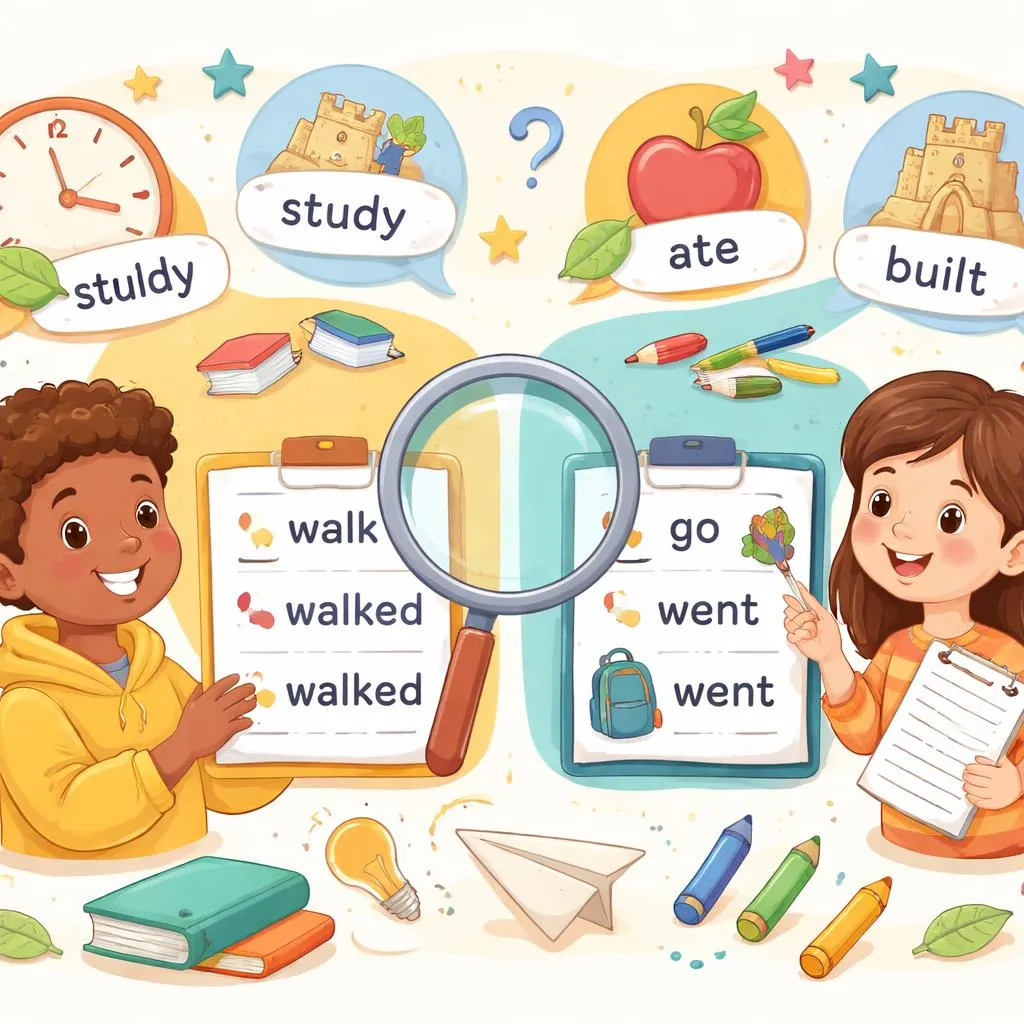

Regular and irregular verbs are important. They appear in every sentence. They help show action.
Understanding regular and irregular verbs helps learners speak clearly, read with confidence, and build correct sentences step by step.
This guide explains regular and irregular verbs in a simple, calm, beginner-friendly way, using short sentences, clear ideas, and a teaching-focused style.
What Verbs Do in a Sentence
Verbs show action.
Run Eat Sleep
Verbs also show state.
Be Have Feel
Every sentence needs a verb.
Without verbs, language stops.
Why Verbs Matter in Learning
Verbs connect ideas.
They tell what happens. They tell when it happens.
Learning verbs early supports all skills.
Reading. Writing. Speaking.
Two Main Verb Types
Verbs fall into two groups.
Regular verbs. Irregular verbs.
The difference is about patterns.
Patterns help memory.
What Are Regular Verbs
Regular verbs follow rules.
They change in a predictable way. The ending follows a pattern.
This makes them easier to learn first.
Regular Verbs in the Present
In the present tense, regular verbs stay simple.
I walk. You walk.
The verb form feels stable.
Regular Verbs and Third Person
One small change appears.
He walks. She walks.
An extra sound shows grammar.
This pattern repeats often.
Regular Verbs in the Past
Past tense is clear.
Add -ed.
Walk becomes walked. Play becomes played.
This rule repeats.
Repetition builds confidence.
Regular Verbs and Pronunciation
The -ed ending sounds different sometimes.
Walked sounds soft. Played sounds light.
Listening helps learning. Hearing patterns matters.
Common Regular Verbs
Many verbs are regular.
Work Talk Help
They appear often. They feel useful.
Why Regular Verbs Feel Safe
Rules reduce fear.
When learners see a new verb, they can predict the form.
Prediction supports independence.
What Are Irregular Verbs
Irregular verbs break patterns.
They do not use -ed. They change form.
These verbs need memory. They need exposure.
Why Irregular Verbs Exist
Irregular verbs are old.
They come from history. They stayed common.
Because they are frequent, they stayed irregular.
Common Irregular Verbs
Some irregular verbs appear very often.
Go Come See
Frequency makes them important.
Irregular Verbs in the Past
Irregular verbs change form.
Go becomes went. See becomes saw.
No clear rule appears.
Practice helps recognition.
Irregular Verbs and Present Forms
Some irregular verbs change even now.
Be Have
These verbs need attention.
The Verb Be
Be is very common.
I am You are
He is They are
Forms change often. Meaning stays central.
The Verb Have
Have shows possession.
I have She has
Have also helps other verbs.
This makes it important.
The Verb Do
Do helps questions.
Do you like cats. Does he work.
It also shows action.
This verb appears often.
Regular and Irregular Verbs Together
Sentences mix verbs.
I played and went home. She worked and saw friends.
Understanding both types supports fluency.
Verbs and Time Awareness
Verbs show time.
Now Before Later
Time words work with verbs.
Present Tense and Verbs
Present tense feels immediate.
I eat now. She reads books.
This tense appears early.
Past Tense and Verbs
Past tense tells stories.
Yesterday I walked. Yesterday I went.
Stories need verbs.
Future Meaning and Verbs
Future meaning uses helpers.
I will go. She will learn.
Helpers keep verbs simple.
Verbs and Sentence Building
Verbs build sentences.
Subject plus verb. Meaning appears.
The dog runs. The bird flies.
Verbs and Questions
Questions use verbs.
Do you like dogs. Did she walk home.
Verb position changes.
Practice builds comfort.
Verbs and Negatives
Negatives use helpers.
I do not run. She did not go.
Helpers carry grammar.
Regular Verbs in Daily Speech
Regular verbs feel common.
Work Study Clean
They describe routine.
Routine language feels safe.
Irregular Verbs in Daily Speech
Irregular verbs appear often too.
Go Eat Make
High frequency makes them necessary.
Learning Regular Verbs First
Regular verbs come first.
Rules feel stable. Confidence grows.
Then irregular verbs feel less scary.
Learning Irregular Verbs Slowly
Irregular verbs need time.
Small groups work best. Repetition matters.
Short exposure builds memory.
Verbs and Listening Practice
Listening improves verb recognition.
Songs. Stories.
Hearing verbs in context supports learning.
Verbs and Speaking Practice
Speaking uses verbs naturally.
I like apples. I went home.
Simple sentences build confidence.
Verbs and Reading Practice
Reading shows verb patterns.
Stories repeat verbs. Patterns appear naturally.
Recognition grows.
Verbs and Writing Practice
Writing slows thinking.
Learners notice endings. They notice changes.
This supports accuracy.
Verbs and Children Learners
Children learn verbs through action.
Jump. Run.
Movement supports meaning.
Verbs and Adult Learners
Adults like structure.
Rules help. Lists help.
Understanding patterns reduces frustration.
Regular Verbs and Memory
Memory likes patterns.
-ed repeats. Forms feel predictable.
Regular verbs stick easily.
Irregular Verbs and Memory
Memory needs exposure.
Seeing verbs often creates familiarity.
Familiar verbs feel natural.
Grouping Irregular Verbs
Grouping helps learning.
Go and come. See and look.
Meaning links support memory.
Verbs and Visual Support
Charts help learners.
Verb lists. Color coding.
Visual clarity supports recall.
Verbs and Games
Games reduce pressure.
Matching forms. Choosing verbs.
Play supports practice.
Verbs and Classroom Language
Classrooms use verbs often.
Open the book. Listen carefully.
Commands use verbs clearly.
Verbs and Daily Review
Daily review works best.
Short practice. Frequent exposure.
Consistency matters.
Verbs and Error Acceptance
Errors are normal.
Wrong form happens. Correction comes later.
Understanding matters first.
Verbs and Confidence
Confidence grows with use.
Using verbs feels powerful.
Power supports motivation.
Verbs and Fluency
Fluency uses verbs smoothly.
Less thinking. More flow.
This comes with time.
Verbs and Communication
Communication depends on verbs.
They show action. They show meaning.
Clear verbs support understanding.
Verbs and Vocabulary Growth
More verbs mean more expression.
Learners say more. They share more.
Verbs and Long-Term Learning
Verbs stay important.
At every level. In every skill.
Strong verb knowledge supports progress.
Regular and Irregular Verbs as Foundations
Regular and irregular verbs form a core part of language.
Regular verbs offer patterns. Irregular verbs offer reality.
Together, they support sentence building, time awareness, and confident communication.
With gentle repetition, clear examples, and daily exposure, learners gradually feel comfortable using both regular and irregular verbs naturally, accurately, and with growing confidence through every stage of language learning.
Regular and Irregular Verbs in Real Conversation
Real conversation uses verbs.
People talk about actions. They talk about changes.
Regular and irregular verbs appear together.
Mixing forms feels natural.
Verbs and Daily Questions
Daily questions need verbs.
What do you do. Where do you go.
These questions use simple verb forms.
Simple forms support understanding.
Verbs and Short Answers
Short answers rely on verbs.
Yes, I do. No, I didn’t.
Helpers carry meaning. Verbs stay clear.
Verbs and Everyday Statements
Statements feel common.
I work here. She goes there.
Routine language uses verbs constantly.
Verbs and Story Telling
Stories need verbs.
First action. Next action.
Regular verbs set rhythm.
Irregular verbs add variety.
Verbs and Time Markers
Time markers guide verbs.
Today. Yesterday.
Markers support correct form choice.
Verbs and Habit Talk
Habits use present tense.
I drink water daily. He walks to school.
Regular patterns feel stable.
Verbs and Sudden Events
Sudden events use past tense.
I fell. She ran.
Irregular verbs often appear here.
Verbs and Emphasis
Emphasis uses verbs.
I did finish. She did try.
Helpers add strength.
Verbs and Contrast
Contrast shows difference.
I worked, but I left early. She wanted to go, but she stayed.
Different verbs carry contrast.
Verbs and Cause and Result
Cause leads to result.
I studied. I passed.
Verbs connect events.
Verbs and Instructions
Instructions rely on verbs.
Open the door. Follow the line.
Commands use base forms.
Verbs and Polite Requests
Requests soften verbs.
Could you help. Would you wait.
Helpers change tone.
Verbs and Permission
Permission uses verbs.
May I go. Can I stay.
Verb choice shows politeness.
Verbs and Rules
Rules use verbs clearly.
Do not run. Do not touch.
Negative commands feel strong.
Verbs and Classroom Language Again
Classroom talk repeats verbs.
Listen carefully. Write your name.
Repetition supports memory.
Verbs and Self-Talk
Self-talk uses verbs.
I can do this. I will try.
Positive verbs support confidence.
Verbs and Emotion Language
Emotion uses verbs.
I feel happy. She feels tired.
State verbs describe inner life.
Verbs and Thought Verbs
Thought verbs appear often.
Think Know Believe
They describe the mind.
Verbs and Change Over Time
Change uses verbs.
Learn Grow Improve
Progress feels visible.
Verbs and Goal Setting
Goals use verbs.
I want to learn. I plan to study.
Future focus uses verbs.
Verbs and Learning Reflection
Reflection uses past verbs.
I learned a lot. I made progress.
Reflection supports motivation.
Verbs and Listening Awareness
Listening catches verb forms.
The ear notices endings. Meaning becomes clearer.
Verbs and Error Recognition
Recognition comes first.
The learner hears difference. Correction follows.
This shows growth.
Verbs and Pattern Reinforcement
Patterns repeat.
-ed appears often. Irregular forms repeat too.
Repetition creates familiarity.
Verbs and Chunk Learning
Chunks reduce thinking.
I went home. I did not know.
Chunks feel safe.
Verbs and Automatic Use
Automatic use is the goal.
No pause. No translation.
Verbs flow naturally.
Verbs and Fluency Growth
Fluency grows slowly.
Small steps. Daily exposure.
Consistency matters.
Verbs and Confidence Reinforcement
Confidence grows with success.
Correct verbs feel rewarding.
Reward supports effort.
Verbs and Long-Term Stability
Stable verb knowledge supports all skills.
Reading improves. Speaking improves.
Verbs as Communication Tools
Verbs are tools.
They build meaning. They move ideas.
Strong verbs support clear communication.
Regular and Irregular Verbs in Daily Use
Daily language mixes forms.
Regular verbs feel predictable.
Irregular verbs feel familiar.
Together, they create natural speech.
Regular and Irregular Verbs as Learning Anchors
Regular and irregular verbs anchor language learning.
They support time, action, and expression.
With steady listening, gentle practice, and daily use, learners gradually feel comfortable choosing correct verb forms without stress, without hesitation, and with growing confidence in real communication situations.