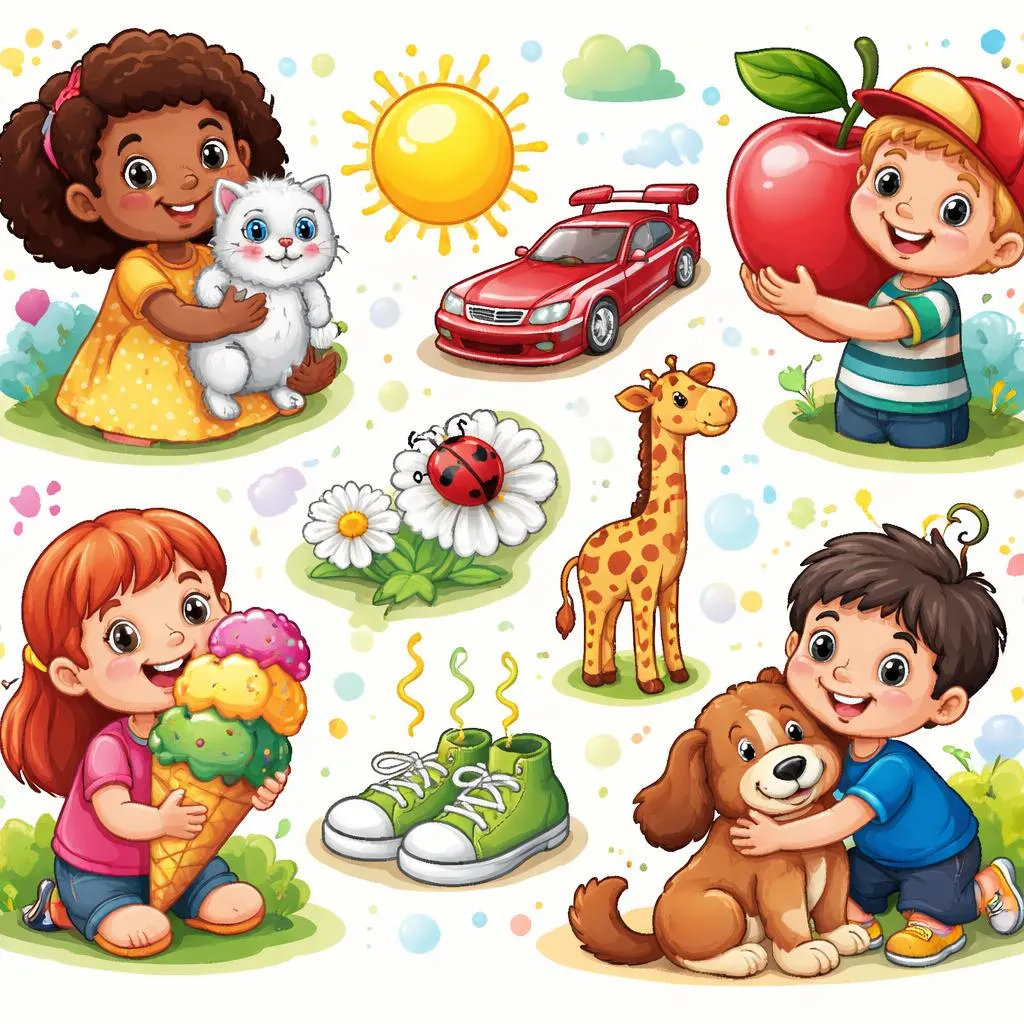

What Are Adjectives Adjectives are describing words. They tell more about nouns. They tell how something looks. They tell how something feels. They tell size, color, and quality.
Adjectives help sentences grow. They add detail and meaning.
Why Adjectives Are Important Adjectives make language clearer. They help children imagine things. They help listeners understand better.
Without adjectives, sentences feel plain. With adjectives, sentences feel alive.
Simple Sentences with Adjectives The cat is small. The dog is big. The apple is red. The sky is blue.
These sentences are easy. The adjective comes before or after the noun.
Sentences with Color Adjectives The ball is yellow. She has a green bag. The car is black. The flower is pink.
Color words are easy to learn. Children see colors every day.
Sentences with Size Adjectives The house is large. The mouse is tiny. He has a tall hat. She has short hair.
Size adjectives help comparison. Big and small feel clear.
Sentences with Feeling Adjectives The child is happy. The baby is sleepy. The boy feels sad. The girl is excited.
Feeling words help expression. Children learn to share emotions.
Sentences with Number Adjectives I have two books. She sees three birds. There are many stars. We have few toys.
Number words describe amount. They help with counting language.
Sentences with Shape Adjectives The table is round. The box is square. The sign is flat. The ball is round.
Shapes are visual. Visual words support memory.
Sentences with Age Adjectives The tree is old. The puppy is young. She has a new bike. He reads an old book.
Age words show time. Time words add meaning.
Sentences with Texture Adjectives The blanket is soft. The rock is hard. The sand feels rough. The pillow feels smooth.
Touch words connect to senses. Senses help learning.
Sentences with Taste Adjectives The cake is sweet. The lemon is sour. The soup is salty. The pepper is spicy.
Food words feel familiar. Familiar words are easy to remember.
Sentences with Sound Adjectives The music is loud. The room is quiet. The bell is noisy. The night is silent.
Sound words support listening skills.
Sentences with Weather Adjectives The day is sunny. The night is cold. The wind is strong. The rain is heavy.
Weather words connect to daily life.
Sentences with Animal Adjectives The fast horse runs. The slow turtle walks. The furry cat sleeps. The wild lion roars.
Animals make sentences fun. Fun supports attention.
Sentences with School Adjectives The book is interesting. The test is easy. The class is quiet. The teacher is kind.
School words feel meaningful.
Sentences with Opposite Adjectives The room is clean. The room is dirty. The box is full. The box is empty.
Opposites build understanding. Contrast helps memory.
Sentences with More Than One Adjective She has a small red bag. He sees a big brown dog. They live in a quiet old house.
Adjectives can work together. Order comes with time.
Sentences with Adjectives in Stories Stories use many adjectives. They describe people. They describe places. They describe feelings.
Adjectives help pictures form in the mind.
Sentences with Adjectives in Speaking Children use adjectives when speaking. They say what they like. They say what they see.
Speaking builds confidence.
Sentences with Adjectives in Writing Writing starts with simple sentences. One adjective is enough. More can come later.
Practice grows slowly.
Sentences with Adjectives in Daily Life Children describe toys. They describe food. They describe friends.
Real use supports learning.
Adjectives and Nouns Together Adjectives need nouns. They work as a team. The noun is the thing. The adjective describes it.
Understanding roles helps grammar.
Adjectives and Sentence Growth Sentences grow step by step. First a noun. Then a verb. Then an adjective.
Growth feels natural.
Adjectives and Confidence Using adjectives feels smart. Children feel proud. They share more ideas.
Confidence supports language growth.
Sentences That Have Adjectives Review Adjectives describe nouns. They add color and detail. They make sentences clear.
Children learn them slowly. Practice makes them familiar.
Sentences That Have Adjectives for Children Simple sentences work best. Short examples feel safe. Clear words support understanding.
Learning stays calm. Progress feels possible.
Adjectives and Language Growth Small words build strong language. Adjectives help ideas grow. Growth happens step by step.
Confidence grows with use. Curiosity continues. Language learning feels enjoyable.
Sentences with Adjectives About Colors and Objects Objects often have colors. Colors help describe them clearly.
The cup is blue. The bag is yellow. The chair is brown. The table is white.
Color adjectives are easy to see. Seeing helps learning.
Sentences with Adjectives About Size and Shape Size and shape work together.
The box is big. The box is square. The plate is round. The pencil is long.
Simple details make sentences clearer.
Sentences with Adjectives About School Supplies School items are familiar. Familiar topics support learning.
The book is heavy. The pencil is short. The bag is full. The paper is clean.
Daily items help memory.
Sentences with Adjectives About Friends Friends can be described kindly.
My friend is nice. My friend is funny. My friend is helpful. My friend is honest.
Positive adjectives build values.
Sentences with Adjectives About Family Family words feel safe.
My mother is kind. My father is strong. My sister is smart. My brother is playful.
Safe topics support confidence.
Sentences with Adjectives About Pets Pets are popular with children.
The dog is loyal. The cat is lazy. The fish is small. The bird is colorful.
Interest keeps attention.
Sentences with Adjectives About Games Games bring emotion.
The game is fun. The game is easy. The game is hard. The game is exciting.
Opinion words appear naturally.
Sentences with Adjectives About Learning Learning can be described too.
The lesson is clear. The task is simple. The question is tricky. The answer is correct.
Academic language grows slowly.
Sentences with Adjectives About Books Books invite description.
The book is interesting. The story is long. The page is colorful. The ending is happy.
Reading supports imagination.
Sentences with Adjectives About Places at School School spaces feel familiar.
The classroom is bright. The hall is quiet. The playground is big. The library is calm.
Environment words support awareness.
Sentences with Adjectives About Transportation Movement words mix with adjectives.
The bus is late. The train is fast. The car is new. The bike is old.
Daily life supports understanding.
Sentences with Adjectives About Time of Day Time can be described.
The morning is early. The afternoon is busy. The evening is quiet. The night is dark.
Routine language repeats daily.
Sentences with Adjectives About Holidays Holidays feel special.
The day is special. The party is fun. The gift is surprising. The food is delicious.
Emotion supports memory.
Sentences with Adjectives About Feelings at School School feelings matter.
The child feels proud. The student feels nervous. The class feels ready. The teacher feels happy.
Emotional language builds expression.
Sentences with Adjectives About Safety Safety words are important.
The road is busy. The rule is important. The place is safe. The sign is clear.
Understanding supports behavior.
Sentences with Adjectives About Health Health words appear early.
The meal is healthy. The water is clean. The body feels tired. The child feels better.
Care language supports well being.
Sentences with Adjectives About Weather Changes Weather changes often.
The day is warmer. The wind is colder. The sky is darker. The rain is lighter.
Comparisons come naturally.
Sentences with Adjectives About Nature Sounds Nature has sounds.
The river is loud. The leaves are quiet. The birds are noisy. The night is silent.
Sound adjectives build listening skills.
Sentences with Adjectives About Art Art invites description.
The painting is beautiful. The color is bright. The line is smooth. The picture is clear.
Creative language feels enjoyable.
Sentences with Adjectives About Music Music uses adjectives often.
The song is slow. The music is loud. The tune is soft. The rhythm is fast.
Music supports pronunciation.
Sentences with Adjectives About Movement Movement and adjectives connect.
The jump is high. The walk is slow. The run is quick. The dance is graceful.
Action language feels alive.
Sentences with Adjectives About Numbers Numbers can be described.
The number is big. The answer is small. The group is large. The set is equal.
Math language blends with grammar.
Sentences with Adjectives About Daily Choices Choices use adjectives.
The shirt is clean. The snack is tasty. The seat is comfortable. The option is better.
Decision language grows.
Sentences with Adjectives in Simple Paragraphs Sentences can connect.
The room is clean. The room is quiet. The room feels calm.
Adjectives build atmosphere.
Sentences with Adjectives and Expansion One adjective becomes two.
The big dog runs. The big brown dog runs. Expansion happens naturally.
Growth comes with practice.
Sentences with Adjectives and Confidence Children enjoy adding detail. They feel expressive. They feel understood.
Expression builds confidence.
Sentences with Adjectives and Review Practice Review brings comfort.
The cat is small. The sky is blue. The day is sunny.
Familiar sentences feel safe.
Sentences That Have Adjectives Long Review Adjectives describe nouns. They add detail. They add color. They add feeling.
Sentences become richer.
Sentences That Have Adjectives for Young Learners Young learners need clarity. Short sentences work best. Real topics support memory.
Learning stays calm.
Sentences That Have Adjectives and Language Growth Adjectives support speaking. They support reading. They support writing.
Strong basics matter.
Sentences That Have Adjectives Final Extension Children describe the world with adjectives. They notice more details. They share clearer ideas.
Language grows step by step. Confidence grows naturally. Learning continues with joy.