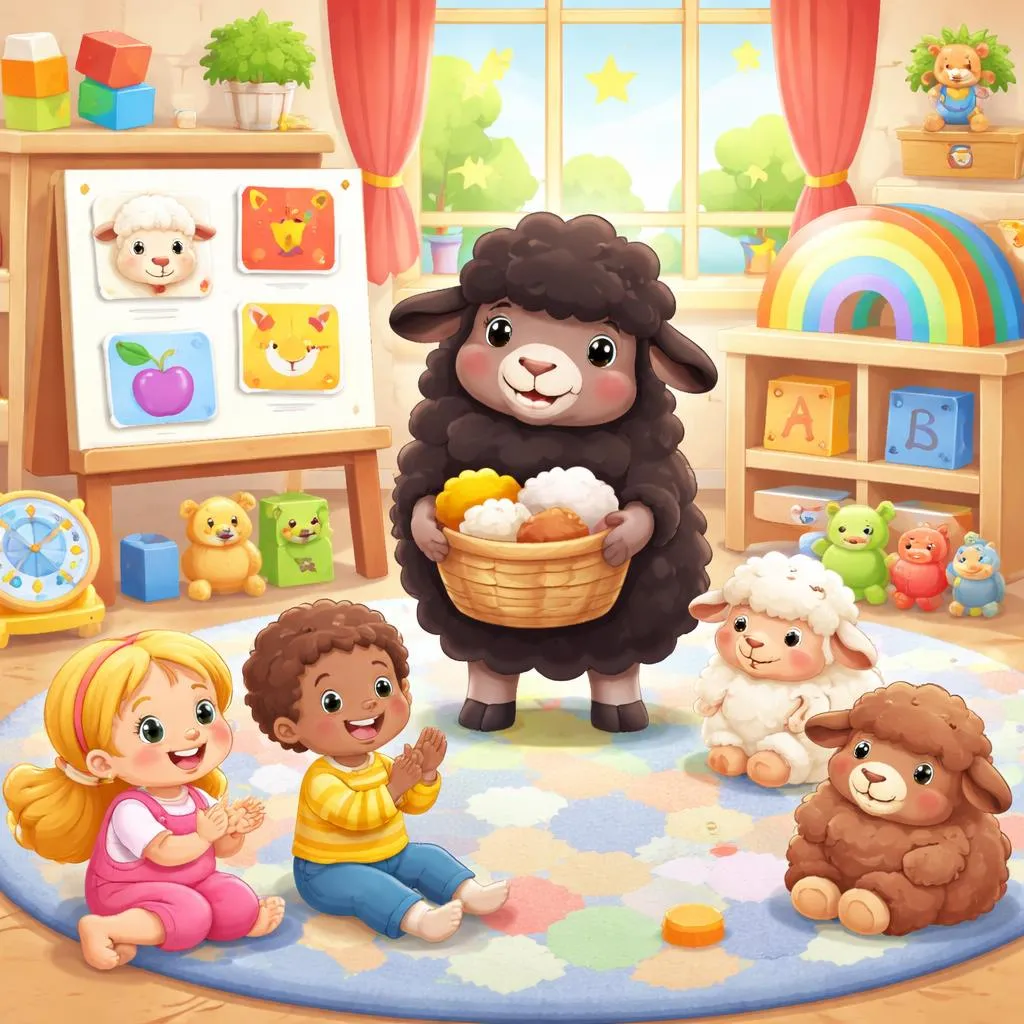

What Is the Rhyme “sheep black sheep”?
The keyword sheep black sheep connects with a classic English nursery rhyme. This rhyme is also known as “Baa, Baa, Black Sheep.”
The rhyme tells a simple story about a black sheep and its wool. It uses rhythm, repetition, and clear language. These features make it ideal for early English learning.
Songs and rhymes like this support listening skills, pronunciation, and vocabulary growth. They also create a playful and memorable learning environment.
The Lyrics of “sheep black sheep”
The traditional lyrics of the rhyme are short and rhythmic.
“Baa, baa, black sheep, Have you any wool? Yes sir, yes sir, Three bags full. One for the master, And one for the dame, And one for the little boy Who lives down the lane.”
These lines repeat sounds and patterns. This repetition supports memorization and speaking practice.
Vocabulary Learning from Sheep Black Sheep
The rhyme introduces many useful words. Animal names, family roles, and objects appear in a simple story.
Key words include: sheep black wool bag master dame boy lane
Each word connects to real-world images. This connection helps vocabulary retention.
“Sheep” is a farm animal. “Black” describes color. “Wool” is the soft hair from sheep. “Bag” is a container. “Lane” is a small road.
Short explanations and pictures can strengthen word meaning.
Meaning and Explanation of the Rhyme
The rhyme tells about sharing. The sheep has wool and gives it to others. This theme supports kindness and generosity.
The simple dialogue format teaches question and answer patterns. “Have you any wool?” “Yes sir, yes sir.”
This pattern helps early conversational English.
The rhyme also reflects historical farming life. Sheep and wool were important resources in the past.
Phonics Points in Sheep Black Sheep
Phonics practice is strong in this rhyme. The “baa” sound helps with vowel awareness. The word “sheep” introduces the long “ee” sound.
“Black” highlights the short “a” sound. “Bag” and “lane” show different vowel patterns.
Rhyming words help with sound recognition. Full and wool do not rhyme, which supports listening skills.
Clapping syllables also helps pronunciation. Sheep has one syllable. Black sheep has two syllables.
Grammar Patterns in Sheep Black Sheep
The rhyme includes simple grammar structures. Questions and answers appear naturally.
“Have you any wool?” uses present tense. “Yes sir, yes sir” shows polite responses.
The phrase “One for the master” uses prepositions. This pattern teaches how to describe giving.
Repetition of “and one for” builds sentence structure awareness.
What Is a Sheep?
A sheep is a farm animal. Sheep live in fields and farms. They eat grass and plants.
Sheep grow wool. Wool is used to make clothes, blankets, and yarn.
Black sheep have dark wool. White sheep have light wool.
The rhyme focuses on a black sheep, which adds visual interest.
Categories and Lists Related to Sheep
Sheep belong to farm animals. Other farm animals include cows, goats, pigs, and chickens.
Wool belongs to natural materials. Other materials include cotton and silk.
Colors include black, white, brown, and gray. The rhyme highlights the color black.
Daily Life Examples Using Sheep and Wool
Sheep appear in farms, stories, and cartoons. Wool appears in sweaters, scarves, and blankets.
Simple sentences help connect vocabulary to life. “The sheep lives on a farm.” “The sweater is made of wool.”
These examples support real-world understanding.
Printable Flashcards for Sheep Black Sheep
Flashcards support visual learning. One card can show a sheep with the word “sheep.” Another card can show black wool with the word “black.”
Flashcards for wool, bag, and lane can expand vocabulary. Using pictures and words together strengthens memory.
Grouping cards by theme also helps. Animals, colors, and objects can be separate sets.
Learning Activities with Sheep Black Sheep
Singing the rhyme helps listening and speaking. Actions can match the lyrics. Hands can act like sheep or bags of wool.
Drawing activities can include a black sheep in a field. Coloring activities reinforce color words.
Sentence-building activities can use rhyme lines. “Baa, baa, black sheep” can be followed by creative lines.
Role-play can include a dialogue between a person and the sheep. This practice builds conversational skills.
Printable Materials for Classroom or Home
Printable worksheets can include matching tasks. Sheep pictures can match with words.
Fill-in-the-blank exercises can use rhyme lines. Spelling practice can focus on sheep, wool, and black.
Simple reading passages can repeat the rhyme story. Tracing worksheets can support early writing skills.
Educational Games with Sheep Black Sheep
Games make learning fun and memorable.
A memory game can use sheep and wool cards. A sorting game can separate animals and objects.
A singing game can pause the song and ask for missing words. This activity improves listening accuracy.
A board game can include questions about the rhyme. “Who lives down the lane?” “What does the sheep have?”
Correct answers move pieces forward.
Storytelling with Sheep Black Sheep
The rhyme can inspire stories. A story can follow the sheep on a farm day. Another story can describe where the wool goes.
Story maps help organize events. Beginning, middle, and end can be illustrated.
Storytelling strengthens comprehension and creativity.
Reading Practice with Sheep Black Sheep
Reading the rhyme aloud builds fluency. Short sentences and rhythm support confidence.
Choral reading can involve groups reading together. Echo reading can repeat after a model voice.
Repeated reading builds speed and accuracy.
Writing Practice with Sheep Black Sheep
Writing activities can start with simple sentences. “The black sheep is in the field.” “The sheep gives wool.”
Creative writing can extend the rhyme. New verses can be added with similar rhythm.
This practice builds writing structure and creativity.
Listening and Speaking Practice
Listening to recorded versions of the rhyme supports pronunciation. Speaking activities can repeat key phrases.
Question and answer practice can use rhyme language. “Have you any wool?” “Yes, I have wool.”
This practice builds dialogue skills.
Cultural Notes About Black Sheep
The phrase “black sheep” also has a figurative meaning. In English, “black sheep” can describe someone different from a group.
This idiom can be introduced gently in advanced levels. Simple examples can explain difference and uniqueness.
This cultural note expands language understanding.
Cross-Curricular Connections
Sheep connect with science topics about animals. Wool connects with materials and textiles. Counting bags of wool connects with math.
Art projects can include sheep crafts. Social studies can discuss farming life.
This integrated approach strengthens learning across subjects.
Visual Learning Tools for Sheep Black Sheep
Charts, pictures, and videos help visual learners. A farm scene chart can show sheep and wool.
Animated videos of the rhyme can support understanding. Picture books about sheep can extend learning.
Creative Classroom Projects
A sheep puppet can be made with paper and cotton. A wool collage can use yarn and fabric scraps.
A classroom wall can display a farm scene with sheep. Creative projects deepen engagement and memory.
Common Mistakes with Sheep Black Sheep Vocabulary
Some learners confuse sheep and ship. Clear pronunciation practice helps.
Sheep is singular and plural. One sheep, two sheep. This irregular form needs special attention.
Wool and wall can also be confused. Listening practice helps distinguish sounds.
Advanced Language Use with Sheep Black Sheep
Advanced learners can explore idioms and poetry. The rhyme can be compared with other nursery rhymes.
Rhyming patterns and rhythm can be analyzed. This analysis builds early literary awareness.
Digital Learning Resources
Online songs, animations, and interactive games support engagement. Digital flashcards and quizzes can reinforce vocabulary.
Interactive calendars and story apps can include sheep themes. Technology adds motivation and multisensory input.
Encouraging Positive Learning with Nursery Rhymes
Nursery rhymes create a joyful learning environment. They support memory, rhythm, and language patterns.
“Sheep black sheep” offers repetition and clear structure. This structure helps early learners feel successful and confident.
Songs, stories, and activities around this rhyme build a strong foundation in English.