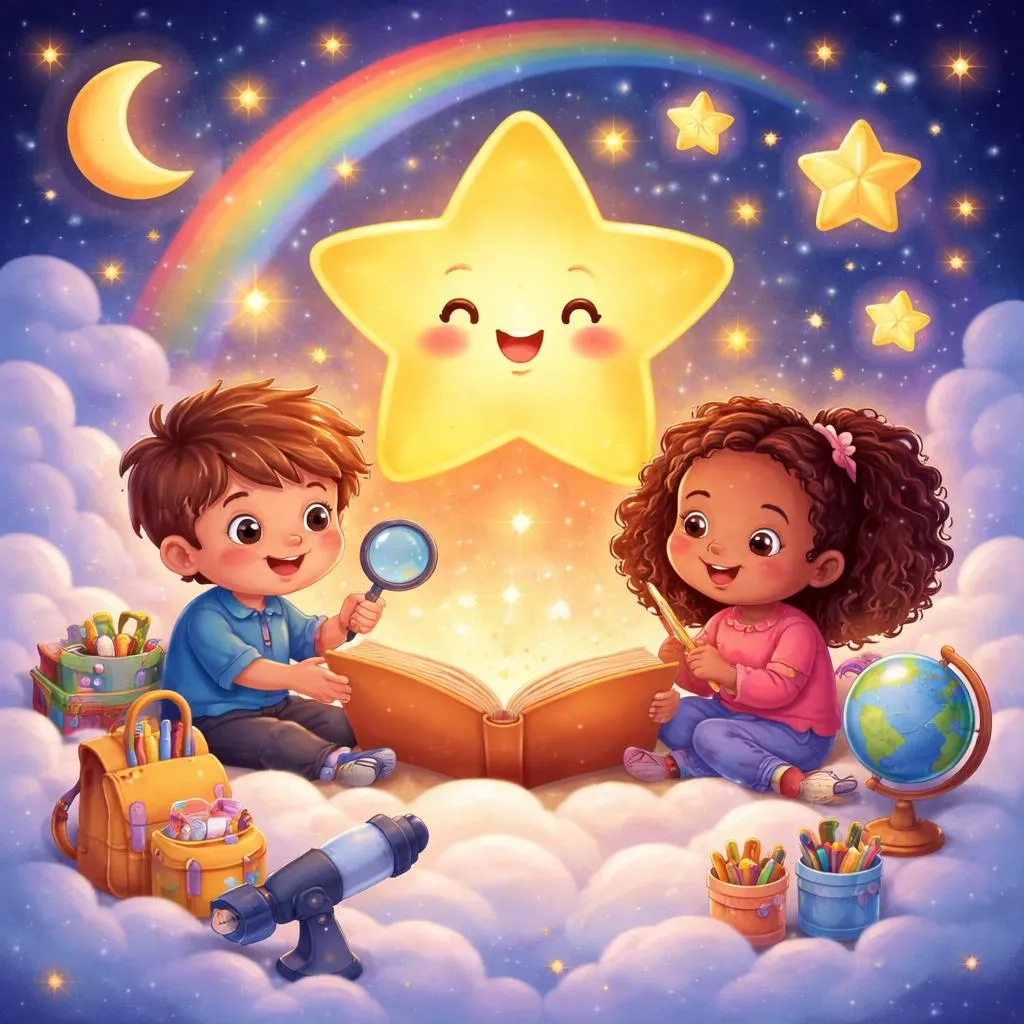

What is the Rhyme "Twinkle Little Star"? "Twinkle Little Star" is a classic nursery rhyme loved by children everywhere. It describes the beauty of stars shining in the night sky. The song has a simple melody and repeated phrases that are easy to sing. It is widely used in homes, classrooms, and early learning centers. The rhyme helps introduce vocabulary, rhythm, and early reading skills. It also encourages imagination and observation of the natural world.
The song is interactive and engaging. Children can pretend to be stars twinkling in the sky. Clapping, pointing, or moving their hands enhances the learning experience. Repeating the lyrics strengthens memory and pronunciation. The rhyme supports social interaction when sung in groups. It combines music, language, and movement in a playful way.
Twinkle Little Star Lyrics The lyrics begin with: “Twinkle, twinkle, little star, how I wonder what you are.” It continues: “Up above the world so high, like a diamond in the sky.” The repeated words “twinkle” and “star” help children recognize and remember key vocabulary. The song introduces descriptive words like “little,” “high,” and “diamond.” Children can also learn simple questions with phrases like “how I wonder what you are.”
The rhyme can be sung slowly or with soft movements for bedtime. Children often use gestures to trace stars in the air while singing. The repetition of words supports early literacy and sight word recognition. Visuals like star cards or glow-in-the-dark stickers enhance comprehension. The melody and rhythm make it easier for children to memorize. Singing together builds confidence and enjoyment in learning language.
Vocabulary Learning The rhyme introduces nature-related vocabulary. Words like “star,” “sky,” and “diamond” expand children’s word knowledge. Descriptive words such as “little” and “high” teach adjectives in context. The phrase “how I wonder” introduces simple questions. Using props, pictures, or stickers reinforces vocabulary visually. Songs provide a natural and memorable context for learning words.
Flashcards with stars, night sky images, and key words help children connect words to objects. Children can point or gesture to stars while singing. Visual aids strengthen understanding and retention of new vocabulary. Repetition and movement help children internalize words naturally. Vocabulary learning becomes multi-sensory and interactive. Children understand meaning and context rather than memorizing words alone.
Phonics Points The rhyme supports early phonics development. Words like “twinkle” and “star” emphasize consonant and vowel sounds. Children practice blending sounds and recognizing syllables. Repetition of “twinkle, twinkle” highlights initial consonant sounds. Rhymes like “high” and “sky” teach sound patterns and word endings.
Clapping to the rhythm emphasizes syllables and sound breaks. Singing improves pronunciation and listening skills. Recognizing rhyming words builds phonemic awareness. Movement and gestures reinforce connections between sounds and letters. Phonics learning becomes enjoyable and memorable through song.
Grammar Patterns The rhyme uses simple sentence structures. For example, “Twinkle, twinkle, little star” is a subject-adjective-noun phrase. The phrase “how I wonder what you are” introduces a basic question. Children learn word order and sentence meaning in context. Short and repetitive sentences make grammar easy to understand.
Repeating phrases helps children notice patterns and sentence structure. Songs naturally introduce questions and descriptive language. Children practice forming simple sentences without formal grammar lessons. The rhyme demonstrates how words combine to convey meaning. Understanding basic grammar prepares children for more complex language skills.
Learning Activities The rhyme can be paired with interactive activities. Children trace stars in the air while singing. Clapping, finger movements, or gentle swaying enhances rhythm and engagement. Craft activities, such as making paper stars or star stickers, add creativity. Children can invent new verses using colors, shapes, or animals.
Games strengthen memory and comprehension. For example, “Twinkle the Star” encourages children to act while singing. Letter or word-matching games reinforce sight words in the lyrics. Interactive apps or videos can show animated stars and lyrics. Group singing promotes cooperation, listening, and speaking skills. Combining music, movement, and visual aids deepens learning.
Printable Materials Printable flashcards reinforce vocabulary and letter recognition. Cards may include words like “star,” “sky,” “diamond,” and “twinkle.” Children can match words to pictures while singing. Worksheets can include tracing letters, coloring stars, or sequencing exercises.
Lyric sheets allow children to follow along visually. Highlighting key words improves reading and recognition. Worksheets provide hands-on practice and repetition. Materials can be used at home, in classrooms, or during group activities. Interactive, tactile learning helps strengthen memory and literacy skills.
Educational Games Games make learning playful and engaging. Memory games with star cards improve recall and recognition. Puzzle activities connect letters or words to star images. Movement games like “Twinkle Star Freeze” combine action with language practice.
Group activities support listening, speaking, and teamwork. Children ask and answer questions about stars while acting out the rhyme. Positive feedback and rewards maintain motivation. Games enhance vocabulary, phonics, sentence structure, and pronunciation. Music, visuals, and play create an immersive, joyful learning environment.
Singing with family or classmates adds social and fun elements. Children imitate sounds, gestures, and words, reinforcing learning. Interactive play builds confidence and communication skills. Twinkle Little Star combines melody, vocabulary, phonics, and grammar in a playful story. Children explore creativity, imagination, and early literacy in a fun and memorable way.
The rhyme provides a rich multi-sensory learning experience. Visuals, games, and printable materials support understanding and engagement. Repetition, music, and movement strengthen memory and language skills. Children can create their own versions with colors, shapes, or characters. Twinkle Little Star remains a classic and inspiring tool for early learning.