
Opening Introduction
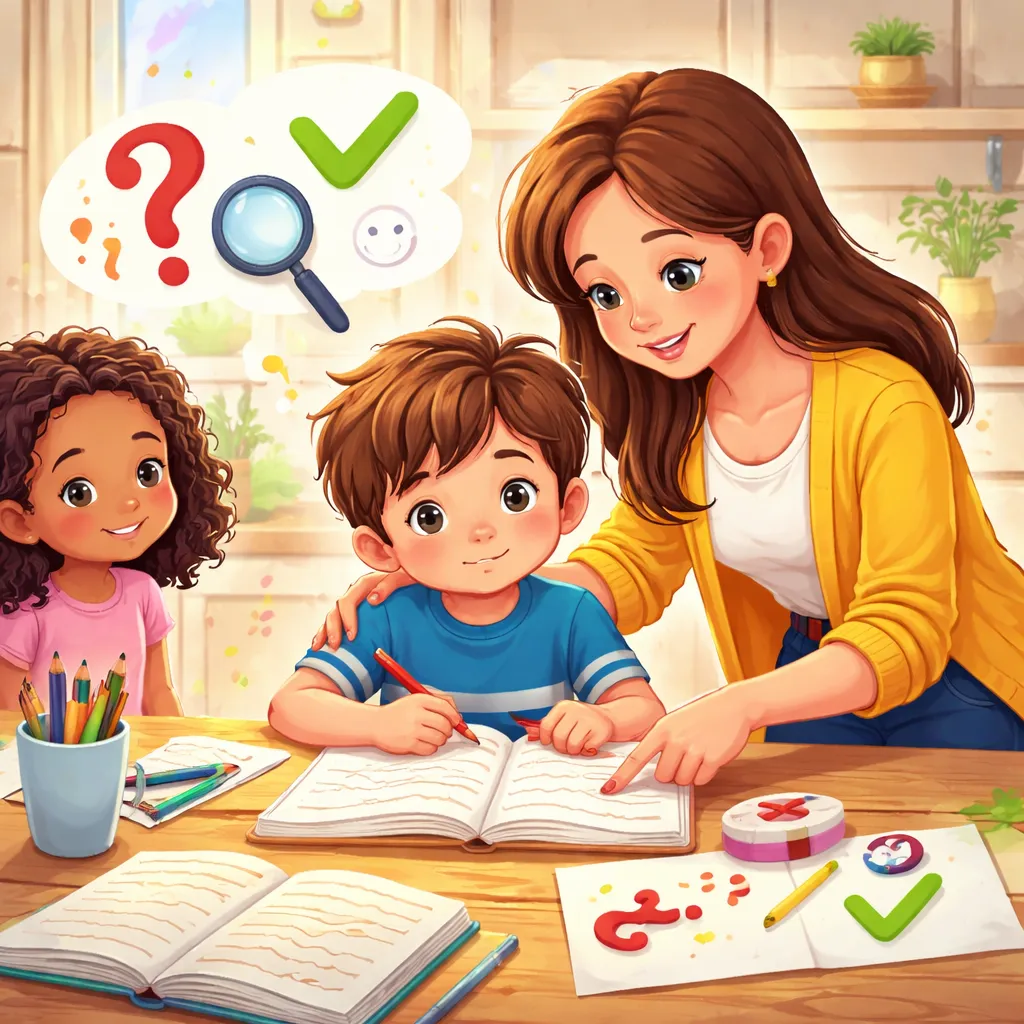
Leo is telling a story. "Yesterday, I goed to the park," he says. His older sister, Mia, jumps in. "No, Leo! It's 'went'! You say 'went to the park'!" Leo's happy face falls. He stops talking. He feels a little silly. Their mom hears this. She gives Mia a kind look. "Mia, thank you for helping. But we must think about the right time. We need to know when to correct grammar mistakes in kids. If we correct every mistake, Leo might stop talking. We want him to love sharing his stories." Mia thinks about this. She wants to help, not hurt. Let's learn together about the best times to help.
Core Knowledge Explanation
What is grammar? Grammar is the rule book for language. It tells us how to put words together to make sense. In English, we say "I have two cats" not "I has two cat". The grammar rules help us understand each other. But learning these rules is hard. It takes time. When you are learning, you will make mistakes. This is normal. It is how you learn. The big question is about when to correct grammar mistakes in kids.
First, we must know why kids make mistakes. Sometimes, they are trying a new rule. Leo said "goed" because he knows the -ed rule for past tense. He applied it to "go". That is smart. His brain is working. He just doesn't know the exception yet. If we correct him in a harsh way, he might feel bad. He might not try new words. So, we must be gentle. Our goal is to keep them talking and trying.
So, when is a good time to correct? A good time is during focused practice. If you are doing an English worksheet about past tense, that is the time to correct. The child knows you are learning that rule. They are ready for feedback. Another good time is when the mistake causes confusion. If Leo says, "I eat dinner yesterday," it is hard to know when he ate. You can gently say, "Oh, you ate dinner yesterday? That sounds good." You say the correct form without making a big deal.
A not-so-good time is in the middle of an exciting story. If the child is sharing a happy moment, let them finish. Focus on the meaning, not the grammar. You can say the correct sentence later in the conversation. "You went to the park? That sounds fun!" This way, you model the correct grammar without stopping their joy. Another not-so-good time is when the child is tired, frustrated, or shy. Correction then can make them feel worse. The key is to balance communication and accuracy. First, we want to understand each other. Then, we can make the words more accurate.
Think about learning to ride a bike. If someone shouts "You're wobbling!" every second, you will fall. But if they say, "Great job pedaling! Now, try to look ahead," you will do better. Grammar is the same. We celebrate the try. We give tips at the right moment. Knowing when to correct grammar mistakes in kids is about being a supportive coach, not a strict judge.
Fun Interactive Learning
Let's play a game to practice this. It is called "The Correction Detective". You will need two toys or puppets. One toy is the storyteller. The other toy is the helper. The storyteller tells a short story with a few mistakes. "I see three mouses in the garden." The helper must decide: correct now or not? If the mistake is funny and doesn't block meaning, the helper can just react. "Three mice? That is funny!" The helper says the correct word in a natural way. This game teaches you to listen for meaning first.
Another game is "The Grammar Spotlight". Choose a "Grammar Star of the Week". It could be a verb tense or a plural rule. For example, the rule is "past tense -ed". For that week, when you are playing a board game, you both try to use past tense. "I moved three spaces." If someone says, "I move three spaces," you can gently remind them, "This is our past tense week! Try 'moved'." This makes correction a fun, shared goal, not a personal criticism. You are both focusing on one rule together.
You can also do "The Recording Studio". Use a phone or tablet to record yourself telling a story. Then, listen to it with a parent or friend. You can be the detective of your own mistakes. "Oh, I said 'runned'! It should be 'ran'." This puts you in control. You decide which mistakes to find and fix. It is a safe way to practice noticing errors without pressure. These games help you understand when to correct grammar mistakes in kids by making it a playful, positive activity.
Expanded Learning
A long time ago, people thought correcting every mistake was the only way to learn. But now, language scientists know that too much correction can make a child afraid to speak. In some schools, teachers use the "silent way" or "natural approach". They let children talk a lot without interruption. They correct only when necessary. In other schools, they have specific grammar lessons. Both ways can work. The important thing is the balance.
In different languages, grammar mistakes sound different. In English, a common mistake is "I am knowing" instead of "I know". In Spanish, a common mistake might be with gender. Every language learner makes mistakes. It is a sign of growth. Think about a baby learning to walk. They fall many times. We cheer when they stand. We don't scold them for falling. Learning to speak is like learning to walk. We cheer for the tries. We help them get better step by step. Knowing when to correct grammar mistakes in kids is part of being a kind and effective teacher.
Let's make a chant about mistakes. Chants are fun to remember.
Mistakes, mistakes, they're okay, they help us learn and play! We try, we slip, we try again, a little better every day! When to fix, when to let go, we're learning as we grow! The most important thing to know, is let the conversation flow!
You can say this chant to remind yourself and others that mistakes are part of the journey.
What You Will Learn
You are learning about teaching and learning. You are learning new words: grammar, rule book, exception, feedback, model, accuracy, coach, detective, approach, gender. You are learning about the process of language acquisition.
You are learning thoughtful sentences. You can say, "I will focus on the meaning first." You can ask, "Is this a good time to correct that mistake?" You can explain, "Mistakes show that you are trying new things." You are using English to talk about language learning in a mature way.
You are building important skills. You are building empathy. You think about how correction feels. You are building judgment. You decide when to correct. You are building communication skills. You learn to give feedback kindly. You are building patience. You understand that learning takes time.
You are forming a wise habit. The habit of mindful correction. You think before you correct. You ask, "Will this help right now?" This habit will make you a better friend, sibling, and helper. Understanding when to correct grammar mistakes in kids makes you a supportive part of someone's learning journey.
Using What You Learned in Life
Use this knowledge at home. If your younger sibling says, "I good to school," you can smile and say, "You went to school? What did you do there?" You corrected by modeling, and you kept the conversation going. At school, if you are doing group work, be a kind helper. If a friend makes a mistake, wait for a pause. Then, you can say, "I think the word is 'children', not 'childs'. It's a tricky one!" Say it as a friend, not a teacher.
When you are practicing your own English, be your own kind coach. If you make a mistake, say, "Oops, that was 'ate', not 'eated'. Let me try again." Be patient with yourself. Remember, the goal is to communicate. If people understand you, that is a big win. The grammar can get better with time and practice. By thinking about when to correct grammar mistakes in kids, you are creating a kinder, more encouraging world for language learners everywhere.
Closing Encouragement
You are doing an amazing job. You are a thoughtful helper. You are a patient guide. You are a kind communicator. I am so proud of you. Learning about when to correct grammar shows you care about people's feelings and their growth.
Keep this knowledge in your heart. Use it to encourage everyone around you. Celebrate the courage it takes to speak a new language. Every sentence is a victory.
Remember, language is a bridge between hearts. We build that bridge with kindness, patience, and joy. Keep building, keep learning, keep being your wonderful self. Great work, my amazing grammar guardian.