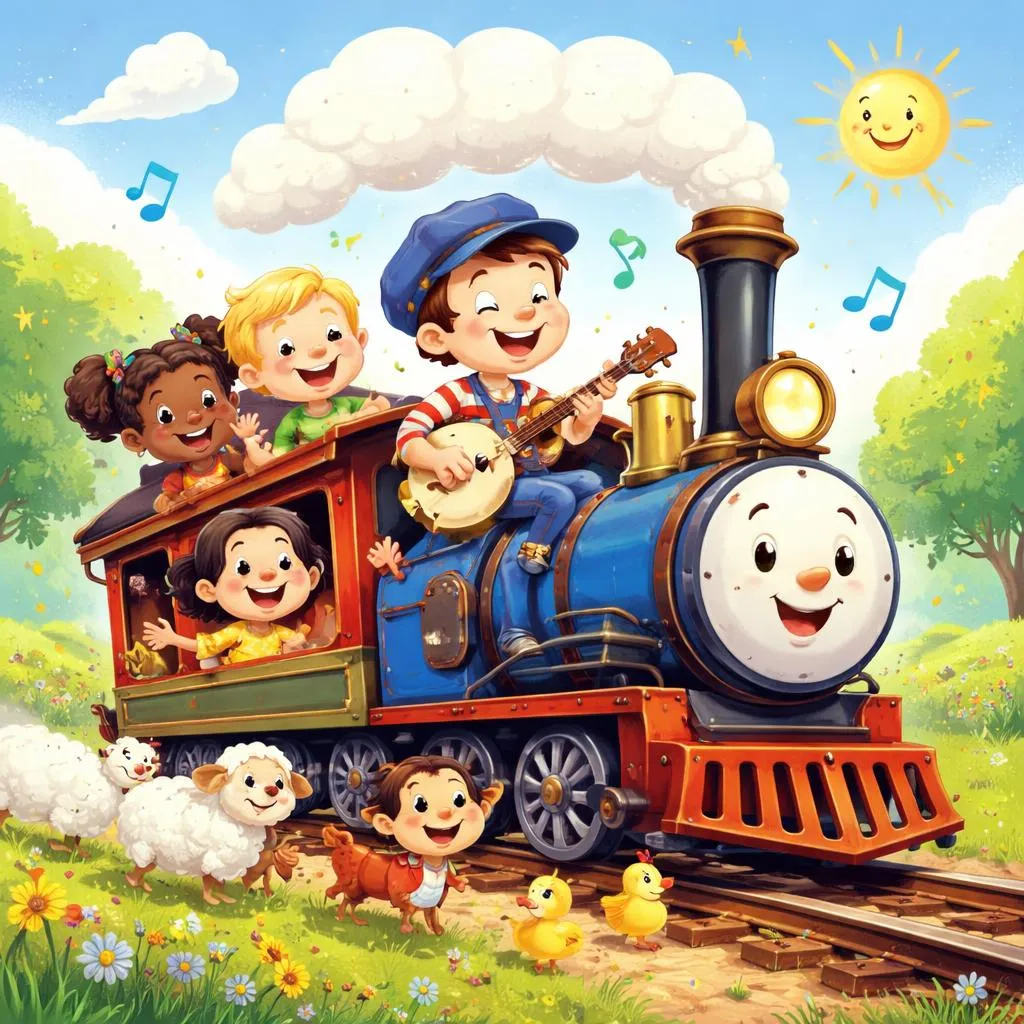

What is the Rhyme "I've Been Working on the Railroad"? "I’ve Been Working on the Railroad" is a traditional American folk song. It describes the life of workers building and maintaining railroads. The melody is simple, rhythmic, and easy to follow. Children enjoy singing it at school, home, or group activities. The song introduces action words and storytelling in a musical context. It helps develop memory, listening, and language skills.
The song is repetitive, making it easy to learn. Children can mimic the rhythm of the train with clapping or stomping. Songs like this combine movement, sound, and imagination. It encourages social learning when sung in groups. The song introduces historical and cultural context through lyrics. Children explore daily life and work in the past while having fun.
Lyrics I've Been Working on the Railroad The song starts with: “I’ve been working on the railroad, all the live-long day.” It continues: “I’ve been working on the railroad, just to pass the time away.” Other lines include: “Can’t you hear the whistle blowing, rise up so early in the morn.” And: “Can’t you hear the captain shouting, ‘Dinah, blow your horn.’”
The repetition of phrases makes the song easy to follow. Children can learn key words like “railroad,” “whistle,” and “captain.” Action words like “working” and “blowing” introduce verbs naturally. The lyrics tell a simple story about working and music. Singing with gestures enhances understanding and memory. Children can tap, march, or pretend to blow a horn while singing.
Vocabulary Learning The song introduces transportation and work-related vocabulary. Words like “railroad,” “whistle,” and “captain” are contextual and easy to understand. Verbs like “working” and “blowing” show actions clearly. Children learn adjectives and adverbs through phrases like “all the live-long day.” Vocabulary can be reinforced with pictures, props, or gestures.
Visual aids like toy trains or paper whistles enhance comprehension. Children connect words to objects and actions. Repetition of lyrics strengthens retention and pronunciation. Songs provide a natural way to learn and use new words. Children remember vocabulary longer when combined with music and movement.
Phonics Points The rhyme helps with early phonics and sound recognition. Words like “railroad” and “Dinah” introduce consonant blends. Repetition of “blowing” and “working” emphasizes vowel sounds. Rhyming words support auditory discrimination and listening skills.
Children can clap syllables to break down sounds in words. Singing aloud improves pronunciation and fluency. The rhythm highlights stressed and unstressed syllables. Phonics learning becomes fun with gestures and movements. Children notice patterns in sounds while enjoying the song.
Grammar Patterns The song introduces simple present tense verbs. For example, “I’ve been working” shows continuous action. Other lines like “Can’t you hear the whistle blowing?” introduce questions. Children observe word order and sentence meaning in context.
Using song lyrics helps children learn grammar naturally. Children hear subject-verb-object patterns repeatedly. Question forms like “Can’t you hear…” introduce structure in a fun way. Short sentences and repetition make grammar clear and easy to grasp. Songs provide context for understanding tense, verbs, and questions.
Learning Activities Singing the song can be paired with fun activities. Children can march like train workers or pretend to blow whistles. Movement helps internalize rhythm and vocabulary. Drawing or coloring trains and tracks reinforces comprehension. Role-play allows children to act as workers or the train captain.
Games like “Guess the Word” encourage children to identify actions or objects. Sorting cards with vocabulary from the song helps with memory. Children can create their own verses using familiar actions or objects. Group activities enhance social skills and teamwork. Interactive learning turns listening and singing into an engaging experience.
Printable Materials Printable worksheets and flashcards support learning. Cards can include key words, images, and verbs from the song. Children can match words to pictures or sequence lines in the song. Tracing exercises help with spelling and handwriting practice.
Lyric sheets allow children to follow along visually. Highlighting action words or rhyming words reinforces phonics. Worksheets can include coloring activities or puzzles related to trains. Printable materials make the song accessible for classroom or home use. Children can review and practice independently with engaging visuals.
Educational Games Games make learning the song interactive and playful. Children can march in rhythm to imitate the train. Memory games help recall lyrics, vocabulary, and rhyming words. Role-play encourages imagination and speaking practice.
Children can take turns being the captain calling out commands. Movement and gestures strengthen memory and vocabulary recall. Singing together develops social skills and confidence. Games reinforce phonics, sentence patterns, and comprehension naturally. Music, play, and visuals create a multi-sensory learning experience.
Songs like "I’ve Been Working on the Railroad" support literacy, language, and imagination. Visual aids, movement, and printable materials make the learning process enjoyable. Repetition, rhythm, and fun activities strengthen memory and understanding. Children can create their own stories, verses, and actions inspired by the song. The rhyme provides a joyful, educational, and memorable way to explore language and culture.