
What Is the Rhyme or Story?
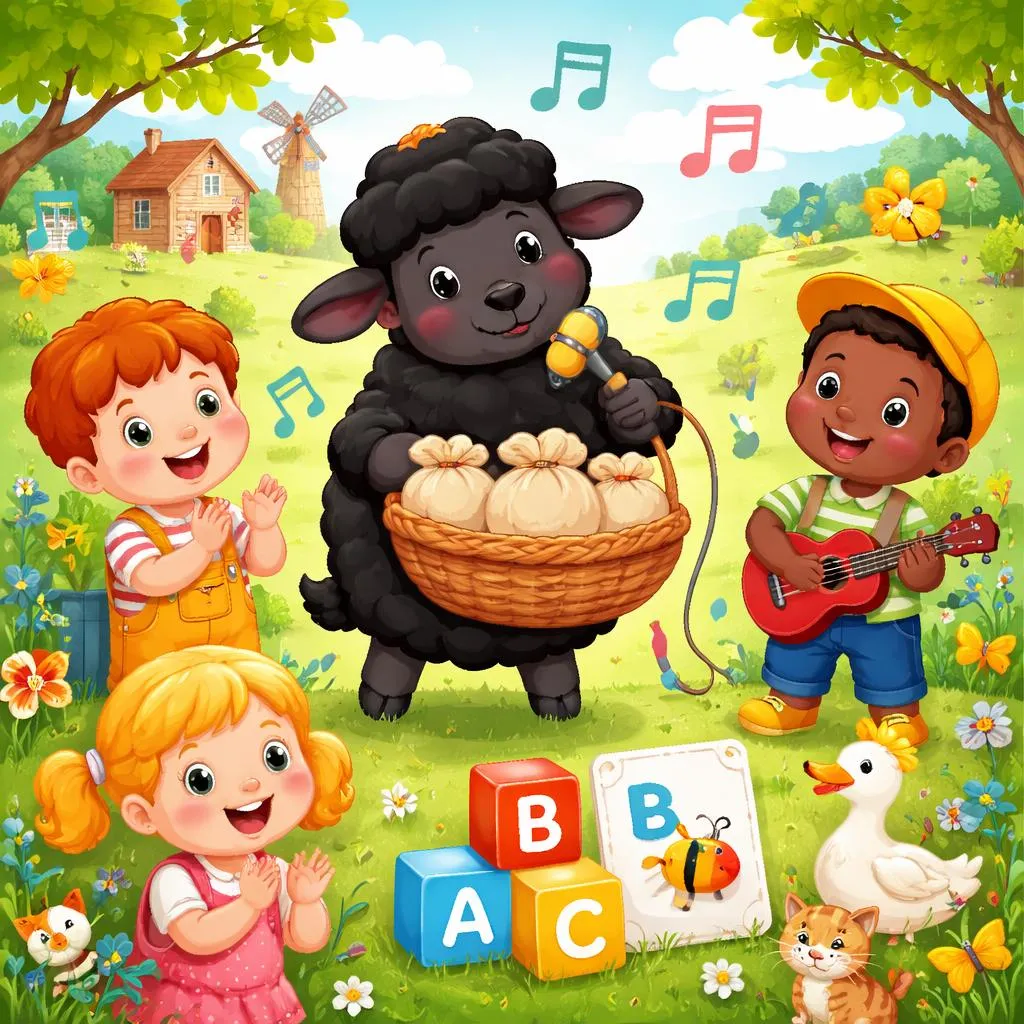
“baba black sheep lyrics” refer to the famous English nursery rhyme “Baa, Baa, Black Sheep.” This rhyme is one of the most popular songs for early English learning. It uses simple words, clear rhythm, and repeated patterns.
The story is short and friendly. It describes a black sheep and the wool it gives. It introduces sharing, numbers, and daily life themes.
Nursery rhymes like this create strong sound patterns. They support listening skills. They support speaking confidence. They support early reading awareness.
Songs turn language into music. Music makes language easy to remember.
The lyrics of nursery rhymes
Here is a classic version of “baba black sheep lyrics”:
Baa, baa, black sheep, Have you any wool? Yes sir, yes sir, Three bags full.
One for the master, One for the dame, And one for the little boy Who lives down the lane.
The rhyme uses repetition. The rhythm is steady and calm. The structure is easy to follow.
This makes the rhyme ideal for early English lessons.
Vocabulary Learning
The rhyme introduces many useful words.
“sheep” introduces an animal word. It connects with farm themes and nature topics.
“wool” introduces a material word. It connects with clothing and daily life.
“bags” introduces counting and objects. It connects with math and quantity.
“master” and “dame” introduce people and roles. They connect with storytelling and traditional language.
“boy” introduces family and people vocabulary. “lane” introduces place vocabulary.
“yes” and “have” introduce basic conversation words. These words support simple dialogue.
Vocabulary learning becomes meaningful with images. Pictures of sheep, wool, and bags support comprehension. Real objects like clothes and blankets connect words with reality.
Phonics Points
“baba black sheep lyrics” provide strong phonics practice.
The “baa” sound introduces long vowel sounds. It supports early vowel awareness.
The “sh” sound in “sheep” supports consonant blends. The “oo” sound in “wool” supports long vowel patterns.
The “b” sound in “baa,” “black,” and “bags” supports initial consonant practice. The repeated “b” sound strengthens phonemic awareness.
Rhyming patterns like “full” and “wool” support sound recognition. Clapping with each syllable supports syllable awareness.
Songs provide repeated sound input. Repeated sound input strengthens pronunciation and listening skills.
Grammar Patterns
The rhyme includes simple grammar structures.
“Have you any wool?” introduces a question form. This supports early question patterns.
“Yes sir, yes sir” introduces polite answers. This supports social language.
“One for the master” introduces prepositional phrases. It supports basic sentence expansion.
“Who lives down the lane” introduces relative clauses in simple form. It supports descriptive language.
Grammar appears in context. Grammar appears in meaningful communication. Grammar appears with rhythm and repetition.
This makes grammar easy to absorb.
Learning Activities
Singing with actions supports memory. Pretending to shear wool connects words with movement.
Role-play can use the story. One role becomes the sheep. Others become the master, the dame, and the boy.
Counting activities can use “three bags full.” This connects language with math.
Drawing activities can show sheep, bags, and houses. Drawing supports comprehension and creativity.
Echo singing supports pronunciation. Call-and-response supports listening and speaking.
Story retelling supports narrative skills. Simple questions support communication practice.
Printable Materials
Printable lyric sheets support reading practice. Picture flashcards support vocabulary recognition.
Flashcards can include:
sheep wool bag boy lane black
Tracing worksheets support writing skills. Sentence strips support sequencing practice.
Coloring pages with sheep themes support fine motor skills. Matching worksheets support comprehension.
Printable materials support visual, auditory, and tactile learning.
Educational Games
Rhythm clapping games support timing and pronunciation. Each clap can match a word or syllable.
Memory games match words with pictures. This reinforces vocabulary.
Counting games use the three bags concept. This connects language with numbers.
Story puzzle games reorder the rhyme lines. This supports reading flow and sequencing.
Role-play games build speaking confidence. Movement games connect language with actions.
Music-based games create joy and engagement. They reduce anxiety and encourage participation.
“baba black sheep lyrics” provide vocabulary, phonics, grammar, and story in one short rhyme. They connect culture, music, and language learning. They support listening, speaking, reading, and early literacy. They turn English into rhythm, story, and imagination.
Nursery rhymes like this build strong language foundations. They make English friendly, memorable, and meaningful.