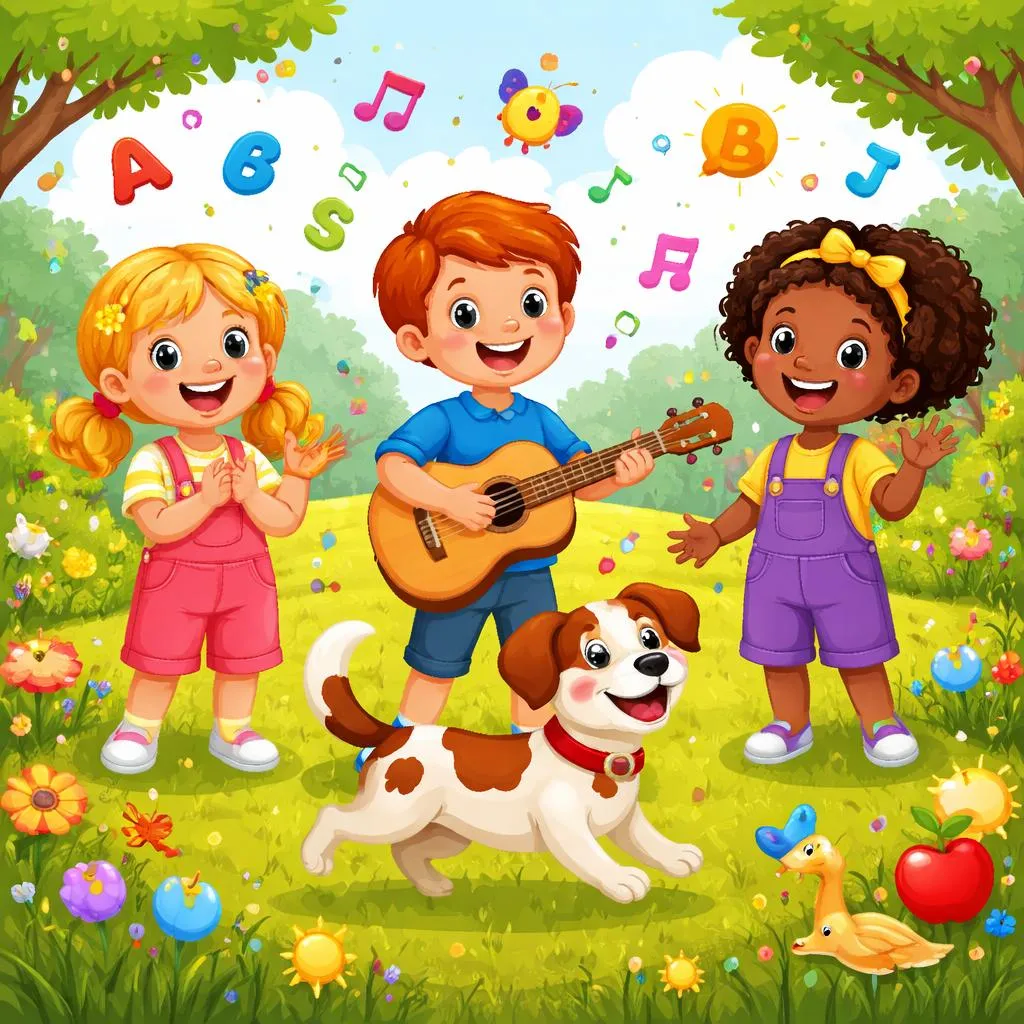

What Is the Rhyme or Story Behind bingo was his name of song
bingo was his name of song is a classic nursery rhyme about a farmer and a friendly dog. The song uses spelling, clapping, and repetition to make language playful and memorable. The melody feels cheerful and easy to follow. The story introduces a simple character, a dog named Bingo, and a farm setting.
Nursery rhymes like this one support early English learning through rhythm and repetition. Songs create a natural bridge between sounds and meaning. The farm theme also connects language with real-world topics like animals and nature.
The Lyrics of bingo was his name of song
The song begins with a simple introduction to a farmer and his dog. The chorus spells the dog’s name using letters and claps.
“B-I-N-G-O, B-I-N-G-O, B-I-N-G-O, and Bingo was his name-O.”
Each verse replaces a letter with a clap. This pattern builds anticipation and attention. The spelling activity makes the song interactive and engaging.
Lyrics like these help build letter recognition and spelling awareness. The rhythm supports memory and listening skills.
Vocabulary Learning with bingo was his name of song
This song introduces useful everyday words. The word “farmer” connects to occupations and rural life. The word “dog” connects to pets and animals.
The spelling of “Bingo” introduces letters and name structure. Letters appear in order and repeat across verses. This repetition strengthens letter memory.
Farm-related vocabulary can expand from the song. Words like farm, barn, cow, pig, and field fit naturally into the theme. Songs provide a meaningful context for these words.
Phonics Points in bingo was his name of song
Phonics learning focuses on sounds and letter patterns. The song highlights the sounds of letters in B-I-N-G-O.
The /b/ sound appears in “Bingo.” The short /i/ sound appears in the middle of the word. The /g/ sound appears before the long /o/ sound.
Clapping replaces letters in later verses. This builds sound awareness and phoneme recognition. Listening to missing sounds strengthens phonological skills.
The rhyme and rhythm support syllable awareness. The name “Bingo” has two syllables. Clapping syllables helps with pronunciation and decoding.
Grammar Patterns in bingo was his name of song
Songs model grammar in natural contexts. This song uses past tense in the phrase “was his name.” This introduces the past form of “is.”
The sentence structure “There was a farmer” shows simple past tense. This pattern can connect to storytelling and narrative language.
Possessive pronouns appear in “his name.” This supports understanding of ownership and relationships.
Short sentences in songs make grammar patterns easy to notice and repeat.
Learning Activities with bingo was his name of song
Movement and music create strong learning experiences. Clapping along with the song reinforces rhythm and spelling.
Gesture activities can match each letter with a movement. Jump for B, turn for I, clap for N, stomp for G, and wave for O.
Acting out the story adds drama and creativity. Pretend to be the farmer or the dog. Role play supports speaking and imagination.
Listening activities can focus on identifying letters and sounds. Pause the song and predict the next letter.
Storytelling activities can extend the farm theme. Imagine other animals with names to spell.
Printable Materials for bingo was his name of song
Printable flashcards can show the letters B, I, N, G, and O. Each card can include a picture and the uppercase and lowercase forms.
Word cards can show farm vocabulary such as dog, farmer, barn, and field. Sentence strips can display simple sentences from the song.
Mini-books can retell the story of the farmer and his dog. Each page can show one sentence and one illustration.
Coloring pages with farm scenes and Bingo the dog support creativity and fine motor skills.
Educational Games Inspired by bingo was his name of song
Games turn learning into play. A spelling game can use letter cards to build the name BINGO. Mix the letters and place them in the correct order.
A clapping game can remove letters one by one, like in the song. Listen and clap at the right moment.
A guessing game can describe an animal and guess the name. Use farm animals to connect with the song theme.
A rhythm game can clap syllables in animal names like cow, pig, sheep, and horse.
Why bingo was his name of song Supports Language Development
Songs combine sound, rhythm, and meaning. This combination supports memory and attention.
Spelling songs build letter recognition and early literacy skills. Clapping and movement reinforce listening and timing.
Farm themes connect language to real-life contexts. Context supports comprehension and vocabulary retention.
Songs also support social learning through shared activities. Singing together builds cooperation and communication.
Expanding Language with bingo was his name of song
The song opens many language pathways. Discuss animals and their homes. Introduce words like kennel, stable, and coop.
Ask simple questions about the song. “What is the dog’s name?” “Who owns the dog?”
Use simple answers to practice sentence structure. “The dog’s name is Bingo.” “The farmer owns the dog.”
Create new verses with different names. Spell a different name using the same pattern. This encourages creative language use.
Reading and Writing Practice with bingo was his name of song
Reading practice can include printed lyrics or simplified storybooks. Point to each word while reading aloud. This builds word tracking and decoding skills.
Writing practice can include spelling the name Bingo. Write sentences like “Bingo is a dog.”
Creative writing can describe a day on the farm. Use verbs like run, eat, play, and sleep.
Shared writing can build confidence in sentence construction and spelling.
Social and Emotional Learning Through bingo was his name of song
Songs create a joyful and inclusive learning environment. Singing together supports emotional connection and teamwork.
The story of a friendly dog encourages empathy and kindness toward animals. Discuss caring for pets and farm animals.
Creative play with the song encourages expression and imagination. Expression supports emotional growth and confidence.
Teaching Rhythm and Pronunciation with bingo was his name of song
English rhythm includes stress and timing patterns. This song highlights rhythm through clapping and repetition.
Clapping on each letter helps with timing and coordination. Chanting the letters without music supports clear pronunciation.
Repeating verses at different speeds can challenge listening and speaking skills. Slow and fast versions build control and fluency.
Integrating bingo was his name of song into Daily Routines
Songs fit many daily learning moments. Start a session with the song to build energy and focus.
Use the song during transitions to keep attention. Connect the song to lessons about animals, farms, and nature.
Art lessons can follow with drawings of farms and dogs. Science lessons can explore animal habitats and needs.
Cultural and Storytelling Context of bingo was his name of song
This song belongs to a long tradition of English nursery rhymes. Nursery rhymes often teach language, rhythm, and cultural themes.
Farm stories appear in many cultures and children’s books. This song connects language learning with cultural storytelling traditions.
Songs from different cultures can compare themes and settings. This builds global awareness and curiosity.
Creative Projects Based on bingo was his name of song
Craft projects can create a paper dog named Bingo. Add a collar with the name spelled in letters.
Build a paper farm with barns, fields, and animals. Label each part with simple English words.
Create puppets of the farmer and Bingo. Use puppets to sing and tell new stories.
Make a class book titled “Bingo and His Farm Friends.” Each page can introduce a new animal and sentence.
Supporting Multisensory Learning with bingo was his name of song
Multisensory learning combines sound, sight, and movement. This song naturally includes all three.
Sound comes from singing and spelling. Sight comes from letters, pictures, and flashcards. Movement comes from clapping and acting.
Using multiple senses strengthens memory and engagement.
Assessment Ideas Using bingo was his name of song
Informal assessment can occur during singing and spelling. Observe letter recognition and pronunciation.
Short quizzes can match letters to sounds. Spelling tasks can write the name Bingo correctly.
Creative tasks can show understanding through drawings and short sentences.
Encouraging Confidence Through bingo was his name of song
Confidence grows through repetition and success. The song structure allows gradual mastery of letters and rhythm.
Group singing reduces pressure and builds comfort with speaking. Positive feedback encourages participation and persistence.
Performing the song for others builds pride and motivation.
Connecting bingo was his name of song to Other Songs and Topics
This song connects well with other animal and spelling songs. Alphabet songs and animal songs can follow naturally.
Thematic units can include farms, pets, and rural life. Themes support deeper vocabulary and conceptual understanding.
Stories about dogs and farms can extend reading and listening practice.
Tips for Effective Use of bingo was his name of song
Keep sessions short, lively, and interactive. Use gestures, props, and visuals to support meaning. Repeat the song with small changes to maintain interest.
Invite creative variations with new names or animals. Creativity increases language use and engagement.
Celebrate effort and progress with applause and sharing. Positive experiences with music support long-term language growth.
bingo was his name of song offers a joyful path to English learning through rhythm, spelling, and storytelling. Music, movement, and imagination combine to build strong language foundations and a lasting love for English.