
What Is the Rhyme “and the green grass grew all around”?
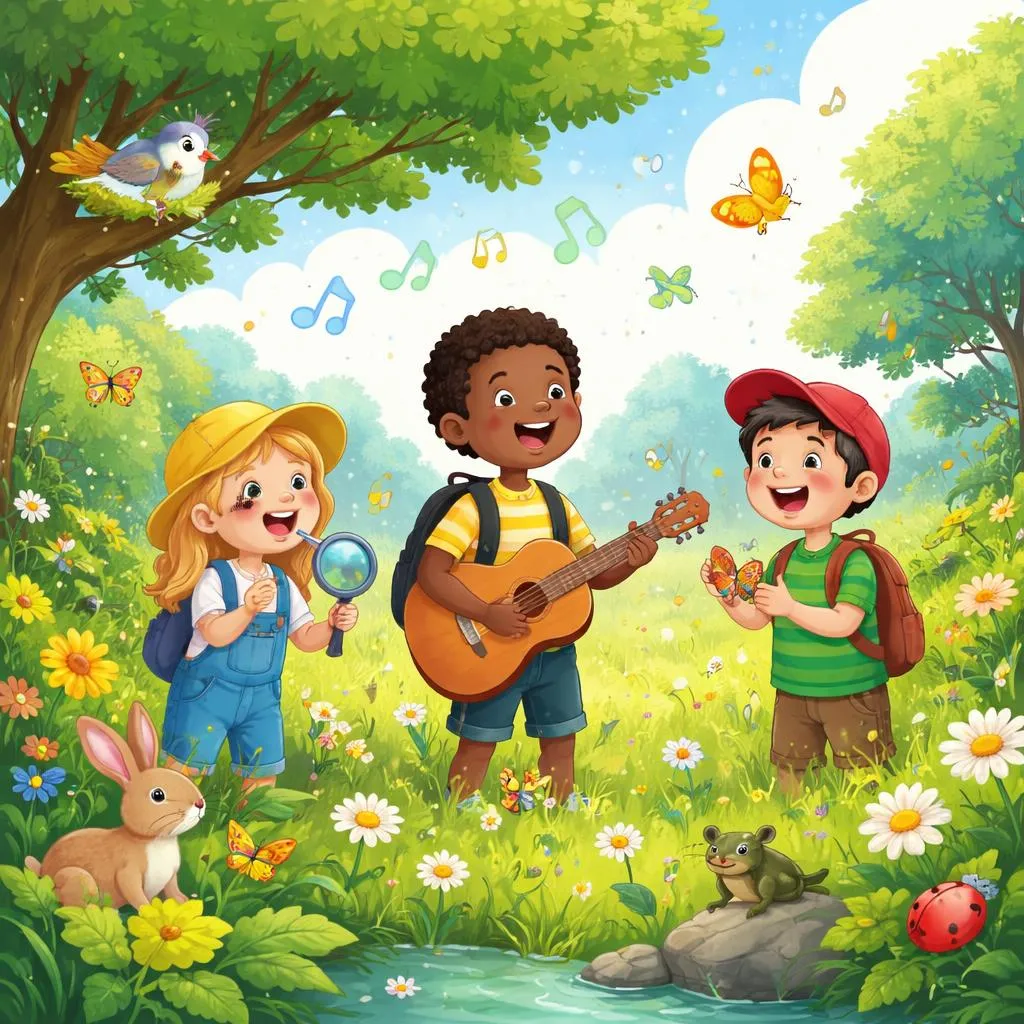
“And the green grass grew all around” is a traditional English nursery rhyme that celebrates nature, animals, and repetition. The song builds a circle of images that start from grass and move upward to a tree, a nest, a bird, and an egg.
The rhyme follows a cumulative pattern. Each verse adds a new element and repeats the previous lines. This pattern supports memory, listening, and sequencing skills.
The melody is simple and rhythmic. This makes it easy to sing and easy to remember. The repetition also creates a calm and joyful learning atmosphere.
The Lyrics of Nursery Rhymes: and the green grass grew all around
Below is a common version of the rhyme. Variations exist across regions and classrooms.
And the green grass grew all around, all around, And the green grass grew all around.
And on that grass there was a tree, a rare tree, a rattlin’ tree, And the tree in the hole, and the hole in the ground, And the green grass grew all around, all around, And the green grass grew all around.
And on that tree there was a nest, a rare nest, a rattlin’ nest, And the nest on the tree, and the tree in the hole, and the hole in the ground, And the green grass grew all around, all around, And the green grass grew all around.
And in that nest there was a bird, a rare bird, a rattlin’ bird, And the bird in the nest, and the nest on the tree, and the tree in the hole, and the hole in the ground, And the green grass grew all around, all around, And the green grass grew all around.
And on that bird there was a feather, a rare feather, a rattlin’ feather, And the feather on the bird, and the bird in the nest, and the nest on the tree, and the tree in the hole, and the hole in the ground, And the green grass grew all around, all around, And the green grass grew all around.
Some versions continue with an egg, a worm, or other nature elements. The cumulative structure remains the same.
Vocabulary Learning with “and the green grass grew all around”
This rhyme introduces nature-based vocabulary in a clear context. Words appear in a logical sequence that builds meaning.
“Grass” refers to green plants that cover the ground. “Tree” refers to a tall plant with a trunk and leaves. “Nest” refers to a small home for birds. “Bird” refers to an animal with wings and feathers. “Feather” refers to the soft covering on birds. “Ground” refers to the earth or soil.
The repeated phrase “grew all around” reinforces the concept of growth and environment. This helps connect language with real-world observation.
The word “rare” adds descriptive language. It introduces the idea of something special or uncommon.
Phonics Points in “and the green grass grew all around”
Phonics practice becomes natural through singing and repetition. Each verse includes many initial sounds that support phonemic awareness.
The /g/ sound appears in grass and grew. The /t/ sound appears in tree. The /n/ sound appears in nest. The /b/ sound appears in bird. The /f/ sound appears in feather.
Rhyming and rhythm help recognize sound patterns. Stress and intonation patterns also become familiar through melody.
The repeated phrase “all around” highlights the /aʊ/ sound in around. This helps practice vowel sounds.
Grammar Patterns in “and the green grass grew all around”
This rhyme introduces simple sentence structures that appear often in English.
The pattern “There was” introduces existence in the past. This structure appears in storytelling and descriptions. The phrase “And on that…” introduces prepositions like on, in, and around. These prepositions describe location and spatial relationships.
The cumulative pattern models sequencing language. Phrases like “the bird in the nest” and “the nest on the tree” show how prepositional phrases add detail.
The repeated conjunction “and” models sentence linking. This supports understanding of connected ideas.
Learning Activities with “and the green grass grew all around”
Movement and gestures enhance comprehension. Each verse can include a gesture for grass, tree, nest, bird, and feather.
Drawing activities can include a circular nature scene that shows each element. This reinforces sequencing and vocabulary.
Singing in rounds or with echo patterns builds listening and speaking skills. Call-and-response singing strengthens participation.
Story-building activities can add new verses, such as an egg in the nest or a worm in the ground. This encourages creative language use.
Printable Materials for “and the green grass grew all around”
Printable flashcards with grass, tree, nest, bird, and feather support word recognition. Picture-word cards strengthen visual associations.
Sentence strips can show the cumulative structure. These strips can be arranged in order to practice sequencing.
Coloring pages with nature scenes provide a calm way to review vocabulary. Labeling pictures supports early writing skills.
A mini-book template can include one verse per page with illustrations. This supports print awareness and reading practice.
Educational Games Based on “and the green grass grew all around”
Games bring energy and reinforce learning objectives. A sequencing game can involve arranging picture cards in the correct order.
A sound game can involve clapping when hearing specific sounds like /g/ or /b/. This builds phonemic awareness.
A nature scavenger hunt can connect vocabulary to real-world observation. Pictures or objects can represent grass, trees, and birds.
A rhythm game can involve tapping the beat while singing. This strengthens musical timing and language rhythm.
Meaning and Explanation of the Rhyme
The rhyme describes a simple ecosystem. Grass supports a tree. A tree supports a nest. A nest supports a bird. A bird supports a feather. Everything connects in a cycle.
This structure shows how nature layers and connects. The repetition highlights the idea of environment and continuity.
The phrase “green grass grew all around” emphasizes growth and abundance. This creates a peaceful and positive image of nature.
The cumulative pattern mirrors memory-building exercises. Each verse adds complexity while reinforcing previous lines.
Daily Life Examples Connected to “and the green grass grew all around”
Nature walks can connect to the vocabulary in the song. Grass, trees, birds, and nests can appear in parks, gardens, and neighborhoods.
Observing birds and trees supports real-world language connections. Drawing or photographing these elements can extend learning.
Gardening activities can connect to the idea of growth. Planting seeds and watching them grow mirrors the rhyme’s theme.
Outdoor storytelling sessions can use the rhyme as a starting point for nature-based stories.
How “and the green grass grew all around” Supports Language Development
The rhyme supports listening, speaking, and memory skills. Repetition strengthens comprehension and recall.
Cumulative verses train working memory. Each new line requires remembering previous lines. This builds cognitive skills.
Vocabulary learning occurs in context. Words connect logically, which improves retention.
Grammar structures appear naturally. Prepositions, conjunctions, and descriptive phrases become familiar.
Creative Extensions Using “and the green grass grew all around”
Creative writing can add new verses with animals or insects. A worm in the ground or a bee on the flower can extend the chain.
Art projects can create a layered nature collage. Each layer represents a verse of the song.
Drama activities can assign roles for grass, tree, nest, bird, and feather. Acting out the song builds expressive language.
Music composition can add instruments for each verse. This integrates music and language learning.
Tips for Teaching with “and the green grass grew all around”
Slow pacing supports pronunciation and comprehension. Gradual speed increase adds challenge and fun.
Visual aids such as puppets or pictures enhance understanding. Gestures reinforce meaning.
Repetition across sessions supports long-term retention. Variation in activities maintains engagement.
Encouraging creative additions builds confidence and expressive language skills.
Integrating “and the green grass grew all around” into English Curriculum
This rhyme fits into nature units, phonics lessons, and sequencing activities. It can introduce environmental vocabulary and simple ecosystems.
It also supports science topics about plants and animals. Cross-curricular integration strengthens learning.
In literacy units, the cumulative pattern supports retelling and story structure understanding.
In music units, rhythm and melody support musical development.
Cultural and Musical Value of “and the green grass grew all around”
This rhyme comes from folk traditions in English-speaking cultures. It reflects storytelling through song and oral tradition.
The repetitive structure makes it easy to pass down through generations. This keeps cultural heritage alive.
Music enhances emotional engagement and memory. Singing connects language with emotion and movement.
The rhyme remains popular in classrooms and homes due to its simplicity and adaptability.
Using Technology with “and the green grass grew all around”
Animated videos can illustrate the cumulative story. Interactive apps can reinforce vocabulary and sequencing.
Digital flashcards and quizzes can support self-paced practice. Recording singing sessions can support pronunciation review.
Virtual nature tours can connect vocabulary to real environments. This bridges digital learning and real-world observation.
Encouraging Confidence Through “and the green grass grew all around”
Group singing builds social connection and confidence. The predictable structure reduces anxiety.
Repetition allows gradual mastery. Each verse becomes easier with practice.
Positive reinforcement for participation supports motivation and joy in language learning.
Building Literacy Skills with “and the green grass grew all around”
Print lyrics support word recognition and tracking. Pointing to words while singing builds print awareness.
Sentence patterns support early syntax understanding. Prepositional phrases add descriptive detail.
Sequencing verses supports narrative skills. This builds foundational reading comprehension abilities.
Writing short sentences about nature extends literacy development.
Expanding Lessons Beyond the Rhyme
Nature-themed units can include stories, poems, and songs about plants and animals. This creates a rich thematic learning environment.
Science lessons can explore habitats, life cycles, and ecosystems. Vocabulary from the rhyme supports these topics.
Outdoor art and journaling activities integrate language with observation and creativity.
Emotional and Social Learning Through Singing
Shared singing builds a sense of community. Turn-taking in verses fosters cooperation and respect.
Music supports emotional expression and relaxation. Calm nature imagery creates a peaceful learning atmosphere.
Group activities encourage empathy and teamwork.
Long-Term Benefits of Using “and the green grass grew all around”
Early exposure to cumulative songs strengthens memory, sequencing, and attention skills. These skills support academic learning.
Phonics and vocabulary exposure support later reading development. Grammar patterns provide a foundation for sentence building.
Positive musical experiences build motivation and confidence in English learning.
The images of grass, trees, nests, and birds stay vivid and meaningful. The rhythm and repetition keep language learning joyful, connected to nature, and easy to remember through song and imagination.