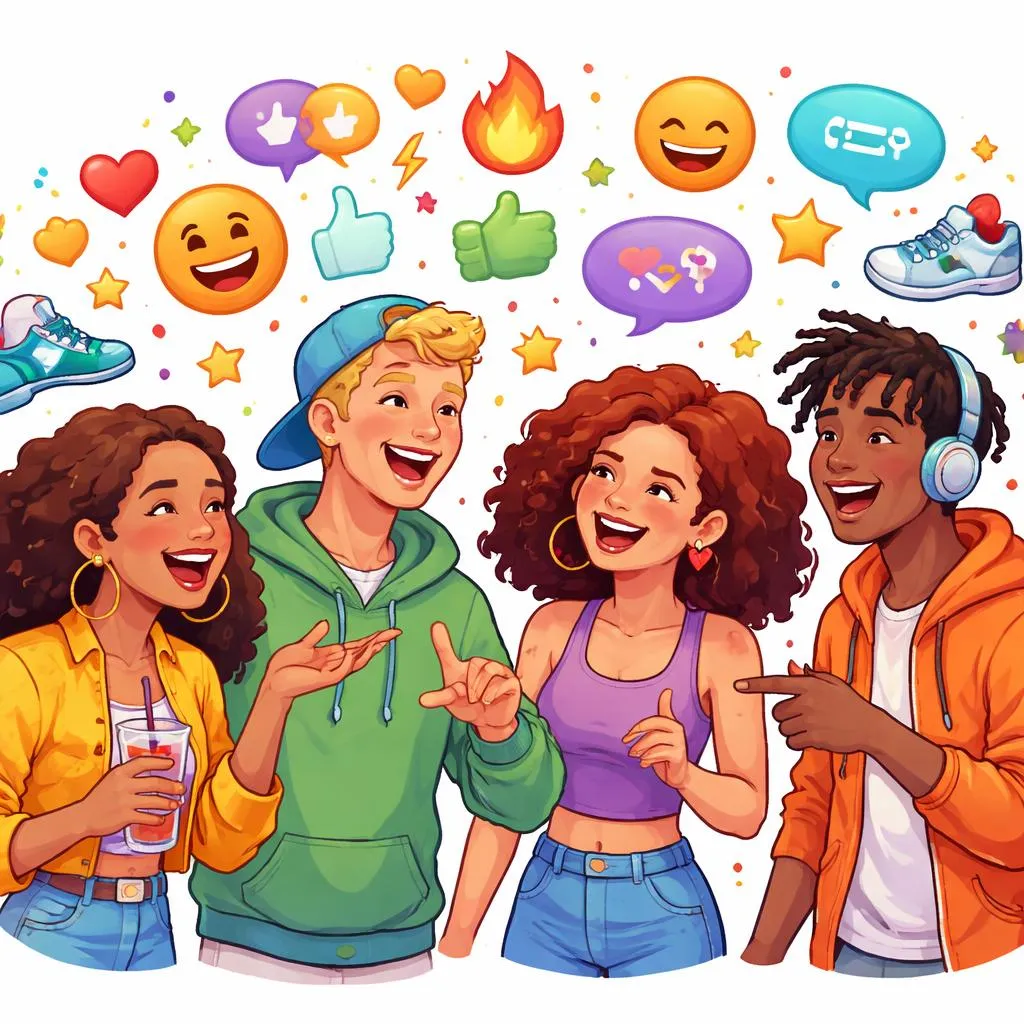

What is Slang? Slang is informal language used in everyday conversations. It is different from standard or formal language. People use slang to sound more casual or friendly.
Slang makes language more relaxed.
When Do People Use Slang? People use slang with friends, family, or in casual settings. For example, in a conversation with friends, you might say “cool” instead of “good.” Slang is used to make speech feel more personal and fun.
Slang is used in casual conversations.
Examples of Common Slang Words Here are some common slang words: “Cool” means “good” or “awesome.” “Chill” means “relax.” “Hang out” means “spend time with someone.”
Slang words make conversations more relaxed.
Why Do People Use Slang? People use slang to show they are part of a group. It can also make conversations feel more friendly and fun. Using slang helps people connect with others.
Slang helps people feel connected.
Slang in Different Countries Slang can be different in each country. For example, in the United States, “awesome” means something is great, but in the UK, people might say “brilliant” instead. Each place has its own slang words.
Slang changes by country and culture.
The Meaning of “Cool” “Cool” is a very common slang word. It means something is good, awesome, or impressive. For example, “That movie was really cool.”
“Cool” is used to describe something great.
“Chill” as Slang “Chill” is another slang word. It means to relax or take it easy. For example, “I’m just going to chill at home today.”
“Chill” means to relax.
Using “Dude” in Conversations “Dude” is a slang word used to refer to a person. For example, “Hey, dude, how are you?” It’s a friendly and informal way to refer to someone.
“Dude” is used to talk to friends.
“Hang Out” with Friends “Hang out” means to spend time with friends. For example, “Let’s hang out this weekend.” It’s used to suggest getting together and having fun.
“Hang out” means to spend time together.
Using “Bummer” in Slang “Bummer” is a slang word used to express disappointment. For example, “It’s a bummer that we can’t go to the concert.” It shows that something is unfortunate or sad.
“Bummer” means something disappointing.
“What’s Up?” as Slang “What’s up?” is a common slang greeting. It’s used to ask “How are you?” or “What’s going on?” For example, “Hey, what’s up?” means “Hey, how are you doing?”
“What’s up?” is used to greet someone.
Slang and Age Groups Slang is often used by younger people, like teenagers and young adults. However, some slang words can be used by people of all ages. It’s important to know when and where it’s okay to use slang.
Slang is popular among younger people.
The Slang Word “Lit” “Lit” is a modern slang word that means something is very exciting or fun. For example, “The party was lit!” means “The party was amazing!” It is often used to describe a great experience.
“Lit” means something exciting or fun.
“YOLO” and Its Meaning “YOLO” stands for “You Only Live Once.” It’s used to encourage people to take risks and enjoy life. For example, “Let’s go on that roller coaster—YOLO!”
“YOLO” is used to remind people to live life fully.
The Slang Word “FOMO” “FOMO” stands for “Fear of Missing Out.” It is used to describe the feeling of being left out or not included. For example, “I stayed home because of FOMO” means “I stayed home because I didn’t want to miss out on anything.”
“FOMO” means the fear of missing out.
The Role of Slang in Pop Culture Slang words are often used in music, movies, and TV shows. For example, words like “cool,” “chill,” and “awesome” are popular in songs and films. Pop culture influences the slang that becomes popular.
Slang is shaped by pop culture.
Using Slang in Texting Many people use slang when texting. For example, “LOL” means “laugh out loud” and “BRB” means “be right back.” Texting slang makes messages shorter and more casual.
Texting slang makes communication quick.
The Importance of Understanding Slang It’s important to understand slang, especially when talking to younger people or in casual settings. Slang can help make conversations feel more relaxed. However, be careful when using slang in formal situations.
Understanding slang helps you connect with others.
When Not to Use Slang Slang should not be used in formal settings, like at work or in school presentations. For example, saying “cool” or “chill” might not be appropriate in a job interview. It’s important to know when to use informal language.
Slang is not suitable for formal situations.
How Slang Changes Over Time Slang words can change over time. For example, words that were popular years ago, like “rad,” may not be used much today. New slang words emerge as people create new ways to communicate.
Slang words change with time.
Learning Slang with Friends One of the best ways to learn slang is by spending time with friends. Listen to how they talk and pay attention to the words they use. Ask them what certain words mean if you’re not sure.
Learning slang from friends is fun and helpful.
: Slang Makes Language Fun Slang is an important part of casual language. It helps people express themselves in fun and relaxed ways. By learning slang, you can sound more natural when speaking with friends and peers.
Slang makes conversations more interesting and informal.
The Influence of Social Media on Slang Social media platforms have a big impact on the slang that becomes popular. For example, “lit,” “savage,” and “slay” have become common slang words thanks to social media. These platforms make it easy for new words to spread quickly.
Social media helps slang spread fast.
“Extra” as Slang “Extra” is a slang word used to describe someone who is over the top or doing too much. For example, “She’s being extra with all those decorations” means “She’s going overboard with the decorations.” It’s often used when someone is being dramatic.
“Extra” means over the top or dramatic.
The Slang Word “Flex” “Flex” is a slang word that means to show off or boast. For example, “He’s flexing his new car” means “He’s showing off his new car.” It’s often used when someone is proudly displaying something.
“Flex” means showing off.
“Bae” and Its Meaning “Bae” is a slang term used to refer to someone you love or care about. It’s short for “before anyone else.” For example, “I’m going to the movies with bae tonight.”
“Bae” means boyfriend or girlfriend.
The Slang Word “Savage” “Savage” is used to describe someone who is tough, bold, or fierce. For example, “She made a savage comeback” means “She gave a bold or strong reply.” It can also be used to describe someone who doesn’t care about the consequences.
“Savage” means bold or fierce.
“Goofy” as Slang “Goofy” is used to describe someone who is silly or funny in an awkward way. For example, “You look so goofy in that outfit!” means “You look funny in that outfit!” It’s a lighthearted term used to tease someone.
“Goofy” means silly or awkward.
“Chill” vs. “Chill Out” “Chill” means to relax, while “chill out” is often used to tell someone to calm down. For example, “Chill out, it’s not a big deal” means “Calm down, it’s not serious.” “Chill” is more about relaxing, while “chill out” is used to help someone calm down.
“Chill” means relax, and “chill out” means calm down.
“Turn Up” as Slang “Turn up” is a slang phrase used to describe having a good time or partying. For example, “We’re going to turn up at the concert tonight!” means “We’re going to have a great time at the concert!” It’s often used when talking about fun or excitement.
“Turn up” means to party or have fun.
“Slay” and Its Use “Slay” is a slang word used to describe someone doing something extremely well or looking amazing. For example, “You’re slaying that outfit!” means “You look amazing in that outfit!” It’s used to praise someone for their style or skills.
“Slay” means to look amazing or do something well.
“Finesse” as Slang “Finesse” is a slang word used to describe doing something smoothly or skillfully. For example, “She finessed her way into the club” means “She skillfully got into the club.” It can also mean tricking someone in a clever way.
“Finesse” means to do something skillfully.
“Lowkey” vs. “Highkey” “Lowkey” means something is done in a subtle or not very obvious way. For example, “I lowkey love this song” means “I secretly love this song.” “Highkey” is the opposite and means something is very obvious or openly done.
“Lowkey” means secretly, and “highkey” means openly.
The Use of “No Cap” “No cap” is used to emphasize that something is true or not a lie. For example, “I’m the best at this game, no cap!” means “I’m really the best at this game, no lie!” It’s often used to make a statement stronger.
“No cap” means no lie, or it’s true.
“Lit” vs. “Fire” “Lit” and “fire” are both slang words used to describe something that is exciting, great, or awesome. For example, “This party is lit!” or “That concert was fire!” Both words show that something is very cool or impressive.
“Lit” and “fire” both mean something is awesome.
“Shade” and “Throwing Shade” “Shade” is a slang word used to describe subtle insults or criticism. For example, “She’s throwing shade at me” means “She’s making a subtle insult toward me.” It’s often used when someone says something disrespectful but in a disguised way.
“Shade” means a subtle insult.
“Ghost” Someone To “ghost” someone means to stop talking to them without any explanation. For example, “He ghosted me after our date” means “He stopped responding to me after our date.” It’s often used in the context of friendships or relationships.
“Ghost” means to stop talking to someone suddenly.
“Tea” and “Spilling the Tea” “Tea” refers to gossip or the latest news. For example, “Do you have the tea on what happened at the party?” means “Do you know the gossip about the party?” “Spilling the tea” means sharing the gossip or news.
“Tea” means gossip.
“Clout” as Slang “Clout” refers to influence or power, especially on social media. For example, “She’s just doing it for the clout” means “She’s only doing it to get attention.” It can also be used to describe someone who is popular or influential.
“Clout” means influence or popularity.
“Flex” and “Flexing” “Flex” is a slang term used when someone shows off or flaunts something. For example, “He’s flexing his new shoes” means “He’s showing off his new shoes.” It’s often used in a playful or teasing way.
“Flex” means to show off.
Slang and Its Evolving Nature Slang words change over time and can have different meanings depending on the group of people using them. For example, “sick” used to mean unwell, but now it can mean something is cool. Slang is constantly evolving and adapting to new trends and cultures.
Slang evolves as language changes.
: The Fun of Slang Slang adds fun and personality to language. It helps people connect and express themselves in casual ways. By learning slang, you can talk like a native speaker and be part of popular culture.
Slang makes communication lively and fun.