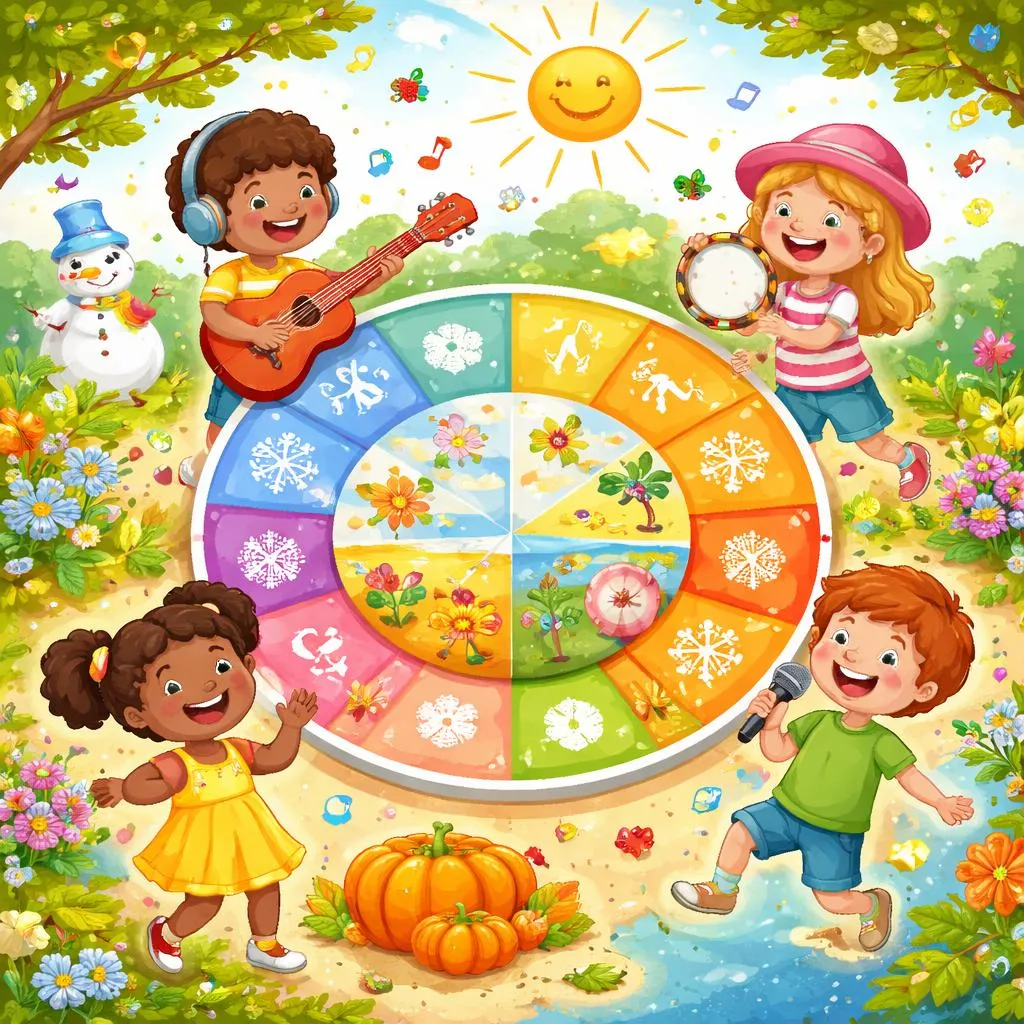

What are Songs for the Months of the Year?
Songs for the months of the year are cheerful and educational songs that help children learn the names and order of all twelve months. These songs combine melody, rhythm, and repetition to make learning fun. Music engages memory and makes abstract concepts like time easier to understand. Children can sing, dance, and move while learning, which reinforces both listening and speaking skills.
The songs often include simple lyrics with months in order:
January, February, March, and April May, June, July, and August September, October, November, December Now I know the months of the year!
This format helps children remember the sequence naturally. Repetition of the months in a song allows children to learn quickly without pressure. Some songs also include simple facts about seasons or holidays, adding context to learning.
Lyrics and Structure
The lyrics are typically short and repetitive. Each line introduces four months, making it easier for children to remember. The final line usually repeats the idea that they now know all the months. Adding hand movements or gestures for each month can help visual learners. For example, pointing to a calendar or drawing the seasons alongside singing reinforces memory.
Songs can vary in style. Some use a rock beat, while others are slower and gentle. This allows teachers and parents to select the version that suits the child’s mood or class energy.
Vocabulary Learning
Songs for the months of the year introduce new vocabulary naturally. Children learn the spelling and pronunciation of each month:
January, February, March
April, May, June
July, August, September
October, November, December
Each month can also be linked to seasonal words:
January – Snow
April – Rain
July – Sun
October – Leaves
Connecting months to familiar words or events improves understanding. Children can associate each month with holidays, weather, or personal experiences, making learning meaningful.
Phonics Points
The songs emphasize the sounds of letters in months.
Long vowels: May, June, July
Short vowels: March, April, September
Consonant blends: March, July, December
Repeating the song allows children to practice pronunciation regularly. Phonics practice with months also improves early reading skills. Children notice patterns like “-ember” in September, October, November, and December, which builds awareness of word families.
Grammar Patterns
Simple sentences in these songs introduce basic grammar patterns.
Statements: “Now I know the months of the year”
Questions: “Can you sing the months with me?”
Repetition: Reinforces sentence structure and rhythm
Singing and repeating these sentences helps children understand English sentence flow. They start recognizing the difference between statements and questions naturally.
Daily Life Examples
Learning months becomes more relevant with everyday examples. Children can mark birthdays, holidays, or school events on a calendar while singing. Teachers can ask, “Which month is your birthday in?” or “What happens in July?” Connecting months to real life strengthens memory and comprehension.
Months can also be linked to seasonal activities:
Winter months: January, February, December – Snow, cozy indoor play
Spring months: March, April, May – Rain, flowers, gardening
Summer months: June, July, August – Sun, vacations, beach
Autumn months: September, October, November – Leaves, harvest, Halloween
This association helps children understand the concept of seasons.
Printable Flashcards
Flashcards enhance learning from songs. Each card can show a month’s name, a picture, or a seasonal symbol.
January – Snowflake
April – Umbrella
July – Sun
October – Pumpkin
Children can arrange the months in order while singing. Tracing letters or coloring objects associated with each month reinforces visual and kinesthetic learning. Flashcards are effective for both home practice and classroom activities.
Learning Activities
Songs for the months of the year can be paired with engaging activities:
Month Match: Match a month card to its seasonal image.
Calendar Jump: Children jump to the month on a large floor calendar while singing.
Birthday Song: Sing each month and celebrate children’s birthdays during class.
Seasonal Sorting: Sort month cards by season while singing.
Activities support multiple learning styles and help children internalize months in an interactive way. Movement and music combined enhance memory and enjoyment.
Educational Games
Games make learning months even more engaging:
Musical Months: Play music; pause and children shout the correct month.
Memory Match: Match months to their images or season symbols.
Month Relay: Place cards in order across the room; children run to arrange them while singing.
Sing and Spell: Spell each month aloud while singing along.
Games encourage teamwork, focus, and recall while reinforcing the months in a playful manner.
Combining Music and Learning
Songs for the months of the year demonstrate the power of music in education. Repetition, melody, and rhythm improve listening, speaking, and memory skills. Children learn months naturally while moving, clapping, and singing. This multisensory approach engages auditory, visual, and kinesthetic learners simultaneously.
Tips for Learning the Months
Start with a few months at a time before learning all twelve. Repeat each song multiple times to build confidence. Add hand gestures, props, or visual aids for each month. Link months to personal events, holidays, or seasonal activities. Encourage children to sing along in groups and individually. Integrate movement and rhythm for active learning.
Creative Variations
Children can create their own versions of songs:
“January brings snow, February too March and April show flowers new May and June shine under the sun July and August, summer fun September leaves fall down so bright October pumpkins light the night November chilly winds blow near December brings holidays and cheer!”
Creative variations let children explore language, rhythm, and imagination. They can perform or record their own versions with classmates or family.
Connecting to Other Songs
Songs for the months of the year can be linked with other learning songs:
Seasons Song – reinforce weather and month relationships
Birthday Song – connect months to celebrations
Calendar Song – teach days and weeks alongside months
These connections strengthen recognition of time, seasons, and events.
Summary of Benefits
Learning months through songs offers multiple advantages:
Builds familiarity with month names and order
Introduces vocabulary related to seasons and holidays
Improves pronunciation and phonics
Supports sentence structures and repetition
Connects learning to real-life experiences
Combines music, movement, and visual aids for multisensory learning
Children enjoy singing, dancing, and acting while learning months. Songs for the months of the year make English learning interactive, memorable, and fun. Through repetition, games, and creative activities, children gain confidence in language, time concepts, and social interaction. Music and rhythm transform abstract learning into an engaging experience for young learners.