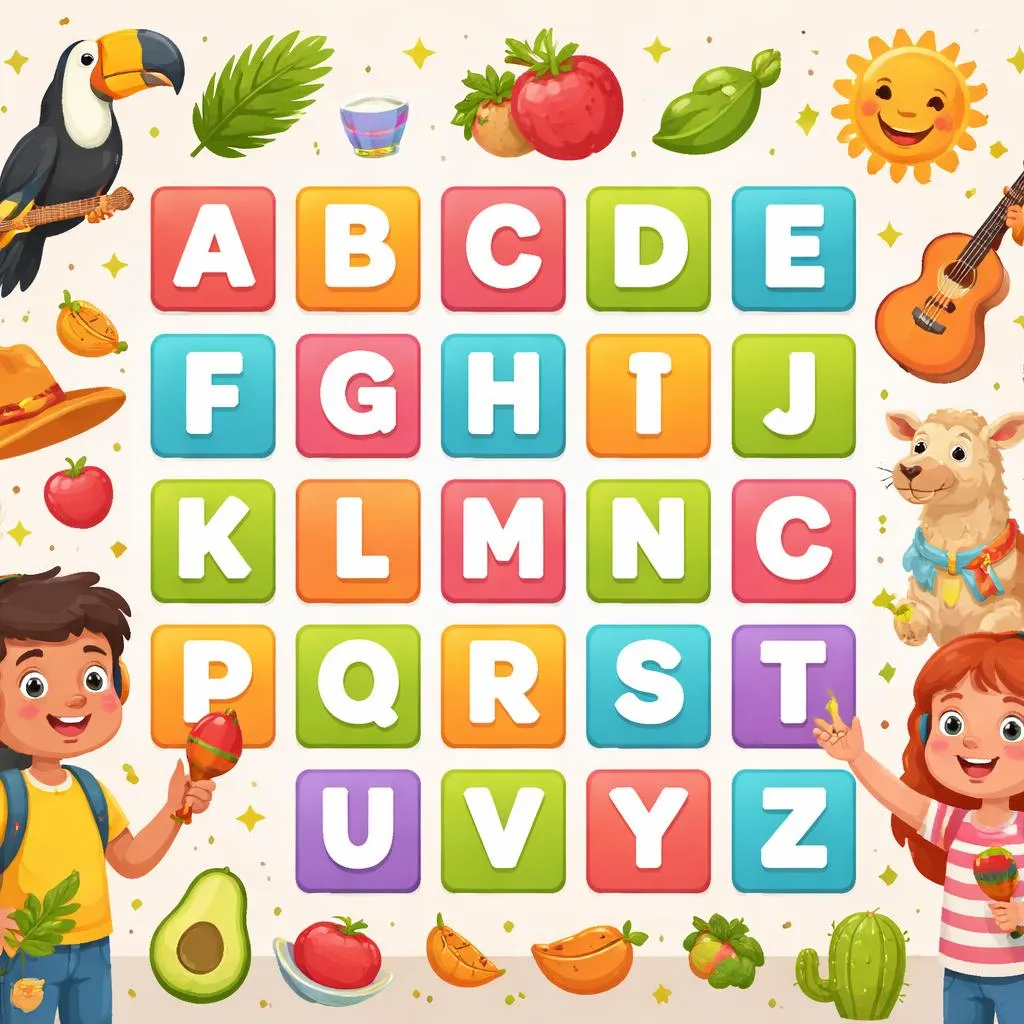

A Spanish alphabet chart shows letters. It also shows sounds.
This chart helps beginners. It makes learning clear.
The Spanish alphabet is friendly. It is consistent.
Letters usually sound the same. This helps reading and speaking.
Using a Spanish alphabet chart builds a strong foundation.
What Is a Spanish Alphabet Chart
A Spanish alphabet chart is a visual guide.
It lists all the letters. It shows their names.
Many charts also show sounds. Some include examples.
Charts help learners see patterns. Patterns support memory.
This tool is simple. It is very effective.
Why a Spanish Alphabet Chart Matters
Charts reduce confusion. They organize information.
Seeing letters together helps understanding.
The Spanish alphabet is more predictable than English.
A chart makes this clear. Clarity builds confidence.
Confidence supports progress.
How Many Letters Are in the Spanish Alphabet
The modern Spanish alphabet has 27 letters.
They include all English letters except a few changes.
One special letter exists. That letter is ñ.
This letter is important. It has its own sound.
Spanish Alphabet Letters Overview
The Spanish alphabet includes vowels and consonants.
Vowels are stable. They rarely change sound.
Consonants follow rules. Rules create consistency.
A chart shows this structure clearly. Structure supports learning.
Spanish Vowels on the Chart
Spanish has five vowels.
A E I O U
Each vowel has one main sound. This is very helpful.
A sounds open. E sounds clear.
I sounds sharp. O sounds round.
U sounds soft. Charts show this clearly.
Why Spanish Vowels Are Easy to Learn
Spanish vowels are stable. They do not shift much.
This helps beginners read aloud. Reading feels safer.
Once vowels are learned, many words become readable.
This creates early success. Early success matters.
Spanish Consonants on the Chart
Consonants make up most letters. They follow patterns.
Some match English sounds. Some feel new.
Charts help show differences. Differences become clear visually.
This reduces guessing. Guessing slows learning.
The Special Letter Ñ
Ñ is unique to Spanish. It is not an N.
It has its own sound. It sounds like ny.
This letter appears often. It is common in words.
Seeing ñ on the chart helps recognition.
Recognition improves reading.
Letters That Sound Similar to English
Many Spanish letters sound like English ones.
M sounds the same. L sounds the same.
S sounds similar. P sounds similar.
Charts reassure learners. Not everything is new.
This reduces fear. Fear blocks learning.
Letters With Different Sounds
Some letters sound different.
J sounds strong. G can change sound.
H is silent. This surprises learners.
Charts explain this clearly. Visual notes help.
Knowing differences early prevents mistakes.
The Silent Letter H
H appears in many words. It is not pronounced.
This feels strange at first. Charts remind learners.
Seeing H marked silent helps memory.
With practice, it becomes normal.
Hard and Soft Sounds on the Chart
Some letters change sound.
C can be hard. C can be soft.
G can be hard. G can be soft.
Charts often show examples. Examples guide understanding.
This prevents confusion later.
Spanish Alphabet Chart and Pronunciation
Pronunciation is key. Charts support this.
Seeing letters with sounds connects eye and ear.
This connection builds accuracy. Accuracy builds confidence.
Charts help self-study. They support classroom learning too.
Using the Chart for Reading Practice
Reading starts with letters. Charts support decoding.
Learners point to letters. They say sounds.
Slow reading builds clarity. Clarity builds fluency.
Charts make practice easy. They stay visible.
Using the Chart for Speaking Practice
Speaking needs confidence. Charts reduce hesitation.
Learners check sounds. They practice aloud.
Repeating letters daily builds muscle memory.
This supports clear speech. Clear speech builds confidence.
Spanish Alphabet Chart and Listening
Listening improves with awareness.
Knowing letter sounds helps catch words.
The brain expects patterns. Charts teach those patterns.
Listening becomes easier. Understanding improves.
Spanish Alphabet Chart for Children
Children learn visually. Charts work well.
Bright letters attract attention. Simple layout helps focus.
Children point and repeat. Repetition builds memory.
Charts feel playful. Play supports learning.
Spanish Alphabet Chart for Beginners
Beginners need structure. Charts provide it.
All letters in one place reduce overwhelm.
Learners feel guided. Guidance builds comfort.
Comfort supports consistency.
Spanish Alphabet Chart and Daily Review
Daily review matters.
Looking at the chart for a few minutes helps.
Small practice adds up. Consistency beats speed.
Charts support habit building. Habits support progress.
Spanish Alphabet Chart and Writing
Writing starts with letters.
Charts guide spelling. They support accuracy.
Learners copy letters. They practice sounds.
Writing reinforces learning. It strengthens memory.
Spanish Alphabet Chart and Spelling Confidence
Spanish spelling is logical. Charts show why.
Letters match sounds. Sounds match letters.
This consistency helps learners. It reduces frustration.
Confidence grows naturally.
Comparing English and Spanish Alphabet Charts
English charts show many sounds. Spanish charts show fewer.
Spanish feels simpler. This motivates learners.
Seeing both charts highlights differences.
Understanding differences prevents transfer errors.
Spanish Alphabet Chart and Accent Marks
Charts sometimes show accents. Accents guide stress.
Stress matters in Spanish. It changes meaning.
Seeing accents early builds awareness.
Awareness improves pronunciation.
Spanish Alphabet Chart and Word Building
Letters form syllables. Syllables form words.
Charts support this process. They show building blocks.
Learning syllables feels logical. Logic supports retention.
Words become less scary.
Spanish Alphabet Chart and Syllable Clarity
Spanish syllables are clear. Charts support this clarity.
Each vowel matters. Each sound is heard.
This makes reading smoother. Smooth reading builds fluency.
Spanish Alphabet Chart in the Classroom
Teachers use charts often. They stay on walls.
Students refer to them. They feel supported.
Charts reduce constant correction. Learners self-check.
This builds independence.
Spanish Alphabet Chart for Self-Study
Self-learners need tools. Charts are reliable.
No technology needed. Always available.
Charts support review anytime. They encourage autonomy.
Spanish Alphabet Chart and Confidence Building
Confidence grows from clarity.
Charts provide clarity. Clarity reduces doubt.
Reduced doubt increases speaking. Speaking builds fluency.
Charts quietly support this journey.
Spanish Alphabet Chart and Long-Term Learning
Alphabet knowledge lasts. It never disappears.
Even advanced learners benefit from review.
Strong basics support growth. Charts protect those basics.
Spanish Alphabet Chart as a Foundation Tool
A chart is simple. Its impact is large.
It supports reading. It supports writing.
It supports listening. It supports speaking.
The Spanish alphabet chart creates a stable starting point for confident, clear, and enjoyable Spanish learning from the very beginning.Spanish Alphabet Chart and Letter Names
Letter names matter. They are different from sounds.
A is called a. B is called be.
Knowing letter names helps spelling activities.
Spelling appears early. Charts support this step.
Spanish Alphabet Chart and Sound Stability
Spanish sounds are stable. Charts show this clearly.
A stays a. E stays e.
This stability reduces confusion. Learners feel safe reading.
Safe reading encourages practice. Practice builds skill.
Spanish Alphabet Chart and Early Reading Success
Early reading success matters. It shapes motivation.
Charts help decode words. Words feel readable.
When reading feels possible, learners continue.
This creates a positive loop. Charts support that loop.
Spanish Alphabet Chart and Syllable Awareness
Spanish uses clear syllables. Charts support syllable learning.
Pa Pe Pi Po Pu
Seeing letters together helps blend sounds.
Blending supports fluency. Fluency builds confidence.
Spanish Alphabet Chart and Consonant Practice
Consonants need practice. Charts guide repetition.
Learners point and say. They repeat slowly.
Repetition builds muscle memory. Muscle memory supports speaking.
Charts keep practice organized. Organization reduces stress.
Spanish Alphabet Chart and the Letter R
R can feel difficult. Charts help awareness.
Soft R and strong R look the same but sound different.
Seeing examples on charts helps expectation.
Expectation improves listening. Listening improves pronunciation.
Spanish Alphabet Chart and the Letter LL
LL appears in many words. Charts often include it.
Learners notice the pattern. Pattern recognition matters.
Seeing LL on charts helps reading flow.
Flow reduces hesitation. Hesitation blocks speaking.
Spanish Alphabet Chart and the Letter Y
Y can act as a vowel. Charts explain this visually.
This helps reading words. Words feel less strange.
Visual explanation reduces questions. Clarity supports independence.
Spanish Alphabet Chart and Silent Letters
Silent letters surprise learners. H is silent.
Charts mark this clearly. Visual reminders help memory.
Remembering silence matters. It improves pronunciation.
Correct pronunciation builds confidence.
Spanish Alphabet Chart and Accent Awareness
Accent marks guide stress. Stress changes rhythm.
Charts introduce this gently. No heavy rules.
Seeing accents early builds awareness.
Awareness improves listening. Listening supports speaking.
Spanish Alphabet Chart and Rhythm
Spanish has rhythm. Charts support it indirectly.
Stable vowels create rhythm. Clear syllables support flow.
Reading aloud with charts builds natural timing.
Timing makes speech pleasant. Pleasant speech feels confident.
Spanish Alphabet Chart and Phonics Learning
Phonics matters for beginners. Charts support phonics.
Sound and letter connect. Connection strengthens memory.
Phonics reduces guessing. Guessing slows learning.
Charts promote decoding. Decoding supports reading.
Spanish Alphabet Chart and Word Confidence
Words feel less scary when letters are known.
Charts remind learners they can read.
Confidence grows slowly. Charts support steady growth.
Steady growth lasts longer than fast memorization.
Spanish Alphabet Chart and Classroom Routine
Charts support routine.
Start class with letters. End class with sounds.
Routine builds habit. Habit supports retention.
Charts stay visible. Visibility supports consistency.
Spanish Alphabet Chart and Independent Practice
Independent practice matters. Charts enable it.
Learners do not wait for help. They check the chart.
Self-checking builds autonomy. Autonomy builds motivation.
Motivation keeps learning alive.
Spanish Alphabet Chart and Error Reduction
Errors are normal. Charts reduce them.
Visual reference prevents guessing. Guessing creates mistakes.
Fewer mistakes improve confidence. Confidence improves participation.
Spanish Alphabet Chart and Vocabulary Growth
Vocabulary grows from letters. Charts support this base.
New words feel approachable. Approachable words get used.
Usage builds fluency. Fluency builds comfort.
Charts support every new word.
Spanish Alphabet Chart and Reading Aloud
Reading aloud helps learning. Charts guide pronunciation.
Learners check sounds. They correct themselves.
Self-correction builds awareness. Awareness improves accuracy.
Accuracy supports confidence.
Spanish Alphabet Chart and Listening Prediction
Knowing sounds helps predict words.
Prediction improves comprehension. Comprehension reduces effort.
Reduced effort increases enjoyment. Enjoyment supports consistency.
Charts help build this skill.
Spanish Alphabet Chart and Memory Support
Memory needs structure. Charts provide structure.
Letters are grouped. Sounds are organized.
Organized information lasts longer. Long-lasting memory matters.
Charts quietly support recall.
Spanish Alphabet Chart and Visual Anchoring
Visual anchors support learning. Charts are anchors.
Learners glance and remember. Memory connects to image.
This reduces cognitive load. Lower load improves focus.
Focus supports learning.
Spanish Alphabet Chart and Early Writing Accuracy
Writing accuracy matters. Charts guide spelling.
Learners check letters. They avoid random spelling.
Accuracy feels good. Good feelings support motivation.
Spanish Alphabet Chart and Child Confidence
Children need success. Charts offer it.
Pointing and naming feels easy. Easy success builds pride.
Pride supports engagement. Engagement supports learning.
Spanish Alphabet Chart and Adult Learners
Adults value clarity. Charts provide it.
Rules feel visible. Progress feels measurable.
This reduces frustration. Reduced frustration keeps learners going.
Spanish Alphabet Chart and Review at Higher Levels
Even advanced learners review. Charts still help.
Pronunciation check matters. Spelling accuracy matters.
Returning to basics strengthens control.
Strong control supports fluency.
Spanish Alphabet Chart and Language Awareness
Charts build awareness. Awareness builds control.
Control builds confidence. Confidence improves communication.
This chain matters. Charts start it.
Spanish Alphabet Chart and Long-Term Habit
Using charts builds habit. Habits shape learning.
Short daily review works. Charts support short review.
Consistency beats intensity. Charts support consistency.
Spanish Alphabet Chart as a Learning Companion
Charts stay with learners. They do not disappear.
From beginner to intermediate, they remain useful.
A simple tool with long-term value.
Spanish Alphabet Chart and Language Comfort
Comfort matters. Charts provide comfort.
Learners feel guided. They feel supported.
Support reduces anxiety. Reduced anxiety improves learning.
Spanish Alphabet Chart and Confidence Over Time
Confidence grows slowly. Charts support patience.
Small steps feel safe. Safe steps build progress.
Progress builds belief. Belief fuels learning.
The Spanish alphabet chart is simple, visual, and reliable.
It supports letters, sounds, reading, writing, listening, and speaking.
By returning to the chart, learners strengthen basics, build confidence, and create a stable foundation for long-term Spanish learning that feels clear, calm, and achievable.