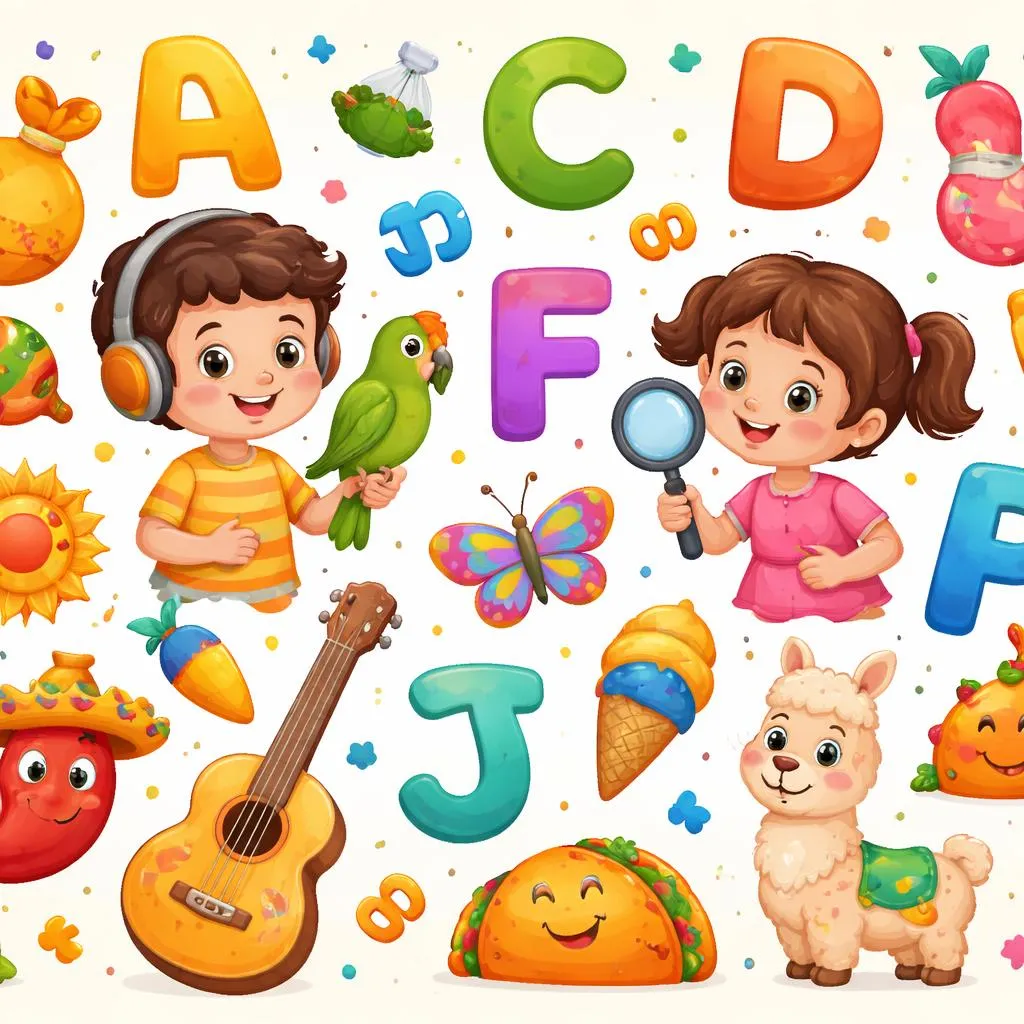

What Is the Spanish Alphabet?
The Spanish alphabet is the set of letters used to write Spanish.
Spanish is spoken in many countries.
People use Spanish to talk, read, and write every day.
Children can learn Spanish step by step.
The alphabet is the first step.
Learning the Spanish alphabet helps children see letters clearly.
It also helps children hear new sounds.
Spanish uses letters from the English alphabet.
But some sounds are different.
This makes Spanish fun and interesting.
Why Learn the Spanish Alphabet?
Learning the Spanish alphabet builds a strong base.
Children need letters before words.
Words come before sentences.
Sentences come before stories.
The alphabet helps children read.
It also helps children spell.
Knowing letter sounds builds confidence.
It helps children speak clearly.
It also supports learning other languages later.
Spanish is a useful world language.
Learning it early is helpful.
How Many Letters Are in the Spanish Alphabet?
The modern Spanish alphabet has 27 letters.
It uses the same letters as English.
These letters go from A to Z.
Spanish once had extra letters.
They were CH and LL.
Today, they are not separate letters.
They are letter combinations.
Children still see them often in words.
But the alphabet list has 27 letters.
The Spanish Alphabet List
Here is the Spanish alphabet.
Children can read it slowly.
A B C D E F G H I J K L M N Ñ O P Q R S T U V W X Y Z
The letter Ñ is special.
English does not have this letter.
Spanish uses it often.
Spanish Alphabet Letter Names
Each Spanish letter has a name.
The names help children talk about letters.
They are useful in spelling games.
Here are some examples.
A is called “ah.”
B is called “beh.”
C is called “seh.”
D is called “deh.”
E is called “eh.”
Children do not need to memorize all names at once.
They can learn slowly.
Spanish Alphabet Sounds
Spanish letter sounds are clear.
Most letters have one main sound.
This helps children read easily.
Spanish spelling is regular.
Words sound like they look.
This makes reading less confusing.
Children can sound out words.
This builds confidence.
Vowels in the Spanish Alphabet
Spanish has five vowels.
They are A, E, I, O, U.
Spanish vowels are very important.
Each vowel has one clear sound.
A sounds like “ah.”
E sounds like “eh.”
I sounds like “ee.”
O sounds like “oh.”
U sounds like “oo.”
These sounds do not change much.
This makes Spanish easier than English.
Vowel Practice for Kids
Children can practice vowels daily.
They can say the sounds aloud.
They can clap for each vowel.
They can match pictures to sounds.
For example:
A for apple.
E for elephant.
I for ice.
O for orange.
U for umbrella.
Simple practice builds strong skills.
Consonants in the Spanish Alphabet
Spanish consonants are similar to English.
But some sound different.
Children should listen carefully.
B and V sound very similar.
J has a strong sound.
H is silent.
R can be soft or strong.
Learning these differences takes time.
Practice helps a lot.
The Special Letter Ñ
Ñ is unique to Spanish.
It has a special sound.
It sounds like “ny.”
Children find this letter fun.
It appears in many words.
For example:
niño
año
mañana
Ñ is an important part of Spanish.
Children should practice it slowly.
Silent Letters in Spanish
Some Spanish letters are silent.
H is always silent.
Children may see H in many words.
But they do not pronounce it.
For example:
hola
huevo
hablar
Learning silent letters helps reading.
It also helps spelling.
Spanish Alphabet and Pronunciation
Pronunciation is very important.
Spanish sounds are clear and steady.
Children can practice by listening.
Repeating words helps memory.
Teachers can say letters slowly.
Children can repeat together.
Group practice is helpful.
Spanish Alphabet Songs for Kids
Songs make learning fun.
Alphabet songs help memory.
Children enjoy music.
Songs add rhythm to learning.
Spanish alphabet songs are easy to find.
They repeat letters often.
This helps children remember order.
Singing reduces stress.
Learning feels joyful.
Spanish Alphabet Games
Games help children stay engaged.
Alphabet games can be simple.
Matching letters and pictures works well.
Sorting letters is also helpful.
Flashcards are useful.
Children can play alone or in groups.
Games turn learning into play.
Matching Letters and Sounds
Matching builds strong connections.
Children see a letter.
They hear a sound.
They say the sound.
This builds reading skills.
Matching games are easy to set up.
They work well in class or at home.
Writing Practice with the Spanish Alphabet
Writing helps memory.
Children can trace letters.
They can copy letters.
They can write simple words.
Writing slowly is fine.
Accuracy is more important than speed.
Writing builds confidence.
Uppercase and Lowercase Letters
Spanish uses uppercase and lowercase letters.
Children should learn both.
Uppercase letters start sentences.
They are used for names.
Lowercase letters are used most of the time.
Practice helps children recognize both forms.
Reading Practice with the Spanish Alphabet
Reading starts with letters.
Then syllables.
Then words.
Children can read simple words.
For example:
mamá
papá
sol
luna
Reading practice should be short.
Daily reading works best.
Spanish Alphabet Order
Alphabet order is important.
It helps with dictionaries.
It helps with word lists.
Children can practice ordering letters.
They can sing the alphabet song.
They can use cards.
Order practice builds organization skills.
Comparing Spanish and English Alphabets
Spanish and English alphabets are similar.
They share many letters.
But some sounds are different.
Spanish spelling is more regular.
English spelling changes often.
Children may find Spanish easier.
Knowing both helps language awareness.
Common Beginner Spanish Words
Children enjoy learning words.
Simple words work best.
Examples include:
hola
adiós
gracias
por favor
sí
no
These words use basic letters.
They are easy to practice.
Spanish Alphabet in Daily Life
Children see Spanish letters everywhere.
Books use them.
Signs use them.
Songs use them.
Spanish letters help children connect language to life.
Learning feels useful.
Learning Tips for the Spanish Alphabet
Short lessons work best.
Repeat often.
Use songs and games.
Use pictures.
Praise effort.
Make learning fun.
Positive feelings support learning.
Building Confidence with the Spanish Alphabet
Confidence grows slowly.
Mistakes are normal.
Practice builds skill.
Children learn at different speeds.
Encouragement matters.
Learning should feel safe.
Using the Spanish Alphabet at Home
Parents can help at home.
Reading together helps.
Singing songs helps.
Playing letter games helps.
Home practice supports school learning.
Spanish Alphabet Review Practice
Review helps memory.
Children can review daily.
They can say letters aloud.
They can write letters.
They can read simple words.
Review keeps skills strong.
Growing Language Skills with the Spanish Alphabet
The Spanish alphabet is the start.
Letters lead to words.
Words lead to sentences.
Sentences lead to stories.
Language grows step by step.
Learning Spanish opens new doors.
It builds communication skills.
It builds cultural awareness.
Learning feels meaningful and fun.
Spanish Alphabet Sounds and Syllables
After learning letters, children can learn syllables.
Syllables are small sound units.
Spanish syllables are clear and regular.
Most syllables follow simple patterns.
Common patterns include consonant and vowel.
For example:
ma, me, mi, mo, mu
pa, pe, pi, po, pu
These patterns help children read faster.
They also help with pronunciation.
Practicing syllables builds strong reading skills.
Syllable Practice for Early Readers
Children can clap for each syllable.
They can tap the table.
They can say sounds slowly.
For example:
ma–má
pa–pá
so–l
lu–na
This practice helps children hear word parts.
It also improves spelling.
Slow practice works best.
Spanish Alphabet and Word Building
Letters join to form words.
Words start small.
Children can build simple words.
They can use letter cards.
They can move letters around.
For example:
s + o + l = sol
l + u + n + a = luna
Building words feels like a game.
Games increase motivation.
Listening Practice with the Spanish Alphabet
Listening is very important.
Children should hear correct sounds.
They can listen to teachers.
They can listen to recordings.
Repeating sounds builds accuracy.
Listening helps speaking skills grow.
Speaking Practice Using Alphabet Sounds
Speaking builds confidence.
Children can say letters aloud.
They can say syllables.
They can say words.
Short speaking practice works best.
Group speaking feels safe.
Encouragement matters.
Spanish Alphabet Flashcards
Flashcards are useful tools.
They show letters clearly.
Pictures help memory.
Flashcards can be colorful.
Children enjoy flipping cards.
They can practice alone.
They can practice with friends.
Classroom Activities with the Spanish Alphabet
Teachers can use many activities.
Circle time works well.
Letter hunts are fun.
Children find letters in books.
They find letters on posters.
Movement keeps children focused.
Spanish Alphabet Learning Through Stories
Stories help language grow.
Simple stories use simple words.
Children listen carefully.
They recognize letters.
They recognize sounds.
Stories connect language with meaning.
Learning feels natural.
Using Pictures with the Spanish Alphabet
Pictures support understanding.
Children connect letters to images.
Visual learning is powerful.
Pictures help memory last longer.
Learning becomes easier.
Review Games for the Spanish Alphabet
Review keeps skills strong.
Games make review fun.
Children can match letters.
They can order letters.
They can name letters.
Short review is enough.
Common Challenges When Learning the Spanish Alphabet
Some letters feel difficult.
R can be hard to pronounce.
J sounds strong.
Ñ is new.
These challenges are normal.
Practice helps.
Patience helps.
Encouraging Progress in Alphabet Learning
Every child learns differently.
Some learn fast.
Some need more time.
Praise effort.
Celebrate small wins.
Confidence supports learning.
Spanish Alphabet and Cultural Learning
Language connects to culture.
Spanish letters appear in songs.
They appear in stories.
They appear in names.
Learning letters opens cultural doors.
Children learn about the world.
Daily Routine with the Spanish Alphabet
Routine builds habits.
Five minutes a day helps.
Letter review works well.
Sound practice works well.
Daily learning feels easy.
Long-Term Benefits of Learning the Spanish Alphabet
Early learning helps later skills.
Alphabet knowledge supports reading.
It supports writing.
It supports speaking.
Spanish learning builds flexibility.
It supports future language learning.
Growing with the Spanish Alphabet
Learning the Spanish alphabet is a journey.
It starts with letters.
It grows with practice.
Children gain confidence.
They gain skills.
Language learning becomes enjoyable.
Step by step, Spanish feels friendly.