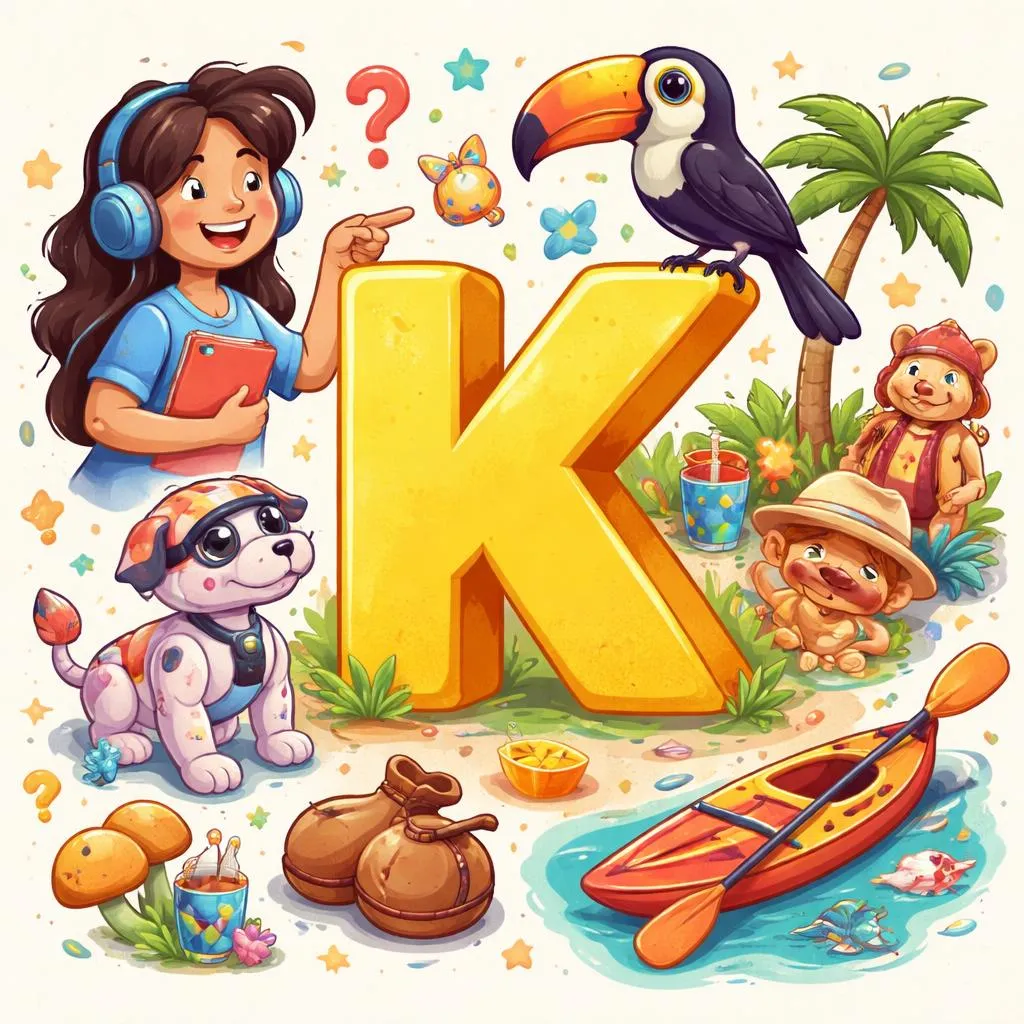

When learners explore Spanish, they notice something interesting.
Spanish words that start with K are rare.
This makes them special.
In Spanish, the letter K is not very common.
Most Spanish words use C or Q instead.
Still, some words begin with K.
Learning spanish words that start with k can feel surprising and fun.
These words often stand out.
Many Spanish words that start with K come from other languages.
They are borrowed words.
Spanish has borrowed words over time.
From English. From Greek.
Borrowed words keep their spelling.
This is why the letter K appears.
It stays the same. It keeps its original look.
Children often notice these words quickly.
They look different. They sound modern.
Interest grows.
Spanish words that start with k often appear in science and technology.
They also appear in food and culture.
One common Spanish word that starts with K is kilo.
Kilo means thousand.
Kilo is used with measurements.
Kilo de arroz. Kilo de manzanas.
This word feels practical.
Children hear kilo in daily life.
At the store. At the market.
Context supports learning.
Another Spanish word that starts with K is kilómetro.
Kilómetro means kilometer.
Kilómetro is used for distance.
Cien kilómetros. Diez kilómetros.
Numbers and words connect.
Spanish words that start with k often relate to measurement.
This makes them useful.
Kiosco is another familiar word.
Kiosco means kiosk.
A kiosco sells small items.
Snacks. Newspapers.
Children recognize this place.
The word kiosco comes from another language.
Spanish kept the K.
Kárate is also a Spanish word.
Kárate is a sport.
This word comes from Japanese.
The spelling stays the same. The sound stays strong.
Children may already know kárate.
They see it in movies. They hear it in sports.
Learning feels easy.
Spanish words that start with k often sound international.
They feel global.
Another example is kiwi.
Kiwi is a fruit. Kiwi is also a bird.
In Spanish, kiwi keeps the same spelling.
Children like learning food words.
They see the fruit. They taste it.
Memory connects to experience.
Kilo and kiwi are easy starter words.
They feel friendly.
Ketchup is also used in Spanish.
Ketchup is a sauce.
Some Spanish speakers write ketchup.
Others write kétchup.
Both forms appear.
This shows flexibility in borrowed words.
Language adapts. Usage varies.
Kids often recognize ketchup quickly.
They see it on food. They hear it often.
Learning feels familiar.
Spanish words that start with k also appear in pop culture.
They come from English often.
For example, karaoke is used in Spanish.
Karaoke is an activity.
People sing together. People have fun.
The word karaoke comes from Japanese.
Spanish keeps the spelling.
Children enjoy the idea of karaoke.
Music helps memory. Joy supports learning.
Another borrowed word is kayak.
Kayak is a small boat.
Kayak is used in Spanish with the same spelling.
This word connects to nature.
Water. Movement.
Spanish words that start with k can appear in geography too.
Kenia is the Spanish name for Kenya.
Country names may use K.
Kuwait is another example.
Country names keep original letters.
Children learning countries often see the letter K.
These names feel global.
They connect Spanish to the world.
Spanish words that start with k also include some science words.
For example, kelvin is a temperature unit.
Kelvin is used in science.
It keeps the K.
This word is common in textbooks.
Students see it later. Exposure begins early.
Another science word is kernel.
In Spanish, kernel may appear in technical contexts.
Technical words often keep original spelling.
Spanish accepts them as loanwords.
This explains many K words.
Spanish words that start with k often do not change much.
They stay close to the original language.
This can help learners.
Spelling feels familiar. Pronunciation feels similar.
Children who know English may recognize these words.
Recognition builds confidence.
Some Spanish words that start with k appear in fashion.
Kimono is one example.
Kimono is clothing.
This word comes from Japanese.
Spanish keeps the spelling.
Children may see kimono in stories.
Cultural learning happens.
Another cultural word is kung fu.
Kung fu is a martial art.
Spanish speakers use kung fu without changing spelling.
This shows how Spanish accepts global terms.
Spanish words that start with k are often nouns.
They name things. They name ideas.
This makes them easier to learn.
Concrete meaning helps memory.
Children can picture these words.
Food. Sports.
Places and objects.
Spanish words that start with k are not usually verbs.
This is helpful to note.
Most verbs in Spanish do not start with K.
This pattern stays consistent.
When children learn this, they understand structure.
Language feels organized.
Spanish words that start with k often appear later in learning.
They are not beginner core words.
But they are fun to explore.
They add color.
Teachers may introduce them as special words.
Rare letters spark curiosity.
Children like unusual letters.
K looks strong. It feels different.
Learning rare letters can feel exciting.
Spanish words that start with k help children see language diversity.
Not all words follow the same pattern.
This builds flexibility.
Learners stay open. They stay curious.
Spanish spelling usually avoids K.
C and Q do the work.
Knowing this helps learners spell better.
They know when K appears.
When learners see a K, they expect a borrowed word.
This strategy supports reading.
Recognition improves speed.
Spanish words that start with k also appear in brand names.
Brand names often keep original spelling.
This introduces K naturally.
Children see brand words early.
Exposure happens naturally.
Spanish accepts these words without changing much.
Language stays flexible.
Spanish words that start with k show how languages interact.
No language is isolated.
Words travel with people.
Culture moves. Language follows.
This makes Spanish richer.
Borrowed words add variety.
For learners, this means Spanish can feel familiar.
Some words look the same as English.
This reduces fear.
Learning feels possible.
Spanish words that start with k are a small group.
But they are meaningful.
They show history.
They show culture. They show connection.
Children do not need to memorize all of them.
Exposure is enough.
Seeing them in context matters most.
Reading. Listening.
When children encounter these words, they recognize patterns.
Borrowed words stand out.
This awareness supports vocabulary growth.
Learning feels layered.
Spanish words that start with k are not the core of the language.
But they add flavor.
They make learning interesting.
They add surprise.
As learners grow, they appreciate these details more.
Language becomes more than rules.
It becomes a story.
Spanish words that start with k tell part of that story.
A story of travel. A story of contact.
Learning them helps learners see Spanish as alive.
Not fixed. Not closed.
Language grows with people.
Spanish grows with the world.
And even rare letters like K have a place in Spanish.
That is what makes language learning rich.
Curious. Enjoyable.
Spanish continues to evolve.
New words appear. Old patterns remain.
And learners grow with it, one word at a time.
Spanish words that start with k often feel modern to learners.
They do not look traditional.
This contrast catches attention.
Children may ask why Spanish uses K at all.
This opens a good teaching moment.
Spanish spelling follows strong rules.
C and Q usually make the hard sound. K is not needed often.
But borrowed words keep their shape.
They keep their K.
This helps learners understand that languages share words.
No language stands alone.
Spanish words that start with k often come from science, sports, or culture.
These areas travel across borders.
Technology brings many new words.
Some arrive with K. Spanish accepts them.
For example, the word kilobyte appears in Spanish.
Kilobyte is used in computers.
Files. Memory.
Children may hear this word early.
Technology is everywhere.
This shows that Spanish grows with time.
New ideas bring new words.
Spanish words that start with k can also appear in medicine.
Words like kinesiología appear in advanced contexts.
These words come from Greek roots.
Greek often uses K.
Spanish keeps the letter to preserve meaning.
This is helpful for international study.
Words stay similar across languages.
Children do not need to learn these words now.
But early exposure builds familiarity.
Seeing complex words early reduces fear later.
Spanish words that start with k are often written the same as in English.
This helps bilingual learners.
Recognition supports confidence.
Confidence supports curiosity.
When children recognize a word, they feel smart.
Motivation increases.
Teachers can point out these shared words gently.
No pressure.
Just noticing patterns is enough.
Learning happens quietly.
Spanish words that start with k also appear in geography.
Some place names use K.
They keep original spelling.
This shows respect for origin.
Language honors culture.
Children learning maps often see these names.
Visual learning supports memory.
Spanish words that start with k may look strange at first.
But they become familiar quickly.
Frequency builds comfort.
Comfort builds fluency.
Children do not need long lists.
Seeing words in context matters more.
Reading simple texts helps.
Labels help.
Signs help.
Spanish words that start with k often appear on packaging.
Food labels. Brand names.
This is real-world exposure.
Learning feels practical.
Children learn faster when words connect to life.
Abstract lists feel heavy.
Context feels light.
Spanish words that start with k can be playful.
Kids like saying kilo.
The sound feels strong.
They like kiwi too.
It feels fun.
Sound matters in learning.
Rhythm helps memory.
K words often have a clear sound.
This makes them memorable.
Spanish pronunciation of K is usually clean and sharp.
No surprises.
This consistency helps learners.
They know what to expect.
Spanish words that start with k rarely change pronunciation.
Spelling and sound match well.
This reduces confusion.
Learning feels stable.
Children appreciate predictability.
It helps them relax.
Spanish words that start with k also show spelling differences.
Some words may have accent marks.
Like kárate.
Accent marks guide stress.
They support pronunciation.
Children can notice accents visually.
They help reading.
Teachers can explain that accents help sound.
No grammar terms needed.
Just listening and repeating works.
Language sinks in.
Spanish words that start with k are a good example of exceptions.
Exceptions exist in all languages.
They do not break the system.
They add character.
They add history.
Children can learn that exceptions are normal.
This reduces frustration.
Language does not need to be perfect.
Communication matters more.
Spanish words that start with k also show how Spanish adapts.
Spanish does not reject new words.
It welcomes them.
This keeps the language alive.
Flexible.
Children learning Spanish benefit from this openness.
Language feels human.
Spanish words that start with k may not appear in early textbooks.
But they appear in life.
Life teaches language best.
Exposure beats memorization.
Seeing a word again and again builds understanding.
Spanish words that start with k can be introduced as fun facts.
Kids enjoy fun facts.
They enjoy surprises.
A rare letter sparks curiosity.
Curiosity fuels learning.
Learning does not need pressure.
Joy supports memory.
Spanish words that start with k also help children compare languages.
They see similarities.
They see differences.
This builds language awareness.
Thinking becomes flexible.
Bilingual children benefit strongly.
They connect systems.
Monolingual learners benefit too.
They see language as dynamic.
Spanish words that start with k remind learners that spelling has reasons.
History matters.
Words carry stories.
Letters carry meaning.
Learning vocabulary becomes storytelling.
Not just memorization.
Spanish words that start with k can be collected slowly.
No rush.
One word at a time.
Context first.
Children do not need mastery.
Recognition is enough.
With time, these words feel normal.
They stop standing out.
They blend into vocabulary.
This is a sign of growth.
Language becomes natural.
Spanish words that start with k may be rare.
But they are not difficult.
They are friendly words.
Borrowed words.
They connect Spanish to the world.
They connect learners to culture.
Language learning becomes broader.
Richer.
And children learn that even rare letters matter.
Every letter has a place.
Every word has a story.
Spanish keeps growing.
Learners grow too.
And curiosity stays alive, one unusual letter at a time.