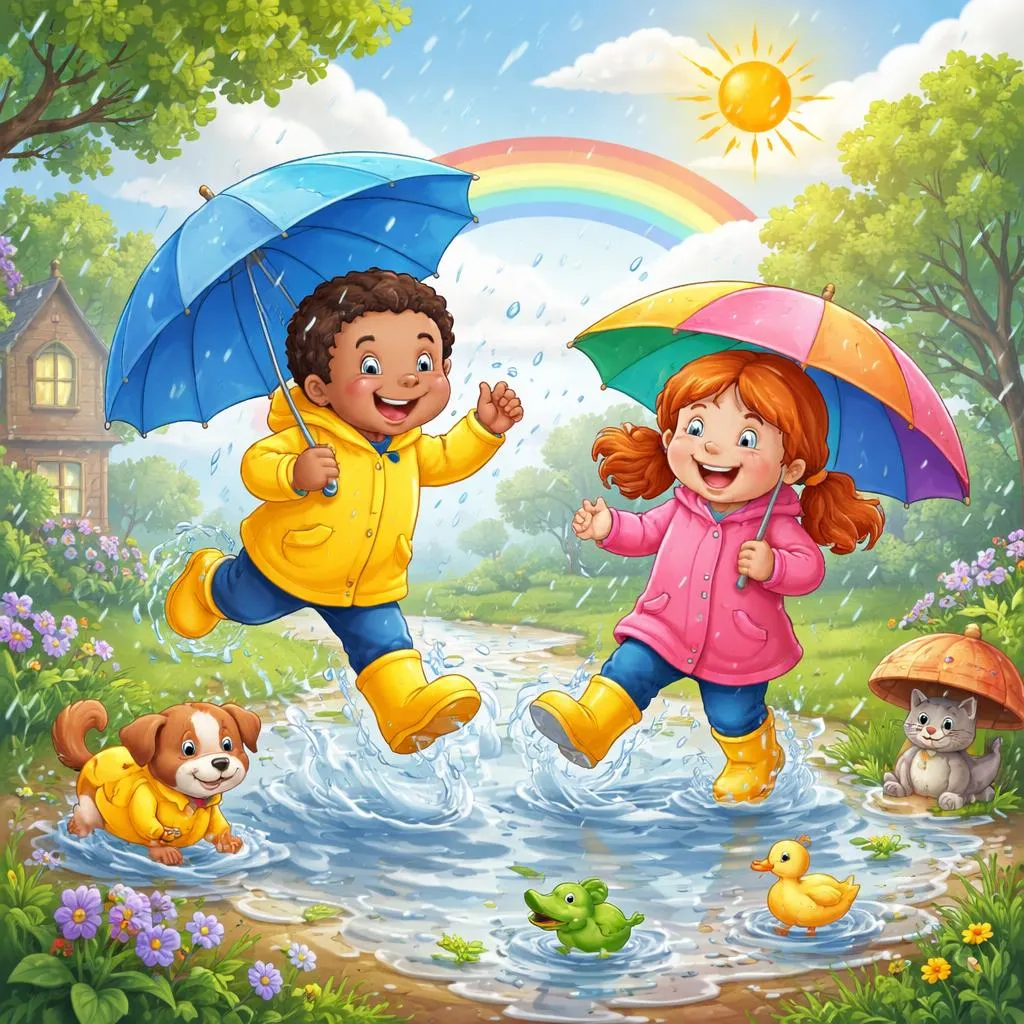

What is the Rhyme "It Is Raining It's Pouring"? "It Is Raining It's Pouring" is a classic nursery rhyme. It has been sung by children for many years. The rhyme describes rainy weather in a fun way. It tells the story of a character falling asleep while it rains. The melody is simple, repetitive, and easy to follow. Children quickly learn to sing along with its rhythmic lines.
The song is popular in homes, schools, and early learning centers. It is often accompanied by actions or gestures. Teachers use the rhyme to introduce weather vocabulary. The cheerful tone encourages listening and participation. Repetition in the rhyme helps children remember words and rhythm.
It Is Raining It's Pouring Lyrics The lyrics are short, playful, and easy to memorize. The song begins with, “It is raining, it’s pouring.” It continues with lines like, “The old man is snoring.” Children sing about the old man who went to bed. The rhyme describes what happens while it rains. Singing the lyrics helps children connect words with meaning.
The lyrics also include familiar weather words. Words like “rain,” “pouring,” and “snoring” appear. Singing these words strengthens vocabulary and pronunciation. Children often act out the story while singing. Pointing to imaginary rain or pretending to sleep makes the experience interactive. Repeating the rhyme multiple times keeps children engaged and energetic.
Vocabulary Learning "It Is Raining It's Pouring" introduces weather-related words. Words like rain, pouring, puddle, and storm become familiar. Children learn nouns, verbs, and descriptive words through the song. For example, “pouring” teaches action words describing rain. “Snoring” teaches how to describe sounds and actions. The song also reinforces simple verbs and adjectives.
Visual aids improve comprehension. Teachers and parents can show pictures of clouds, rain, or umbrellas. This helps children link words to real-life weather objects and actions. Songs provide context for new vocabulary. Children understand words in practical scenarios, like rainy days. The rhyme supports both listening and speaking skills in English.
Phonics Points The rhyme emphasizes clear English sounds. Repetition of consonants and vowels helps children recognize patterns. For example, “raining” and “pouring” share the “ing” sound. Children practice blending sounds in words. Phonics activities can follow the song, like clapping for each syllable. This builds awareness of letters, sounds, and spelling patterns.
Children also notice rhymes and rhythms. Words like “pouring” and “snoring” rhyme, teaching phonetic similarity. Recognizing rhymes improves reading and spelling skills. Phonics practice with the song strengthens early literacy. The cheerful melody keeps children motivated to sing and learn.
Grammar Patterns The rhyme contains simple sentences that show basic grammar. Phrases like “The old man is snoring” use subject-verb agreement. Children learn sentence structure naturally. Verbs are in simple present tense, supporting understanding of time and actions. Adjectives like “old” describe nouns and add meaning.
The song encourages asking questions and talking about daily life. For example, discussing rainy weather uses phrases from the lyrics. Children notice how words fit together to form meaningful sentences. Repetition helps internalize grammar patterns in a fun way. Songs act as a gentle introduction to English grammar for young learners.
Learning Activities The rhyme can be used in various fun learning activities. Children can act out the rain by clapping or tapping. Pretending to snore or go to bed makes singing interactive. Arts and crafts can accompany the rhyme, like making paper umbrellas. Children can create their own lyrics about rainy days.
Games enhance engagement. For example, “Rain and Shine” game involves moving according to weather words. Children jump, tiptoe, or clap along with the lyrics. Interactive apps provide animated visuals to follow the song. Group singing promotes listening, cooperation, and memory. Activities with the song combine music, movement, and learning effectively.
Printable Materials Printable flashcards can support the rhyme. Cards may show words, images, and phrases from the lyrics. Children can match words with pictures or act out lines. Worksheets can include coloring pages with clouds, rain, and puddles.
Printable lyric sheets let children follow along. Highlighting key vocabulary improves reading and recognition. Worksheets can include tracing letters, filling blanks, or matching words. Printable materials create hands-on learning experiences. They can be reused to reinforce memory and engagement.
Educational Games Games complement the rhyme to reinforce learning. Memory games with word and picture cards improve recall. Puzzle games help match lyrics with images or actions. Interactive apps add rewards and challenges for motivation.
Movement-based games make learning active and fun. Children clap, stomp, or march along with specific words from the song. Vocabulary bingo can be adapted to weather words from the lyrics. Group games encourage teamwork, listening, and friendly competition. Games help children enjoy the learning process while practicing English.
Singing with friends or family adds a social element. Children learn by listening to peers and imitating sounds. Group activities build confidence and communication skills. The rhyme becomes a fun experience that combines music, language, and play.
"It Is Raining It's Pouring" introduces children to weather concepts. It combines melody, vocabulary, phonics, and grammar in one song. Visuals, games, and activities make learning engaging and interactive. Music, movement, and repetition support memory and language development.
The song also inspires creativity. Children can make up their own verses or act out the story. Learning becomes playful and meaningful. Vocabulary, sentence structure, and phonics skills strengthen naturally. The rhyme remains a joyful tool for early literacy and weather learning.