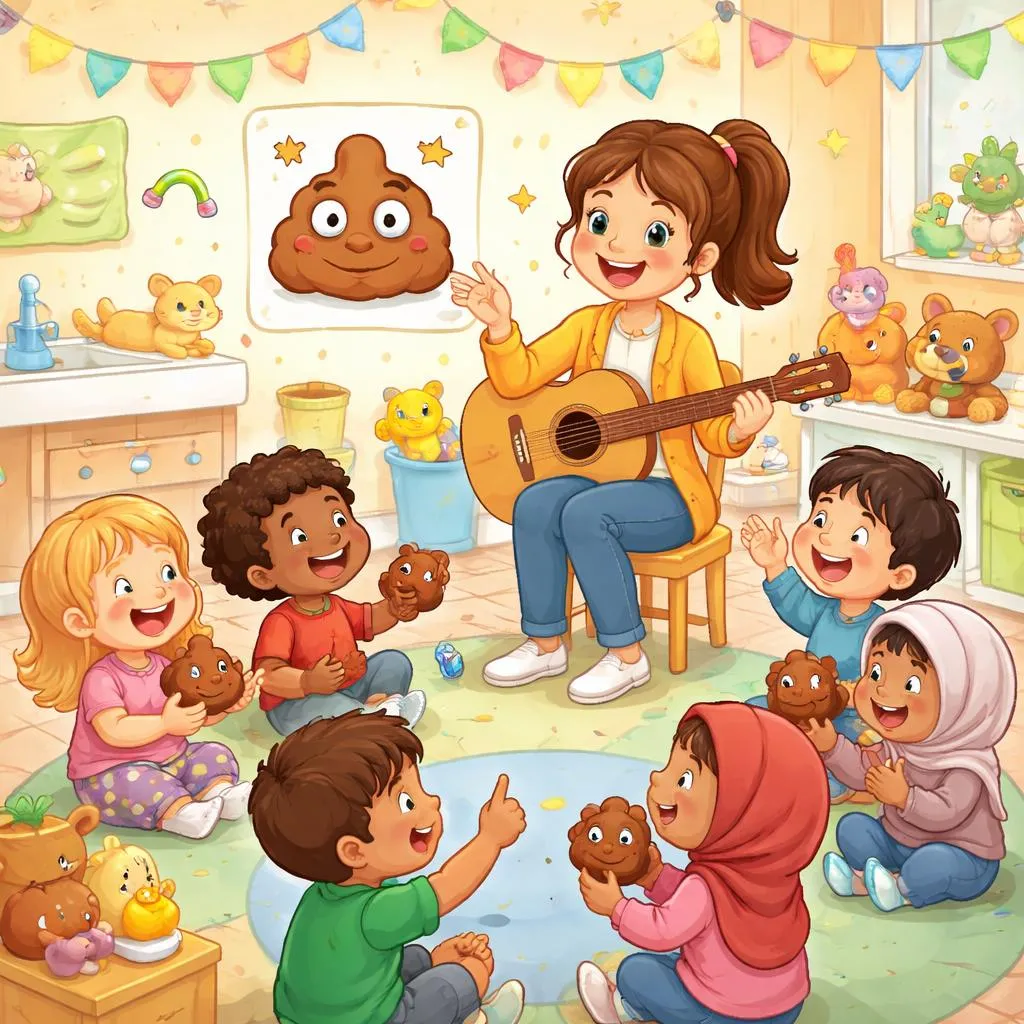

What is the rhyme?
In early English learning, humor often opens the door to attention. Light, friendly topics help language feel safe and familiar. One such topic appears in poop song lyrics written for children.
From a teacher’s perspective, this type of rhyme does not focus on shock. It focuses on routine, health, and daily life. Bathroom topics appear naturally in early childhood.
When handled with care, poop song lyrics support learning. They reduce anxiety around daily habits. They also invite laughter and relaxed participation.
These rhymes usually sound cheerful. They use simple words. They repeat key lines.
This makes them suitable for classroom use. Language learning stays positive and respectful.
The lyrics of nursery rhymes
For teaching purposes, original and gentle lyrics work best. Below is a classroom-friendly example style.
Time to go, time to go, To the bathroom nice and slow. Sit down calm, take a breath, Healthy habits are the best.
Wash, wash, wash your hands, Clean and fresh, now back we stand. Feeling good and feeling bright, Ready to learn with all our might.
These poop song lyrics avoid rude language. They focus on routine and care.
The structure stays simple. Lines repeat sounds and rhythm.
In class, reading the lyrics aloud comes first. Singing follows when the words feel familiar.
The gentle tone keeps the classroom comfortable.
Vocabulary learning
This type of rhyme introduces practical vocabulary. Many words relate to daily routines.
Words like bathroom, wash, and hands appear often. These words connect directly to real actions.
The word time appears in daily schedules. The word go shows action and movement.
Adjectives like clean and good express feelings. They support emotional language.
Through poop song lyrics, vocabulary stays meaningful. Words connect to actions that happen every day.
This connection supports understanding. It also supports memory.
Phonics points
Phonics learning fits naturally into short rhymes. These lyrics include clear sound patterns.
The word go highlights the long “o” sound. Slow and go share the same vowel.
Wash and hands include short vowel sounds. Best and breath show different consonant endings.
Repeating these sounds builds awareness. Singing stretches sounds gently.
Teachers often model pronunciation slowly. Learners listen first. Then they repeat with confidence.
Music supports sound learning. It removes pressure from speaking.
Grammar patterns
Although playful, poop song lyrics include clear grammar. Imperative sentences appear naturally.
Wash your hands. Sit down calm.
These sentences give gentle instructions. They model polite commands.
Present tense verbs appear often. Time to go. We wash.
Pronouns appear in simple forms. Your hands. We stand.
These patterns repeat across verses. Repetition supports grammar awareness.
No direct explanation is needed. Understanding grows through use.
Learning activities
Classroom activities help extend the rhyme. Movement-based activities work well.
Actions match the lyrics. Walking slowly. Sitting down. Washing hands in the air.
These actions support comprehension. They also support focus.
Role play activities fit naturally. One voice leads the song. Others follow the routine.
Drawing activities also help. A simple picture of handwashing reinforces meaning.
Through these activities, poop song lyrics become part of daily learning.
Printable materials
Printable resources support structure and review. For this rhyme, visuals stay clean and friendly.
Picture cards can show handwashing steps. Another card can show bathroom signs.
Lyric sheets with large text support early reading. Repeated words can appear in bold.
Coloring pages show clean routines. They encourage calm practice time.
Word cards support sentence building. Wash hands. Time to go.
Printable materials help learning continue at home. They also keep classroom routines consistent.
Educational games
Games bring light energy to routine-based topics. With poop song lyrics, games stay respectful.
A listening game works well. The teacher sings one line. The class echoes the line.
A sequence game also fits. Place picture cards in routine order.
Movement games add fun. Freeze when the song stops. Move when it starts again.
These games support attention. They also support cooperation.
Learning feels shared and relaxed.
Connecting the rhyme to hygiene lessons
This rhyme connects directly to hygiene education. Clean habits matter in early learning environments.
Songs make these lessons gentle. They remove stress and embarrassment.
Discussing routines through poop song lyrics feels normal. Language supports healthy habits.
Teachers often connect the song to real moments. Before handwashing. After bathroom breaks.
This timing strengthens understanding. Language becomes functional.
Classroom routines and emotional comfort
Routine songs bring predictability. Predictability brings comfort.
This type of rhyme works well before transitions. It prepares the class calmly.
The familiar melody signals a change. It helps everyone move together.
Over time, poop song lyrics become part of classroom culture. They support both language and wellbeing.
Laughter remains gentle. Respect stays central.
Supporting different learning styles
Different learners respond to different cues. This rhyme supports many styles.
Auditory learners enjoy the melody. Visual learners benefit from picture cards.
Kinesthetic learners enjoy action-based singing. They move and learn at the same time.
Because the lyrics stay short, focus remains strong. No one feels overwhelmed.
This balance supports inclusive teaching.
Using humor carefully in language learning
Humor works best when guided. Teachers model respectful language.
With poop song lyrics, tone matters. The focus stays on routine, not jokes.
This approach teaches boundaries. It also teaches appropriate vocabulary.
Language learning remains safe and positive. Classroom trust stays strong.
Extending learning beyond the classroom
At home, routines continue naturally. Songs help bridge school and home life.
Families may sing the rhyme during daily routines. This repetition strengthens memory.
Parents can ask simple questions. Did we wash our hands?
These questions mirror classroom language. They keep English active in real life.
A playful and respectful path to practical English
Poop song lyrics may sound unusual at first. Yet in teaching practice, they serve a clear purpose.
They combine humor, routine, and simple language. They reduce anxiety around daily habits.
Through rhythm and repetition, English becomes approachable. Words connect to actions and care.
In a supportive classroom, this type of rhyme builds confidence. It supports health, communication, and cooperation.
With thoughtful guidance, even simple topics become powerful learning tools. Language grows best when it feels natural, friendly, and part of everyday life.