
What is the rhyme?
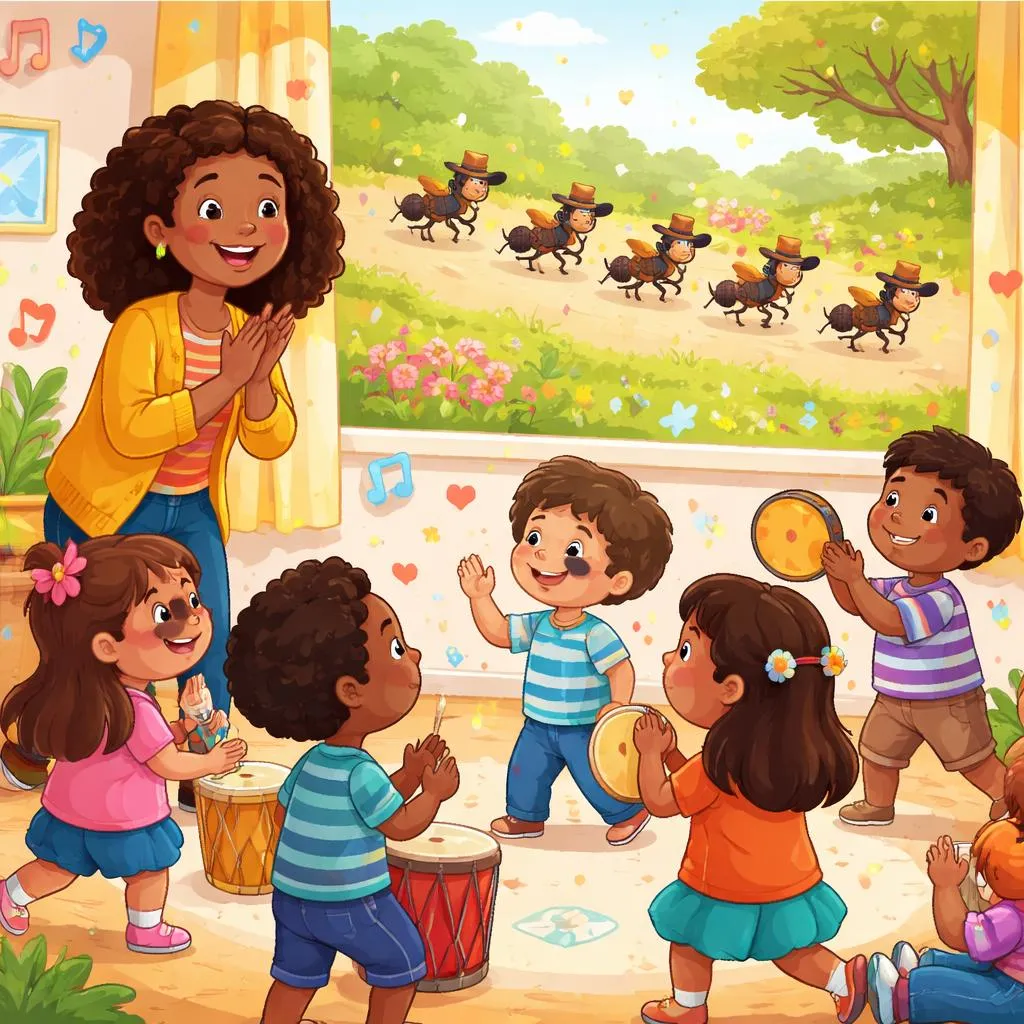
In many English classrooms, songs play an important role. One well-loved nursery rhyme is the ants go marching. This rhyme combines music, movement, and simple language.
From a teaching point of view, this song offers structure. The lyrics repeat. The rhythm stays steady. These features support early language learning.
The ants go marching tells a short story. A group of ants marches together. Each verse adds a number and an action. The rhyme ends with a clear pattern.
This makes the rhyme easy to follow. It also makes it easy to teach.
The lyrics of nursery rhymes
When introducing the ants go marching, the lyrics deserve slow and clear attention. The song begins with counting.
The ants go marching one by one, hurrah, hurrah. The ants go marching one by one, hurrah, hurrah. The ants go marching one by one, The little one stops to suck his thumb, And they all go marching down to the ground to get out of the rain.
Each new verse changes the number and the action. Two by two ties a shoe. Three by three climbs a tree. Four by four shuts the door.
The structure stays the same. Only a few words change. This repetition supports memory.
In class, singing slowly helps learners notice language. Pausing between lines gives time to listen and repeat.
Vocabulary learning
This rhyme introduces useful everyday words. Many of them appear again and again in early English learning.
Words like ants, marching, and ground name objects and actions. Numbers from one to ten appear in order.
Each verse includes a simple verb phrase. Suck his thumb. Tie a shoe. Climb a tree.
These phrases connect language with action. They also support understanding without translation.
From a teaching angle, this vocabulary feels concrete. Learners can act it out. They can draw it.
Through the ants go marching, new words enter memory naturally.
Phonics points
Nursery rhymes work well for phonics. This song offers clear sound patterns.
The word ants starts with a short vowel sound. The word marching highlights the “ar” sound.
Hurrah repeats the same sound at the end of each line. This creates rhythm and confidence.
Marching down to the ground includes rhyme. Down and ground share a similar sound.
In class, teachers can stretch these sounds gently. Listening comes first. Speaking follows naturally.
Phonics instruction feels light here. Music carries the sounds forward.
Grammar patterns
Although the ants go marching feels playful, it contains real grammar. The present continuous tense appears in every verse.
The ants go marching. This shows an action happening now.
The pattern “go + verb-ing” appears again and again. This repetition supports understanding.
Simple sentences also appear. The little one stops. This sentence shows subject and verb clearly.
Prepositions appear too. Down to the ground. Out of the rain.
These patterns stay simple. They suit early learners well.
Through song, grammar becomes familiar. No long explanation is needed.
Learning activities
Classroom activities grow easily from this rhyme. Movement fits naturally with the song.
Marching around the room matches the rhythm. Stopping for each action adds meaning.
Counting activities also work well. Holding up fingers during each verse supports number learning.
Drawing activities extend understanding. A picture of ants marching shows comprehension.
Role play works too. One learner becomes the little ant. Others march together.
Through these activities, the ants go marching becomes a full lesson.
Printable materials
Printable materials support both class and home learning. For this rhyme, visuals work best.
Picture cards can show each action. One card for sucking a thumb. One for tying a shoe.
Number cards support counting. They connect numbers with words.
Lyrics sheets with large text help reading practice. Highlighting repeated lines builds confidence.
Teachers often use coloring pages. Coloring ants keeps focus gentle and calm.
Printable materials give structure. They also allow review outside class.
Educational games
Games bring energy to song-based lessons. With the ants go marching, games stay simple.
A listening game works well. Play the song. Pause suddenly. The class names the next action.
A sequencing game also fits. Mix up picture cards. Place them in the correct order.
Memory games use repetition. Match numbers with actions.
These games support attention and joy. They turn learning into shared experience.
Music, language, and play come together here.
Using the rhyme across lessons
This nursery rhyme does not stand alone. It connects with many lesson themes.
Counting lessons use the numbers. Movement lessons use marching.
Story time connects to insects and nature. Art lessons connect to drawing ants.
By returning to the ants go marching, familiarity grows. Each return feels easier.
Language learning works best this way. Repetition with purpose builds strength.
Classroom atmosphere and confidence
Songs shape classroom mood. This rhyme brings energy without stress.
The rhythm invites participation. Even quiet learners join in.
Mistakes feel small during singing. Confidence grows naturally.
Teachers guide gently. Listening comes before speaking.
Over time, learners begin to sing clearly. Language feels friendly and safe.
Extending learning beyond the classroom
At home, this rhyme continues to support learning. Families often enjoy singing together.
Listening to the song during play reinforces memory. Simple actions add fun.
Parents can ask small questions. Which number comes next?
These moments keep English active. They also connect learning with joy.
A song that teaches more than words
The ants go marching offers more than a melody. It provides rhythm, structure, and meaning.
Through lyrics, sounds, and actions, language becomes alive. Each verse builds understanding step by step.
In a supportive classroom, this rhyme grows into a strong learning tool. It invites movement, listening, and shared laughter.
With careful guidance, the song stays in memory. It continues marching forward with every lesson.