
What is the rhyme?
In early English learning, nursery rhymes create a strong foundation. One classic example is rain rain lyrics, often known as “Rain, Rain, Go Away.”
This rhyme appears simple. Yet from a teaching perspective, it offers rich learning value.
The song talks about rain. It also expresses a clear wish. Rain should stop. Play should begin.
Because of this, the rhyme connects language with feeling. It also connects words with everyday experience.
In class, rain rain lyrics work well as a first step into English songs. The melody stays gentle. The words stay short. The message stays clear.
The lyrics of nursery rhymes
When introducing rain rain lyrics, clear pacing matters. The most common version of the rhyme goes like this.
Rain, rain, go away. Come again another day. Little Johnny wants to play. Rain, rain, go away.
Some versions change the name. Some replace Johnny with children or family members.
The structure stays the same. Rain speaks to the listener. The speaker makes a request.
In class, reading the lyrics slowly helps understanding. Singing follows naturally.
The repetition of lines supports memory. It also builds confidence with English sounds.
Vocabulary learning
This rhyme introduces key weather vocabulary. The word rain appears several times. This repetition strengthens recognition.
Other important words appear too. Go away shows movement. Come again shows return.
The word play connects to daily life. This makes meaning easy to grasp.
Names like Johnny represent people. Teachers often replace them with familiar names.
Through rain rain lyrics, vocabulary enters context. Words do not stand alone. They live inside a message.
This approach supports natural language learning.
Phonics points
Phonics instruction fits well with this rhyme. Short vowel sounds appear clearly.
The word rain highlights the long “ai” sound. Go shows a long “o” sound.
Away and day share the same ending sound. This creates a simple rhyme pattern.
Listening to these sounds builds phonemic awareness. Repeating them builds pronunciation confidence.
Teachers often stretch sounds gently. Rain becomes raaaain. Day becomes daaaay.
Music supports this process. Sound learning feels playful and calm.
Grammar patterns
Although short, rain rain lyrics include real grammar. Imperative sentences appear clearly.
Go away. Come again.
These sentences give commands or requests. They sound polite in the song context.
The sentence “Little Johnny wants to play” introduces the verb want. This shows desire.
The structure stays simple. Subject comes first. Verb follows.
Through repetition, grammar patterns become familiar. No long explanation is needed at this stage.
Learning activities
Classroom activities grow naturally from this rhyme. Weather themes support many lesson ideas.
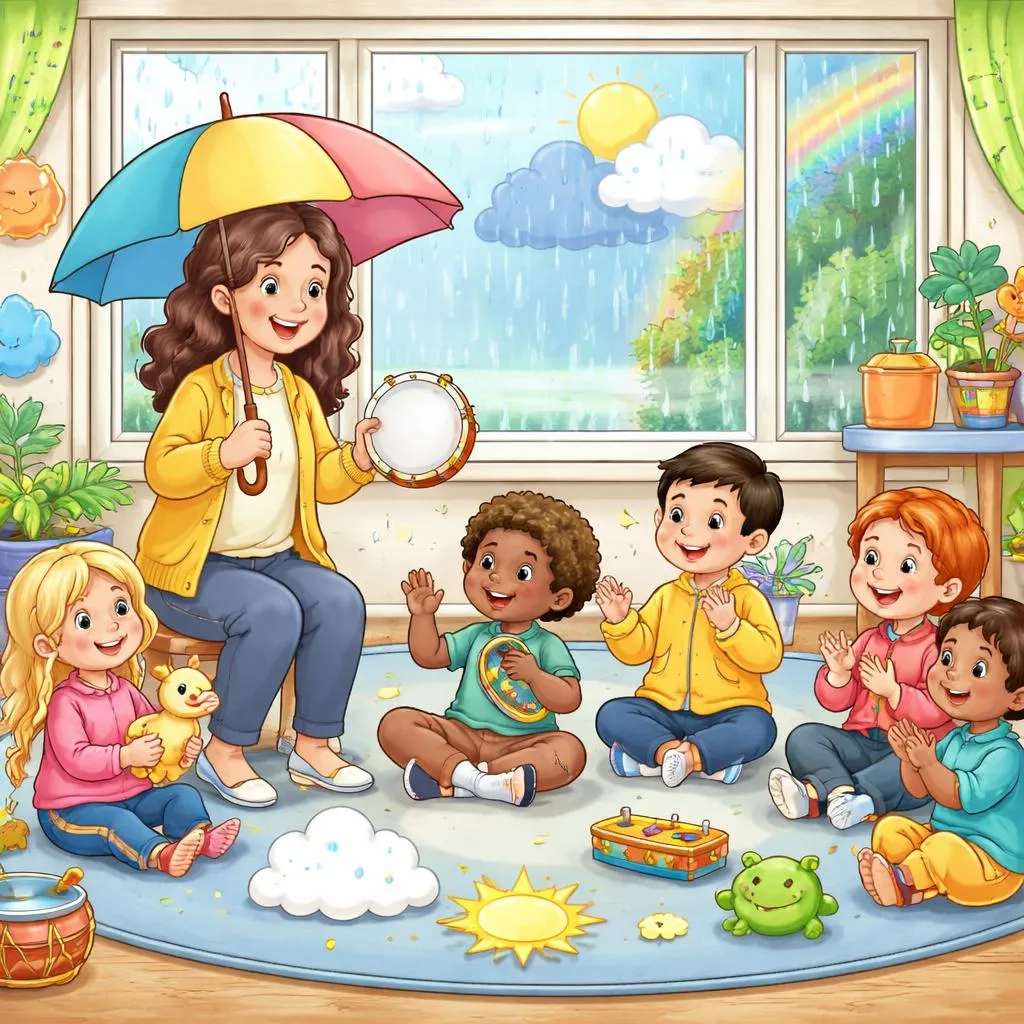
One activity uses actions. Hands move like falling rain. Then hands open wide for play.
Another activity uses role play. One voice becomes the rain. Another voice speaks the request.
Drawing activities also support learning. A rainy picture and a sunny picture show meaning.
Singing with gestures adds memory support. Language stays active and visible.
Through these activities, rain rain lyrics turn into a full lesson.
Printable materials
Printable resources support both classroom and home learning. For this rhyme, visuals work especially well.
Weather cards show rain, sun, and clouds. These images support understanding without translation.
Lyric sheets with large print help early reading. Highlighting repeated words builds awareness.
Coloring pages with rain scenes add calm practice time. They also support fine motor skills.
Printable word cards show key vocabulary. Rain. Play. Day.
These materials help structure review. They keep learning consistent.
Educational games
Games bring joy and focus to song lessons. With rain rain lyrics, games stay simple and effective.
A listening game works well. The teacher sings one line. The class completes the next line.
A weather guessing game also fits. Show a picture. Ask if it matches the song.
Movement games add energy. March in place for rain. Jump for play.
These games encourage participation. They also reduce pressure.
Learning feels shared and safe.
Using the rhyme with weather lessons
This rhyme connects easily with weather topics. Rain appears in daily life.
Looking out the window supports real-world connection. Is it raining today?
Calendar activities also connect. Rainy days and sunny days get marked.
Science lessons about water can follow later. Language prepares the ground.
By revisiting rain rain lyrics, understanding deepens. Each repetition adds confidence.
Building emotional expression through song
Nursery rhymes often express feelings. This one expresses a wish.
Rain stops play. The speaker wants change.
This idea matters in language learning. English becomes a tool for expression.
Through the song, simple feelings find words. Wanting to play feels universal.
Teachers guide gently here. Listening comes first. Expression follows naturally.
Supporting different learning styles
This rhyme supports many learning styles. Auditory learners enjoy the melody.
Visual learners benefit from pictures and gestures. Kinesthetic learners enjoy movement.
Because rain rain lyrics stay short, focus remains high. No learner feels overwhelmed.
This balance keeps lessons inclusive. Everyone finds a way to join.
Classroom routines with rain rain lyrics
Many teachers use songs as routines. This rhyme works well at transitions.
It fits weather checks. It fits circle time.
Singing together creates calm. It also signals a change in activity.
Over time, the song becomes familiar. Familiarity brings comfort.
Language learning feels safe and predictable.
Extending learning beyond the classroom
At home, this rhyme often continues naturally. Families sing it during rainy days.
This connection strengthens memory. English appears in real moments.
Parents can ask simple questions. Is it raining? Can we play?
These questions mirror the song. They keep language active.
A gentle doorway into English rhythm and meaning
Rain rain lyrics offer more than a simple tune. They introduce weather, sound, grammar, and feeling.
Through repetition and rhythm, English becomes approachable. Words connect to experience.
In a supportive classroom, this rhyme grows into a trusted learning tool. It brings calm, joy, and understanding.
With careful guidance, the song stays in memory. Like rain itself, it returns again and again, nourishing language growth.