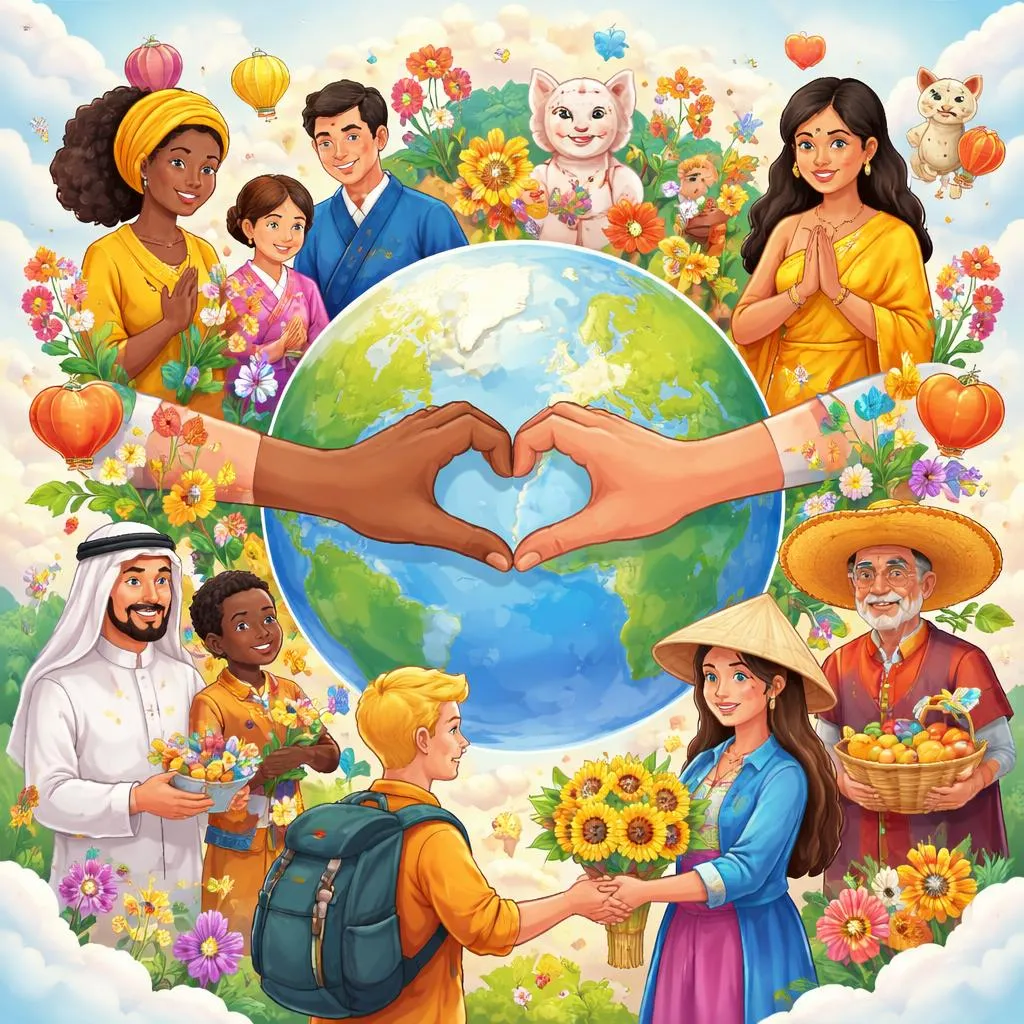

What Does “Thank You” Mean
“Thank you” is a polite expression. It shows gratitude.
People use it every day. They use it for help, gifts, and kindness.
Learning how to say “thank you” matters. It helps communication.
It also shows respect. Respect is important in every culture.
Why Learning “Thank You” in Other Languages Matters
Learning “thank you” is often the first step in a new language. It is simple and useful.
Using local words shows effort. Effort is appreciated.
Even one polite word can create connection. Connection builds understanding.
Children enjoy learning polite words. They feel friendly and positive.
Thank You in Romance Languages
Many languages come from the Romance language family. These languages share history.
In Spanish, people say gracias. The word is short and common.
In French, people say merci. It is soft and easy to remember.
In Italian, people say grazie. The sound is bright and musical.
In Portuguese, people say obrigado. The ending changes for gender.
These words appear often. Hearing them builds familiarity.
Thank You in Germanic Languages
Germanic languages include English and German. They share some roots.
In German, people say danke. It is clear and strong.
In Dutch, people say dank je. It sounds friendly.
In Swedish, people say tack. The word is short.
These words are easy to practice. Short words build confidence.
Thank You in Slavic Languages
Slavic languages are spoken in Eastern Europe. They sound different from English.
In Russian, people say spasibo. The rhythm is smooth.
In Polish, people say dziękuję. The sound feels unique.
In Czech, people say děkuji. It looks complex but feels natural with practice.
Learning these words builds sound awareness. New sounds expand listening skills.
Thank You in Asian Languages
Asian languages use different writing systems. The meaning stays the same.
In Japanese, people say arigatō. Tone and politeness matter.
In Korean, people say gamsahamnida. It sounds formal and respectful.
In Chinese, people say xièxiè. The word is repeated.
Repetition helps memory. Memory supports confidence.
Thank You in Southeast Asian Languages
Southeast Asia has many languages. Politeness is very important.
In Thai, people say khop khun. Tone and respect matter.
In Vietnamese, people say cảm ơn. Tone changes meaning.
Listening carefully helps learning. Sound awareness is key.
Thank You in Middle Eastern Languages
Middle Eastern languages have rich history. Polite language is valued.
In Arabic, people say shukran. It is widely understood.
In Hebrew, people say todah. The word is short and warm.
These words appear in daily life. They connect people quickly.
Thank You in African Languages
Africa has many languages. Each culture values gratitude.
In Swahili, people say asante. The word is friendly.
In Zulu, people say ngiyabonga. It sounds rhythmic.
Learning these words builds global awareness. Awareness supports respect.
Thank You in Indigenous and Local Languages
Many communities have their own languages. Gratitude exists everywhere.
In Māori, people say kia ora. It can mean thanks and hello.
In Hawaiian, people say mahalo. It is used often.
Local languages carry culture. Learning them shows appreciation.
Formal and Informal Ways to Say Thank You
Some languages have levels of politeness. Context matters.
A formal “thank you” is used with elders. An informal one is used with friends.
Understanding levels helps communication. It avoids confusion.
Children can start with one form. More forms come later.
Thank You and Body Language
Words are not everything. Body language matters too.
A smile adds warmth. Eye contact shows sincerity.
In some cultures, a bow is used. In others, a nod is enough.
Learning culture and language together matters. Meaning becomes clearer.
Thank You in Songs and Stories
Songs often include polite words. Stories do too.
Children hear “thank you” repeated. Repetition supports learning.
Hearing words in stories makes them real. Real use supports memory.
Songs make learning fun. Fun supports motivation.
Thank You and Daily Practice
Daily practice helps. Small moments matter.
Saying “thank you” during play helps. Using it during class helps.
Practice does not need pressure. Natural use works best.
Thank You and Emotional Learning
Gratitude connects to emotion. Emotion helps memory.
Children feel good when they say thank you. Feeling good supports learning.
Language and emotion grow together. This makes learning meaningful.
Thank You and Cultural Respect
Using local words shows respect. Respect builds trust.
Trust helps communication. Communication connects people.
Learning “thank you” is a small step. But it has big meaning.
Thank You in Travel and Daily Life
Travelers often learn “thank you” first. It helps everywhere.
It helps in shops. It helps in schools.
Even one word can open doors. People respond kindly.
Thank You and Language Confidence
Knowing polite words builds confidence. Confidence encourages speaking.
Speaking helps fluency. Fluency grows with use.
Learning “thank you” feels safe. It is a friendly word.
Thank You and Word Awareness
Seeing how languages express thanks builds awareness.
Some words are short. Some are long.
Different sounds show language variety. Variety is interesting.
Thank You as a Universal Idea
Languages differ. But gratitude is universal.
Every culture has a way to say thank you. This connects people.
Learning these words builds empathy. Empathy supports kindness.
Thank You and Learning Together
Children enjoy learning world words. They feel curious.
Curiosity drives learning. Learning becomes joyful.
Words become bridges. Bridges connect cultures.
Thank You in the Learning Journey
Language learning happens step by step. “Thank you” is often the first step.
It is easy to use. It feels good to say.
From one word, learning grows. Understanding grows.
Learning how to say “thank you” in other languages is not just about words.
It is about respect. It is about connection.
And through simple expressions of gratitude, the world feels a little closer.
Thank You and Repetition in Learning
Repetition helps language learning. “Thank you” is repeated often.
Children hear it many times a day. They hear it at home.
They hear it at school. They hear it in stories.
Hearing the same idea in different languages makes learning feel playful.
Thank You and Sound Awareness
Different languages use different sounds. Some sounds feel soft.
Some sounds feel strong. Some sounds feel musical.
Listening to “thank you” in many languages helps children notice sound patterns.
Sound awareness supports pronunciation. Pronunciation builds confidence.
Thank You and Rhythm
Many “thank you” words have rhythm. They flow naturally.
Gra-cias. Mer-ci. A-ri-ga-tō.
Rhythm makes words easier to remember. Memory improves with rhythm.
Children often repeat words like songs. This makes learning joyful.
Thank You and Writing Systems
Some languages use different writing systems. The sound stays the same.
The letters may change. The meaning does not.
This helps children understand that language has many forms.
Different scripts show diversity. Diversity is normal.
Thank You and Early World Knowledge
Learning world words builds world knowledge. Children learn that many languages exist.
They learn that people speak differently. They learn that meaning connects us.
This understanding supports openness. Openness supports kindness.
Thank You and Classroom Language
Teachers often teach “thank you” early. It is useful in class.
Students thank teachers. Teachers thank students.
This creates a respectful environment. Respect supports learning.
Language is used for real purpose. Real use builds skill.
Thank You and Polite Habits
Saying “thank you” builds habits. Habits grow through repetition.
Polite habits support social skills. Social skills matter.
Children learn when to say thank you. They learn why it matters.
Language connects to behavior. Behavior supports communication.
Thank You and Listening Practice
Listening comes before speaking. Children hear “thank you” first.
They listen to tone. They listen to rhythm.
Later, they try to say it. Listening prepares speaking.
This natural order supports confidence.
Thank You and Picture Learning
Pictures support vocabulary learning. A smiling face shows gratitude.
A gift picture shows thanks. A helping hand shows thanks.
Visual support helps memory. Memory supports language growth.
Pictures and words work together.
Thank You and Simple Matching Activities
Simple activities help learning. Match the language to the word.
Match the word to the country. Match the word to the sound.
These activities feel like games. Games reduce pressure.
Low pressure supports learning.
Thank You and Cultural Curiosity
Children often ask questions. Why do people say it differently.
Why do some words sound long. Why do some sound short.
Questions show curiosity. Curiosity supports learning.
Learning answers builds understanding.
Thank You and Travel Language
“Thank you” is useful for travel. It works everywhere.
Travel language is practical. Practical language motivates learners.
Children enjoy pretending to travel. Pretend play supports learning.
Language becomes part of imagination.
Thank You and Storytelling
Stories include polite words. Characters say thank you.
Stories show when to use it. Stories show feelings.
Learning through stories feels natural. Natural learning lasts longer.
Thank You and Emotional Meaning
Gratitude has emotion. Emotion supports memory.
Children feel warmth when they say thanks. Warm feelings stay longer.
Emotion and language grow together. This deepens understanding.
Thank You and Social Connection
Saying “thank you” builds connection. Connection feels good.
People smile when they hear it. Smiles encourage communication.
Children see positive reactions. This motivates use.
Thank You and Daily Routines
Daily routines include gratitude. Thank you for help.
Thank you for food. Thank you for sharing.
Routine use strengthens habit. Habit strengthens language.
Language becomes automatic.
Thank You and Quiet Confidence
Knowing polite words builds quiet confidence. Children feel prepared.
Prepared learners speak more. Speaking builds fluency.
Fluency grows step by step. Small words matter.
Thank You and Language Comparison
Comparing languages is helpful. Children notice similarities.
Some words start with the same sound. Some words end similarly.
Comparison builds awareness. Awareness supports learning.
Thank You and Respectful Tone
Tone matters when saying thank you. A gentle voice shows sincerity.
Children learn tone naturally. They copy adults.
Modeling polite tone helps learning. Learning happens through example.
Thank You and Cultural Sensitivity
Using the right word matters. Using it kindly matters more.
Learning cultural sensitivity early helps. It supports respectful communication.
Respect builds trust. Trust supports learning.
Thank You and Vocabulary Expansion
From one phrase, vocabulary grows. Please comes next.
Sorry comes next. Greeting words come next.
Polite language builds a strong base. The base supports future learning.
Thank You and Memory Through Use
Words used often stay longer. Thank you is used often.
Use strengthens memory. Memory supports fluency.
This creates a positive learning loop.
Thank You and Calm Learning Pace
There is no rush. One word is enough.
Learning slowly builds confidence. Confidence supports curiosity.
Curiosity keeps learning going.
Thank You and Multilingual Awareness
Knowing many “thank you” words supports multilingual awareness.
Children see that language is flexible. Meaning stays strong.
This awareness prepares learners for future language study.
Thank You and Shared Humanity
Every culture values gratitude. Words change.
Meaning stays. Connection stays.
Learning this builds empathy. Empathy supports kindness.
Thank You in Simple Review
Review can be simple. Say the words again.
Hear them again. Smile again.
Learning does not need stress. Gentle review works best.
Thank You and the Learning Path
Language learning has a path. “Thank you” is near the beginning.
It opens the door. It invites conversation.
From one polite word, many words can grow.
Through simple expressions of gratitude, children learn language.
They learn culture. They learn respect.
And step by step, their world becomes wider and warmer.