
Meaning
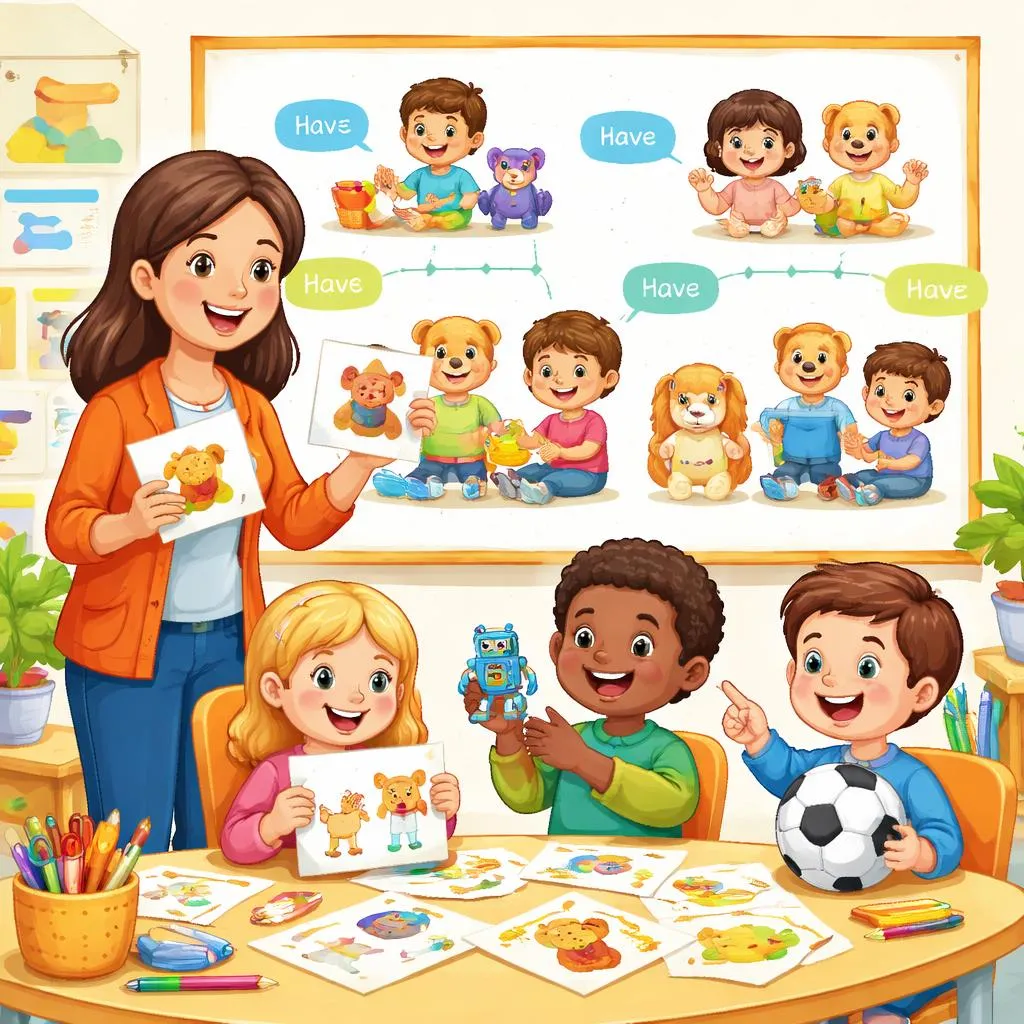
Verbet have is a core English verb used to show possession, experience, and actions. In early English lessons, have connects language with daily life and personal expression.
The verb have often means “to own,” “to eat,” or “to experience.” It also works as a helping verb in perfect tenses.
Teachers introduce have early because it appears in many common sentences. It supports basic communication, classroom talk, and daily routines.
Simple examples help build understanding. “I have a book.” “We have lunch.”
Conjugation
The verb have changes form depending on the subject and tense. Teachers present forms in clear patterns to support memory.
In the present tense, have changes to has for he, she, and it. In the past tense, have becomes had for all subjects.
Conjugation patterns help learners recognize subject-verb agreement. This awareness supports sentence accuracy and grammar development.
Teachers often use charts and oral drills to reinforce conjugation. Regular practice improves fluency and confidence.
Present tense
In the present tense, have describes possession or routine actions. Teachers model simple sentences for daily communication.
“I have a pencil.” “You have two hands.” “He has a dog.” “She has a red bag.” “It has a tail.” “We have English class.” “They have snacks.”
The form has appears with third person singular subjects. This pattern introduces subject-verb agreement in a natural way.
Teachers can connect have with classroom objects and personal items. This makes grammar meaningful and concrete.
Past tense
In the past tense, have changes to had for all subjects. Had describes possession or experience in the past.
“I had a toy.” “You had a party.” “He had a bike.” “She had a test.” “We had lunch.”
Teachers often link had with time words like yesterday and last week. This supports temporal understanding and narrative skills.
Simple stories help practice past tense forms. “Yesterday, I had a cake.” “This morning, we had math.”
Future tense
In the future tense, have uses will have or going to have. These forms describe future possession or events.
“I will have a new book.” “We will have a trip.” “She is going to have a birthday party.”
Teachers explain that will and going to show future meaning. This connects grammar with planning and expectations.
Future tense practice supports speaking about plans and hopes. It also encourages imaginative language use.
Questions
Questions with have use do, does, or did in simple tenses. Teachers model clear question patterns with short answers.
“Do you have a pen?” “Yes, I do.” “No, I don’t.”
“Does he have a cat?” “Yes, he does.” “No, he doesn’t.”
“Did you have lunch?” “Yes, I did.” “No, I didn’t.”
Teachers can use real objects to practice question and answer patterns. This builds interaction and communicative competence.
Other uses
Have appears in many common expressions beyond possession. Teachers introduce these uses gradually with context.
Have can mean eating or drinking. “I have breakfast.” “We have tea.”
Have can mean experiencing feelings or events. “I have fun.” “She has a cold.”
Have also works as a helping verb in perfect tenses. “I have finished my homework.” “They have played.”
Teachers can connect these uses with daily routines and classroom experiences. This broadens functional language skills.
Learning tips
Teachers guide learning with structured and meaningful practice. Clear routines and repetition support long-term retention.
Visual aids help connect have with objects and actions. Sentence frames support speaking and writing practice.
Context-based practice improves comprehension. For example, classroom surveys with “Do you have…” questions build communication skills.
Choral repetition and pair practice strengthen pronunciation and confidence. Short daily drills maintain accuracy without overload.
Integrating have into stories and role-play deepens understanding. This approach connects grammar with real communication.
Educational games
Games make verbet have practice engaging and memorable. Teachers can adapt games for group, pair, or individual learning.
Have and find game Teachers say “Find something you have.” Learners show an object and say a sentence.
Question chain game One learner asks “Do you have…?” and passes the question to the next. This builds fluency and listening skills.
Classroom survey game Learners ask classmates about items or hobbies. Results can be shared in simple sentences.
Sentence building cards Word cards combine subjects, have, and objects. Learners build and read sentences aloud.
Role-play shop game Learners pretend to buy items and use “I have” and “Do you have.” This integrates language with social interaction.
Grammar bingo Bingo cards include have, has, had, and will have. Teachers call sentences and learners mark correct forms.
These games encourage participation and active use of grammar. They also integrate speaking, listening, and social communication skills.
Verbet have serves as a foundational grammar concept in early English education. It supports possession, daily routines, experiences, and future plans in simple and clear language.
Through guided explanation, meaningful examples, and interactive activities, the verb have becomes a practical tool for communication. With consistent classroom practice and playful learning tasks, learners develop strong grammar awareness and confident English expression.