
A Friendly Hello and First Impressions
Namaste! (nuh-MUH-stay). This is a respectful "Hello" in Hindi. It means "I bow to you". Shukriya! (shook-REE-yah). This is a warm "Thank you". People say it with a smile. Learning reading about India starts with these ancient, graceful words.
India is a huge country in South Asia. Its shape looks like a giant, upside-down triangle. The triangle points into the Indian Ocean. The country is in Asia. The Arabian Sea is to the west. The Bay of Bengal is to the east. Pakistan, China, and Bangladesh are its neighbors. The land has tall mountains, wide rivers, and long coasts. It is a country of incredible variety.
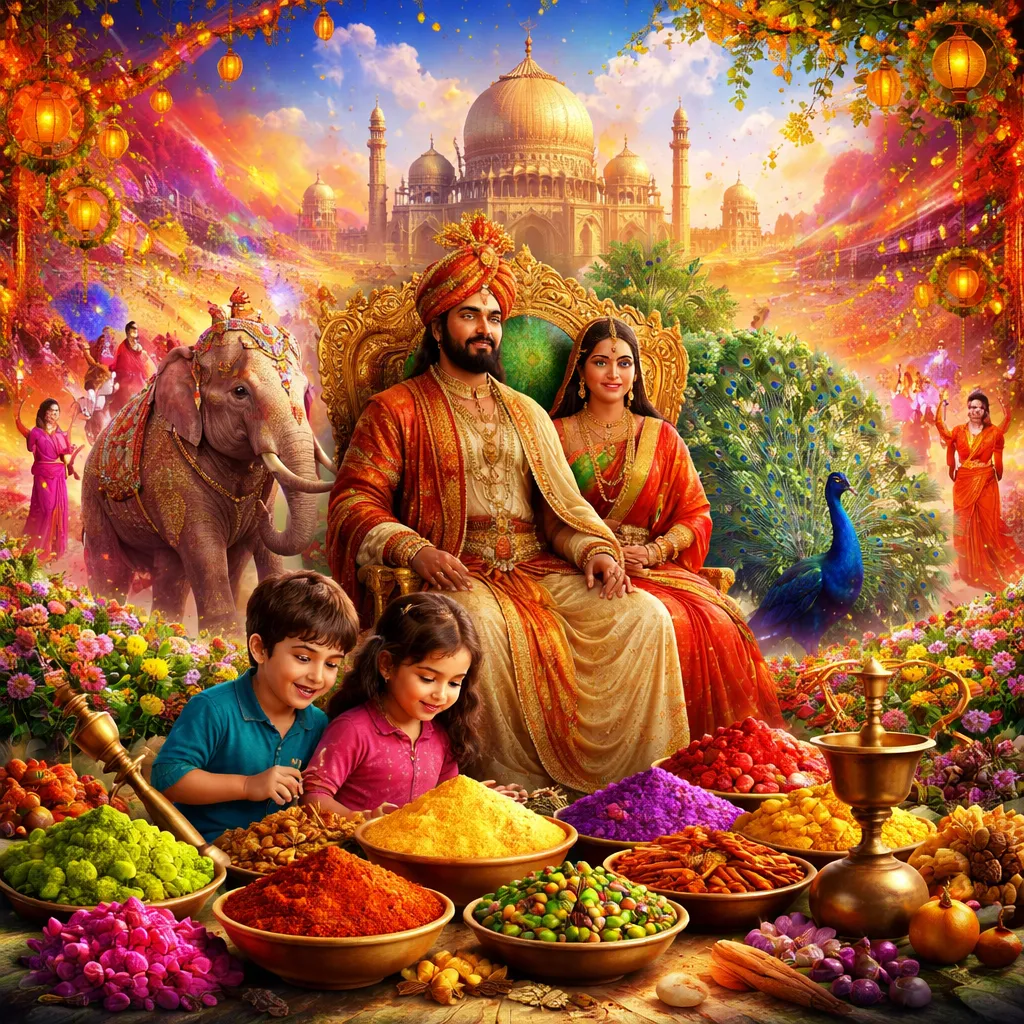
People call it the "Land of Spices". For centuries, traders came for its pepper, cardamom, and turmeric. Another name is the "Subcontinent". It is so large and diverse, it is like a small continent. Are you ready for a journey of color, flavor, and sound?
Deep Dive into Culture and Stories
Echoes of History
A great emperor ruled long ago. His name was Ashoka. He lived around 268 BCE. He ruled most of the Indian subcontinent. First, he was a fierce warrior. Then, he fought a terrible war at Kalinga. The suffering made him very sad. He gave up violence. He became a follower of Buddha. He spread messages of peace and kindness. His symbol, the Ashoka Chakra, is on the Indian flag. His story is a key part of learning reading about India. It is a story of transformation.
Another important leader was Mahatma Gandhi. He lived in the 1900s. He led India to independence from Britain. He did not use violence. He used peaceful protest. The world calls this "non-violence". His ideas inspired many people.
A Gift of Numbers and Thought
India gave the world two great gifts. The first is the number zero. Indian mathematicians invented the concept of zero. This changed mathematics forever. The second gift is yoga. This is a practice for the mind and body. It brings peace and health. Now, people everywhere do yoga. These gifts show India's ancient wisdom.
A Land of Extremes
India's geography is very diverse. The north has the mighty Himalaya mountains. The center has the flat, fertile Indo-Gangetic Plain. The west has the Thar Desert. The south has coastal plains and hills. The landscape changes from snowy peaks to sandy beaches.
The climate has many seasons. The north has cold winters. The south is hot and tropical. The summer monsoon brings heavy rain. The environment shapes life. People grow rice, wheat, and tea. They also grow many spices. Houses in the mountains are made of wood and stone. In villages, houses are often made of mud brick. The main exports are software, medicines, and rice.
A special animal is the Bengal tiger. It is the national animal. It is strong and beautiful. The national bird is the Indian peacock. It has a spectacular fan of feathers. The national flower is the lotus. It grows in muddy water but is pure and beautiful. The national tree is the banyan tree. It has long, hanging roots.
Landmarks of Love and Power
Visit the Taj Mahal. It is in the city of Agra. It is a white marble mausoleum. Emperor Shah Jahan built it for his wife. It is a symbol of love. The building seems to change color. It is pinkish in the morning. It is white at noon. It is golden at night. A fun story says the emperor cut off the hands of the workers. He did not want them to build another like it. The Taj Mahal is a UNESCO wonder. It is breathtaking.
See the Red Fort. It is in the capital, Delhi. It is a large fort made of red sandstone. Mughal emperors lived here. The prime minister gives a speech here on Independence Day. A legend says a secret tunnel connects it to the Taj Mahal. The fort is powerful and grand.
Another wonder is the Himalayan Mountains. They are the highest in the world. Mount Everest is on the border. The mountains are home to monasteries and rare animals. They are a place of adventure and spirituality.
Festivals of Light and Color
The biggest festival is Diwali. It is the Festival of Lights. It happens in October or November. It celebrates the victory of light over darkness. People clean their homes. They draw colorful patterns on the floor. These are called "rangoli".
At night, families light small oil lamps. They set off fireworks. They share sweets and gifts. The festival is about joy, hope, and new beginnings. The whole country sparkles with millions of lights.
Another important day is Republic Day. It is on January 26th. It marks the day the constitution started in 1950. There is a huge parade in Delhi. The military shows its strength. Cultural groups from every state perform. The parade has elephants, camels, and floats. The day is about national unity and pride.
Food and Flavors
Indian food is famous for spices. A common dish is curry. This is a spiced sauce with meat or vegetables. It is served with rice or flatbread. Families eat it for dinner. It can be mild or very spicy. It tastes rich, complex, and delicious. It is a celebration of spices.
You must try Biryani. It is a fragrant rice dish. The rice is cooked with meat, spices, and saffron. It is often served at weddings and parties. A good biryani is flavorful, aromatic, and hearty. It is a dish for celebration.
A Culture of Dance and Innovation
India has many classical dance forms. Bharatanatyam is from the south. It tells stories with hand gestures and footwork. Bollywood movies are famous worldwide. They have singing, dancing, and drama. This love for performance is a joyful part of learning reading about India.
India is a world leader in information technology. It is often called the "back office of the world". It also has a strong space program. The Mars Orbiter Mission was a big success. This mix of tradition and technology is special.
Tips for Young Explorers
Cultural Manners Matter
India has many customs. The common greeting is "Namaste". Press your palms together and bow slightly. This is respectful. Use your right hand for eating and giving. The left hand is considered unclean. This rule is very important.
Remove your shoes before entering a temple or a home. This shows respect. Dress modestly, especially at religious sites. Cover your shoulders and knees.
The head is considered sacred. Do not touch anyone's head, even a child. This is a sign of disrespect. Always ask before taking a photo of someone.
A Note on Staying Safe
India is generally safe, but be smart. Be careful in crowded places. Watch for pickpockets. Do not walk alone at night. Use official taxis. Always tell an adult where you are going.
The traffic is very busy and chaotic. Be extra careful when crossing streets. Use pedestrian bridges or cross with a local. This keeps you safe.
A Tasty Stop
Look for a "chaat" stall. Chaat is a savory snack. It can be a mix of fried dough, potatoes, and chickpeas. It is topped with chutneys and spices. Eat it from a paper bowl. The chaat is crispy, tangy, and spicy. It is a popular street food.
Healthy and Happy Travels
Drink only bottled or filtered water. This is the most important rule. Do not drink tap water. Avoid ice in drinks. Brush your teeth with bottled water. This keeps your stomach happy.
The sun is very strong. Use a high SPF sunscreen. Wear a hat. The sun can burn you quickly. Drink lots of water to stay hydrated.
Wash your hands often. Carry hand sanitizer. This helps prevent getting sick. Be careful with street food. Eat at busy stalls where the food is cooked fresh.
Your Invitation to Explore
Start your journey with a story. Read a tale from the Panchatantra or the Jataka tales. These are ancient Indian fables. Or, watch a colorful Bollywood dance number. Try to learn a few moves. This is a wonderful way of learning reading about India.
Visit an Indian grocery store. Look for spices like turmeric or cardamom. Smell their unique aromas. Imagine the bustling markets of Delhi. You can also try drawing a rangoli pattern with colored chalk. Make it symmetric and bright.
The world is a big, open book. Each country is a different chapter. India's chapter is about ancient wisdom, vibrant festivals, and delicious flavors. Open it with curiosity. Read about its history, harmony, and high-tech dreams. Your curiosity is your guide.
Indian families celebrate Diwali with rows of lamps. Friends play cricket in a park. Children learn about peace from Gandhi's life. We all know these scenes. We love celebrating with lights. We enjoy playing games. We learn about great leaders. Learning about India shows us this. Our global family shares the same hopes for peace and happiness. Keep exploring, one page, one country, at a time. Your adventure has just begun.