
A Friendly Hello and First Impressions
N走 h見o! (nee how). This is the friendly "Hello" in Mandarin. Xi豕xie! (shee-eh shee-eh). This is a polite "Thank you". People say it with a smile. Learning reading about China starts with these simple, tonal words.
China is a huge country in East Asia. Its shape looks like a big rooster. The rooster faces the Pacific Ocean. The country is on the continent of Asia. It has 14 neighboring countries! The Pacific Ocean touches its eastern coast. The land is incredibly vast and diverse.
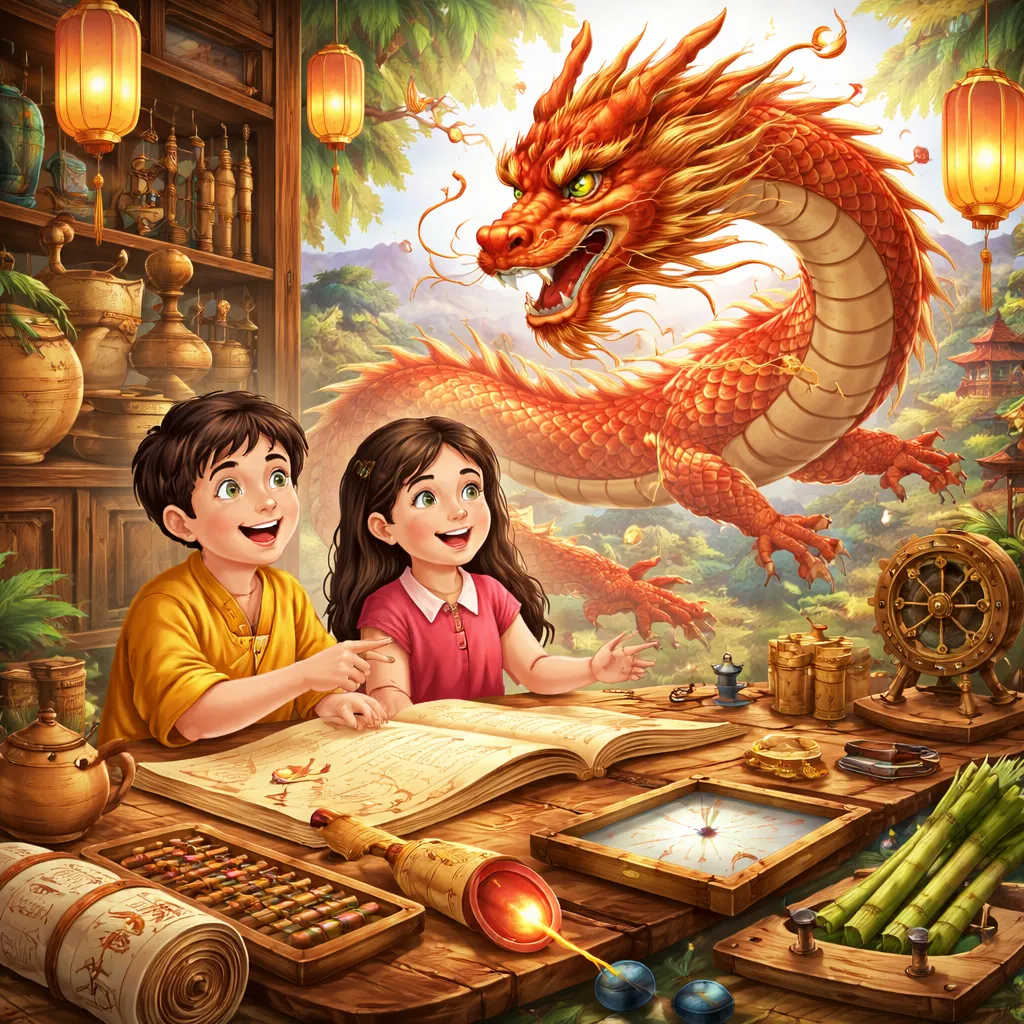
People call it the "Middle Kingdom". The Chinese name is "Zh身nggu車". It means "Middle Kingdom" or "Central State". Long ago, people thought China was the center of the world. Another name is the "Land of the Dragon". The dragon is a symbol of power and good luck. What stories does this ancient dragon guard?
Deep Dive into Culture and Stories
Echoes of History
A long time ago, a powerful emperor ruled. His name was Qin Shi Huang. He was the first emperor of a united China. This was in 221 BC. He connected old walls to make the Great Wall. He also made everyone use the same money and writing. He even had a terracotta army built. The army was to protect him in the afterlife. His work created the idea of one China. His story is a key part of learning reading about China.
Another important time was the Tang Dynasty. It was a golden age of art and poetry. The capital city, Chang'an, was the largest in the world. People from all over Asia came to trade and learn. Poetry and painting flourished. This period shows China's long history of culture and openness.
Gifts to the World
China gave the world many great inventions. One of the most important is paper. A man named Cai Lun improved papermaking around 100 AD. Before paper, people wrote on bamboo or silk. Paper was lighter and cheaper. It helped spread knowledge everywhere. Books and ideas could travel. This changed the world.
Other Chinese inventions are the compass, gunpowder, and printing. These "Four Great Inventions" helped shape history. The compass helped explorers navigate. Printing made books common. These show China's ancient creativity.
A Land of Mountains and Rivers
China's geography is amazing. The west has high mountains and plateaus. The Himalayas are there. The east has wide plains and long rivers. The Yangtze and Yellow Rivers are very important. The south has green hills and rice terraces. The north has colder plains. The landscape changes from deserts to jungles.
The climate is just as varied. The north has cold, dry winters. The south is warm and wet. The west is dry and high. This affects how people live. In the north, people grow wheat. They eat noodles and dumplings. In the south, people grow rice. They live in houses designed for heavy rain. The land provides tea, silk, and many crops.
A special animal is the giant panda. It lives in the mountains of central China. It is black and white. It eats bamboo all day. It is a symbol of peace and friendship. The national bird is the red-crowned crane. It is a symbol of long life. The plum blossom is the national flower. It blooms bravely in the winter cold.
Landmarks of Stone and Majesty
Visit the Great Wall. It is a long, winding wall. It was built over 2,000 years ago. Different emperors added to it. It was built to protect the country. It is over 21,000 kilometers long! You can walk on parts of it. The view from the wall is grand. A sad legend is about a woman named Meng Jiangnu. Her husband died building the wall. She cried so much that part of the wall fell down. The wall is a symbol of strength and perseverance.
See the Forbidden City in Beijing. It was the home of emperors for 500 years. It has 980 buildings! The roofs are bright yellow. Only the emperor could use that color. The complex is a city within a city. Now it is a museum. You can see the emperor's throne. A fun story says a golden river runs under the emperor's throne. It was for protection. The Forbidden City is a masterpiece of design.
Another wonder is the Terracotta Army. It is in Xi'an. Thousands of life-sized clay soldiers stand in rows. Each soldier has a unique face. They were buried with the first emperor. They were to protect him in the next life. They were discovered by farmers in 1974. The army is silent and powerful. It is an amazing archaeological find.
Festivals of Family and Light
The most important festival is Chinese New Year. It is also called Spring Festival. It is based on the lunar calendar. The date changes each year. It is a time for family reunion. People travel home for a big meal. The eve dinner is the biggest of the year.
Homes are decorated in red. Red is for good luck. Children get red envelopes with money. They are called "h車ngb芋o". There are dragon and lion dances in the streets. The festival ends with the Lantern Festival. People light lanterns and solve riddles. The holiday is about new beginnings and family love.
Another fun day is the Mid-Autumn Festival. Families admire the full moon. They eat mooncakes. These are round pastries with sweet fillings. The round shape symbolizes family unity. The festival is about thanksgiving and togetherness.
Food and Flavors
Chinese food is famous worldwide. A famous dish is Peking Duck. It comes from Beijing. The duck skin is roasted until crispy. It is served with thin pancakes, spring onions, and sweet sauce. You wrap it all in a pancake. It is a special meal for guests. It tastes crispy, savory, and sweet.
You must try Dumplings. They are called "ji見ozi". The filling is often pork and cabbage. They are wrapped in thin dough. They are boiled or fried. Families make them together for New Year's Eve. Eating them brings good fortune. A hot dumpling is juicy and delicious. It is like a little pouch of happiness.
A Culture of Learning and the Future
China has a deep respect for learning. The ancient imperial exams were very hard. They chose government officials. Education is still very valued today. This history is a core part of learning reading about China. Children work hard in school. They learn calligraphy, the art of beautiful writing.
Today, China is a leader in technology. It has the world's fastest trains. They are called high-speed rail. They connect cities smoothly. China also leads in digital盓葆. People use apps on phones to pay for everything. It is fast and easy. This mix of ancient respect and modern speed is fascinating.
Tips for Young Explorers
Cultural Manners Matter
Respect for elders is very important. Always greet the oldest person first. A slight nod is polite. A handshake is common in business. Do not hug people you just met. This is the custom.
Use both hands to give or receive a gift. This shows respect. Never give a clock as a gift. The word for clock sounds like the word for "death". It is a bad omen. A nice gift is tea or fruit.
At the dinner table, do not stick your chopsticks upright in rice. It looks like incense for the dead. It is considered rude. Place them on the chopstick rest. Try to use chopsticks. It is a fun skill to learn.
A Note on Staying Safe
China is a very safe country. But always be aware in big cities. Watch for pickpockets in crowded places. Keep your bag closed. Use crosswalks when crossing busy streets.
Be careful with street food. Eat at busy stalls. The food should be cooked fresh in front of you. This is usually a good sign. Drink only bottled water. It is available everywhere.
A Tasty Stop
Look for "ji芋nb走ng" on the street. It is a Chinese crepe. The vendor spreads batter on a hot grill. They add an egg, herbs, and a crispy cracker. Then they fold it all up. It is a popular breakfast. Eat it hot. The crepe is crispy, savory, and delicious. It is the perfect start to a day of exploring.
Healthy and Happy Travels
Drink bottled water. Tap water is not for drinking. Use it only for brushing teeth. This simple habit keeps you healthy. Bottled water is cheap and easy to find.
The sun can be strong. Use sunscreen. The air in big cities can be dusty. A face mask can be useful on bad days. This helps you breathe easier.
Wear comfortable walking shoes. You will walk a lot. The Great Wall and big cities need good shoes. Your feet will thank you. It makes exploring more fun.
Your Invitation to Explore
Start your journey with words. Try writing the Chinese character for "mountain". It is 刓 (sh芋n). It looks like a mountain with three peaks. Or, listen to traditional Chinese music. Hear the sound of the guzheng, a stringed instrument. This is a wonderful way of learning reading about China.
Visit a local Chinatown. Find a Chinese grocery store. Look for mooncakes or tea. Try a new flavor. You can also try using chopsticks at home. Pick up some peanuts or grapes. It is a fun challenge.
The world is a big, wonderful book. Each country is a different chapter. China's chapter is about ancient wisdom, family, and future dreams. Open it with an open mind. Read about its walls, words, and wonderful food. Your curiosity is your guide.
Chinese families gather for a big New Year's meal. Grandparents tell stories to their grandchildren. Friends practice calligraphy together. We all know these feelings. We love sharing meals with family. We enjoy learning new things. We cherish our traditions. Learning about China shows us this beautiful connection. Our global family shares the same hopes for happiness and health. Keep exploring, one page, one country, at a time. Your adventure has just begun.