
A Friendly Hello and First Impressions
Marhaba! (mar-HAH-bah). This is a warm "Hello" in Arabic. Shukran! (SHOOK-rahn). This is a sincere "Thank you". People say it with a smile. Learning reading about Lebanon starts with these friendly, traditional words.
Lebanon is a small country in the Middle East. Its shape looks like a long, narrow leaf. The leaf lies on the eastern shore of the Mediterranean Sea. The country is in Western Asia. Syria and Israel are its neighbors. The Mediterranean Sea is to the west. The land is a mix of beautiful coast, high mountains, and green valleys. It is a country of amazing variety in a small space.
People call it the "Switzerland of the East". This is for its snowy mountains and historic banking. Another nickname is the "Land of the Cedars". The cedar tree is the national symbol. Are you ready to explore a land where you can ski in the morning and swim in the afternoon?
Deep Dive into Culture and Stories
Echoes of History
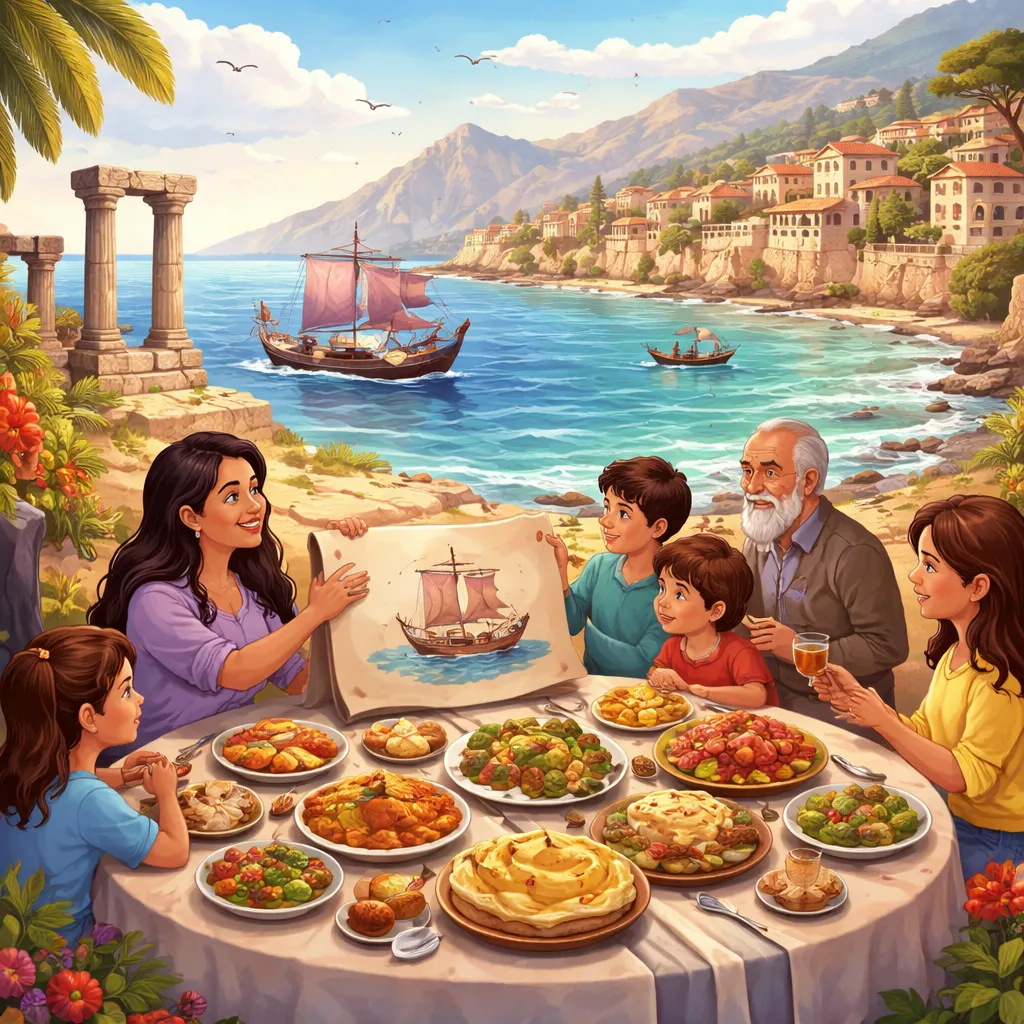
An ancient and clever people lived here. They were the Phoenicians. They lived along the coast 3,000 years ago. They were master sailors and traders. They sailed across the Mediterranean. But their greatest gift was the alphabet. They created one of the first alphabets. This alphabet is the ancestor of many scripts today. Their story is a key part of learning reading about Lebanon. It is a story of communication and connection.
Another important time was the civil war. It lasted from 1975 to 1990. It was a very sad and difficult period. The country is still recovering. This history helps explain modern Lebanon's challenges.
A World of Letters and Flavors
Lebanon gives the world a huge gift. It is the alphabet. The Phoenician alphabet spread everywhere. It led to Greek, Latin, and Arabic scripts. This changed writing forever. Lebanon also gives the world amazing food. Dishes like hummus and tabbouleh are loved globally. This mix of intellectual and culinary gifts is a key part of learning reading about Lebanon.
A Land of Sea and Snow
Lebanon's geography is dramatic. A narrow coastal plain runs along the sea. Then, the Mount Lebanon range rises steeply. The Bekaa Valley lies between two mountain chains. The landscape changes from beach to ski slope quickly.
The climate is Mediterranean on the coast. It is hot in summer, mild in winter. The mountains are cooler and get snow. The environment shapes life. People grow olives, grapes, and citrus fruits. In the Bekaa Valley, they grow wheat and vegetables. Houses are often made of stone. They have red-tiled roofs. The main exports are jewelry, machinery, and food.
A special tree is the Cedar of Lebanon. It is the national symbol. It is on the flag. The national animal is the striped hyena. The national bird is the hoopoe. The national flower is the Lebanese cyclamen. It is pink and delicate.
Landmarks of Stone and Memory
Visit the ruins of Baalbek. It is a huge Roman temple complex. The temples are for Jupiter, Bacchus, and Venus. The stone blocks are gigantic. A fun legend says giants built it. The site is a UNESCO World Heritage site. It is incredibly grand.
See the National Museum of Beirut. It holds treasures from all of Lebanon's history. You can see Phoenician sarcophagi and Roman statues. A moving story says the staff hid the artifacts during the war. They saved the country's history. The museum is a place of memory.
Another wonder is the city of Byblos. It is one of the oldest continuously inhabited cities. The Phoenicians lived here. You can see a crusader castle and an old harbor. A local tale says the alphabet was born here. The city is a living history book.
Festivals of Faith and Music
The biggest religious festivals are Eid al-Fitr and Christmas. Lebanon has many religions. Muslim families celebrate Eid after Ramadan. They wear new clothes, visit family, and give gifts. Christian families celebrate Christmas with trees and church services.
The celebrations show Lebanon's diversity. People respect each other's holidays. The feeling is of shared joy and community. It is a model of coexistence.
Another important day is Independence Day. It is on November 22nd. It marks freedom from France in 1943. There is a military parade in Beirut. The national flag is everywhere. The colors are red, white, and green. A cedar tree is in the center. The day is about national pride.
Food and Flavors
A national dish is Hummus. It is a creamy dip. It is made from chickpeas, tahini, lemon, and garlic. People eat it with pita bread for breakfast or a snack. It is smooth, tangy, and delicious. It is a food everyone shares.
You must try Shawarma. It is spiced meat cooked on a vertical rotisserie. The meat is shaved off in thin slices. It is wrapped in pita bread with garlic sauce. People eat it as fast food. The shawarma is juicy, savory, and delicious. It is a favorite street meal.
A Culture of Dance and Debate
Music and dance are important. The national dance is the dabke. People form a line and do a stomping dance. It is for weddings and celebrations. This love for dance is a joyful part of learning reading about Lebanon. It brings people together.
Lebanese people are known for being great talkers. They love to discuss politics, art, and life. Caf谷s are always full of people talking. This culture of conversation and debate is lively and intellectual.
Tips for Young Explorers
Cultural Manners Matter
Lebanese people are very hospitable and social. Greetings are warm. A handshake is common. Close friends and family kiss on the cheek three times. Say "Marhaba" with a smile. It is polite to ask about the person's health and family.
Always use your right hand. Give gifts, eat food, and shake hands with your right hand. The left hand is considered unclean. This rule is very important. Wash your hands before eating.
Dress modestly, especially outside Beirut. Cover your shoulders and knees. This shows respect. In religious places, be especially careful. This is important in a country of many faiths.
A Note on Staying Safe
Lebanon has political and economic problems. Safety can change quickly. It is very important to check travel advisories. Avoid all protests and large gatherings. Do not travel to areas near the borders. Stay in central, safe areas. Use common sense. Your safety is the most important thing.
The sun is very strong, especially in summer. Use sunscreen. Wear a hat. Drink lots of bottled water. Stay hydrated. In the mountains, it is cooler but the sun is still strong.
A Tasty Stop
Look for "Knefeh" in a sweet shop. It is a famous dessert. It is made of melted cheese. The cheese is covered with shredded pastry. It is soaked in sweet syrup. It is served hot. The knefeh is sweet, cheesy, and delicious. It is a must-try treat.
Healthy and Happy Travels
Drink only bottled water. This is the most important rule. Do not drink tap water. Avoid ice in drinks. Brush your teeth with bottled water. This keeps your stomach healthy.
Wash your hands often. Carry hand sanitizer. This helps prevent getting sick. Be careful with street food. Eat at busy, clean-looking places.
Be patient and polite. Life can be slow and disorganized sometimes. Do not show anger in public. A calm and friendly manner is best. Lebanese people appreciate good humor.
Your Invitation to Explore
Start your journey with a map. Look at the Phoenician trade routes. See how their ships connected the world. Or, listen to Lebanese music by Fairuz. Hear her beautiful voice. This is a wonderful way of learning reading about Lebanon.
Visit a Middle Eastern grocery store. Look for Lebanese za'atar spice or tahini. Taste the za'atar on bread. Imagine a Lebanese breakfast. You can also try drawing the alphabet. Write your name in Phoenician letters. Feel the start of written communication.
The world is a big, ancient book. Each country is a different chapter. Lebanon's chapter is about ancient traders, delicious shared plates, and resilient joy. Open it with respect. Read about its history, its hardships, and its incredible culture. Your curiosity is your guide.
Lebanese families share a big mezze of many small dishes. Friends argue and laugh for hours in a caf谷. Children play on the Corniche by the sea. We all know these scenes. We love sharing meals. We enjoy deep talks with friends. We play by the water. Learning about Lebanon shows us this. Our global family shares the same loves, despite different challenges. Keep exploring, one page, one country, at a time. Your adventure has just begun.