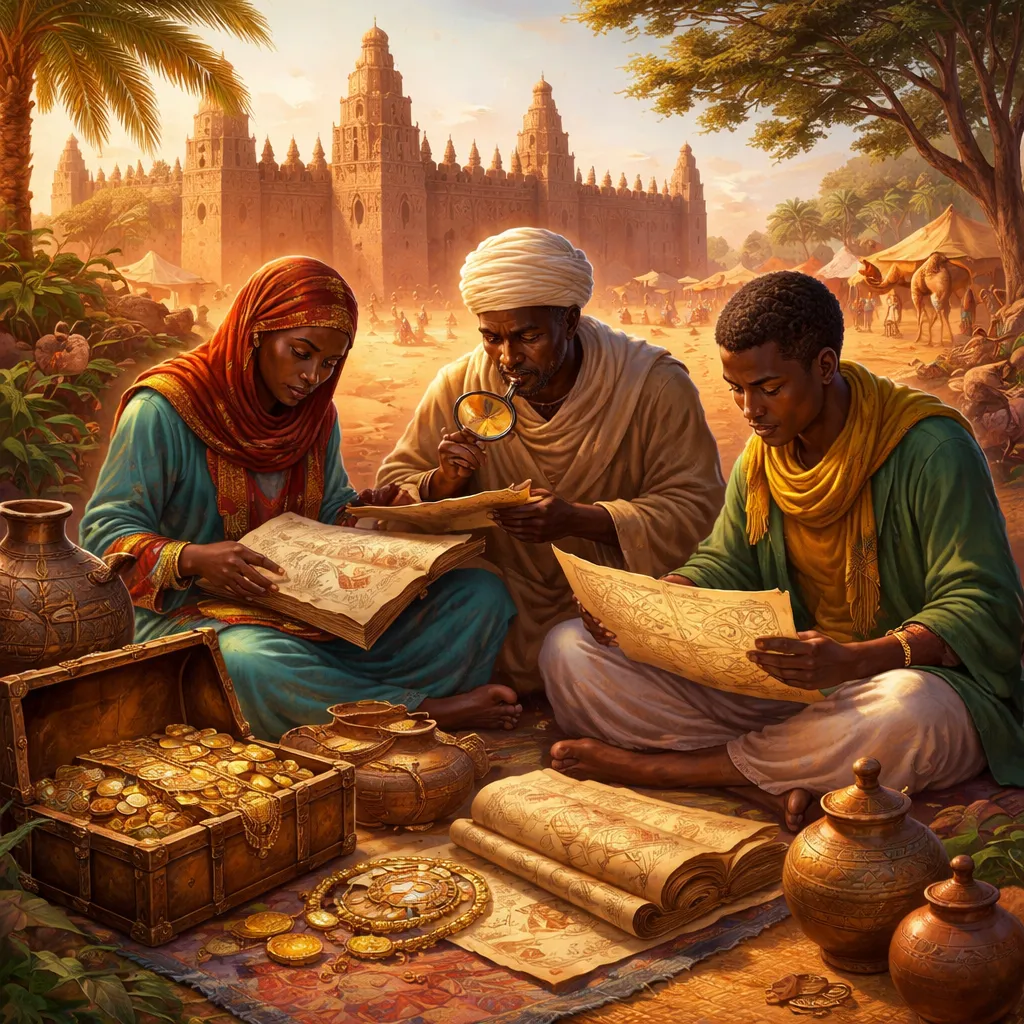

Introduction to Mali
Language learning invites us to walk where ancient kings once ruled. Today we travel to a land of desert sands and legendary cities. This West African nation holds stories of great empires and scholarly towns. Children will discover a place where trade routes crossed and knowledge flourished. They will learn about a city that once held the world's richest king. Exploring Mali builds reading skills while revealing history's wonders. Every fact connects past to present. Every word opens a door to Africa's great civilizations.
Where Is Mali?
Mali lies in West Africa, far from the coast. It sits south of the Sahara Desert and north of the tropical forests. The country shares borders with seven other nations. Algeria touches the north. Niger borders the east. Burkina Faso, Ivory Coast, and Guinea lie to the south. Senegal and Mauritania sit to the west. The capital city is Bamako. Bamako stands on the Niger River. This great river flows through the country for over one thousand miles. The northern part of Mali enters the Sahara Desert. The southern part holds grasslands and rivers. Finding Mali on a map shows its position between desert and savanna. This location made it a crossroads for ancient trade.
Interesting Facts About Mali
Mali offers many remarkable facts for young learners. It was once home to three great empires. The Ghana Empire, the Mali Empire, and the Songhai Empire all ruled here. The Mali Empire grew so wealthy that its ruler, Mansa Musa, became the richest person in history. When he traveled to Mecca, he gave away so much gold that he caused inflation in cities along the way. Another interesting fact involves Timbuktu. This city became a center of learning hundreds of years ago. Scholars gathered there with thousands of books. They studied mathematics, astronomy, and law.
Mali also holds unique architecture. The Great Mosque of Djenné stands as the largest mud-brick building in the world. People rebuild it each year during a festival. Another fun fact involves the Dogon people. They live in the Bandiagara Cliffs. Their villages sit on cliff edges and at the base of steep walls. This area holds ancient traditions and remarkable rock art. Mali also has diverse landscapes. The Sahara Desert covers the north. The Niger River creates green banks in the south. Elephants still roam in some protected areas. These facts show children a country of rich history and living traditions.
Key Vocabulary About Mali
Let us build vocabulary for this historic land. These words help children describe what they learn.
Empire: a group of lands or nations ruled by one leader.
Desert: a dry area with little rain and few plants.
Mosque: a building where Muslims gather for prayer.
Scholar: a person who studies and learns.
Trade: the buying and selling of goods.
Caravan: a group of travelers journeying together.
Mud-brick: a brick made from mud and straw dried in the sun. Introduce these words with pictures and stories. Show the Great Mosque of Djenné made of mud-brick. Show a caravan crossing the desert. Let children say each word aloud. These vocabulary words give children the language to explore Mali's rich past and present.
Simple Sentences for Reading Practice
Short sentences help new readers build confidence. Use these sentences about Mali for practice.
Mali is a country in West Africa.
The capital city is Bamako.
The Niger River flows through Mali.
Great empires once ruled this land.
Timbuktu was a famous center of learning.
The Sahara Desert covers the north.
The Great Mosque of Djenné is made of mud-brick. Read each sentence together. Let children point to the words. Encourage them to repeat after you. Use pictures to show each fact. These simple sentences prepare young readers for longer passages.
Short Reading Passage About Mali
Here is a short passage for children to read together.
“Mali sits in West Africa, where the Sahara Desert meets the grasslands. The Niger River flows through the country, bringing water to cities and farms. Long ago, great empires rose here. The Mali Empire became famous for its wealth. King Mansa Musa carried so much gold that people still tell stories about him. The city of Timbuktu grew into a center of learning. Scholars traveled from far away to study at its universities. They filled buildings with books on law, math, and the stars. Today, visitors can still see ancient manuscripts in Timbuktu. In the south, the city of Djenné holds a special building. The Great Mosque of Djenné is the largest mud-brick structure in the world. Every year, the community comes together to repair its walls. In the east, the Dogon people live along the Bandiagara Cliffs. Their villages cling to rocky slopes. Mali holds history in its desert sands and riverbanks.”
Read this passage slowly together. Pause to talk about each idea. Ask children to find vocabulary words in the text. This activity builds reading fluency and deepens understanding.
Fun Questions About Mali
Questions make reading interactive and engaging. Use these to start conversations with young learners.
What river flows through Mali?
What is the capital city of Mali?
Which king became famous for his great wealth?
What city was a famous center of learning?
What is the largest mud-brick building in the world?
Where do the Dogon people live? Let children answer in complete sentences. Encourage them to use new vocabulary. Ask them to imagine visiting Timbuktu. What would they want to learn about? Creative questions make the topic personal and exciting.
Tips for Learning English with This Topic
Use Mali to create rich English learning experiences. Start with a map activity. Let children find Mali and trace the Niger River. Point out the Sahara Desert to the north. Discuss how the river created a green path through dry lands. This connects geography to history in a meaningful way.
Next, introduce the vocabulary through a building activity. Let children make their own mud-bricks using clay or playdough mixed with straw. Talk about the Great Mosque of Djenné and how people rebuild it each year. This hands-on activity makes architecture and tradition memorable.
Read the passage aloud with the weight of history in your voice. Let your tone express wonder at the ancient empires. After reading, let children draw a scene from Mali. One child might draw Mansa Musa with his gold. Another might draw the Great Mosque of Djenné. Let them label their drawings with vocabulary words.
Incorporate a history connection. Talk about how people once traveled across the desert with caravans. Discuss what goods they traded. Use simple terms to explain how Timbuktu became a place of learning. This shows children that language learning reading connects to history and ideas.
Use music to enhance the experience. Listen to traditional Malian music with kora and balafon. Let children move like travelers crossing the desert. Music and movement reinforce learning in joyful ways.
Encourage children to share their knowledge. Let them tell a family member about Mansa Musa and his gold. They can explain why Timbuktu was important. Teaching others builds confidence and deepens understanding.
Connect Mali to your child's world. Ask, “What old buildings or places have we visited?” Talk about history in your own community. Compare it to the ancient empires of Mali. Ask about markets or trade near your home. Compare them to the great trade routes of West Africa. These connections help children see that language learning reading is about understanding people across time and place. By exploring Mali together, you give children a rich experience. They learn new words, discover a land of empires and scholars, and grow their love for reading. This West African nation becomes a treasured chapter in their learning journey.