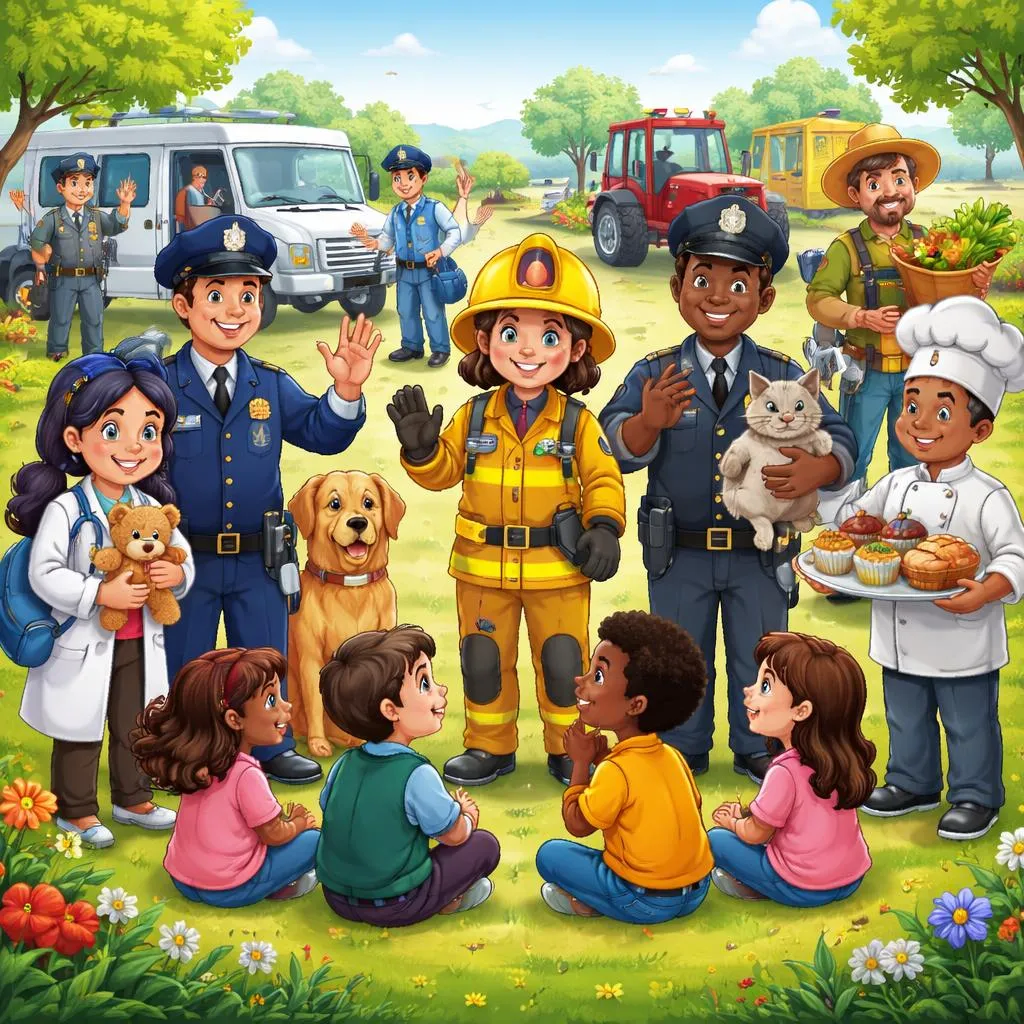

Welcome, young learners and educators! Today, we are going to explore the wonderful world of work. We will look at many example of jobs. This helps us learn how people in our community contribute. It also builds important English vocabulary. Let's discover the different roles that make our world function every day.
What is "Example of Jobs"? The phrase "example of jobs" refers to specific instances or types of occupations that people do. A job is a regular activity a person does to earn money. It is also called an occupation or profession. Learning these examples helps children understand the society around them. They learn that a firefighter puts out fires. They learn that a teacher helps students learn. Each job has a name, a place of work, and special tools. Exploring these examples connects language to real-world roles and fosters curiosity about the future.
Meaning and Explanation Understanding jobs goes beyond just knowing titles. Each job example tells a story about skills, help, and contribution. The meaning of learning job examples is to see how interconnected our community is. The baker makes our bread. The mail carrier delivers our letters. The doctor keeps us healthy.
We learn that jobs often involve helping others. We call these "community helpers." We also learn that jobs require different settings. Some people work in a hospital. Others work at a construction site or in an office. This vocabulary helps describe where people are and what they do. It builds respect for all kinds of work and expands a child's understanding of possible futures.
Categories or Lists We can organize jobs into friendly categories. This makes them easier to remember and discuss.
Community Helpers & Safety: These jobs focus on helping and protecting people. Examples are Firefighter, Police Officer, Doctor, Nurse, Paramedic, Lifeguard.
Education & Knowledge: These jobs involve teaching and learning. Examples are Teacher, Librarian, Professor, Coach.
Food & Services: These jobs provide things we need daily. Examples are Chef, Baker, Farmer, Grocer, Waiter, Mail Carrier.
Creative & Skilled Trades: These jobs build things or use special skills. Examples are Artist, Musician, Carpenter, Plumber, Electrician, Hairdresser.
Technology & Business: These jobs work with information, machines, or organizations. Examples are Scientist, Engineer, Computer Programmer, Businessperson, Pilot.
Daily Life Examples We encounter example of jobs all around us every single day. On the way to school, we might see a crossing guard helping children cross the street safely.
When we visit a store, we see a cashier or a store clerk scanning items. At school, we are with teachers, the principal, and perhaps a school nurse.
If we get a package, a delivery driver brought it. When we watch a building being constructed, we see construction workers, architects, and crane operators. At home, parents or family members might have their own jobs to discuss. "My mom is a designer. She draws clothes on her computer." Pointing out these roles in real time makes the vocabulary immediate and meaningful.
Printable Flashcards Flashcards are a perfect tool for learning job vocabulary. Create a set with a clear, friendly picture on one side.
For a Veterinarian, show a person caring for a dog. On the back, write: "VETERINARIAN. A doctor for animals. They work in a clinic."
For a Dentist, show someone examining teeth. The back states: "DENTIST. A doctor for teeth. They help keep our smiles healthy."
You can create pairs: a picture of a tool (like a hose) and the job that uses it (firefighter). Or, match a workplace (school) to the job (teacher). These cards are great for memory games, sorting, and storytelling.
Learning Activities or Games Let's make learning about jobs interactive and fun with these activities.
-
"Who Am I?" Guessing Game: Place a job card on a learner's back. They ask the group yes/no questions to guess their job. "Do I work inside?" "Do I wear a uniform?" "Do I help people?" This practices question formation and deductive reasoning.
-
Job Charades: One person acts out a job without speaking. The others guess. "You are a chef! You are cooking!" This encourages physical expression and vocabulary recall.
-
"When I Grow Up" Collage: Provide magazines, printouts, and scissors. Learners create a collage titled "My Future Job." They cut out pictures representing a job they find interesting and present it. "This is a pilot. Pilots fly airplanes to different countries." This connects vocabulary to personal aspiration.
-
Community Map Drawing: Draw a simple map of a town. Have learners draw and label buildings (hospital, school, fire station, restaurant). Then, place drawings of community helpers in the correct locations. This integrates job vocabulary with place vocabulary.
Exploring example of jobs is more than a vocabulary lesson. It is a window into the adult world and how communities function. It shows that every job, from a scientist to a sanitation worker, plays an important part. Encourage questions about what people do and how they help. Use this topic to practice sentences like "She is a..." or "He works at the..." As you learn these words, you are not just naming jobs. You are building a richer understanding of the world and all the people who make it work. Keep observing, asking, and imagining the many possibilities ahead.