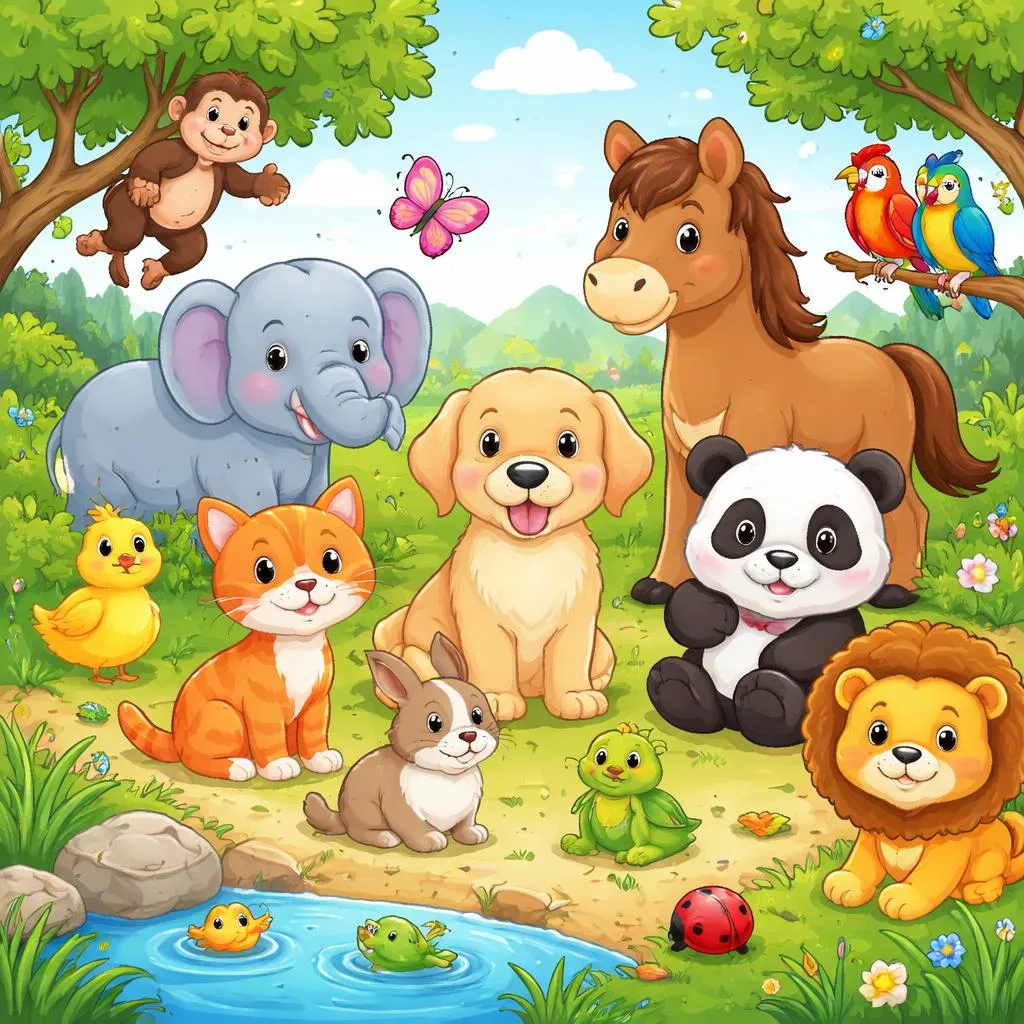
What Are Common Animals? Easy English Animal Vocabulary for Kids Animals, Vocabulary, Farm Animals, Wild Animals, Pets, Nature What Are Common Animals? Common animals are animals seen often. Common animals live on farms. Common animals live in homes. Common animals live in forests. Common animals live in oceans. Animal vocabulary is important in early English learning. Animal words are simple. Animal words are visual. Animal words are easy to remember. Pictures help memory. Sounds help memory. Stories help memory. Common Farm Animals Farm animals live on farms. Farm animals help people. Cow Pig Sheep Horse Chicken Duck Goat A cow gives milk. A pig lives in a pen. A sheep has wool. A horse runs fast. A chicken lays eggs. A duck swims in water. A goat eats grass. Farm animal vocabulary supports daily language practice. Short sentences build structure. The cow is big. The pig is pink. The sheep is white. Repetition strengthens retention. Common Pets Pets live at home. Pets are friendly. Pets stay close to families. Dog Cat Fish Bird Rabbit Hamster A dog barks. A cat meows. A fish swims. A bird sings. A rabbit hops. A hamster runs on a wheel. Pet vocabulary connects with real life. Many learners have pets. Personal connection improves motivation. The dog is small. The cat is soft. Describing pets builds adjective use. Common Wild Animals Wild animals live in nature. Wild animals live in forests. Wild animals live in jungles. Wild animals live in deserts. Lion Tiger Elephant Monkey Bear Fox Wolf A lion is strong. A tiger has stripes. An elephant is large. A monkey climbs trees. A bear has thick fur. A fox is clever. A wolf runs in groups. Wild animal vocabulary supports storytelling. Stories create imagination. Imagination supports creative speaking. Common Zoo Animals Zoo animals come from many countries. Zoo animals are exciting. Giraffe Zebra Panda Kangaroo Penguin Hippo A giraffe has a long neck. A zebra has black and white stripes. A panda eats bamboo. A kangaroo jumps high. A penguin cannot fly. A hippo lives near water. Zoo visits support vocabulary review. Animal flashcards strengthen recognition. Matching games build memory. Common Ocean Animals Ocean animals live in water. Ocean animals swim. Shark Dolphin Whale Octopus Crab Sea turtle A shark has sharp teeth. A dolphin jumps in water. A whale is very big. An octopus has eight arms. A crab walks sideways. A sea turtle swims slowly. Ocean vocabulary connects with nature lessons. Water words expand knowledge. Blue ocean. Big whale. Fast shark. Simple phrases improve fluency. Common Forest Animals Forest animals live in trees and grass. Deer Rabbit Squirrel Owl Raccoon A deer runs quickly. A rabbit jumps. A squirrel climbs trees. An owl flies at night. A raccoon looks for food. Forest vocabulary supports reading comprehension. Nature stories use these words often. Animal Sounds in English Animal sounds are fun. Sound words build phonics awareness. Dog says woof. Cat says meow. Cow says moo. Duck says quack. Sheep says baa. Horse says neigh. Sound practice builds listening skills. Chanting animal sounds builds confidence. Sound imitation supports pronunciation. Describing Common Animals Descriptive words improve sentences. Big Small Fast Slow Soft Furry Wild Friendly The dog is friendly. The lion is strong. The turtle is slow. The rabbit is small. Adding adjectives makes language richer. Richer language supports writing growth. Sorting Common Animals by Group Grouping improves thinking skills. Farm animals together. Wild animals together. Pets together. Ocean animals together. Birds together. Sorting tasks strengthen vocabulary memory. Picture cards can be used. Matching pictures to words supports reading. Animal Habitats Animals live in different habitats. Farm. House. Forest. Jungle. Ocean. Desert. Matching animals to habitats builds knowledge. Lion → jungle. Fish → ocean. Cow → farm. Rabbit → forest. Habitat vocabulary connects science and English. Cross-subject learning improves retention. Simple Animal Sentences for Writing Practice Writing supports spelling. Short sentences are effective. The dog runs. The cat sleeps. The bird flies. The fish swims. Adding details increases skill. The big dog runs fast. The small fish swims in water. Sentence building builds grammar awareness. Grammar awareness builds accuracy. Fun Classroom Activities with Common Animals Learning through play increases motivation. Animal Charades One learner acts like an animal. Others guess. Guessing builds speaking practice. Movement builds energy. Animal Bingo Animal words fill a grid. The teacher calls a word. Listening improves. Recognition improves. Animal Drawing An animal is drawn. A short sentence is written. The elephant is big. Drawing supports creativity. Creativity supports engagement. Comparing Common Animals Comparison builds thinking skills. A lion is bigger than a cat. A horse is taller than a dog. A whale is bigger than a shark. Simple comparison structures build grammar. Bigger Smaller Faster Slower Gradual introduction supports understanding. Cultural Awareness and Animals Different countries have different common animals. In Australia, kangaroos are common. In Canada, moose are common. In India, elephants are important animals. Learning global animals builds world knowledge. World knowledge supports curiosity. Curiosity strengthens learning motivation. Review and Repetition Repetition builds mastery. Animal word lists can be reviewed weekly. Speaking practice reinforces memory. Writing practice improves spelling. Listening practice improves recognition. Common animals are simple words. Simple words create strong foundations. Strong foundations support future learning. Animal vocabulary connects language with the real world. Real-world connection builds lasting understanding. Animal Colors and Patterns Animals have many colors. Colors help describe animals. Brown bear. Black cat. White sheep. Gray elephant. Pink pig. Patterns are also important. A zebra has stripes. A leopard has spots. A tiger has orange and black stripes. A panda is black and white. Color vocabulary connects with animal vocabulary. The brown dog runs. The yellow duck swims. Combining color and animal words builds longer sentences. Longer sentences increase confidence. Animal Body Parts Vocabulary Animal body parts are useful words. Tail Wing Fur Feather Beak Claw Horn Hoof A bird has wings. A fish has fins. A rabbit has long ears. A cow has a tail. A horse has hooves. A lion has sharp claws. Learning body parts supports science lessons. Labeling pictures strengthens reading skills. Matching words to body parts improves accuracy. What Do Common Animals Eat? Food vocabulary connects with animals. Cows eat grass. Rabbits eat carrots. Monkeys eat bananas. Pandas eat bamboo. Lions eat meat. Fish eat small insects. Discussing animal food builds sentence variety. The panda eats green bamboo. The lion eats fresh meat. Simple present tense practice becomes natural. Baby Animals Vocabulary Baby animal words are interesting. Puppy – baby dog. Kitten – baby cat. Calf – baby cow. Lamb – baby sheep. Chick – baby chicken. Foal – baby horse. Cubs are baby lions and bears. Teaching baby animal names expands vocabulary depth. Picture matching games increase memory. Family word groups improve organization skills. Animal Movements Animals move in different ways. Run Jump Swim Fly Climb Crawl A horse runs. A frog jumps. A fish swims. A bird flies. A monkey climbs. A snake crawls. Action verbs combined with animal nouns strengthen grammar patterns. The small frog jumps high. The big bird flies fast. Movement words add energy to sentences. Animal Homes Animals live in special homes. Nest – bird. Den – bear. Stable – horse. Barn – cow. Hive – bee. Pond – duck. Home vocabulary supports reading comprehension. The bird lives in a nest. The horse lives in a stable. Connecting animals and homes builds logical thinking. Plural Forms of Animal Words Grammar practice is important. One dog. Two dogs. One cat. Three cats. One fox. Two foxes. One sheep. Two sheep. Irregular plurals need attention. One mouse. Two mice. Plural practice improves sentence accuracy. There are three rabbits. There are five ducks. Clear patterns reduce mistakes. Question Practice with Common Animals Questions build speaking interaction. What animal is big and gray? Answer: Elephant. What animal says meow? Answer: Cat. What animal lives in water? Answer: Fish. Wh-questions improve comprehension. Listening and answering strengthen understanding. Short question drills increase fluency. Animal Riddles for Fun Learning Riddles make learning exciting. It is big. It has a long neck. It eats leaves. Answer: Giraffe. It is small. It likes cheese. It says squeak. Answer: Mouse. It is green. It jumps. It lives near water. Answer: Frog. Riddles support critical thinking. Critical thinking supports language flexibility. Seasonal Animals Some animals are seen in different seasons. In winter, a bear sleeps. In spring, chicks are born. In summer, butterflies fly. In autumn, squirrels collect food. Season words connect with animal vocabulary. Cross-topic learning strengthens memory. Animal Safety and Respect Learning about animals includes safety. Wild animals should not be touched. Pets need gentle care. Animals need food and water. Respect for animals builds responsibility. Language lessons can include simple safety rules. The dog needs clean water. The cat needs fresh food. Practical sentences support real-life use. Story Building with Common Animals Storytelling improves creativity. A small rabbit runs in the forest. A big bear sleeps in a cave. A clever fox finds food. Short stories use common animals. Stories include action and description. Creative storytelling builds vocabulary expansion. Animal characters make stories lively. Animal Classification Basics Animals can be grouped by type. Mammals – dog, cat, cow. Birds – duck, eagle, owl. Fish – salmon, goldfish. Reptiles – snake, turtle. Basic classification builds science vocabulary. Simple charts improve organization. Grouping strengthens analytical skills. Listening Practice with Animal Words Listening activities improve recognition. Audio clips of animal sounds can be played. Learners match sound to animal. Woof → dog. Moo → cow. Quack → duck. Listening sharpens attention. Attention improves pronunciation. Memory Review Strategies Weekly review supports long-term learning. Flashcards can be used. Word walls can display animals. Mini quizzes build recall speed. Spelling practice reinforces accuracy. Repeated exposure ensures retention. Common animals are foundational vocabulary. Foundational vocabulary supports advanced learning later. Clear pronunciation, simple sentences, and regular practice create strong language habits. Animal words remain useful in reading, writing, listening, and speaking activities throughout early English education.
What Are Common Animals? Easy English Animal Vocabulary for Kids
