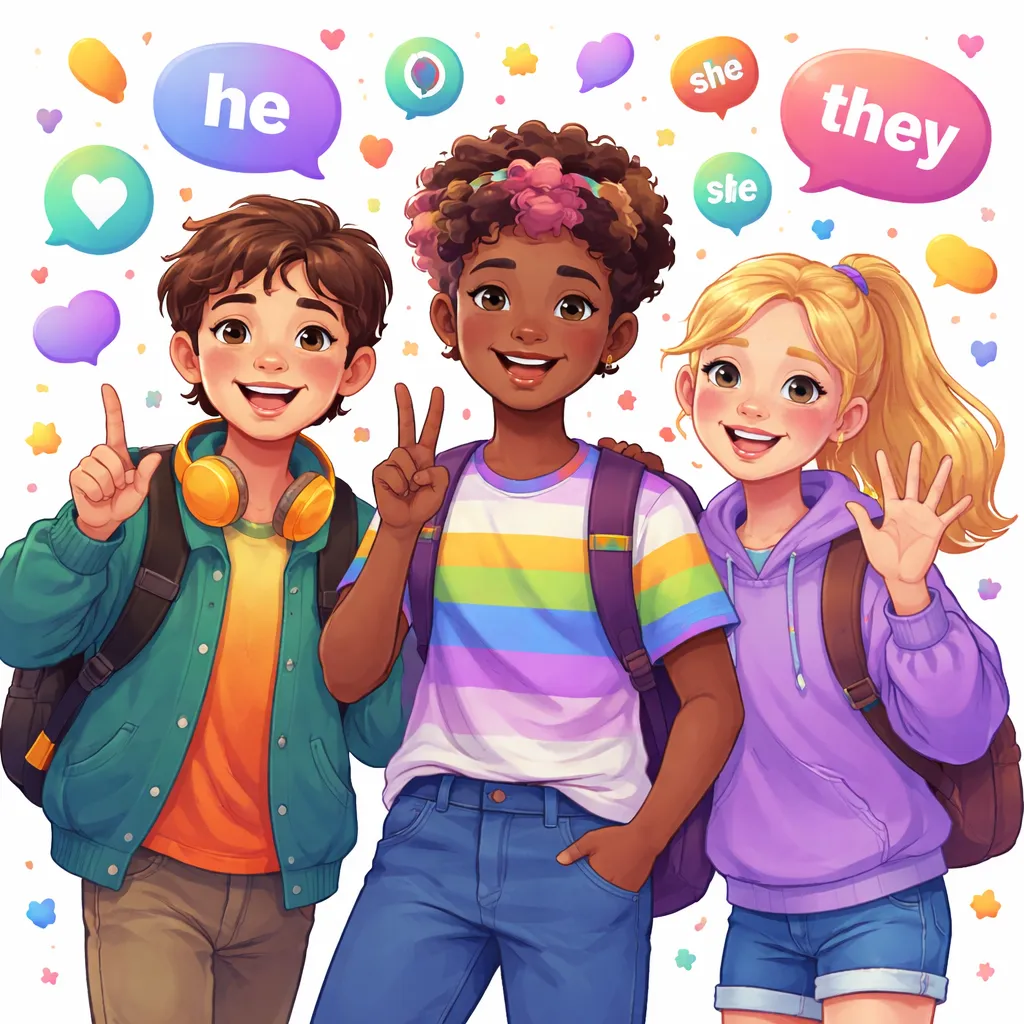

Let’s play a quick game. Read this sentence: "Leo finished Leo's project, and then Leo showed Leo's project to Leo's group." Sounds weird, right? It’s repetitive and clunky. Now read this: "Leo finished his project, and then he showed it to his group." Much better. The words his, he, and it are the heroes here. They are pronouns. A pronoun is a word that stands in for a noun. It’s a substitute, a shortcut. Instead of repeating "Leo" and "Leo's project" over and over, we use these handy little words to make our speech and writing smooth, efficient, and natural. Mastering pronouns isn't just a grammar rule—it's a core skill for clear and intelligent communication. For any junior high school student, understanding and using the right pronouns is essential for sounding fluent and being understood.
Pronouns Unpacked: Your Language Shortcuts So, what is a pronoun? In simple terms, a pronoun is a word that replaces a noun or a noun phrase. Think of it like a gamer tag online. Instead of using your full legal name every time, you use your handle. Pronouns work the same way. The noun it replaces is called the antecedent. In a group chat, you wouldn’t type, "Is Sam coming to Sam's party? Sam said Sam would bring Sam's console." You'd say, "Is Sam coming to his party? He said he'd bring it." Pronouns like his, he, and it prevent annoying repetition. They are fundamental linguistic tools. A strong command of various pronouns for junior high school students is a sign of advanced language skill.
Why Pronouns Are a Communication Power-Up Using pronouns well is a silent superpower. For your speaking, it makes you sound natural and fluent. Listen to any natural conversation—pronouns are everywhere. For your writing, it eliminates clunky repetition, making your essays and stories flow. For reading, spotting pronouns and instantly connecting them back to their antecedents (the nouns they refer to) is key for comprehension. It helps you follow complex sentences in textbooks or articles. In social situations, using the correct pronouns for people (like he, she, they) is a basic sign of respect. In the digital world, clear pronoun use avoids confusion in texts and posts. Simply put, pronouns make efficient and respectful communication possible.
Your Pronoun Toolkit: Different Types for Different Jobs Pronouns aren't one single thing. They have different categories, each with a specific function. Knowing these types helps you choose the right tool for the job.
Personal Pronouns are the most common. They refer to specific people or things. Subject Pronouns: I, you, he, she, it, we, they. (They do the action). Object Pronouns: me, you, him, her, it, us, them. (They receive the action). Possessive Pronouns: mine, yours, his, hers, its, ours, theirs. (They show ownership). For example: "She (subject) told me (object) a secret. The idea was hers (possessive)."
Reflexive Pronouns refer back to the subject of the sentence, emphasizing that the action affects the doer. They end in -self or -selves: myself, yourself, himself, herself, itself, ourselves, yourselves, themselves. "I prepared myself for the match. They organized the event themselves."
Demonstrative Pronouns point to specific things: this, that, these, those. "This is my favorite song. Look at those!"
Interrogative Pronouns are used to ask questions: who, whom, whose, which, what. "Who is that? Whose phone is this? Which one do you prefer?"
Relative Pronouns introduce a clause that describes a noun: who, whom, whose, which, that. "The player who scored is my friend. The game that I want is expensive."
Indefinite Pronouns refer to non-specific people or things: everyone, someone, anyone, no one, everybody, somebody, anybody, nobody, everything, something, anything, nothing, each, both, all, many, few, several, some, any, none. "Everyone is here. Can anybody help? Few understood the trick."
Finding the Shortcut: How to Spot a Pronoun You can usually identify a pronoun with two simple checks.
The Replacement Test. Can the word replace a specific noun you’ve already mentioned? If yes, it’s likely a pronoun. "My sister finished. She did well." ("She" replaces "My sister.") "I love that game. It is awesome." ("It" replaces "that game.")
The Question Word or Pointer Clue. Is the word used to ask a question (who, what, which) or to point at something (this, that, these, those)? These are almost always pronouns. "What is that? This is incredible."
Grammar Rules: Where Pronouns Work and How to Pair Them Using pronouns correctly means knowing their proper place in a sentence's structure.
Subject vs. Object Position. This is a major one. Subject pronouns (I, you, he, she, it, we, they) are the doers. They come before the verb. Object pronouns (me, you, him, her, it, us, them) are the receivers. They come after the verb or after a preposition. Correct: "She (subject) helped me (object)." "Between you and me (objects of preposition 'between'), the plan is solid." A common mistake is using a subject pronoun as an object, or vice versa.
Possessive Pronouns Stand Alone. They show ownership and can completely replace a noun phrase. "This seat is mine." (Not "my seat"). "Is that charger yours?"
Reflexive for Emphasis or Necessary Action. Use reflexive pronouns when the subject and object are the same person/thing. "I taught myself to code." Also use them for emphasis: "The app itself is free, but in-game items cost money."
Agreement is Key. A pronoun must agree with its antecedent in number (singular/plural) and gender. "Each student should bring his or her book." Or more commonly now, "Students should bring their books." The key is consistency and clarity.
Common Pronoun Pitfalls and How to Avoid Them Let's fix some typical errors that can trip you up.
The "I vs. Me" Confusion (and other subject/object mix-ups). Incorrect: "Me and my friends are going out." or "Between you and I, that's a bad idea." Correct: "My friends and I are going out." (Subject doing the action: "I am going.") "Between you and me, that's a bad idea." (Objects of the preposition "between": "between me"). Tip: Remove the other person. You wouldn't say "Me am going" or "between I."
Vague Pronoun Reference. Incorrect: "In the video game and the movie, they changed the ending." Who is "they"? The game developers? The movie directors? It's unclear. Correct: "The movie adaptation changed the ending from the video game."
Mixing Up Possessive Pronouns with Contractions. Incorrect: "Is that phone your's? Their going to be late." ("Your's" is not a word. "Their" is a possessive pronoun, but here we need the contraction for "they are"). Correct: "Is that phone yours? They're going to be late." Remember: its (possessive) vs. it's (it is), your (possessive) vs. you're (you are), their (possessive) vs. they're (they are), whose (possessive/interrogative) vs. who's (who is).
Level-Up Challenge: Pronoun Power in Action Let's move beyond the basics. Find a short dialogue from a movie scene, TV show, or even a comic book. Copy down 4-5 lines. Now, highlight every pronoun. For each one, draw an arrow back to the noun (the antecedent) it replaces. This exercise trains you to see the connections in real, flowing language, which is crucial for reading comprehension.
Now, imagine you're explaining a complex process, like how to set up a gaming console for a party or the rules of a sport. Write three consecutive sentences explaining the first step. Then, rewrite those three sentences, intentionally using pronouns to replace repeated nouns. Compare the two versions. Which one sounds more natural and less repetitive? This is the practical power of pronouns.
Your Essential 100-Pronoun Toolkit This list represents a comprehensive and highly useful set of pronouns for junior high school students to master. They are categorized for easy learning and application.
Personal Pronouns (The Core Group): I, me, you, he, him, she, her, it, we, us, they, them.
Possessive Pronouns (Showing Ownership): mine, yours, his, hers, its, ours, theirs, my, your, his, her, its, our, their. (Note: "my, your, his, etc." are often called possessive adjectives when they come before a noun, e.g., "my book." But "mine, yours," etc. are standalone possessive pronouns).
Reflexive & Intensive Pronouns (The -self Group): myself, yourself, himself, herself, itself, oneself, ourselves, yourselves, themselves.
Demonstrative Pronouns (Pointing Things Out): this, that, these, those.
Interrogative Pronouns (Asking Questions): who, whom, whose, which, what.
Relative Pronouns (Connecting Ideas): who, whom, whose, which, that.
Indefinite Pronouns (The Non-Specific Group): all, another, any, anybody, anyone, anything, both, each, either, everybody, everyone, everything, few, many, more, most, much, neither, nobody, none, no one, nothing, one, other, others, several, some, somebody, someone, something, such, all, another, any, anybody, anyone, anything, both, each, either, everybody, everyone, everything, few, many, more, most, much, neither, nobody, none, no one, nothing, one, other, others, several, some, somebody, someone, something, such, all, another, any, anybody, anyone, anything, both, each, either, everybody, everyone, everything, few, many, more, most, much, neither, nobody, none, no one, nothing, one, other, others, several, some, somebody, someone, something, such.
Reciprocal Pronouns (Mutual Action): each other, one another.
You Are Now a Pronoun Pro. Think of pronouns as the essential connective tissue of language. They prevent your sentences from becoming heavy, repetitive blocks of text. They create flow, clarity, and efficiency. Moving from constantly repeating nouns to skillfully deploying pronouns is a mark of a mature communicator. It’s a skill that serves you in every subject, from analyzing a novel in English to writing a lab report in science. A confident grasp of this topic is a significant advantage for any junior high school student.
Your Core Takeaway You now understand that a pronoun is a versatile word that replaces a noun to avoid repetition. You can identify the main families: Personal (I, you, they), Possessive (mine, yours), Reflexive (myself), Demonstrative (this, that), Interrogative (who, what), Relative (who, which, that), and Indefinite (everyone, something). You know the critical rule of pronoun-antecedent agreement and the difference between subject pronouns (I, he, she) and object pronouns (me, him, her). You’re aware of common traps like vague reference and confusing "I" with "me." This knowledge turns pronouns from a source of confusion into a powerful tool for clear and sophisticated expression.
Your Practice Missions First, become a pronoun detective in your own life. For the next hour, actively listen to a conversation (with friends, family, or even in a YouTube video) or read a few social media posts. Mentally note how often pronouns are used. Try to identify just two examples: one where a pronoun clearly refers back to a noun, and one where you spot a demonstrative (this/that) or indefinite (everyone/something) pronoun. This builds real-time recognition.
Second, craft a clean update. Write a three-sentence message as if you're telling a friend about your day or explaining something you learned. In your first draft, intentionally repeat a key noun at least twice. Then, rewrite it, replacing the repeated nouns with the correct pronouns. Compare the two versions. Which one sounds more natural and fluent? This is you applying the shortcut.