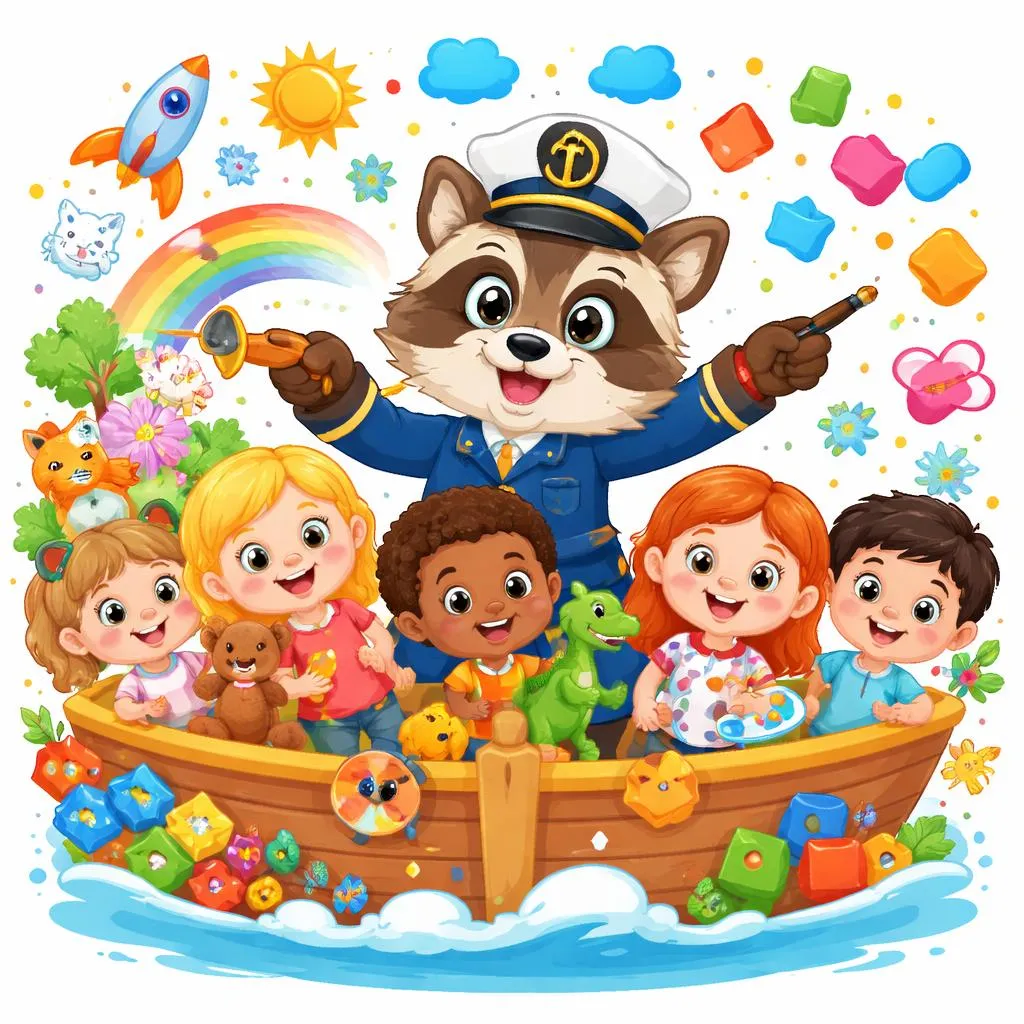

Hello, little captain! Do you know about captains? A captain is the boss of a ship. The captain tells everyone what to do. Sentences have a captain too! The captain of a sentence is called the subject. The subject is the who or what the sentence is about. It is the most important part. Without a captain, the sentence ship cannot sail! Today, we will meet forty wonderful sentence captains. Our guide is Captain Chip, a friendly chipmunk. Chip is a great captain of his own little world! He will show us sentence captains at home, the playground, school, and in the forest. All aboard! Let's meet the captains.
What Is a Subject? The subject is the captain of the sentence. It is the person, animal, place, or thing that is doing the action or being described. It tells us who or what the sentence is about. Every complete sentence needs a captain. At home, you say "Mommy cooks." Who is the sentence about? Mommy! "Mommy" is the captain. At the playground, you say "The swing moves." What is the sentence about? The swing! "The swing" is the captain. At school, you say "My friend shares." Who is the sentence about? My friend! "My friend" is the captain. In nature, Captain Chip says "The acorn falls." What is the sentence about? The acorn! "The acorn" is the captain. "Captain Chip climbs a tree." The captain is Captain Chip. He is doing the action. Learning about these subjects makes you the boss of your sentences.
Why Does the Captain Matter? The subject is your guide! It helps your ears listen. You know who or what the story is about right away. It helps your mouth speak. You can make sure every sentence has a clear captain. "I want that!" is clear. "Want that!" is confusing. Who wants it? It helps your eyes read. You will find the captain at the start of sentences in books. It helps your hand write. You can write sentences that are easy to understand. A good captain makes your sentence strong and clear.
Who Can Be a Sentence Captain? Many different things can be the captain. Let's meet the crew.
First, people can be captains. "I", "you", "Mom", "Dad", "the teacher", "my sister". "I play."
Next, animals can be captains. "The dog", "a cat", "that bird", "this fish". "The dog barks."
Here, places can be captains. "Home is cozy." "The park is fun." "School is big."
We have things as captains. "The ball is red." "My cup is full." "The sun is hot."
Last, ideas can be captains. "Love is great." "Sleep is good." "Fun is here."
Pronouns are also great captains. Words like "he", "she", "it", "we", "they". "He is funny." "They are coming."
How Can You Find the Captain? Finding the captain is a simple game. Here is the best trick. Ask the question: "Who or what is doing the action?" The answer is the captain! Look at the sentence "The boy runs." Ask: Who runs? The boy. The captain is "The boy". Another trick is to look for the verb first. Then ask "who?" or "what?" before that verb. In "The flowers are pretty.", what is pretty? The flowers. The captain is "The flowers". Captain Chip says "I see a bug." Who sees? I see. The captain is "I". You found the captain!
How Do We Use the Sentence Captain? The captain usually goes at the beginning of the sentence. This is the captain's spot. The simplest sentence formula is: Captain (Subject) + Action (Verb). "Baby sleeps." "Bird flies." "Car goes." You can add more after the captain. Captain + Verb + Object. "I eat apples." Captain + Linking Verb + Description. "She is happy." Captain Chip uses this pattern. "Chip stores nuts." The captain is first, telling us who the sentence is about. For questions, the captain sometimes moves. "Are you happy?" The captain "you" comes after the verb "are". But usually, the captain leads the way.
Let's Fix Some Captain Mix-Ups! Sometimes we forget our captain. Let's fix that. A common mix-up is a sentence without a captain. A child might point and say "Eating cookies." This is just an action. Who is eating? We need a captain. The right way is "I am eating cookies." or "The boy is eating cookies." Another mix-up is using the wrong word as captain. Someone might say "Him is my friend." This sounds funny. "Him" is not a captain word. The captain word for a boy is "he". The right way is "He is my friend." Remember, the captain is the one doing the action or being described.
Can You Be a Captain Finder? You are a great first mate! Let's play a game. The "Captain Finder" game. Look at a family photo. Point to people and say sentences with them as the captain. "Daddy is tall. Mommy is smiling. I am happy. The dog is silly." You found four captains! Here is a harder challenge. Listen to a short story from your grown-up. Can you tell them who the captain was in each sentence? If the story says "The cat climbed the tree, and then it saw a bird.", the captains are "The cat" and "it". You are spotting the must-know subjects.
Your Crew of 40 Must-Know Subjects Ready to meet the crew? Here are forty wonderful sentence captains. You can use them in your sentences every day. Captain Chip has them all on his ship's roster. Let's call out their names.
People: I, You, He, She, We, They, Mom, Dad, Mommy, Daddy, Baby, Boy, Girl, Friend, Teacher, Sister, Brother, Grandma, Grandpa.
Animals: Dog, Cat, Bird, Fish, Bear, Rabbit, Butterfly, Squirrel, Monkey, Lion.
Places: Home, School, Park, Store, Kitchen, Playground, Bedroom, Garden.
Things: Ball, Car, Book, Cup, Apple, Sun, Flower, Toy, Block, Star.
Ideas: Love, Sleep, Fun, Happy.
These are your must-know subjects. Start with the simple ones: I, you, he, she, it, we, they. Then use the names of people and things you see every day. They are all ready to be the captain of your sentence.
Leading Your Sentence Ship with a Strong Captain You did it! You are now an expert on sentence subjects. You know the subject is the captain. It tells who or what the sentence is about. You know why the captain is so important. You can find the captain by asking "who?" or "what?". You know the captain usually goes first. Captain Chip uses a clear subject in every sentence he says. Now you can too! Your sentences will have a strong leader. Your stories will be easy to follow. You are the captain of your own word ship.
Here is what you can learn from our captain's adventure. You will know what a subject is. You will see all the different things that can be a subject. You can find the subject in any sentence. You can use subjects correctly in your own sentences. You have a big crew of forty subjects to choose from.
Now, let's do some life practice! Your mission is today. For the next hour, be a captain spotter. Listen to what you say. Who is the captain of your sentences? Tell your grown-up: "I am playing. You are reading. The cat is sleeping." You just used "I", "you", and "The cat" as your sentence captains! Keep giving every sentence a good captain. Sail your word ships on great adventures. Have fun, little captain!