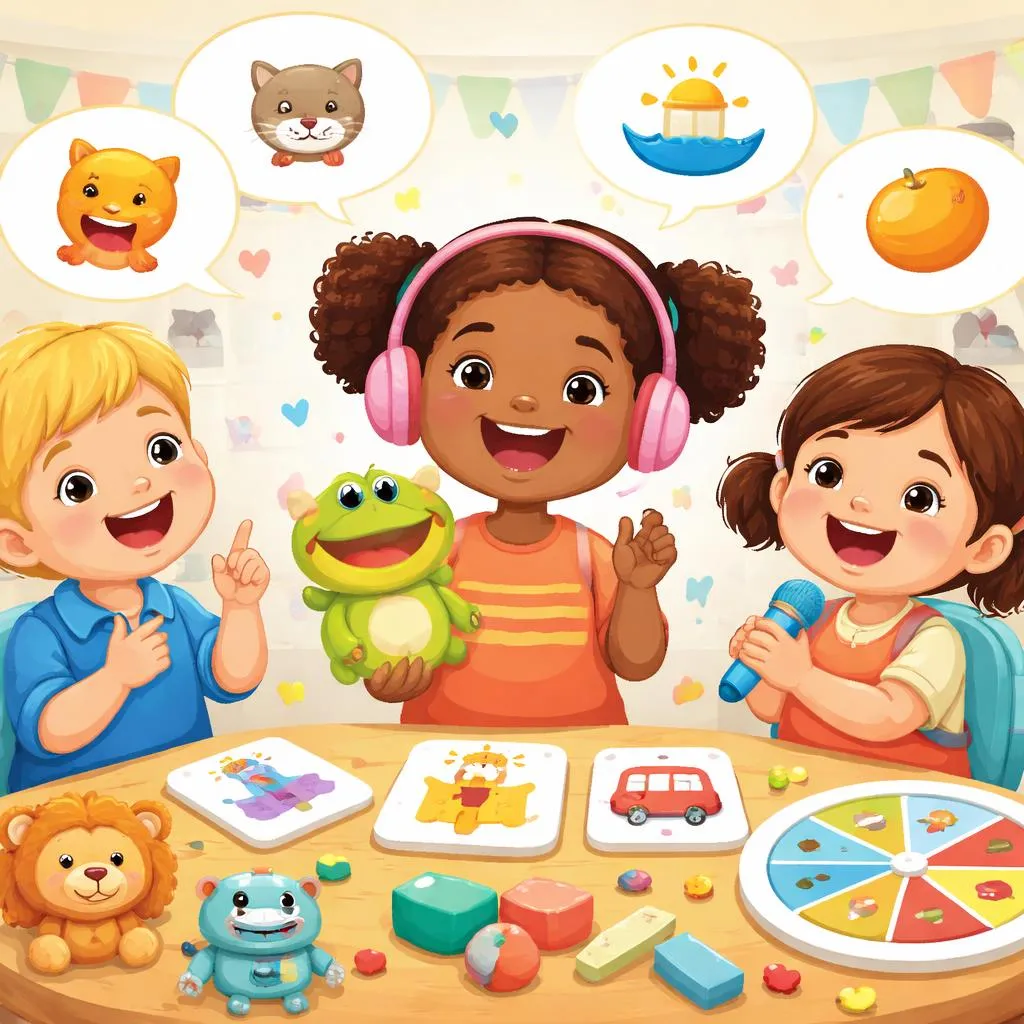

Hello, young sound explorers and word adventurers. Welcome to a fantastic journey into the world of English sounds. Today, we are going to learn all about how to pronounce in English. Pronunciation is just a big word for how we say words. It is about making the correct sounds with your mouth. Learning how to pronounce in English can be like playing a musical instrument. Your voice is the instrument. Let us learn to play it beautifully together.
Meaning
First, what does "how to pronounce in English" mean. It means the way to say English words correctly. Pronunciation involves the sounds, the stress, and the rhythm. When you learn how to pronounce in English, you learn to make sounds like /b/ for "ball" or /sh/ for "shoe." You also learn where to put the emphasis in a word. For example, in "photo," we say PHO-to. The first part is louder. The meaning of pronunciation is about clear communication. If you pronounce words well, people understand you easily. It makes talking fun and confident.
Conjugation
Conjugation is about changing verbs for different subjects and times. How to pronounce in English for conjugated verbs is important. For example, the verb "walk" becomes "walks" for he/she/it. We add an "s" sound. It is pronounced /s/ after voiceless sounds like in "walks." But for "run," it becomes "runs" with a /z/ sound. Also, past tense endings like "-ed" can sound different. "Walked" has a /t/ sound. "Played" has a /d/ sound. "Wanted" has an /id/ sound. Learning how to pronounce in English for these changes helps you sound natural. Practice saying "He walks fast" and "She played well."
Present tense
In present tense, we talk about habits and facts. How to pronounce in English in the present tense often focuses on the base verb sounds. For regular verbs, we just say the word. "I eat." "You sleep." For third person singular (he, she, it), we add -s or -es. The pronunciation can be /s/, /z/, or /iz/. "He talks" with a /s/ sound. "She sings" with a /z/ sound. "It watches" with /iz/ sound. Also, common verbs like "is" are pronounced /iz/. "She is happy." Practice these sounds. Say "He runs" with a /z/ sound. Say "It fixes" with /iz/. This is key to how to pronounce in English for daily talk.
Past tense
For past tense, we talk about yesterday. How to pronounce in English for past tense often involves the "-ed" ending. But it has three sounds. After voiceless sounds like /p/, /k/, /f/, it is /t/. "Jumped" sounds like /jumpt/. After voiced sounds like /b/, /g/, /v/, it is /d/. "Hugged" sounds like /hugd/. After /t/ or /d/, it is /id/. "Wanted" sounds like /wantid/. Irregular verbs have unique pronunciations. "Go" becomes "went" /went/. "See" becomes "saw" /sɔː/. Learning how to pronounce in English in the past helps tell stories. Say "I walked home" with a /t/ sound. Say "She played games" with a /d/ sound.
Future tense
Future tense is about tomorrow. How to pronounce in English for future often uses "will" or "going to." "Will" is pronounced /wɪl/. It is short. "I will go" sounds like /aɪ wɪl ɡoʊ/. "Going to" often becomes "gonna" in casual speech, but for learning, we say "going to." Pronounce it as /ˈɡoʊɪŋ tuː/. The verb after stays in base form. "She will eat" /ʃi wɪl iːt/. "They are going to run" /ðeɪ ɑr ˈɡoʊɪŋ tuː rʌn/. Practice saying these. The rhythm is important. Stress "will" or "going" in the sentence. This part of how to pronounce in English shows your plans and dreams.
Questions
Asking questions is fun. How to pronounce in English for questions involves a rising tone at the end. For yes/no questions, your voice goes up. "Are you happy?" with a rise on "happy." For wh-questions, it often goes down. "What is your name?" with a fall on "name." Also, the pronunciation of question words matters. "What" is /wʌt/. "Where" is /wɛr/. "How" is /haʊ/. In questions with "do" or "does," pronounce them clearly. "Do you like it?" /duː juː laɪk ɪt/. "Does she know?" /dʌz ʃi noʊ/. Learning how to pronounce in English for questions makes you a good conversationalist. Practice with a friend. Ask "Can you play?" with a rising tone.
Other uses
Pronunciation has other cool parts. How to pronounce in English includes stress in sentences. We stress important words. In "I love dogs," stress "love" and "dogs." Also, connected speech is when words link together. "Can I" often sounds like /kənaɪ/. "Going to" becomes "gonna." But for kids, we learn the clear forms first. Another use is intonation for emotions. Excited speech has a higher pitch. Sad speech is lower. Also, silent letters are tricky. "Knight" has a silent /k/. "Psychology" has a silent /p/. Learning how to pronounce in English for these exceptions takes practice. Listen to native speakers. Mimic their rhythm and flow.
Learning tips
Here are great tips for how to pronounce in English. First, listen a lot. Watch cartoons in English. Listen to songs. Your ears learn the sounds. Second, record yourself. Say a word and compare it to a dictionary sound. Many apps can help. Third, use mirrors. Watch your mouth shape. For /th/, stick your tongue out. For /r/, round your lips. Fourth, break words into sounds. "Butterfly" is /b/ /ʌ/ /t/ /ər/ /fl/ /aɪ/. Say it slowly. Fifth, practice tongue twisters. "She sells seashells by the seashore." This is fun and improves clarity. Sixth, be patient. Making new sounds takes time. Celebrate small wins. Learning how to pronounce in English is a journey. Enjoy each step.
Educational games
Games make learning how to pronounce in English a blast. Play "Pronunciation Bingo." Make cards with pictures. Call out words. Kids mark the picture if they hear the correct sound. For example, call "cat" with a clear /k/ sound. They find the cat picture. Another game is "Sound Matching." Have cards with sounds like /ʃ/ for "shoe" and /tʃ/ for "chair." Kids match objects to the sound cards. This trains their ears.
Play "Repeat After Me" with a twist. Use a puppet. The puppet says a word with exaggeration. Kids repeat. Make it silly. Use different voices. For a movement game, do "Pronunciation Hopscotch." Draw squares with words. Say a word correctly to hop to it. If mispronounced, try again. This adds physical fun.
Try "Storytelling with Sounds." Pick a sound for the day, like /s/. Create a story using many /s/ words. "Sally the snake slid slowly." Everyone adds sentences. This encourages creative use of sounds. For a tech game, use pronunciation apps that give instant feedback. Many are designed for kids. They listen and score your pronunciation.
Another idea is "Mouth Gym." Do exercises to strengthen mouth muscles. Puff cheeks. Move tongue in circles. This helps with sound production. Make it a daily warm-up. All these games make learning how to pronounce in English engaging. You are playing, not just studying. Keep practicing, and soon you will speak English with confidence and a big smile.