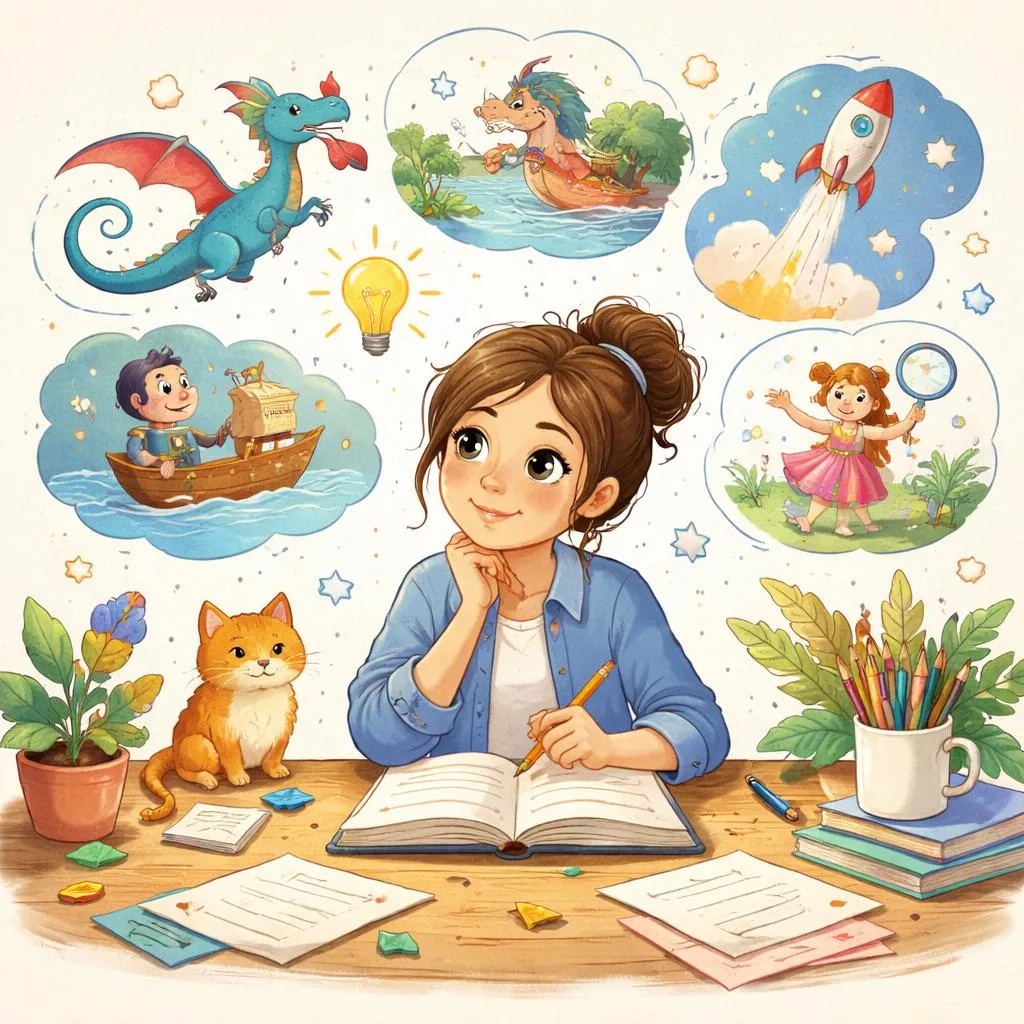

What Are Children's Story Ideas? Let us explore this essential topic for young writers together. Children's story ideas are the starting points for creating original tales. They can be a character, a setting, or a situation. A single question like "What if toys came alive?" sparks imagination. An interesting person seen in daily life might inspire a character. A dream from last night could become a fantasy adventure. A problem needing solution can drive an entire plot. Story ideas come from everywhere when we learn to notice. They hide in ordinary moments and extraordinary events both. The key is learning to recognize and capture them. Writing them down prevents forgetting these precious sparks. A notebook for ideas becomes a treasure chest of possibilities. Every writer needs a way to collect story seeds.
Meaning and Purpose of Story Ideas Story ideas serve as the foundation for all creative writing. They provide the spark that ignites the imagination completely. Without ideas, writers would have nothing to write about ever. Ideas also give direction to the writing process naturally. They suggest what kind of story might be told. A mysterious idea leads toward a mystery story usually. A funny idea points toward humor and comedy. Ideas also motivate writers to keep working on stories. A compelling idea makes the writer eager to explore it. The excitement of a good idea carries through drafting. Ideas also connect writers to their own experiences and feelings. Personal ideas often produce the most authentic writing. Children learn that their lives contain countless story possibilities.
Categories of Story Ideas We can organize story ideas into several helpful categories. Character ideas start with an interesting person to write about. A talking animal, a magical being, or an ordinary child. Setting ideas begin with a place that sparks imagination. A haunted house, an underwater city, or a distant planet. Problem ideas start with a conflict that needs resolution. A lost treasure, a missing friend, or an impossible task. What if ideas explore imaginary situations creatively. What if animals could talk? What if you could fly? Magic ideas involve supernatural elements in stories. A magic wand, a secret spell, or an enchanted object. Friendship ideas explore relationships between characters. Two friends who are very different, or a new friend moving away. Adventure ideas send characters on exciting journeys. Exploring a cave, sailing the ocean, or traveling through time.
Daily Life Sources for Story Ideas Daily life provides endless sources for children's story ideas. Ordinary objects around the house can inspire stories. What adventures might a pencil have when no one is watching? Family members have interesting stories to share sometimes. Grandparents' childhoods happened in a very different world. Pets have personalities that could become story characters. A lazy cat or energetic dog has definite character traits. Dreams at night create bizarre and wonderful story material. Writing dreams down immediately after waking preserves them. School experiences generate countless story possibilities. A funny thing that happened at recess could be a story. Problems faced during the day can become plot conflicts. Getting lost, losing something, or making a mistake all work. We can point out these sources during writing time. "Remember when your dog did something funny? That could be a story."
Vocabulary Learning from Story Ideas Story idea exploration introduces rich creative vocabulary. Idea means a thought or suggestion about what to do. Imagine means to form a picture in your mind of something. Create means to bring something new into existence. Character means a person or animal in a story. Setting means where and when a story takes place. Plot means the sequence of events in a story. Problem means a difficulty that characters need to solve. Solution means the way characters solve their problem. Adventure means an exciting or unusual experience. Fantasy means a story with magical or impossible elements. We can teach these words with examples from familiar stories. Use them in sentences about creating original tales.
Phonics Points in Story Idea Vocabulary Story idea vocabulary provides useful phonics practice for writers. Idea has the long I and long E and short A. Imagine has the short I and short A and soft G and final e. Create has the CR blend and long E and long A. Character has the soft C and short A and short E. Setting has the short E and ING blend. Problem has the short O and short E and M sound. Solution has the short O and long U and SH sound. Adventure has the short A and short E and TURE ending. Fantasy has the short A and short I and long E. Magic has the short A and soft G and IC ending. We can focus on one sound pattern from each idea category. Find all words with that sound in story planning notes. Write them on lightbulb or notebook shapes for practice.
Grammar Patterns in Story Planning Story planning discussions model useful grammar for young writers. Future tense describes stories that will be written. "The character will travel through an enchanted forest." Present tense describes ideas as they are being formed. "This idea feels like it could become a mystery story." Past tense describes where ideas came from originally. "I got this idea from a dream I had last night." Questions help develop and expand story ideas. "What happens next?" "Why does the character want that?" Commands appear in brainstorming and planning. "Think about what the character looks like." "Decide where the story takes place." Descriptive language paints idea pictures clearly. "A dark, mysterious castle on a stormy night." Prepositional phrases describe elements of stories. "In the forest, with her friends, through the magic door." We can point out these patterns during writing workshops.
Learning Activities for Generating Story Ideas Many activities help children discover story ideas. Keep an idea notebook where all ideas get written down. Review it regularly for inspiration when stuck. Create idea cards with different story elements to combine. Draw one character card, one setting card, one problem card. Go on an idea walk observing the world carefully. Notice interesting people, places, and things to write about. Play "What If" games asking imaginative questions. What if it rained food? What if animals could talk? Interview family members for story ideas from their lives. Grandparents have amazing stories from long ago. Look at photographs and imagine the stories behind them. Old pictures spark ideas about who those people were. These activities make idea generation a regular practice.
Printable Materials for Story Ideas Printable resources support deep engagement with idea generation. Create idea prompt cards with different story starters. "A mysterious package arrived at the door..." Design a story idea web for brainstorming connections. Place main idea in center, branch out with details. Make a character creation sheet with prompts for development. Name, appearance, personality, likes, dislikes included. Create a setting description guide with sensory prompts. What does it look, sound, smell, and feel like? Design a problem-solution chart for plot development. List possible problems and brainstorm solutions. Make an idea collection sheet for recording inspirations. Date, where idea came from, and brief description spaces. These printables structure idea generation activities effectively.
Educational Games for Story Ideas Games make idea generation playful and interactive. Play "Story Dice" rolling dice with pictures for elements. Combine what comes up into a unique story idea. Create "Idea Jar" with written prompts on slips of paper. Draw one when needing inspiration for writing. Play "Fortunately, Unfortunately" taking turns adding to story. Each person adds "fortunately" or "unfortunately" to continue. Design "Story Cards" with characters, settings, and problems. Draw one from each pile to create story combination. Play "What If?" passing a question around circle. Each person answers and adds new "what if" question. Create "Idea Freeze" where music stops and children freeze. Teacher calls out story element to add to idea. These games build idea generation through active participation.
Teaching That Ideas Are Everywhere The most important lesson is that ideas surround us always. They hide in ordinary moments if we learn to notice. A dropped ice cream cone could start a story. A funny conversation overheard might inspire characters. A beautiful sunset could be a story setting. A personal fear could become a story problem. Children learn to see the world as full of possibilities. Every person they meet could be a character. Every place they go could be a setting. Every problem they face could be a plot. This mindset transforms daily life into creative fuel. Writers develop this habit of noticing and wondering. Children can too with practice and encouragement.
Overcoming Idea Blocks Sometimes writers feel stuck with no ideas at all. This happens to every writer, even professionals sometimes. Several strategies help get ideas flowing again. Change locations and go somewhere new for inspiration. A different environment stimulates fresh thinking. Talk to someone about being stuck; conversation helps. Another person's questions might spark something. Look through idea notebook for forgotten possibilities. Old ideas can be combined or expanded. Read a book or watch something creative. Other people's creativity often inspires our own. Do something completely different for a while. A walk, a snack, or playing can reset thinking. The most important thing is not to panic. Ideas always return eventually with patience.
Developing Ideas Into Stories A single idea needs development to become a full story. Characters need names, personalities, and motivations. Settings need details that make them feel real. Plots need beginning, middle, and end structure. Problems need to be challenging but solvable. Solutions need to make sense for the characters. Questions help develop ideas more completely. Who is the main character and what do they want? Where and when does this story take place? What problem prevents the character from getting what they want? How will the character solve this problem eventually? What changes by the end of the story? Answering these questions turns sparks into stories. The process takes time but is deeply rewarding.
Celebrating Created Stories When children turn ideas into stories, celebration matters. Share finished stories with classmates and family. Create a class book collecting everyone's stories. Host an author celebration where children read aloud. Display stories on bulletin boards for everyone to see. Record stories as audio files to share with others. Send stories home for families to enjoy together. Positive recognition encourages continued writing efforts. Children see themselves as real authors with valuable ideas. The celebration validates the hard work of creating. It also builds confidence for future writing projects. Every finished story represents ideas successfully developed. That deserves acknowledgment and celebration always.