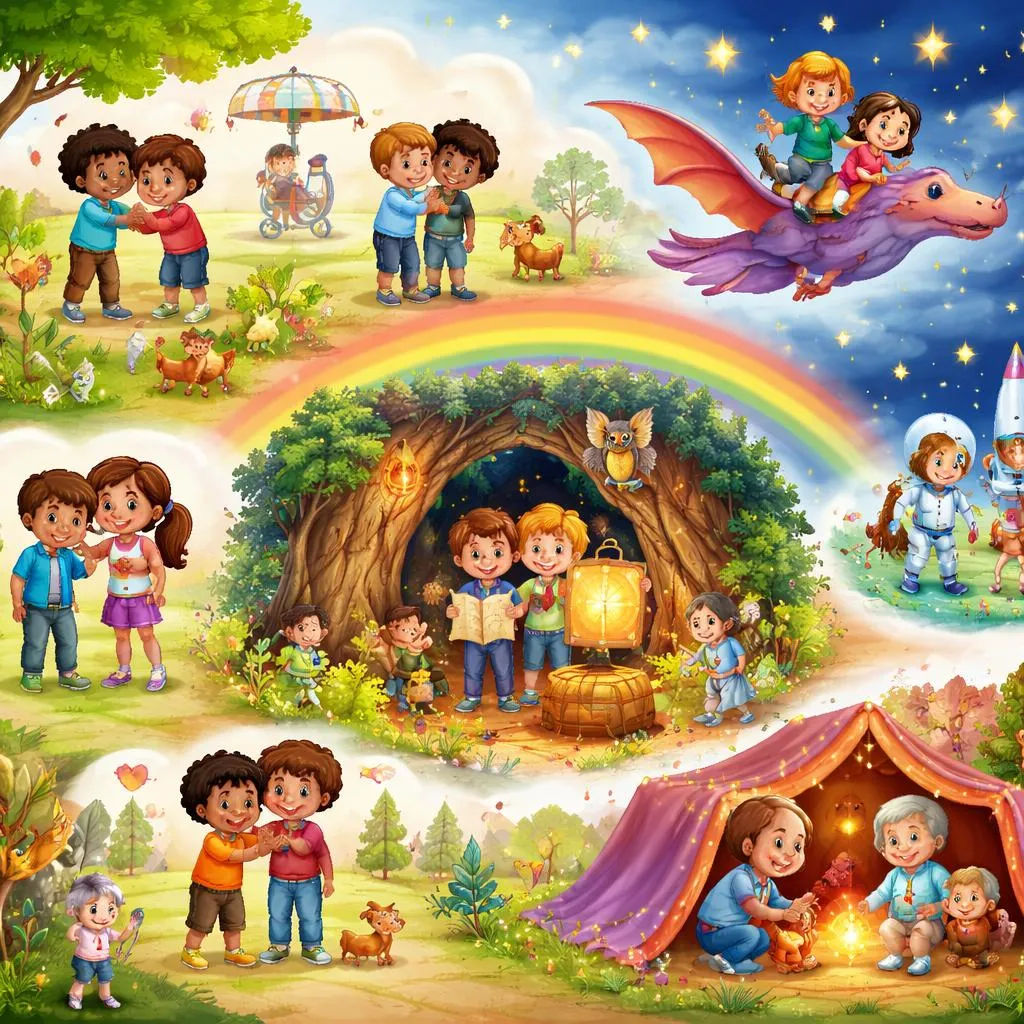

What Are Themes in Children's Stories? Let us explore this essential storytelling element together. Themes are the big ideas that stories explore and reveal. They go beyond the plot events and character actions. Themes answer what the story is really about underneath. A simple story about a lost dog has deeper themes. Loyalty, perseverance, and love might emerge from the tale. Themes give stories meaning and resonance with readers. They connect the specific events to universal human experiences. Children may not name the theme explicitly while reading. But they absorb the message through character experiences. Good stories weave themes naturally into the narrative fabric. The theme emerges from what characters learn and how they change. Different readers may find different themes in the same story. This richness makes literature worth discussing and revisiting.
Meaning and Purpose of Themes Themes serve several important purposes in children's literature. They help children understand complex ideas through concrete stories. Abstract concepts become accessible through character experiences. A story about sharing makes generosity understandable and real. Themes also connect individual stories to universal human experiences. Children learn they are not alone in their feelings. Others have faced fear, loss, joy, and growth too. The themes provide frameworks for understanding the world. They offer lenses through which to view life situations. Stories become guides for navigating real challenges children face. Themes also create lasting meaning beyond the reading experience. A book's message stays with children long after pages close. The best children's books address themes with honesty and hope. They respect children's ability to grapple with important ideas.
Categories of Common Themes We can organize story themes into helpful categories for teaching. Courage themes appear in tales of facing fears and danger. Characters overcome obstacles through bravery and determination. Friendship themes explore connection, loyalty, and support between characters. Stories show how friends help each other through difficulties. Family themes examine relationships with parents, siblings, and relatives. Love, conflict, and forgiveness appear within family contexts. Kindness themes focus on helping others and showing compassion. Small acts of caring create significant changes in stories. Perseverance themes show characters not giving up despite challenges. Effort and persistence eventually lead to success or growth. Identity themes explore who characters are and becoming themselves. Self-discovery and acceptance appear throughout these narratives. Justice themes examine fairness, right and wrong, and consequences. Characters learn that actions have effects on others.
Daily Life Connections Through Themes Story themes connect directly to children's everyday experiences. Courage appears when facing a difficult test at school. Standing up to a bully also requires real courage. Friendship themes mirror playground relationships and classroom dynamics. Making friends and resolving conflicts happens daily. Family themes reflect children's own home experiences. Siblings argue, parents guide, and love continues through everything. Kindness appears in sharing snacks or helping a fallen classmate. Small gestures matter enormously in daily classroom life. Perseverance connects to learning new skills that feel hard. Reading, math, and sports all require persistence over time. Identity questions arise when children consider who they are. What makes me different? What makes me like others? We can point out these connections during reading discussions. "Have you ever needed courage like that character?"
Vocabulary Learning Through Theme Exploration Theme discussions introduce rich literary vocabulary for children. Theme names the central idea or message of a story. Courage means facing danger or difficulty without giving up. Friendship describes the relationship between people who care about each other. Kindness means doing good things for others without expecting reward. Perseverance means continuing despite problems or difficulties. Loyalty means staying faithful to people or commitments. Honesty means telling the truth and being genuine. Justice means fairness and getting what people deserve. Forgiveness means letting go of anger toward someone who wronged you. Compassion means feeling concern for others who suffer. We can teach these words with examples from familiar stories. Use them in sentences about characters children know well.
Identifying Themes in Familiar Stories Practice finding themes in stories children already know. The Three Little Pigs teaches about preparation and hard work. Building well matters more than building quickly. Little Red Riding Hood warns about talking to strangers. Not everyone who seems friendly has good intentions. Charlotte's Web explores friendship, loyalty, and the circle of life. Wilbur and Charlotte's bond transcends their differences. Where the Wild Things Are shows dealing with anger and returning to love. Max's journey represents emotional regulation and home. The Very Hungry Caterpillar demonstrates transformation and growth. Change is natural and leads to something beautiful. Each familiar story carries themes children can identify. Ask what the character learned by the story's end. That learning often points directly to the theme.
Phonics Points in Theme Vocabulary Theme vocabulary provides useful phonics practice for readers. Theme itself has the TH digraph and long E sound. Courage has the C soft sound and GE ending. Friendship has the FR blend and SHIP ending. Kindness has the long I and ND blend and NESS suffix. Perseverance has the PER prefix and long E and ANCE ending. Loyalty has the OY diphthong and TY suffix. Honesty has the short O and NEST pattern and TY suffix. Justice has the J sound and short U and ICE ending. Forgiveness has the OR combination and GIVE and NESS suffix. Compassion has the short O and SH sound and short A. We can focus on one sound pattern from each theme word. Find other words with the same pattern in stories. Write them on shape templates representing each theme.
Grammar Patterns in Theme Discussions Theme discussions model useful grammar for young readers. Present tense describes what themes mean generally. "Courage means facing fear even when scared." Past tense describes how themes appeared in stories. "The character showed courage when she spoke up." Future tense predicts how themes apply to life. "You will need perseverance when learning something hard." Questions explore theme connections and applications. "What did the character learn about friendship?" "How does kindness change the story?" Comparisons show relationships between themes. "Courage and perseverance often appear together in stories." Prepositional phrases locate themes in story events. "At the end, after the challenge, through helping others." We can point out these patterns during theme discussions. Notice how we use present tense to talk about theme meanings.
Learning Activities for Theme Exploration Many activities deepen understanding of story themes. Create a theme wheel showing different possible messages. Spin and discuss stories that match each theme. Make a theme journal recording themes from each book read. Write a sentence about what the story teaches. Draw symbols representing different themes for display. A heart for love, a handshake for friendship, a shield for courage. Compare themes across different stories by same author. Notice what messages the writer returns to repeatedly. Create a theme wall displaying current theme with examples. Add new books to the wall as they are read. Write new stories focused on specific themes to explore. Show characters learning the chosen theme through events. These activities make abstract themes concrete and understandable.
Printable Materials for Theme Learning Printable resources support deep engagement with literary themes. Create theme cards with names and simple definitions. Include picture symbols for non-readers to understand. Design theme tracking sheets for recording books read. Note which themes appeared in each story. Make comparison charts for multiple books on same theme. List how each story explored the message differently. Create a theme word search with vocabulary from discussions. Find courage, kindness, friendship, and perseverance hidden. Design theme bookmarks listing common themes for reference. Children use them while reading independently. Make theme response sheets with writing prompts. "This book taught me about..." "I felt like the character when..." These printables structure literary analysis activities effectively.
Educational Games About Themes Games make theme exploration playful and interactive. Play "Theme Charades" acting out themes without words. Others guess which theme is being portrayed. Create "Match the Theme" pairing books with their messages. Match Charlotte's Web with friendship and loyalty. Play "Theme Bingo" with theme words on cards. Mark when you identify themes in stories read. Design "Theme Sort" with book covers or titles. Group them by what themes they probably explore. Play "What's the Theme?" after reading short passages. Discuss what message the author wants readers to learn. Create "Theme Scavenger Hunt" finding examples in classroom books. List which themes appear in the library collection. These games build theme identification through active participation.
Teaching Multiple Themes in One Story Many rich stories contain several themes working together. Characters may learn about courage and friendship simultaneously. Standing up for a friend requires both courage and loyalty. A story about family might also explore forgiveness and love. The themes interact and support each other throughout. Children can learn to identify multiple messages. Ask what else the character learned besides the main lesson. Discuss how different readers might focus on different themes. Some notice the friendship theme most strongly. Others connect more with the courage message personally. This shows that stories offer different gifts to different readers. All interpretations can be valid when supported by text. Multiple themes make stories worth rereading over time. New readings reveal previously unnoticed dimensions.
Themes Across Different Cultures Themes appear in stories from every culture around the world. Courage stories exist in African, Asian, European, and American traditions. Friendship tales transcend cultural boundaries completely. The specific details change with each culture's context. Japanese stories feature different settings than Mexican tales. But the underlying themes remain remarkably similar. This shows that all humans share common concerns. Love, fear, hope, and growth belong to everyone. Exploring themes across cultures builds global understanding. Children see that people everywhere value similar things. Different cultures express these values through unique stories. This develops respect for diversity and recognition of shared humanity. Theme exploration becomes a bridge between cultures naturally.
Connecting Themes to Character Education Story themes align perfectly with character education goals. Courage themes support developing bravery in real situations. Friendship themes teach skills for building healthy relationships. Kindness themes encourage prosocial behavior and empathy. Perseverance themes build resilience and growth mindset. Honesty themes reinforce the value of truthfulness. Responsibility themes show the importance of keeping commitments. The stories provide models of these qualities in action. Children see characters demonstrating values they can emulate. Discussions connect story events to real-life applications. When should we show courage like that character? How can we be kind like in the story? This integration makes character education organic and meaningful. Themes become lived values, not just abstract concepts.
Why Themes Matter for Developing Readers Theme understanding represents higher-level comprehension skill. Young readers first focus on plot and characters literally. Later they begin to notice patterns and messages. Identifying themes shows deepening engagement with text. It requires synthesizing story elements into bigger ideas. This skill develops gradually through exposure and discussion. Adults model theme thinking through questions and comments. "I wonder what the author wants us to learn." "How did the character change by the end?" Over time, children internalize this way of thinking. They begin to naturally look for meaning in stories. This transforms reading from decoding to true comprehension. Themes open the door to literary appreciation for life. Stories become companions for understanding ourselves and others.