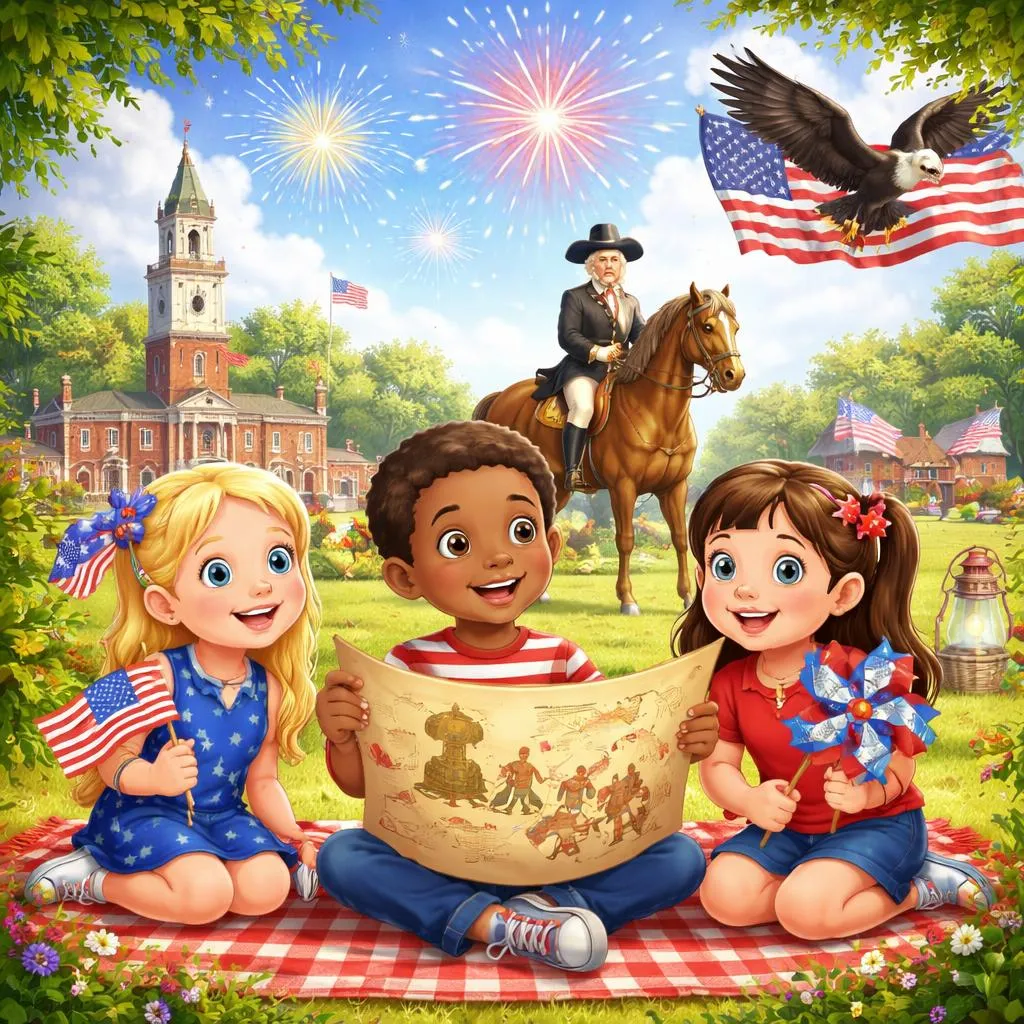

What Is a Children's Story About 4th of July? Let us explore this patriotic genre of children's literature together. A children's story about 4th of July tells about America's Independence Day. It explains why Americans celebrate this special holiday. The story often begins with life in colonial America long ago. People lived under British rule and had to obey British laws. They had no voice in making those laws for themselves. Many colonists felt this was unfair and wanted change. The story introduces important figures like George Washington and Thomas Jefferson. It explains that leaders wrote a document called the Declaration of Independence. This document told the world that America wanted to be free. The Continental Congress approved it on July 4, 1776. Ever since, Americans have celebrated this day as their birthday as a nation.
Meaning and Purpose of 4th of July Stories These stories serve several important purposes in children's education. They introduce the concept of freedom and independence. Children learn that freedom is something worth celebrating. The stories also teach early American history in accessible ways. Complex historical events become understandable narratives. The stories also build patriotic feelings and national pride. Children learn to appreciate the country they live in. The narratives also explain holiday traditions children experience. Parades, fireworks, and barbecues all have meaning. The stories connect present celebrations to past events. Children understand why we do what we do on July 4th. The stories also honor those who fought for American freedom. Sacrifice and courage are recognized and appreciated.
Common Elements in 4th of July Stories We can identify several elements common to these patriotic narratives. Colonial America setting appears at the story's beginning. Life before independence is shown to children. Unfair treatment by the British king is explained. Taxes without representation upset the colonists. Important historical figures are introduced simply. George Washington, Thomas Jefferson, and Benjamin Franklin appear. The Declaration of Independence is explained in basic terms. What it said and why it mattered are clarified. The first Independence Day celebration is described. How people celebrated then compared to now. Modern traditions connect to the historical events. Parades, fireworks, and family gatherings appear. Symbols like the flag, eagle, and Statue of Liberty are included.
Vocabulary Learning from 4th of July Stories These stories introduce important patriotic vocabulary for children. Independence means freedom from being ruled by another country. Liberty means the state of being free within society. Freedom means the power to act, speak, or think without hindrance. Revolution means a forcible overthrow of a government for new system. Colony means a country under full control of another country. Declaration means a formal or explicit statement or announcement. Congress means the national legislative body of a country. Patriot means a person who vigorously supports their country. Flag means a piece of cloth with symbols representing a country. Fireworks means explosive devices used for entertainment on special days. We can teach these words with picture cards showing examples. Use them in sentences about Independence Day celebrations.
Phonics Points in 4th of July Stories These stories provide useful phonics practice with patriotic vocabulary. July has the long U and long I. Independence has the short I and short E and short E and short E. Liberty has the L sound and short I and ER and long E. Freedom has the FR blend and long E and short O and M sound. Revolution has the short E and long U and short U and SH sound. Colony has the short O and short O and long E. Declaration has the short E and short A and long A and SH sound. Congress has the short O and short E and SS. Patriot has the long A and long I and short O. Fireworks has the long I and ER and OR and KS. We can focus on one sound pattern from each story. Find all words with that sound in the 4th of July tale. Write them on flag or firework shapes for practice.
Grammar Patterns in 4th of July Narratives These stories model useful grammar for young readers naturally. Past tense carries the historical narrative throughout. "The colonists decided they wanted to be free." Present tense describes modern celebrations today. "Families gather to watch fireworks on July 4th." Future tense shows what will happen next year. "Next Independence Day we will have a big picnic." Questions explore historical events and meaning. "Why did the colonists want independence?" "What does the Declaration of Independence say?" Commands appear in patriotic songs and pledges. "pledge allegiance to the flag." "Let freedom ring." Descriptive language paints historical scenes vividly. "The brave, determined colonists signed their names to the Declaration." Prepositional phrases describe locations and times. "In Philadelphia, on July 4th, throughout the colonies." We can point out these patterns during reading.
Daily Life Connections Through 4th of July Stories These stories connect directly to children's holiday experiences. Family gatherings on July 4th are common for many. Children recognize the barbecues and picnics described. Fireworks displays happen in most communities. Children watch the colorful explosions in the sky. Parades with flags and music occur everywhere. Children wave flags and catch candy thrown. Wearing red, white, and blue is part of the day. Children dress in patriotic colors proudly. The stories explain why these traditions exist. Children understand the meaning behind the fun. We can point out these connections during reading. "Remember watching the fireworks last year?" "You waved your flag at the parade just like in the story."
Learning Activities for 4th of July Stories Many activities deepen understanding of Independence Day themes. Create a timeline showing events leading to independence. Include key dates from colonial times to July 4, 1776. Make a flag craft with stars and stripes. Use paper, paint, or other materials to create. Practice saying the Pledge of Allegiance together. Discuss what the words mean. Draw pictures of fireworks with chalk on black paper. Create colorful explosion designs. Learn about the Statue of Liberty and what she represents. Find out why France gave her to America. Have a classroom picnic with red, white, and blue foods. Strawberries, blueberries, and whipped cream on shortcake. These activities make history come alive for children.
Printable Materials for 4th of July Learning Printable resources support deep engagement with patriotic themes. Create sequencing cards showing events leading to independence. Unfair laws, Declaration writing, signing, first celebration, modern day. Design flag parts labeling pages with vocabulary. Stars, stripes, union, canton, field identified. Make vocabulary cards with patriotic words and definitions. Independence, liberty, freedom, colony, declaration, congress included. Create a Declaration of Independence coloring page with simplified text. Children color while learning about the document. Design a fireworks safety sheet with important rules. Never touch, stay back, adult supervision, leave to professionals. Make a patriotic symbols matching game. Match flag with country, eagle with freedom, liberty bell with Philadelphia. These printables structure patriotic learning activities effectively.
Educational Games About 4th of July Games make Independence Day learning playful and interactive. Play "Patriotic Charades" acting out July 4th activities. Fireworks, parades, barbecues, flag waving appear. Create "Match the Symbol" pairing symbols with meanings. Flag with country, eagle with freedom, liberty bell with independence. Play "Who Am I?" with historical figures from the story. "I wrote the Declaration of Independence. Who am I?" Design "4th of July Bingo" with holiday elements on cards. Fireworks, flag, parade, barbecue, stars, stripes included. Play "Red, White, and Blue Relay" sorting colored items. Teams race to sort items by patriotic colors. Create "Declaration Quiz" with simple questions about the story. When was independence declared? Who signed the document? These games build patriotic knowledge through active participation.
Teaching About the Declaration of Independence The Declaration of Independence is central to July 4th stories. Children can understand its basic message simply. It said that people have rights that cannot be taken away. Life, liberty, and the pursuit of happiness are examples. It said that governments should protect these rights. When governments don't, people can change them. It listed complaints against the British king. These were reasons for wanting independence. It declared the colonies free and independent states. This was a very brave thing to do at the time. Signers risked their lives by putting names on it. Children can learn that freedom required courage. The document still matters today for all Americans.
Symbols of Freedom in the Story 4th of July stories include many American symbols. The American flag represents the United States. Its stars stand for the fifty states. Its stripes stand for the original thirteen colonies. The bald eagle represents strength and freedom. It appears on money and government buildings. The Statue of Liberty welcomes immigrants to America. She holds a torch representing enlightenment. The Liberty Bell rang for independence in Philadelphia. It has a crack from long ago. Each symbol carries meaning children can understand. The stories explain what they represent simply. Children learn to recognize and appreciate these symbols.
Modern Celebrations Connect to History The story connects today's celebrations to historical events. Fireworks represent the excitement of freedom won. The first Independence Day likely had fireworks too. Parades show community pride and togetherness. People marched then and now celebrate together. Barbecues and picnics bring families together. Families gathered then to celebrate just like now. Wearing red, white, and blue shows patriotism. People then also showed their colors proudly. These connections make history feel alive and relevant. Children understand they are part of a continuing story. The same celebration has happened for almost 250 years. They join a long line of Americans celebrating freedom.