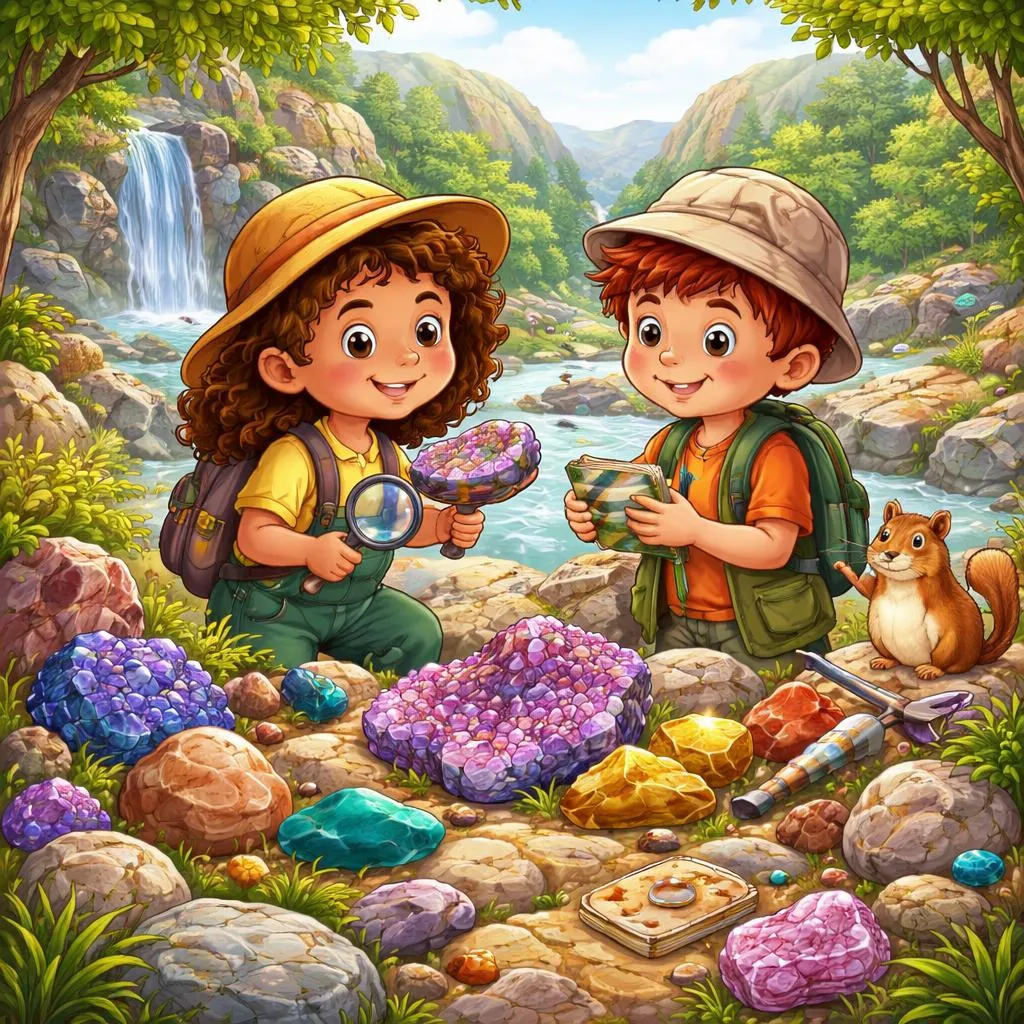

What Is a Children's Story About Rocks? Let us explore this fascinating genre of children's literature together. A children's story about rocks introduces young readers to the world of geology. Characters discover rocks in nature and learn about their formation. The story might follow a rock's journey through millions of years. A pebble could tell its own story of becoming sand. A mountain might share memories of ancient oceans covering it. The stories explain how different rocks form in simple terms. Igneous rocks come from volcanoes and cooling magma. Sedimentary rocks form from layers pressed together over time. Metamorphic rocks change from heat and pressure deep underground. The narratives make Earth science accessible and exciting for children. They spark curiosity about the natural world all around us.
Meaning and Purpose of Rock Stories These stories serve several important purposes in science education. They introduce basic geology concepts through engaging narratives. Children learn about rock formation without feeling like they are studying. The stories also build observation skills for outdoor exploration. Children begin noticing rocks in their environment more carefully. They wonder about where each rock came from originally. The narratives also teach about Earth's long history and changes. Rocks hold evidence of environments millions of years old. Children grasp deep time concepts through concrete examples. The stories also connect to other subjects like art and history. Rocks have been used for tools, buildings, and art forever. This interdisciplinary approach enriches learning across subjects naturally.
Common Elements in Rock Stories We can identify several elements common to rock-themed narratives. A rock collection often appears as a plot device. Characters gather interesting rocks during their adventures. A rock's origin story explains how it was formed. The narrative might travel back in time to show this. Rock identification becomes part of solving a mystery. What kind of rock is this and where did it come from? Rock uses show how people have used rocks throughout history. Building materials, tools, and art appear in stories. Rock changes show the rock cycle in action over time. Weathering, erosion, and pressure transform rocks gradually. A rock's journey follows it through millions of years. From mountain to pebble to sand grain continuously.
Types of Rocks in Children's Stories We can organize rock types commonly featured in children's stories. Igneous rocks form from cooled lava or magma. Granite, obsidian, and basalt appear in stories often. Sedimentary rocks form from layers of sediment pressed together. Sandstone, limestone, and shale are common examples. Metamorphic rocks form when heat and pressure change existing rocks. Marble, slate, and quartzite appear in these narratives. Fossils often appear in sedimentary rock stories. Ancient creatures preserved in stone fascinate children always. Gemstones add sparkle and wonder to rock stories. Diamonds, rubies, and amethysts capture imagination easily. Building stones like marble and granite appear in history contexts. Ancient buildings and monuments tell stories through stone.
Daily Life Connections Through Rock Stories Rock stories connect to children's everyday experiences naturally. Collecting interesting rocks happens on playgrounds and beaches. Many children have pockets full of found treasures. Skipping stones across water is a universal childhood joy. The smooth, flat rocks feel perfect in small hands. Rock painting transforms ordinary stones into art projects. Painted rocks appear in gardens and classrooms everywhere. Rock towers balance stones carefully in quiet concentration. This activity appears in nature and playgrounds globally. Crystals and gemstones fascinate children in museums and stores. Their sparkle and color attract attention immediately. We can point out these connections during reading. "Have you ever found a rock that looked special?" "What kind of rock do you think that is?"
Vocabulary Learning from Rock Stories Rock stories introduce rich scientific vocabulary for children. Geology means the study of Earth and the rocks it contains. Mineral means a natural solid substance with a specific chemical makeup. Crystal means a mineral with a regular geometric shape inside. Igneous means rock formed from cooled lava or magma. Sedimentary means rock formed from layers of sediment pressed together. Metamorphic means rock changed by heat and pressure underground. Fossil means the remains of ancient life preserved in rock. Erosion means the wearing away of rock by wind or water. Weathering means the breaking down of rock by weather exposure. We can teach these words with picture cards showing examples. Use them in sentences about rocks children have seen.
Phonics Points in Rock Stories Rock stories provide useful phonics practice with scientific vocabulary. Rock has the R sound and short O and CK digraph. Stone has the ST blend and long O and silent E. Mineral has the short I and short E and AL ending. Crystal has the CR blend and short I and short A and L sound. Igneous has the short I and long E and OUS ending. Sedimentary has the short E and short E and long A and RY ending. Fossil has the short O and SS and short I and L sound. Erosion has the long E and long O and SH sound. Weather has the W sound and EA digraph and ER ending. We can focus on one sound pattern from each story. Find all words with that sound in the rock tale. Write them on rock or crystal shapes for practice.
Grammar Patterns in Rock Narratives Rock stories model useful grammar for young readers naturally. Past tense tells the rock's long history through time. "Millions of years ago, this rock was liquid lava." Present tense describes what rocks are like now. "This granite feels hard and looks speckled." Future tense shows what will happen to rocks eventually. "Someday this mountain will weather into sand." Questions explore scientific curiosity and discovery. "What kind of rock did we find?" "How old do you think this fossil is?" Commands appear in rock collecting adventures. "Look for shiny spots on that rock." "Feel how smooth this one is." Descriptive language paints clear pictures of rocks. "The sparkly, gray granite glittered in the afternoon sun." Prepositional phrases describe locations and positions. "Under the ground, on the mountain, in the river." We can point out these patterns during reading.
Learning Activities for Rock Stories Many activities deepen understanding of geology concepts. Start a rock collection with samples from local area. Sort rocks by color, size, texture, and type discovered. Perform simple rock tests to identify different types. Check hardness, streak color, and reaction to vinegar. Create a rock cycle diagram showing how rocks change. Draw igneous, sedimentary, and metamorphic processes. Paint rocks to look like different rock types. Decorate granite, sandstone, and marble imitation rocks. Make fossil prints using shells and clay or plaster. Press objects into clay to create fossil impressions. Build rock towers practicing balance and patience. Photograph creations and discuss why some fall. These activities make geology tangible and personally meaningful.
Printable Materials for Rock Learning Printable resources support deep engagement with geology themes. Create rock identification cards with pictures and descriptions. Include igneous, sedimentary, and metamorphic examples. Design a rock cycle diagram for children to complete. Label where each rock type forms in the cycle. Make a rock collection record sheet for logging finds. Space for date, location, description, and drawing included. Create a fossil fact sheet showing how fossils form. Illustrate the process of burial, preservation, and discovery. Design a rock word search with geology vocabulary. Rock, mineral, crystal, fossil, igneous, and more hidden. Make a rock painting planning sheet before starting art. Sketch design and list colors needed for project. These printables structure geology exploration activities effectively.
Educational Games About Rocks Games make rock learning playful and interactive. Play "Rock Detective" identifying rocks by description. Feel texture, see color, and guess rock type. Create "Rock Sort" race sorting rocks by properties. Igneous, sedimentary, metamorphic categories used. Play "Mineral Match" pairing minerals with their uses. Match quartz with glass, graphite with pencil lead. Design "Rock Cycle Journey" board game moving through stages. Start as magma, become igneous, then sedimentary, then metamorphic. Play "Fossil Hunter" digging for hidden fossil pictures in sand. Identify what ancient creature each fossil represents. Create "Rock Bingo" with rock types and properties on cards. Igneous, sedimentary, metamorphic, mineral, crystal, fossil included. These games build geology knowledge through active participation.
Teaching About the Rock Cycle The rock cycle explains how rocks change over time continuously. Igneous rocks form when magma or lava cools completely. They can weather into sediments over millions of years. Those sediments compress into sedimentary rocks eventually. Heat and pressure change rocks into metamorphic forms. Metamorphic rocks can melt into magma and start over. The cycle never ends, just continues forever. Children can understand this cycle as a story. A rock's life involves many adventures and changes. The same matter gets recycled in different forms always. This connects to broader concepts of conservation and cycles. Nothing is truly destroyed, just transformed into something else.
Rocks as Storytellers Rocks hold evidence of Earth's long history within them. Fossils tell about creatures that lived long ago. The type of rock tells about ancient environments. Sandstone means there was once a desert or beach. Limestone means a warm sea once covered the area. Coal means ancient swamps with lush vegetation existed. Metamorphic rocks tell of mountain building events. Great pressure and heat transformed existing rocks completely. Children learn to read rocks like books of history. Each rock has a story waiting to be discovered. This transforms ordinary walks into exciting investigations. Every pebble becomes a potential storyteller from the past.
Collecting Rocks Responsibly Rock collecting teaches environmental responsibility important lessons. Some places should not have rocks removed ever. National parks protect rocks for everyone to enjoy. Private property requires permission before collecting anything. Safety matters when exploring for rocks outside. Watch for cliffs, loose rocks, and weather conditions. What looks like a small rock might be part of something larger. Removing rocks can cause erosion or habitat damage. Sometimes just observing and photographing is best. Children learn to balance curiosity with conservation always. They become stewards of the natural world through collecting. Respect for nature develops alongside scientific interest naturally.
Famous Rocks and Their Stories Some rocks have famous stories that captivate children's imagination. Uluru in Australia is a massive sandstone formation sacred to indigenous people. Stonehenge's giant standing stones remain mysterious in origin. The Rosetta Stone helped decode ancient Egyptian writing. Plymouth Rock marks where Pilgrims landed in America. Rock of Gibraltar stands at entrance to Mediterranean Sea. Mount Rushmore has presidents carved into granite mountain. Each of these rocks has a story worth telling children. They connect geology to history, culture, and human achievement. The stories make rocks meaningful beyond their scientific properties. Children see that rocks matter to people everywhere always.
Rocks in Art and Culture Rocks appear throughout human art and cultural expression. Cave paintings were made on rock walls long ago. Stone sculptures exist in every culture around world. Buildings from stone last for thousands of years. Cathedrals, temples, and homes use local stone. Gemstones become jewelry treasured for generations. Rock balancing creates temporary art in nature. Stone walls divide fields and mark boundaries. Gravestones remember people who lived before. Children can explore how rocks appear in their own community. Buildings, monuments, and decorations all use stone. Rocks connect us to those who came before us always.