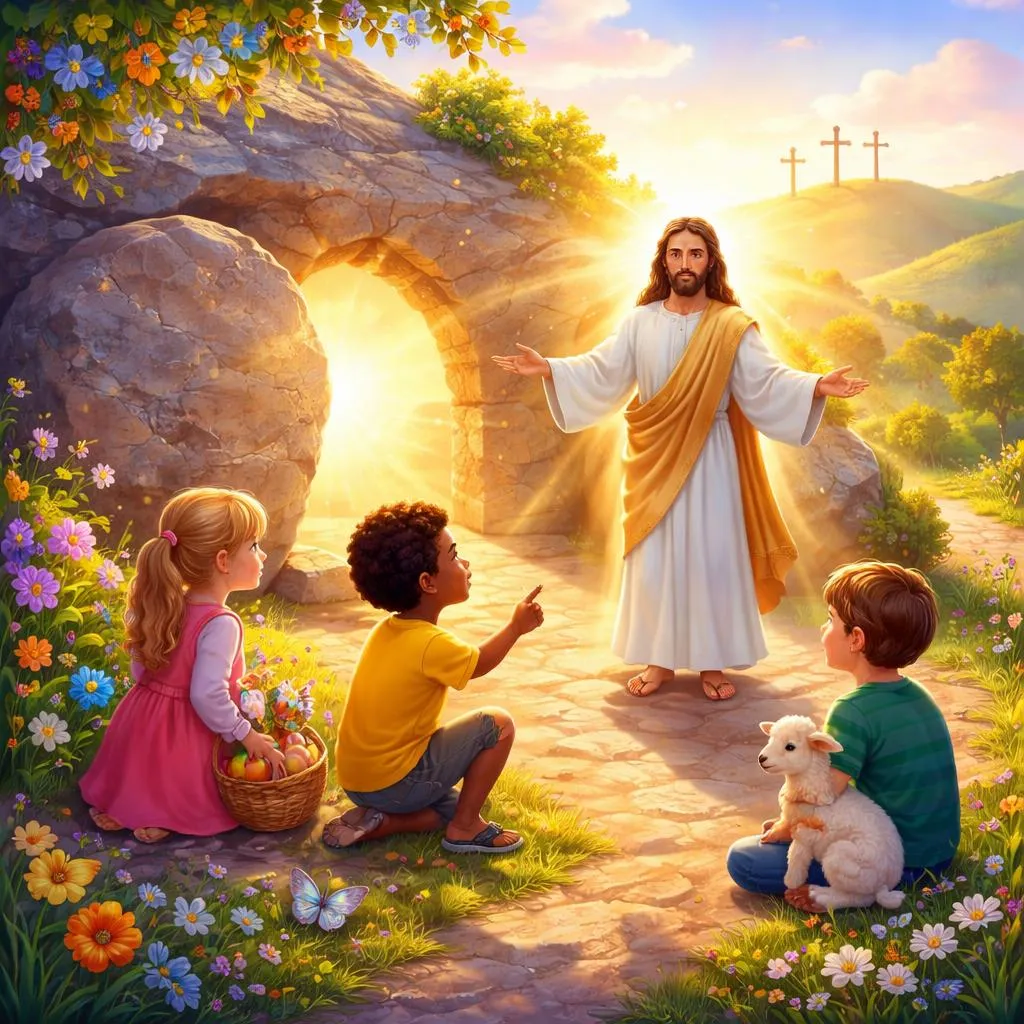

Spring brings visible changes to the world. Flowers bloom. Animals give birth. Days grow longer. These natural events mirror the themes of Easter. The children's bible easter story connects these observations to a narrative of hope and renewal. It tells of a special weekend long ago. It shares themes of love, loss, and joy returned. For young children, the story requires careful telling. The concepts are deep. The emotions are strong. A good children's version uses simple language. It focuses on the joy of the ending. It provides hope without fear. Let us explore how this story serves language development and spiritual understanding in early childhood.
What Is the Children's Bible Easter Story?
This is a simplified retelling of the Easter narrative from the Bible. It begins with Jesus coming to Jerusalem. People welcomed him happily. They waved palm branches. They shouted "Hosanna!" Later, Jesus shared a special meal with his friends. He washed their feet. He broke bread. He gave thanks. Then the story turns sad. Some people did not like Jesus. They arrested him. He died on a cross. His friends were very sad. They put his body in a tomb. They rolled a stone in front. But the story does not end there. On Sunday morning, the stone was rolled away. The tomb was empty. Angels said Jesus was alive. He appeared to his friends. They were filled with joy. The story teaches that love is stronger than death. Hope returns after sadness.
Vocabulary Learning from the Easter Story
This narrative introduces vocabulary across multiple domains. Words connect to spring, emotions, and the story itself.
Story Words: palm branches, donkey, crowd, disciple, meal, bread, cup, garden, arrest, cross, tomb, stone, angel. Emotion Words: happy, sad, scared, confused, joyful, thankful, loving, surprised, peaceful, hopeful. Spring Words: spring, new, life, bloom, grow, light, warm, fresh, alive, reborn, renewal. Action Words: wave, shout, wash, break, share, pray, sleep, wake, roll, see, believe, celebrate. Time Words: Sunday, Thursday, Friday, morning, night, evening, dawn, weekend, three days, first day.
Each element introduces connected vocabulary. The palm branches teach celebration words. The empty tomb teaches surprise and joy. The resurrection teaches new life vocabulary.
Phonics Points in the Easter Story
Specific sound patterns emerge through key vocabulary. Identifying these helps build decoding skills.
The /j/ sound: Jesus, joy, Jerusalem, journey. The main character starts with this sound. Practice saying Jesus words together.
The /l/ sound: love, life, light, lily, Lord. Love is the central theme. Life returns. Light appears. The sound carries meaning.
The /r/ sound: risen, rock, roll, rejoice, rabbit. "He is risen" are key words. The stone rolled away. People rejoiced.
The /s/ sound: sad, stone, Sunday, spring, sunrise. Sadness turns to joy. The stone moves. Sunday morning comes.
Rhyming words: tomb/room, stone/alone, grave/cave, rise/eyes. Simple rhymes help children remember key elements.
Grammar Patterns in the Easter Story
The children's bible easter story models various grammatical structures within its narrative.
Past Tense Narrative: The story uses simple past tense throughout. "Jesus rode into Jerusalem." "The disciples shared a meal." "The women went to the tomb." This provides extensive past tense modeling.
Dialogue Patterns: Characters speak to each other. "Hosanna!" shouted the people. "This is my body," Jesus said. "He is not here," the angel told them. Dialogue models conversational language.
Time Sequence Words: The story follows a clear timeline. "On Sunday, Jesus came." "On Thursday, they ate together." "On Friday, he died." "On Sunday morning, he rose." This builds temporal understanding.
Questions and Answers: Characters ask questions. "Who will roll away the stone?" "Why are you looking for the living among the dead?" Questions and answers model conversational exchange.
Because Sentences: Causal language explains events. "The women were sad because Jesus died." "The disciples were happy because Jesus was alive." This builds causal understanding.
Learning Activities for the Easter Story
Active engagement helps children internalize vocabulary and themes through hands-on learning.
Palm Branch Parade: Create simple palm branches from green paper. Act out the welcome parade. Use celebration words. "Hosanna!" "Welcome!" This builds active vocabulary.
Last Supper Role Play: Have a simple snack together like bread and juice. Talk about sharing a meal with friends. Use sharing vocabulary. "Please pass the bread." "Thank you." "Let's share."
Empty Tomb Craft: Create small tombs using paper cups or clay. Roll small stones in front. On Easter morning, move the stones to show empty tombs. Use discovery language. "It's empty!" "Where is Jesus?" "He is alive!"
Easter Garden: Create a small garden in a tray. Soil, small plants, rocks. Make a tomb from a small pot on its side. Place a stone in front. Discuss new life in spring. Connect to the Easter story.
Resurrection Eggs: Use plastic eggs with small items inside. Each item represents part of the story. A small leaf for palm branches. Bread for the meal. A cross. A stone. An empty egg for the empty tomb. Open one each day and discuss.
Learning Activities for Group Settings
Collaborative learning builds language through interaction and shared experiences.
Story Sequencing with Pictures: Create picture cards showing main events. Palm Sunday. Last Supper. Garden prayer. Cross. Tomb. Empty tomb. Jesus appears. Groups arrange in order and retell the story.
Emotion Walk: Place emotion words around the room. Happy, sad, scared, surprised, joyful. As you tell the story, students walk to the emotion they think characters felt at each part. Discuss why.
Easter Story Bingo: Create bingo cards with story pictures. Donkey, bread, cup, cross, tomb, stone, angel, flower. Call out words or descriptions. Students cover matching pictures.
Good News Circle: The angels gave good news. Sit in a circle. Pass a small symbol of Easter. Each student shares some good news from their week. This builds oral language and positivity.
Educational Games for the Easter Story
Games make learning playful and memorable.
Empty Tomb Memory: Create pairs of cards with Easter story pictures. Donkey/donkey. Bread/bread. Cross/cross. Tomb/tomb. Angel/angel. Place face down. Students flip two looking for matches. Name pictures when flipping.
Stone Roll Game: Use a small ball as the stone. Students sit in a circle. Roll the "stone" to someone. That student names one part of the Easter story before rolling to someone else.
Easter Egg Word Hunt: Hide plastic eggs with word cards inside around the room. Students find eggs, open them, read the word, and use it in a sentence about the story.
He Is Alive Freeze: Play music. Students move like characters in the story. Walking like Jesus. Sad like disciples. Surprised like women. When music stops, freeze. When music plays, continue. This builds kinesthetic learning.
Printable Materials for the Easter Story
Ready-to-use printables extend learning beyond story time.
Easter Story Vocabulary Flashcards: Create cards with story pictures on one side and words on the other. Donkey, palm branch, bread, cup, cross, tomb, stone, angel, lily, butterfly. Use for matching games or quick review.
Story Sequencing Cards: Create cards showing main events in order. Students arrange and retell using complete sentences. This builds narrative skills.
Resurrection Coloring Pages: Print outline drawings of Easter story scenes. Palm Sunday parade. Last Supper. Empty tomb. Jesus with disciples. Students color while discussing with partners.
Easter Mini-Book: Fold paper to create a small book. Each page shows one part of the story with simple text. "Jesus came to Jerusalem." "He shared a meal." "He died on a cross." "The tomb was empty." "Jesus is alive!" Students illustrate each page.
Emotion Cards: Create cards showing emotions from the story. Happy, sad, scared, surprised, joyful. Students match emotions to story moments.
Daily Life Connections to the Easter Story
Linking story themes to daily experiences makes abstract concepts concrete for young learners.
New Life in Spring: Connect Easter to spring observations. Flowers blooming. Chicks hatching. Trees growing leaves. Use new life vocabulary. "The flowers have new life like Jesus."
Sadness and Joy: Discuss times when sadness turned to joy. Losing a toy and finding it. Being sick and getting better. Missing someone and seeing them again. This builds emotional vocabulary.
Sharing Meals: The Last Supper was a shared meal. Discuss family meals. What foods do we share? Who do we eat with? Use meal vocabulary. "We share dinner with our family."
Good News: The angels brought good news. What good news have students heard? A new baby. A visit from grandma. A fun trip planned. Practice sharing good news using complete sentences.
Printable Flashcards from the Easter Story
Effective flashcards support multiple learning styles.
Picture-Word Cards: Front shows simple Easter story drawing or printed image. Back shows word in English. Donkey, palm, bread, cup, cross, tomb, stone, angel, lily, butterfly, egg, spring.
Character Cards: Create cards for each character with simple descriptions. "Jesus: God's son." "Disciples: Jesus's friends." "Mary: came to the tomb." "Angels: gave good news."
Symbol Cards: Create cards showing Easter symbols with simple explanations. "Egg: new life." "Butterfly: new beginning." "Lily: spring and hope." "Cross: Jesus's love."
Sequence Cards: Create cards showing main events. Students arrange in order and retell using complete sentences. "First, Jesus came to Jerusalem. Then..."
Phonics Practice from Easter Words
Use Easter vocabulary for targeted phonics instruction.
Initial Sound Sort: Provide Easter picture cards. Donkey, palm, bread, cross, tomb, stone, angel, lily. Students sort by beginning sound. D words. P words. B words. C words. This builds phonemic awareness.
Syllable Clapping: Clap syllables in Easter vocabulary. Eas-ter (2). Palm (1). Don-key (2). An-gel (2). Dis-ci-ple (3). Cru-ci-fy (3). Res-ur-rec-tion (4). This builds phonological awareness.
Rhyming Word Hunt: Find words that rhyme with Easter words. Tomb/room/broom. Stone/alone/bone. Grave/cave/save. Rise/eyes/surprise. Create rhyming pairs and use in sentences.
Vowel Sound Sort: Sort Easter words by vowel sounds. Palm has /a/. Tomb has /oo/. Stone has long /o/. Angel has long /a/ in first syllable. This builds vowel discrimination.
Grammar Patterns Practice
Use Easter story sentences to practice specific grammar structures.
Past Tense Practice: Write sentences with missing verbs. "Jesus ___ into Jerusalem." Students choose from "ride" or "rode." "The disciples ___ bread." Choose from "share" or "shared." "The women ___ to the tomb." Choose from "go" or "went." Discuss correct choices.
Question Formation: Practice asking questions about the story. "Who came to Jerusalem?" "What did Jesus share?" "Where was the tomb?" "When did they find it empty?" "Why were the women sad?" Students ask and answer with partners.
Because Sentences: Practice causal sentences using "because." "The people were happy because Jesus came." "The disciples were sad because Jesus died." "The women were surprised because the tomb was empty." Students create because sentences.
Sequence Practice: Practice using sequence words to retell the story. "First, Jesus came to Jerusalem. Next, he shared a meal. Then, he died. After that, they buried him. Finally, he rose from the dead." Students retell using sequence language.
The Hope-Filled Message of Easter
The children's bible easter story offers unique value in language classrooms during the spring season. It connects to observable natural changes. It provides vocabulary about emotions, events, and hope. It models past tense narrative naturally. It generates discussion about sadness and joy. The story's themes of new life and hope support social-emotional learning alongside language development. Children learn that sad times can lead to happy endings. They learn about love that continues beyond loss. For educators, this story provides rich material across multiple domains. Vocabulary builds through meaningful narrative. Grammar models appear in authentic contexts. Discussions explore deep feelings in age-appropriate ways. The story connects classroom learning to family traditions and spring observations. That combination creates memorable, meaningful learning that extends far beyond vocabulary lists.