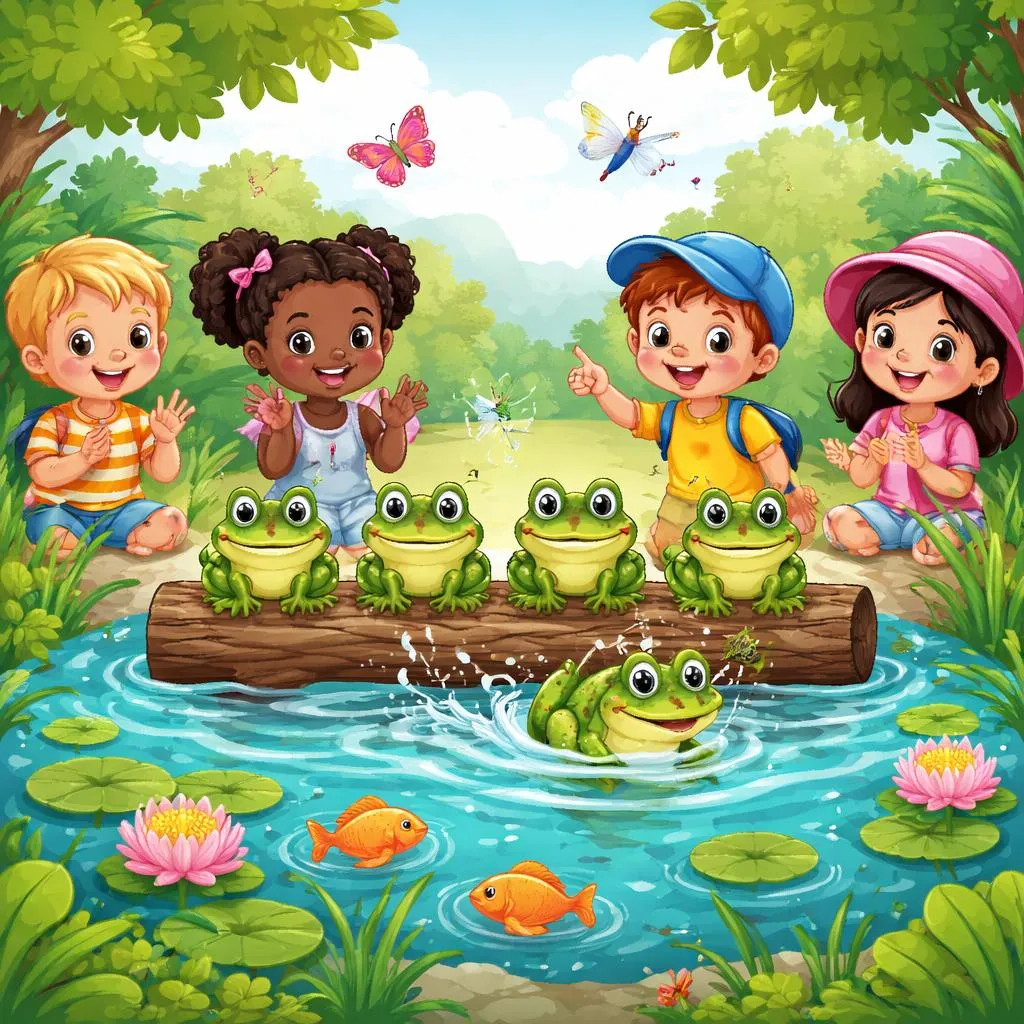

Some songs capture children's hearts and never let go. "Five Little Speckled Frogs" is one of these magical tunes. It tells a simple story of frogs sitting on a log. One by one, they jump into the pool. Children love the repetition and the counting down. The green speckled frog characters become friends as children sing. The song builds number skills, vocabulary, and memory all at once. It introduces subtraction in a natural way. Children learn that one less frog remains each time. Let us discover how to use this classic counting song in the young learners' classroom.
What Is the Green Speckled Frog Song? "Five Little Speckled Frogs" is a traditional counting song. It has been sung for many generations. The song tells about five frogs sitting on a log. They eat bugs. They jump into water. Each verse removes one frog until none remain.
The frogs are described as speckled. This means they have spots. They are also green, like many real frogs. The combination of green and speckled creates a clear picture in children's minds.
The song is cumulative and subtractive. Each verse repeats the pattern but with one fewer frog. This structure helps children learn counting backward. They see numbers decrease by one each time.
The song has a gentle, bouncy rhythm. Children can act out the actions. They pretend to be frogs. They jump when the frogs jump. This physical involvement makes the song memorable.
The song teaches several important concepts. Children practice counting from five down to zero. They learn the concept of subtraction. They develop listening skills. They build vocabulary about frogs and nature. All of this happens while having fun.
The Lyrics of the Green Speckled Frog Song Here is the most common version of this classic song featuring the green speckled frog.
Five little speckled frogs, Sat on a speckled log, Eating some most delicious bugs. Yum! Yum! One jumped into the pool, Where it was nice and cool, Then there were four green speckled frogs. Glub! Glub!
Four little speckled frogs, Sat on a speckled log, Eating some most delicious bugs. Yum! Yum! One jumped into the pool, Where it was nice and cool, Then there were three green speckled frogs. Glub! Glub!
Three little speckled frogs, Sat on a speckled log, Eating some most delicious bugs. Yum! Yum! One jumped into the pool, Where it was nice and cool, Then there were two green speckled frogs. Glub! Glub!
Two little speckled frogs, Sat on a speckled log, Eating some most delicious bugs. Yum! Yum! One jumped into the pool, Where it was nice and cool, Then there was one green speckled frog. Glub! Glub!
One little speckled frog, Sat on a speckled log, Eating some most delicious bugs. Yum! Yum! He jumped into the pool, Where it was nice and cool, Then there were no green speckled frogs. Glub! Glub!
Some versions end with the frogs coming back or with a different final line. The pattern works with any number of frogs.
Vocabulary Learning from the Song The song introduces rich vocabulary about frogs, numbers, and actions. Children learn these words in a memorable musical context.
Green: A color. Frogs are often green to help them hide in plants. Children learn color words through the song.
Speckled: Covered with small spots or marks. Many frogs have speckled skin. Children can see speckles on pictures of frogs.
Frog: A small amphibian that lives near water. Frogs jump and swim. They eat bugs.
Log: A piece of a tree that has fallen. Frogs sit on logs in the water.
Eating: The action of taking in food. The frogs eat bugs.
Delicious: Tasting very good. The bugs are delicious to the frogs.
Bugs: Small insects. Frogs eat bugs like flies and mosquitoes.
Yum: A word people say when food tastes good. The frogs say yum.
Jumped: Moved off the ground into the air. Frogs jump very well.
Pool: A small body of water. The frogs jump into the cool pool.
Nice and cool: Pleasant and not hot. The water feels good to the frogs.
Glub: The sound of going underwater. This fun word imitates bubbles.
Then there were: A phrase showing what happened next. It introduces the new number.
Use these words in other contexts. Show pictures of green things. Learn about real frogs. Practice saying "yum" at snack time. The song provides a springboard for broader learning.
Phonics Points in the Song The song offers excellent phonics practice. The rhyming and repetition highlight specific sounds.
The "og" sound: Frog and log rhyme. This word family includes dog, bog, and hog. Children can generate more words with this pattern.
The "ool" sound: Pool and cool rhyme. This word family includes school, tool, and drool. The long "oo" sound appears in many words.
The "ump" sound: Jumped contains the "ump" sound. This word family includes bump, lump, and stump. Children feel the "ump" in their mouths.
The "ug" sound: Bugs contains the "ug" sound. This word family includes rug, hug, and mug. The short "u" sound is common in English.
The "um" sound: Yum contains the "um" sound. This word family includes gum, drum, and hum. Children enjoy saying this sound.
The "een" sound: Green contains the long "e" sound spelled "een." This word family includes seen, bean, and clean.
Syllable counting: Clap the syllables in key words. Speck-led has two claps. Frog has one. De-li-cious has three. This builds phonemic awareness.
Initial sounds: Green starts with G. Frog starts with F. Log starts with L. Pool starts with P. Bugs starts with B. Practice saying the first sound of each word.
Rhyming words: The song is full of rhymes. Frog and log. Pool and cool. Bugs and yum are near rhymes. Recognizing rhymes is a key reading skill.
Grammar Patterns in the Lyrics The song demonstrates several grammar patterns. Children absorb these through repetition.
Number words: Five, four, three, two, one, no. The song teaches counting backward. Children learn that "no" means zero in this context.
Past tense verbs: Sat, jumped, were. The song uses past tense to tell the story. Children learn that regular verbs add -ed for past. Jumped is regular. Sat is irregular.
Prepositional phrases: On a log, into the pool. These phrases tell where things happen. Children learn common prepositions.
There were / there was: "Then there were four" uses plural. "Then there was one" uses singular. Children see subject-verb agreement in action.
Adjectives before nouns: Green speckled frogs, delicious bugs, cool pool. Multiple adjectives can describe one noun. "Green" and "speckled" both describe the frogs.
Exclamations: Yum! Yum! Glub! Glub! These show strong feeling or sound effects. Children learn that exclamation points show excitement.
Pronouns: He jumped. The pronoun "he" replaces "the frog" in the last verse. Children see how pronouns work.
The song provides rich language input. Children do not need to analyze the grammar. They absorb it through joyful repetition.
Learning Activities with the Song Songs become powerful teaching tools when we add activities. Here are ideas for using the green speckled frog song in the classroom.
Frog Puppets: Create simple frog puppets from paper bags or craft sticks. Make five frogs. Color them green and add speckles with markers. Children use them to act out the song. Each time a frog jumps, they put one puppet down.
Frog Log Craft: Make a log from brown paper or a cardboard tube. Create five green speckled frogs from green paper. Add spots with markers or paint. Place them on the log and remove one each verse.
Speckle Art: Children paint or color frogs green. They add speckles with cotton swabs, fingerprints, or dot markers. Count the speckles on each frog. Compare who has the most speckles.
Counting Backwards Practice: Use the song to practice counting backwards from five. Hold up five fingers as you sing. Put one finger down each time a frog jumps.
Frog Jump Game: Cut out lily pads from green paper. Place them on the floor. Children pretend to be green speckled frogs and jump from pad to pad. Count how many jumps.
Pool Sensory Bin: Create a sensory bin with blue water beads or blue paper for the pool. Add toy frogs. Children act out the song with the toys. Add small logs from sticks.
Bug Hunt: Hide plastic bug toys around the room. Children find them and feed them to the frog puppets. Count how many bugs each frog eats.
Printable Materials for Classroom Use Having printable resources makes lesson planning easier. Here are materials to prepare for this song.
Lyric Poster: Create a large poster with the full lyrics. Add simple illustrations of green speckled frogs on a log. Display it during singing time. Children can follow along.
Frog Counting Cards: Create cards with numbers one through five. On each card, show that many green speckled frogs. Children arrange them in order and sing the corresponding verse.
Frog Puppet Templates: Provide templates for making frog puppets. Children color them green, add speckles, cut out, and attach to craft sticks. Use them during the song.
Speckled Log Scene: Create a printable scene with a log and a pool. Children cut out frog pictures, color them green, add speckles, and place them on the log. They remove one each verse.
Coloring Pages: Design coloring pages showing the green speckled frogs on the log. Children color while listening to the song. Add the number words for tracing.
Number Tracing Pages: Create pages for tracing numbers five through one. Include the number word. Children trace and then draw that many green speckled frogs.
Word Cards: Make flashcards for key words. Green, speckled, frog, log, pool, bugs, jumped. Use pictures on one side and words on the other.
Educational Games for Deeper Learning Games make learning joyful. Here are games centered around the green speckled frog song.
Frog Jump Counting: Cut out five green speckled frog pictures. Place them on a log picture. Children close their eyes. Remove one frog. They open their eyes and say how many frogs remain. This builds subtraction skills.
Speckled Frog Memory: Create pairs of frog cards with different numbers of speckles. Children play memory match, finding frogs with the same number of speckles.
Feed the Frog: Create a frog puppet with a large mouth. Children take turns rolling a die and feeding the frog that many bugs. They count out loud as they feed.
Frog Pond Hop: Place number cards around the room. Children hop from number to number in order from five to one. They say each number as they land.
Speckle Counting Race: Give each child a green frog picture and a bowl of dot stickers. Call out a number. Children race to put that many speckles on their frog. Check together.
Green Frog Hunt: Hide small green frog pictures around the room. Children search for them. When they find one, they bring it to the log and count how many have been found.
Frog Subtraction Stories: Use the frog puppets to tell subtraction stories. "Four green speckled frogs were on the log. One jumped off. How many are left?" Children act out and answer.
Connecting to Science Learning The song naturally leads to science concepts about frogs and nature.
Why are frogs green? Green helps frogs hide in plants. This is called camouflage. Discuss why camouflage helps frogs survive.
What are speckles? Speckles are spots on the frog's skin. They help frogs blend in with dappled light on leaves and water.
Frog life cycle: Learn about how frogs grow. Eggs become tadpoles. Tadpoles become froglets. Froglets become adult frogs. Compare to the frogs in the song.
Frog habitats: Frogs live near water. They need ponds, logs, and bugs to eat. Discuss what frogs need to survive.
What frogs eat: Frogs eat insects. They catch bugs with their long tongues. Learn about different insects that frogs eat.
Frog sounds: Frogs make different sounds. Some croak. Some ribbit. Listen to recordings of real frog sounds.
Where frogs live: Frogs live all over the world. Some live in rainforests. Some live in deserts. Learn about different frog species.
Connecting to Art and Creativity The green speckled frog theme inspires many art activities.
Speckled Frog Painting: Children paint frogs green. While the paint is wet, they add speckles with cotton swabs dipped in darker green or brown paint.
Frog Collage: Provide green paper shapes, googly eyes, and dot stickers for speckles. Children create frog collages on a log background.
Playdough Frogs: Make green playdough. Children shape frogs and add speckles with small beads or beans. Create a log from brown playdough.
Frog Prints: Use halved potatoes or sponges cut into frog shapes. Dip in green paint and print. Add speckles with fingerprints.
Log and Pool Diorama: Create a shoebox diorama with a log and pool. Add green speckled frogs. Use real twigs and blue paper.
Frog Masks: Create frog masks from paper plates. Paint them green and add speckles. Children wear them while singing the song.
The green speckled frog characters in this beloved song become friends for children. They sing about them, count them, and watch them jump away. Through this simple song, children develop number sense, vocabulary, and scientific curiosity. They build memory and coordination. They learn about colors and patterns. The song connects to art, science, and math. And through it all, children are having fun. That is the magic of learning through music.