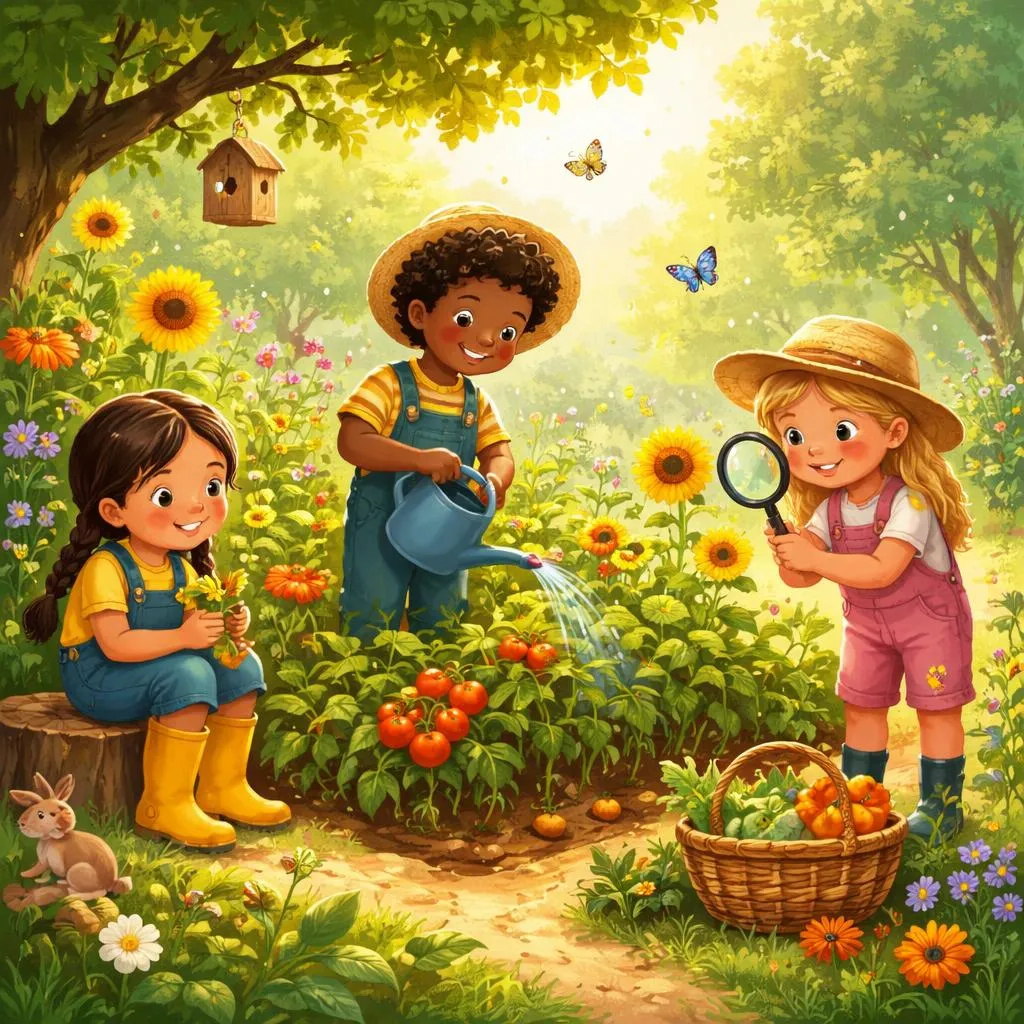

What Are Children's Garden Stories? Let us explore this delightful genre of children's literature together. Children's garden stories focus on plants, gardening, and outdoor spaces. They take readers into gardens where amazing things happen. Characters plant seeds and watch them grow over time. They discover worms, bugs, and creatures living in the soil. The stories teach how plants need sun, water, and care. Some tales feature magical gardens with extraordinary plants. Others show realistic gardens where children help and learn. The changing seasons bring different plants and activities. Vegetables, flowers, and fruits appear throughout the pages. Children learn where food comes from through engaging narratives. The stories inspire wonder at the natural world's beauty.
Meaning and Purpose of Garden Stories These stories serve several important purposes in children's development. They teach where food comes from in an engaging way. Children learn that vegetables don't just appear at stores. The stories also build understanding of plant life cycles naturally. Seeds grow into plants that produce more seeds. This cycle teaches patience and the reward of waiting. Garden stories also connect children to the natural world. They notice insects, birds, and soil creatures more carefully. The narratives also model responsibility and care for living things. Plants need regular attention to thrive and grow. Children learn that their efforts produce visible results. The stories also provide vocabulary for discussing nature. Words like sprout, blossom, and harvest gain meaning through stories.
Common Elements in Garden Stories We can identify several elements common to garden narratives. Planting seeds begins most garden stories at the start. Characters prepare soil and carefully place seeds inside. Waiting for growth teaches patience throughout the story. Nothing happens immediately, requiring trust and patience. Watering and weeding show the care plants need. Characters tend their gardens through sun and rain. Helpful creatures like worms and bees appear regularly. They help the garden grow in their own ways. Troublesome creatures like slugs may cause problems too. The harvest at the end rewards all the hard work. Characters enjoy the fruits of their labor together. Seasons changing affect what grows in the garden. Spring planting leads to summer growing and fall harvest.
Categories of Garden Stories We can organize garden stories into several helpful categories. Realistic garden stories show children gardening with family. They plant, water, weed, and harvest like real gardeners. Vegetable garden stories focus on growing food to eat. Carrots, tomatoes, peas, and beans appear in these tales. Flower garden stories celebrate beauty and color in nature. Tulips, roses, sunflowers, and daisies fill the pages. Magical garden stories add fantasy elements to gardening. Plants might grow overnight or have special powers. Community garden stories show people gardening together. Neighbors share space, work, and harvest with each other. Animal garden stories feature creatures tending gardens. Rabbits, mice, and birds plant and harvest in their ways. Seasonal garden stories follow changes throughout the year. Each season brings different garden activities and plants.
Daily Life Connections Through Garden Stories Garden stories connect to children's experiences in meaningful ways. Many children have helped plant seeds at home or school. They know what it feels like to put seeds in soil. Waiting for something to grow teaches patience to everyone. Children understand wanting to see results immediately. Watering plants with small watering cans happens often. They enjoy the responsibility of caring for something. Pulling weeds feels like helpful work they can do. Picking vegetables from the garden brings joy and pride. Eating something they helped grow tastes especially good. We can point out these connections during reading. "Remember when we planted those bean seeds?" "You helped water the flowers just like in the story."
Vocabulary Learning from Garden Stories Garden stories introduce rich nature vocabulary for children. Garden means a piece of ground where plants are grown. Seed means the small part of a plant that grows into a new plant. Soil means the top layer of earth where plants grow. Plant means a living thing that grows in the ground. Flower means the colorful part of a plant that makes seeds. Vegetable means a plant grown for food, like carrots or peas. Fruit means the sweet part of a plant that contains seeds. Harvest means gathering ripe crops from the garden. Sprout means to begin to grow from a seed. Bloom means to produce flowers that are open. We can teach these words with picture cards showing examples. Use them in sentences about real gardening experiences.
Phonics Points in Garden Stories Garden stories provide useful phonics practice with nature vocabulary. Garden has the G sound and AR combination and short E. Seed has the long E and D sound. Soil has the OI diphthong and L sound. Plant has the PL blend and short A and NT blend. Flower has the FL blend and OW diphthong and ER ending. Vegetable has the short E and short A and final le. Harvest has the HAR combination and short E and ST blend. Sprout has the SPR blend and OU diphthong and T sound. Bloom has the BL blend and long OO and M sound. Water has the WA blend and short A and ER ending. We can focus on one sound pattern from each story. Find all words with that sound in the garden tale. Write them on seed or flower shapes for practice.
Grammar Patterns in Garden Narratives Garden stories model useful grammar for young readers naturally. Past tense tells what happened in the garden story. "The children planted carrot seeds in the garden yesterday." Present tense describes what plants do generally. "Seeds need water and sunlight to grow." Future tense shows what will happen in the garden. "The flowers will bloom next week." Questions explore gardening knowledge and experiences. "Why do plants need sunlight?" "What helps seeds grow?" Commands appear in gardening instructions. "Water the plants gently." "Pull the weeds carefully." Descriptive language paints garden pictures vividly. "The tall, yellow sunflowers stood proudly in the warm sun." Prepositional phrases describe locations in the garden. "Under the soil, beside the tomatoes, among the flowers." We can point out these patterns during reading.
Learning Activities for Garden Stories Many activities deepen understanding of garden themes. Plant real seeds in cups or a classroom garden. Watch and record growth over several weeks. Create a garden journal documenting plant changes. Draw pictures and write observations regularly. Make a seed mosaic using different kinds of seeds. Glue beans, corn, and sunflower seeds onto paper. Create plant part diagrams labeling roots, stems, leaves, flowers. Learn what each part does for the plant. Press flowers between heavy books to preserve them. Use pressed flowers for art projects later. Grow a bean in a clear cup to watch roots grow. See underground parts that are usually hidden. These activities make garden concepts tangible and exciting.
Printable Materials for Garden Learning Printable resources support deep engagement with garden themes. Create plant life cycle cards showing seed, sprout, plant, flower, fruit. Arrange in correct order to show growth. Design garden vocabulary cards with words and pictures. Seed, soil, plant, flower, vegetable, fruit, harvest included. Make a garden journal template for recording observations. Date, weather, what changed, and drawing spaces. Create a seed packet template for designing own seeds. Draw plant and write growing instructions. Design a vegetable matching game pairing pictures with names. Match carrot, tomato, pea, bean, and corn correctly. Make a garden scavenger hunt for outdoor exploration. Find specific leaves, flowers, bugs, and garden items. These printables structure garden exploration activities effectively.
Educational Games About Gardens Games make garden learning playful and interactive. Play "Garden Charades" acting out gardening activities. Planting, watering, weeding, harvesting, and digging appear. Create "Seed Match" pairing seeds with plants they become. Match bean seed with bean plant, sunflower seed with sunflower. Play "What Do Plants Need?" sorting cards into needs and wants. Sun, water, soil are needs; toys, candy are wants. Design "Garden Bingo" with garden items on cards. Seeds, sprouts, flowers, vegetables, worms, bees included. Play "Plant Part Pick" identifying roots, stems, leaves, flowers. Name each part and its job for the plant. Create "Garden Relay" racing to complete gardening tasks. Plant pretend seeds, water, weed, and harvest quickly. These games build garden knowledge through active participation.
Teaching About Where Food Comes From Garden stories teach essential lessons about food origins. Many children think food comes from stores only. They don't connect grocery produce to farms and gardens. Garden stories show the journey from seed to table. Children see carrots pulled from soil, not packages. They learn that food grows, not just appears. This understanding builds appreciation for food and farmers. Children may become more willing to try vegetables. Vegetables they grew themselves seem more interesting. The stories also teach that food takes time to grow. Nothing appears instantly; patience is required. This counters the instant gratification culture children experience. Garden stories plant seeds of food wisdom for life.
The Wonder of Growth Garden stories capture the miracle of growth from tiny seeds. A small, hard seed contains an entire plant inside. With soil, water, and sun, it becomes something huge. Children marvel at this transformation through stories. They watch bean seeds sprout in classroom cups. They see tiny seedlings become mature plants. This wonder builds appreciation for nature's design. Children learn that amazing things start small always. Big oak trees come from little acorns. Giant pumpkins come from small seeds. This truth applies to more than just plants. Children themselves are growing and changing constantly. They started tiny and are becoming amazing people. Garden stories celebrate this universal miracle.
Responsibility Through Gardening Garden stories model responsibility and care for living things. Plants cannot care for themselves at all. They depend on gardeners for water and protection. If forgotten, they wilt and may die completely. Children learn that their actions have consequences. Regular care brings healthy, productive plants. Neglect brings sad, dying plants instead. This teaches cause and effect in visible ways. The lesson transfers to other responsibilities too. Homework, chores, and friendships need regular attention. Children see that effort produces results always. The garden becomes a metaphor for many life lessons. Responsibility learned young serves throughout life.
Connecting Gardens to Seasons Garden stories naturally follow the rhythm of seasons. Spring brings planting time after winter's rest. Summer brings growth under warm, sunny skies. Autumn brings harvest as days grow cooler. Winter brings rest and planning for next year. This cycle teaches children about time and change. Nothing stays the same; seasons always change. Each season has its own beauty and purpose. Children learn to appreciate each time of year. They understand that waiting is part of the cycle. Winter rest prepares for spring growth again. The garden's rhythm mirrors life's rhythms everywhere. Children find comfort in these predictable patterns.