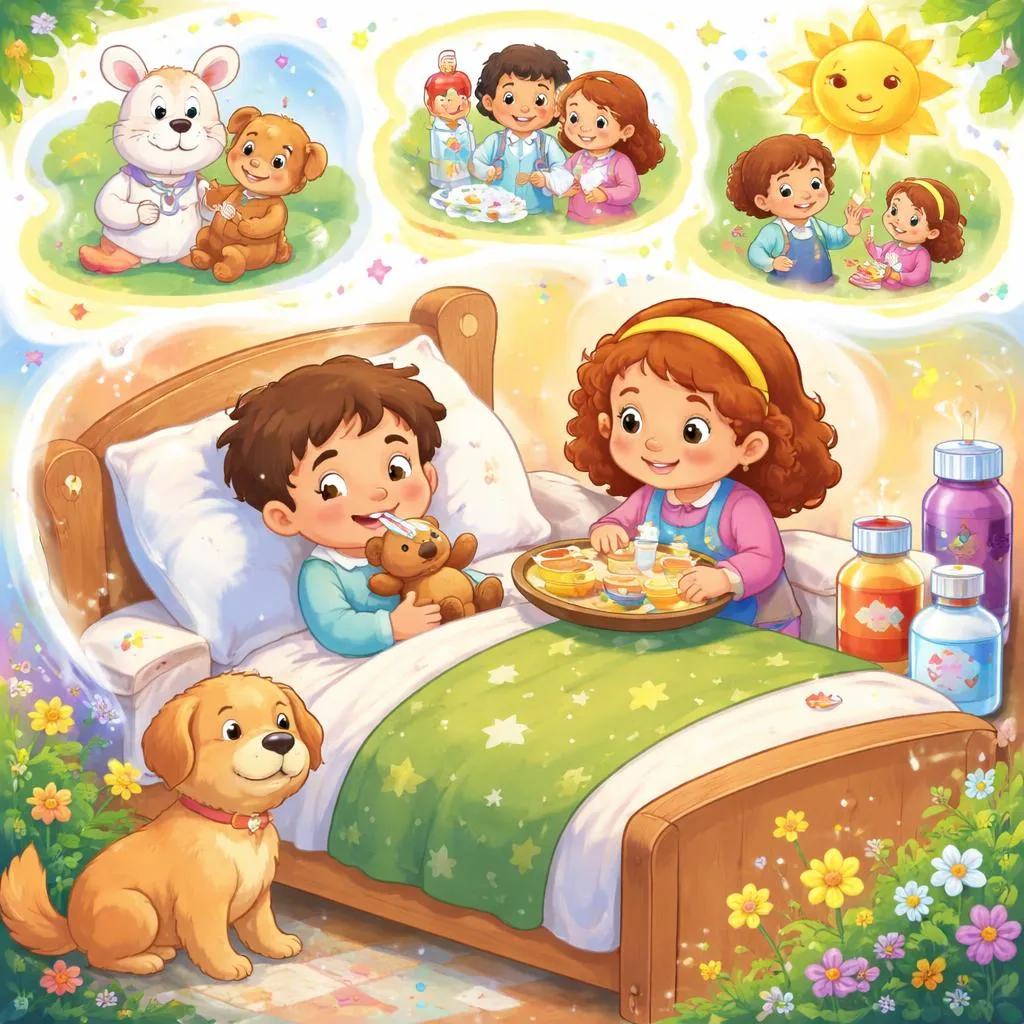

What Are Children's Stories About Being Sick? Let us explore this comforting genre of children's literature together. Children's stories about being sick feature characters who become ill. The stories follow their journey from sickness to health. Characters experience common symptoms like fever, cough, or upset tummy. They visit doctors or stay home in bed recovering. Family members care for them with soup and medicine. The stories show that being sick is temporary and passes. Characters miss school and fun activities while recovering. They feel bored, uncomfortable, and sometimes scared. The stories validate these feelings children recognize. Getting better happens with rest, medicine, and time. The happy ending shows characters healthy again and playing.
Meaning and Purpose of Sickness Stories These stories serve several important purposes in children's development. They prepare children for what happens when they get sick. Knowing what to expect reduces fear and anxiety. The stories also validate the uncomfortable feelings of illness. Children learn it's normal to feel yucky when sick. The narratives also model how to cope with being sick. Characters rest, take medicine, and accept help from others. This shows children healthy ways to handle illness. The stories also reduce fear of doctor visits. Characters have positive experiences with doctors and nurses. Children learn that doctors are helpers, not people to fear. The stories also emphasize that sickness is temporary. Getting better always happens with time and care.
Common Elements in Sickness Stories We can identify several elements common to sickness narratives. The character first notices feeling not like themselves. They might have a headache, fever, or upset stomach. A parent or caregiver recognizes they are sick. They check temperature and notice symptoms carefully. Staying home from school or activities happens next. The character misses normal routines and feels disappointed. A doctor visit may be part of the story. The doctor examines the child and explains what's wrong. Medicine or treatments help the healing process begin. Resting in bed with special care is important. Soup, juice, and extra attention help recovery. Getting better happens gradually over several days. The character returns to normal activities healthy again.
Vocabulary Learning from Sickness Stories Sickness stories introduce important health vocabulary for children. Sick means not feeling well because of illness or disease. Fever means body temperature higher than normal. Cough means forcing air from lungs with a sudden sound. Cold means a common illness with runny nose and sneezing. Flu means a more serious illness with fever and body aches. Medicine means substances used to treat illness or symptoms. Doctor means a person trained to treat sick people. Nurse means a person trained to care for sick people. Thermometer means an instrument for measuring body temperature. Healthy means being well and free from illness or disease. We can teach these words with picture cards showing examples. Use them in sentences about times children were sick.
Phonics Points in Sickness Stories Sickness stories provide useful phonics practice with health vocabulary. Sick has the short I and CK digraph. Fever has the long E and short E and ER ending. Cough has the COU combination and GH silent. Cold has the long O and LD blend. Flu has the FL blend and long U. Medicine has the short E and short I and short I and C soft. Doctor has the short O and short O and OR combination. Nurse has the N sound and UR combination and silent E. Thermometer has the TH digraph and short E and short E and ER ending. Healthy has the H sound and EA digraph and TH and long E. We can focus on one sound pattern from each story. Find all words with that sound in the sickness tale. Write them on tissue or medicine shapes for practice.
Grammar Patterns in Sickness Narratives Sickness stories model useful grammar for young readers naturally. Past tense tells what happened during the illness. "Yesterday Maria woke up with a fever and sore throat." Present tense describes how the character feels now. "Today she feels much better and wants to play." Future tense shows what will happen as healing continues. "Tomorrow she will go back to school if she's well." Questions explore symptoms and feelings. "Where does it hurt?" "How are you feeling today?" Commands appear in care instructions. "Drink plenty of fluids." "Rest in bed." Descriptive language paints the experience vividly. "The tired, uncomfortable girl lay in bed with her favorite stuffed animal." Prepositional phrases describe locations and situations. "In bed, at the doctor's office, under the blanket." We can point out these patterns during reading.
Daily Life Connections Through Sickness Stories Sickness stories connect directly to children's experiences naturally. Every child has been sick at some point in life. They recognize the feelings from their own experiences. Staying home from school has happened to most children. They know what it feels like to miss fun activities. Taking yucky medicine is a universal childhood experience. The taste and struggle are familiar to everyone. Having a parent care for them feels comforting and safe. Children recognize that special attention when sick. Visiting the doctor happens regularly for checkups and illness. The examination room is a familiar place. We can point out these connections during reading. "Remember when you had a fever like that?" "That medicine tasted yucky just like yours."
Learning Activities for Sickness Stories Many activities deepen understanding of health themes. Create a "getting well" kit with items that help recovery. Include a book, tissue, water bottle, and comfort item. Role-play visiting the doctor with stuffed animals. Practice describing symptoms and getting examined. Draw pictures of healthy habits that prevent sickness. Washing hands, eating well, and resting appear. Make a get-well card for someone who is sick. Write cheerful messages and draw healing pictures. Sequence the steps from getting sick to getting better. First symptoms, rest, doctor, medicine, recovery. Practice proper hand washing technique together. Learn how to prevent spreading germs to others. These activities make health concepts practical and memorable.
Printable Materials for Sickness Learning Printable resources support deep engagement with health themes. Create a "How I Feel" chart with different sickness symptoms. Fever, cough, sore throat, tummy ache, headache included. Design a doctor visit preparation sheet with steps. Check in, wait, see doctor, get medicine, go home. Make vocabulary cards with sickness words and definitions. Sick, fever, cough, cold, flu, medicine, doctor included. Create a get-well card template for writing messages. "I hope you feel better soon!" with space to draw. Design a healthy habits checklist for daily use. Wash hands, eat well, sleep enough, exercise, drink water. Make a sickness story map for tracking narrative elements. Characters, symptoms, care, doctor, recovery included. These printables structure health exploration activities effectively.
Educational Games About Sickness Games make health learning playful and interactive. Play "Doctor's Office" dramatic play with medical kit. Children take turns being doctor and patient. Create "Symptom Charades" acting out different symptoms. Coughing, sneezing, holding head, holding tummy appear. Play "Healthy Habits Bingo" with wellness actions on cards. Wash hands, cover cough, rest, drink water, eat well. Design "Medicine or Not?" sorting things that help or don't. Medicine, rest, water help; candy, running, no sleep don't. Play "Germ Spread" game showing how germs travel. Use glitter to demonstrate hand washing importance. Create "Feel Better Relay" racing to complete healing tasks. Get tissue, take pretend medicine, rest with blanket. These games build health awareness through active participation.
Teaching About Doctor Visits Sickness stories help prepare children for doctor visits. They show what happens during an examination. The doctor checks temperature, listens to heart, looks in ears. Children learn these are normal, not scary procedures. The stories also show doctors as helpers, not threats. They want to make children feel better, not hurt them. This positive portrayal reduces anxiety about medical visits. Children can talk about what will happen before going. The familiar story prepares them for the experience. After the visit, they can compare real and story experiences. This connection makes medical care less frightening and more understandable.
The Importance of Rest and Care Sickness stories emphasize that rest helps healing happen. Characters stay in bed and take it easy. They don't try to play or go to school. Children learn that rest is medicine for the body. The stories also show caregivers providing comfort. Soup, blankets, and gentle care help healing. Children learn that accepting help is okay when sick. They don't have to be brave and tough all the time. The stories validate needing extra care during illness. This teaches children to listen to their bodies. Rest when tired, accept help when needed. These lessons apply to many situations beyond sickness.
Empathy Through Sickness Stories Reading about sick characters builds empathy in children. They imagine how the character feels and suffers. They remember their own sickness experiences. This connection helps them understand others' suffering. When classmates are sick, they can be more compassionate. They might make get-well cards or ask how they feel. The stories also help children appreciate their own health. Being well feels good after reading about sickness. They appreciate being able to play and go to school. This gratitude for health develops naturally through stories. Empathy and appreciation both grow from these narratives.
The Happy Ending of Healing Sickness stories always end with the character getting better. This predictable happy ending provides comfort and hope. Children learn that sickness is temporary, not permanent. No matter how bad they feel, healing will come. The happy ending mirrors real life experience. Every illness they've had eventually ended. This builds resilience and hope for future sickness. They know from experience and stories that healing happens. The pattern reinforces trust in the healing process. Children internalize that difficult times pass eventually. This lesson extends beyond sickness to all challenges.